
Market Report · July 31, 2026

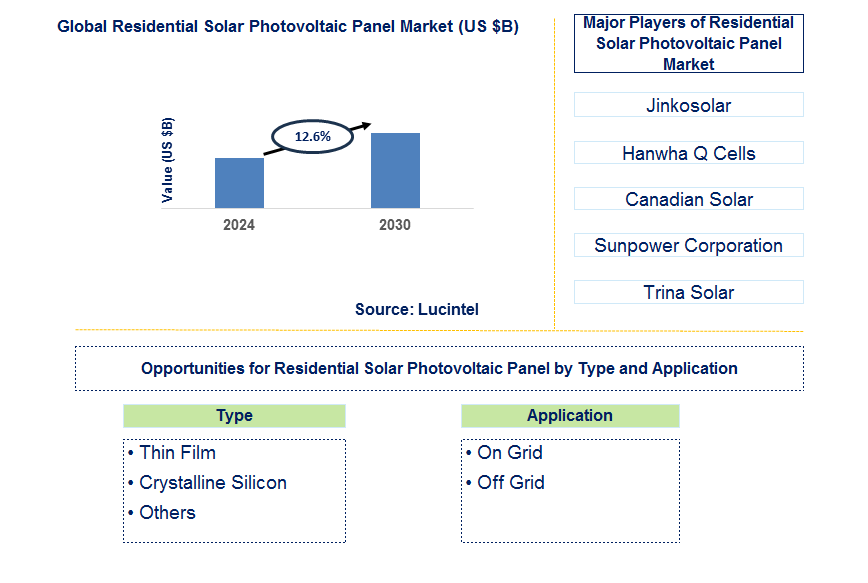
Key data points: The growth forecast = 12.6% annually for the next 6 years. Scroll below to get more insights. This market report covers trends, opportunities, and forecasts in the global residential solar photovoltaic panel market to 2030 by type (thin film, crystalline silicon, and others), application (on grid and off grid), and region (North America, Europe, Asia Pacific, and the Rest of the World)
We'll send your sample report shortly.
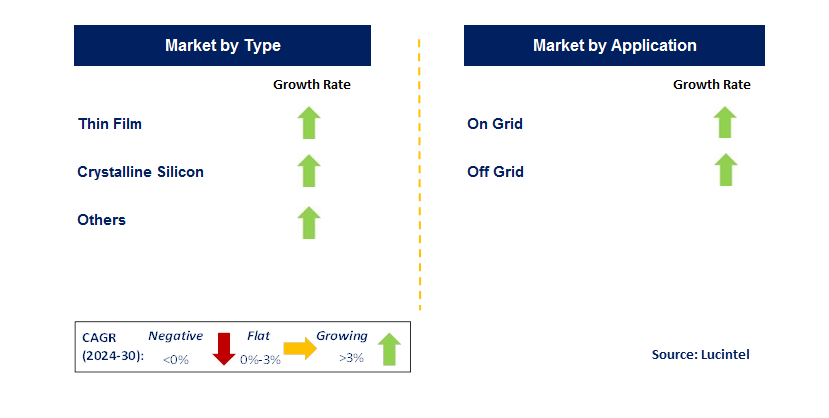
• Lucintel forecasts that, within the type category, thin film is expected to witness higher growth over the forecast period.
• Within the application category, on grid is expected to witness higher growth.
• In terms of regions, North America is expected to witness highest growth over the forecast period. Gain valuable insights for your business decisions with our comprehensive 150+ page report.
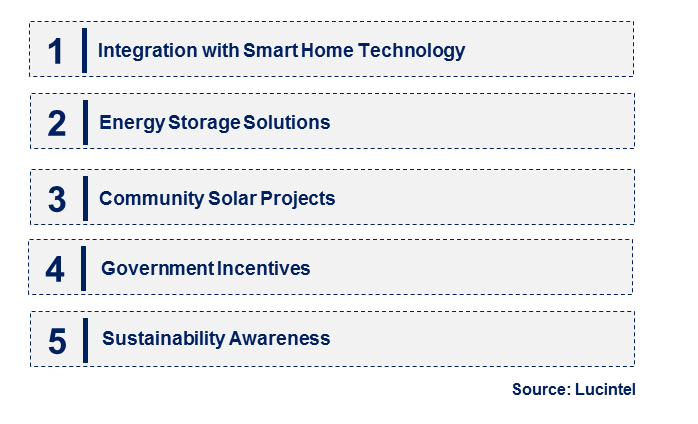
• Integration with Smart Home Technology: More homeowners are adopting solar systems integrated with smart technologies for enhanced energy management and efficiency.
• Energy Storage Solutions: The rising popularity of home battery systems allows homeowners to store excess energy for later use, increasing self-consumption and resilience.
• Community Solar Projects: These initiatives enable homeowners without suitable roofs to participate in solar energy generation, promoting wider access to solar power.
• Government Incentives: Increased financial incentives and rebates continue to drive adoption, making solar installations more appealing to homeowners.
• Sustainability Awareness: Growing concerns about climate change motivate consumers to invest in renewable energy sources, including solar panels.
• Technological Advancements: Innovations in solar panel efficiency and durability make solar systems more attractive and cost-effective. These emerging trends indicate a dynamic shift in the residential solar photovoltaic panel market, driven by technology, sustainability, and evolving consumer needs.
• Technological Innovations: Manufacturers focus on improving solar panel efficiency, leading to higher energy output and lower costs for consumers.
• Increased Adoption of Bifacial Panels: These panels capture sunlight from both sides, enhancing overall efficiency and generating more electricity in limited space.
• Rise of Solar Leasing Options: Companies offer leasing models that enable homeowners to adopt solar without significant upfront costs, making solar accessible to a wider audience.
• Government Support Programs: Many countries introduce or extend subsidies and tax incentives to encourage residential solar installations.
• Partnerships with Utilities: Collaborations between solar companies and utility providers create programs that facilitate easier grid connections and net metering.
• Focus on Resilience: The emphasis on energy independence and resilience, particularly after natural disasters, drives interest in solar systems combined with battery storage. The recent developments in the residential solar photovoltaic panel market reflect a concerted effort by various stakeholders to innovate and enhance the accessibility and efficiency of solar energy solutions.
• Rooftop Installations: The demand for rooftop solar panels remains strong, providing a significant growth opportunity in urban and suburban areas.
• Energy Storage Integration: Pairing solar panels with energy storage systems presents opportunities for increased self-consumption and backup power solutions.
• Community Solar Programs: Expanding community solar initiatives allows for greater participation and energy equity among homeowners without suitable roofs.
• Smart Home Integration: The integration of solar systems with smart home technologies can enhance energy efficiency and attract tech-savvy consumers.
• Green Financing Solutions: Offering tailored financing options helps address the upfront cost barrier, making solar installations more accessible.
• Corporate Partnerships: Collaborating with businesses and residential developers can lead to innovative solar solutions for new housing projects. The strategic growth opportunities in the residential solar photovoltaic panel market are abundant, driven by technological advancements, consumer preferences, and supportive policies.
• Government Incentives: Favorable policies and financial incentives encourage homeowners to invest in solar energy solutions.
• Declining Costs: The decreasing prices of solar panels and installation services make solar energy more accessible and appealing.
• Increased Awareness: Growing public awareness of climate change and the benefits of renewable energy drives demand for solar solutions.
• Technological Advancements: Continuous improvements in solar technology enhance efficiency and effectiveness, boosting market attractiveness.
• Energy Independence: Rising energy costs and the desire for self-sufficiency motivate homeowners to adopt solar energy systems. Challenges in the residential solar photovoltaic panel market include:
• High Upfront Costs: Despite declining prices, the initial investment for solar systems can still be a barrier for many homeowners.
• Regulatory Variability: Fluctuating policies and regulations across regions create uncertainty for consumers and businesses.
• Market Saturation: As the market matures, competition intensifies, leading to potential pricing pressures and reduced margins.
• Technical Limitations: Issues related to energy efficiency and storage capacity may limit the effectiveness of solar installations.
• Consumer Education: There remains a need for educating consumers about the benefits and workings of solar technology to foster adoption.
• Space Constraints: In urban areas, limited roof space can restrict the installation of solar panels for some homeowners. Understanding the drivers and challenges in the residential solar photovoltaic panel market is essential for stakeholders to effectively navigate this evolving landscape.
• Jinkosolar
• Hanwha Q Cells
• Canadian Solar
• Sunpower Corporation
• Trina Solar
• GCL System Integration
• LONGi Solar
• Thin Film
• Crystalline Silicon
• Others
• On Grid
• Off Grid
• North America
• Europe
• Asia Pacific
• The Rest of the World
• USA: In the United States, the residential solar photovoltaic panel market is experiencing robust growth driven by favorable government policies and declining costs. The recent extension of the federal solar tax credit has incentivized homeowners to invest in solar energy systems. Technological advancements, such as more efficient solar panels and energy storage solutions, have also gained traction. Furthermore, states like California are implementing stricter regulations requiring solar installations in new homes, further bolstering market demand. Local solar companies increasingly offer flexible financing options, making it easier for homeowners to adopt solar energy solutions.
• Germany: Germany remains a leader in the residential solar photovoltaic panel market, bolstered by its ambitious energy transition policy, known as the Energiewende. Recent developments include a surge in decentralized energy systems, where homeowners increasingly adopt solar panels coupled with battery storage. The government promotes self-consumption of solar energy through financial incentives and rebates. Additionally, advancements in solar technology, such as bifacial panels and smart inverters, enhance efficiency and usability. The rising awareness of sustainability and eco-friendly living drives demand among German homeowners, solidifying the country's position as a solar powerhouse in Europe.
• China: China is the largest market for residential solar photovoltaic panels, benefiting from its extensive manufacturing capabilities and government support. Recent developments include a focus on improving solar panel efficiency and reducing costs through technological innovation. The Chinese government has introduced incentives for residential solar installations, aiming to increase the share of renewable energy in the country’s energy mix. Additionally, solar energy storage systems are gaining popularity, allowing homeowners to maximize self-consumption of solar power. As urbanization continues, many cities promote solar rooftops to address energy demands and reduce emissions, further fueling market growth.
• India: In India, the residential solar photovoltaic panel market is gaining momentum due to government initiatives and rising energy demands. Recent developments include the introduction of the Rooftop Solar Scheme, which provides financial support to homeowners for installing solar panels. The push for renewable energy is evident as India aims to achieve substantial solar capacity by 2022. Companies innovate by offering affordable solar solutions and financing plans tailored to local needs. The growing awareness of climate change and energy independence encourages more households to adopt solar energy, creating a vibrant market landscape.
• Japan: Japan's residential solar photovoltaic panel market is experiencing significant growth, driven by government policies and technological advancements. Recent developments include the implementation of feed-in tariffs that encourage homeowners to install solar panels and sell excess energy back to the grid. Additionally, Japan focuses on enhancing energy storage solutions to complement solar systems, allowing households to utilize stored energy during peak demand periods. Technological innovations, such as high-efficiency solar cells and smart energy management systems, are becoming increasingly popular. The Japanese government continues to promote renewable energy as part of its commitment to sustainability and energy security.




Choose a license that fits your team. Instant PDF delivery.
Prices exclude taxes. Instant delivery. Custom licensing available on request.
Market Report · July 31, 2026
Market Report · July 22, 2026
Market Report · July 20, 2026
Trusted partner for strategic intelligence and business growth


Receive a complimentary market analysis tailored to your industry. Our analysts will identify key growth opportunities and competitive dynamics specific to your business.

Market size, growth rate, and key trend analysis for your specific sector.

Top competitor positioning and market share analysis.

Strategic recommendations backed by data-driven insights.
Get curated market intelligence and competitive moves straight to your inbox.
By subscribing, you agree to receive our monthly insights. Unsubscribe anytime.
Receive a complimentary market analysis tailored to your industry. Our analysts will identify key growth opportunities and competitive dynamics specific to your business.
Market size, growth rate, and key trend analysis for your specific sector.
Top competitor positioning and market share analysis.
Strategic recommendations backed by data-driven insights.
Get curated market intelligence, emerging trends, and competitive moves straight to your inbox each month.
By subscribing, you agree to receive our monthly insights. Unsubscribe anytime.
We'll send your sample report shortly.