
Market Report · May 18, 2026

This market report covers trends, opportunities, and forecasts in the global remains freezing service market to 2031 by technology (cryogenic preservation technology, cooling and freezing systems, cryoprotectants, and vitrification), application (people and pet), and region (North America, Europe, Asia Pacific, and the Rest of the World)
We'll send your sample report shortly.
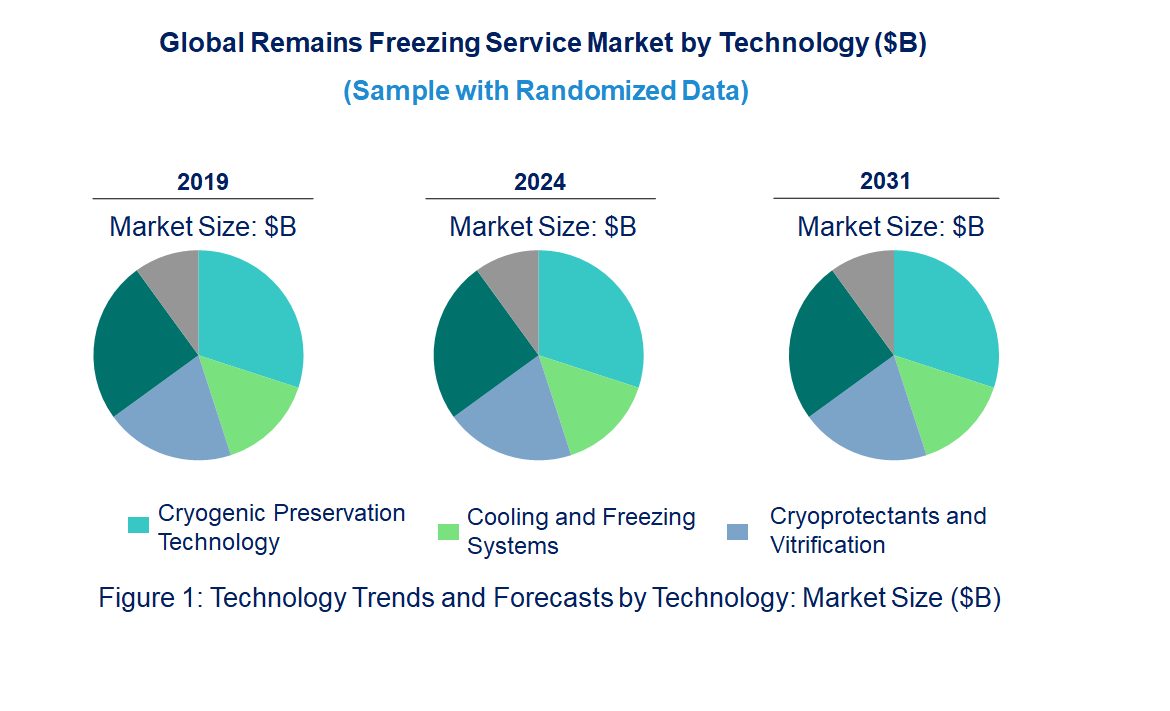
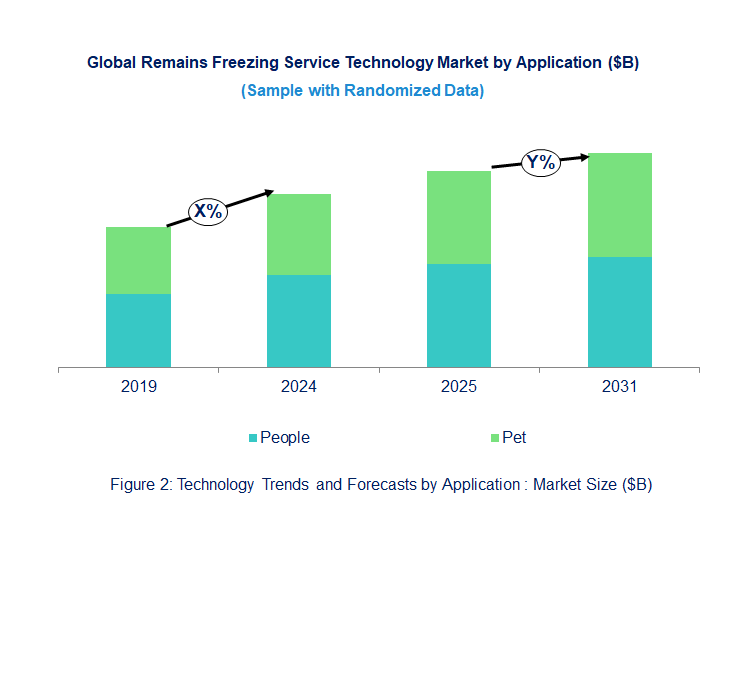
• Cryopreservation Advancements: With continuous improvements in cryogenic preservation and vitrification, more remains can be preserved with higher viability over time, leading to growing adoption of these services.
• Customizable Services for Pets: The expansion of remains freezing services beyond humans to include pets is gaining popularity, with advancements in technology allowing for more tailored preservation methods.
• Improved Cryoprotectants: Newer cryoprotectant solutions are minimizing cellular damage during the freezing process, enabling more successful preservation and thawing of remains.
• Focus on Non-Invasive Preservation Methods: Technological innovations in freezing and cooling systems are reducing the need for invasive procedures, making the preservation process safer and more ethical.
• Regulatory and Ethical Developments: As the market grows, there is increasing scrutiny over ethical concerns and regulation surrounding cryopreservation, with governments beginning to establish clearer guidelines for its use. These trends are transforming the market, as the shift toward more efficient, ethical, and customizable technologies is likely to expand the consumer base and improve the success rates of remains preservation.
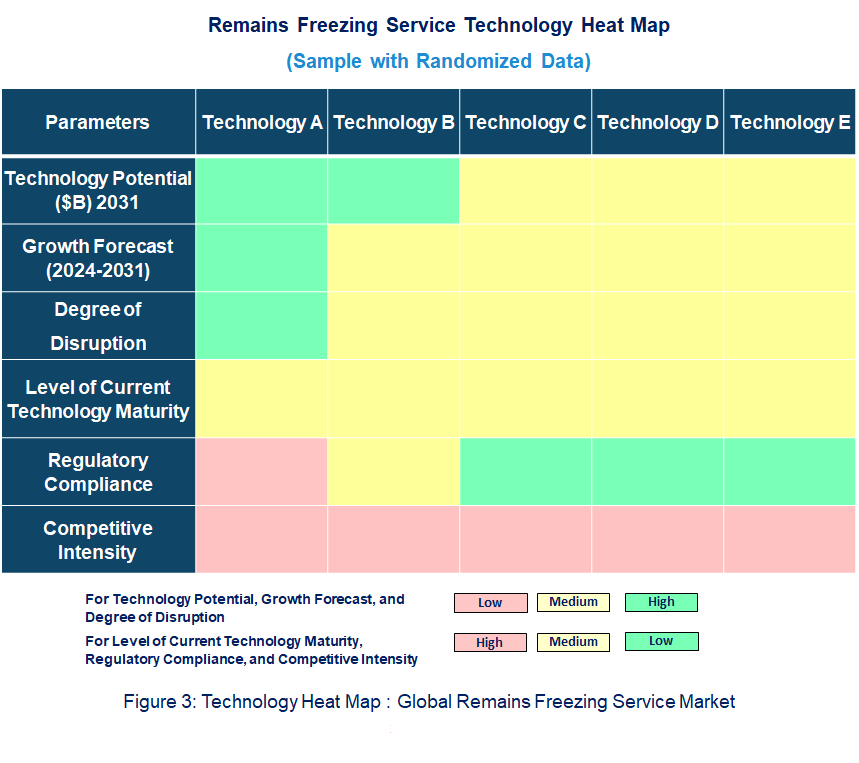
• Technology Potential: Cryogenic preservation technology has significant potential to revolutionize the way we think about life extension and death. With the continuous improvement of cryoprotectants and vitrification techniques, the technology is becoming more efficient in preserving tissue and cells without causing damage during freezing and thawing. The potential for these advancements lies in the possibility of storing biological material indefinitely, awaiting future breakthroughs in revival technology.
• Degree of Disruption: This technology has the potential to disrupt both the funeral and veterinary industries by offering alternative solutions for long-term preservation. It challenges traditional methods of body preservation, offering hope for revival in the future. However, the technology is still in early stages for human applications, with much research needed before it becomes widely accessible.
• Level of Current Technology Maturity: While the technology has matured in the preservation of small tissues and cells, large-scale applications for human or pet remains remain limited. The maturity of cryogenic preservation technologies is growing, yet challenges in long-term storage and revival processes still need to be addressed.
• Regulatory Compliance: The regulatory environment for cryonics services is complex, as many countries lack clear guidelines or acceptability for these procedures. Compliance with ethical, legal, and safety standards remains a key hurdle to widespread adoption. Cryogenic preservation holds transformative potential but faces significant technological, regulatory, and ethical challenges. As the technology matures and regulatory frameworks evolve, it could reshape how society approaches life extension and remains preservation, although widespread adoption may take time.
• Alco: Alco has been at the forefront, developing advanced cryogenic preservation methods that focus on minimizing damage to cells and tissues. Their commitment to research in cryoprotectant formulations has led to improved preservation results for both humans and pets.
• KrioRus: As one of the leading players, KrioRus has pioneered the use of modern vitrification techniques, improving the quality of preservation. Their recent expansion into the pet preservation sector is also setting new trends in the market.
• Cryonics Institute: With decades of experience, the Cryonics Institute is continuously refining its freezing technology and cryoprotectant solutions. They have a strong track record in both human and pet cryonics and are focusing on refining their processes for higher success rates.
• Shandong Yinfeng Life Science Research Institute: This institute is making notable advancements in the scientific research of cryopreservation methods, focusing on improving both the biological viability of preserved remains and the ethical considerations of the process. The continued development of these companies reflects a growing commitment to improving cryopreservation methods, which, in turn, could increase the adoption of these services for both humans and pets.
• Technological Advancements: Ongoing improvements in cryogenic preservation technologies, such as vitrification and cryoprotectants, are enhancing the quality and success rates of remains preservation, making it a more viable option for both humans and pets.
• Growing Interest in Life Extension: Increasing interest in life extension and the potential of revival through cryonics is driving more individuals to invest in remains freezing services, contributing to market expansion.
• Pet Preservation Demand: The rising trend of preserving pets through cryopreservation is creating a new consumer segment and fueling market growth, as people look for ways to extend the lives of their beloved animals.
• Improved Success Rates: Technological breakthroughs in preserving biological material have led to a higher success rate in the preservation and thawing processes, thus boosting consumer confidence and market adoption. Challenges facing the global remains freezing service market are:
• High Cost: The expensive nature of cryopreservation services remains a significant challenge, limiting their accessibility to a broader audience and hindering market penetration.
• Ethical and Legal Concerns: Ethical debates surrounding the practice of cryonics, as well as the lack of clear legal frameworks in many regions, can create hesitation and resistance toward widespread adoption.
• Regulatory Barriers: The absence of standardized regulations governing cryopreservation services across regions adds complexity and uncertainty, slowing down the global expansion of the market. The remains freezing service market is poised for growth due to advances in technology and increasing demand for life extension, particularly for pets. However, the high cost of services, ethical debates, and lack of regulatory consistency pose significant challenges. Overcoming these barriers will be crucial for the future success and acceptance of cryopreservation as a viable service.
• Alco
• Kriorus
• Cryonics Institute
• Shandong Yinfeng Life Science Research Institute
• Technology Readiness: Cryogenic preservation is the most mature technology, with operational facilities offering services for human and pet preservation. Cooling and freezing systems are well-developed, but high costs limit accessibility. Cryoprotectants and vitrification are still under research, showing promise for improved preservation but requiring further development to achieve widespread use.
• Competitive Intensity and Regulatory Compliance: The freezing service market is seeing increasing competition as companies advance cryogenic preservation and related technologies. However, the sector faces regulatory challenges as clear standards and laws are still evolving. Ethical concerns and the legal status of preserved remains also pose hurdles for wider market acceptance.
• Disruption Potential: Technologies like cryogenic preservation, cooling and freezing systems, cryoprotectants, and vitrification have the potential to radically disrupt the remains freezing service market. Cryogenic preservation allows long-term storage of bodies, while cooling systems ensure low temperatures to prevent damage. Cryoprotectants and vitrification enhance preservation by preventing ice formation, improving efficiency in biological preservation.
• Cryogenic Preservation Technology
• Cooling and Freezing Systems
• Cryoprotectants and Vitrification
• People
• Pet
• North America
• Europe
• Asia Pacific
• The Rest of the World
• Latest Developments and Innovations in the Remains Freezing Service Technologies
• Companies / Ecosystems
• Strategic Opportunities by Technology Type


Choose a license that fits your team. Instant PDF delivery.
Prices exclude taxes. Instant delivery. Custom licensing available on request.
Market Report · May 18, 2026
Market Report · May 18, 2026
Market Report · May 18, 2026
Trusted partner for strategic intelligence and business growth


Receive a complimentary market analysis tailored to your industry. Our analysts will identify key growth opportunities and competitive dynamics specific to your business.

Market size, growth rate, and key trend analysis for your specific sector.

Top competitor positioning and market share analysis.

Strategic recommendations backed by data-driven insights.
Get curated market intelligence and competitive moves straight to your inbox.
By subscribing, you agree to receive our monthly insights. Unsubscribe anytime.
Receive a complimentary market analysis tailored to your industry. Our analysts will identify key growth opportunities and competitive dynamics specific to your business.
Market size, growth rate, and key trend analysis for your specific sector.
Top competitor positioning and market share analysis.
Strategic recommendations backed by data-driven insights.
Get curated market intelligence, emerging trends, and competitive moves straight to your inbox each month.
By subscribing, you agree to receive our monthly insights. Unsubscribe anytime.
We'll send your sample report shortly.