
Market Report · July 22, 2026

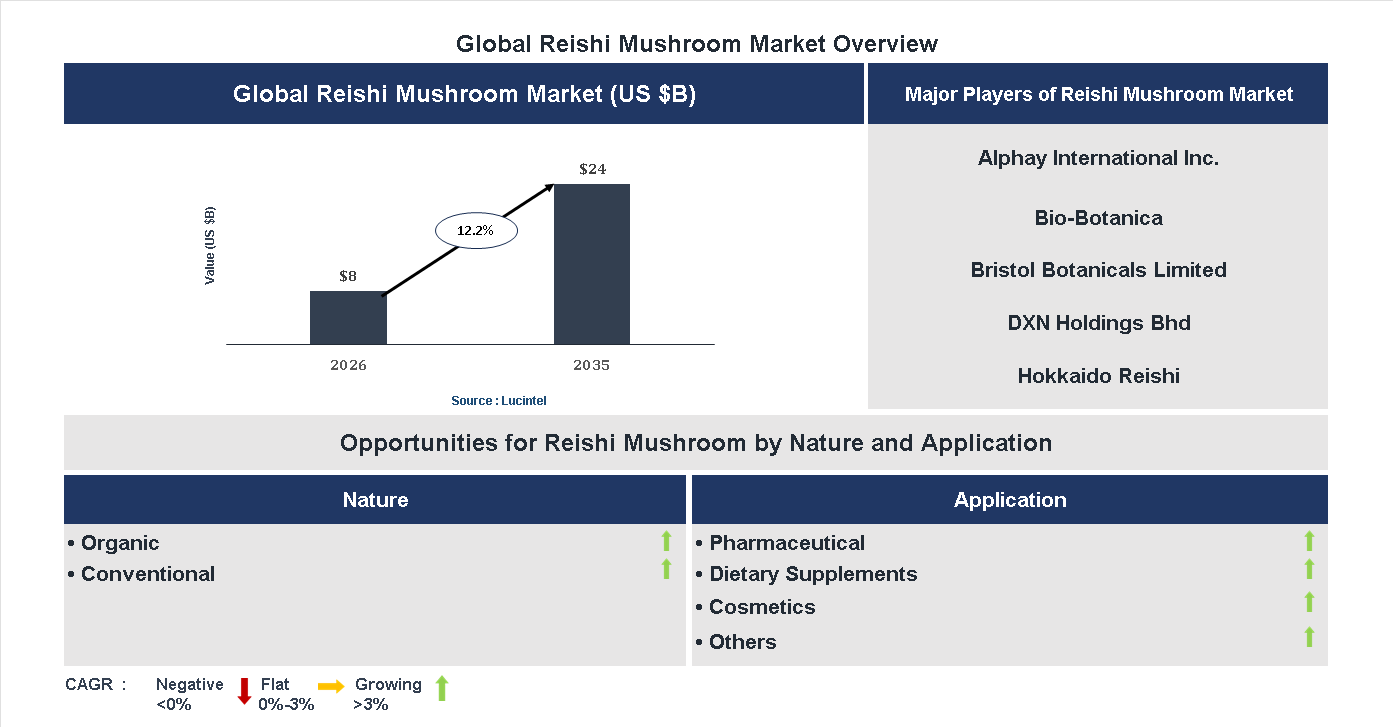
Key data points: The market size in 2035 = $24 billion, growth forecast = 12.2% annually for the next 8 years. Scroll below to get more insights. This market report covers trends, opportunities and forecasts in reishi mushroom market to 2035 by nature (organic and conventional), application (pharmaceutical, dietary supplements, cosmetics, and others), and region (North America, Europe, Asia Pacific, and the Rest of the World)
We'll send your sample report shortly.
• Lucintel forecasts that, within the nature category, conventional is expected to witness higher growth over the forecast period.
• Within the application category, dietary supplement is expected to witness the highest growth.
• In terms of region, APAC is expected to witness the highest growth over the forecast period. Gain valuable insights for your business decisions with our comprehensive 150+ page report. Sample figures with some insights are shown below.
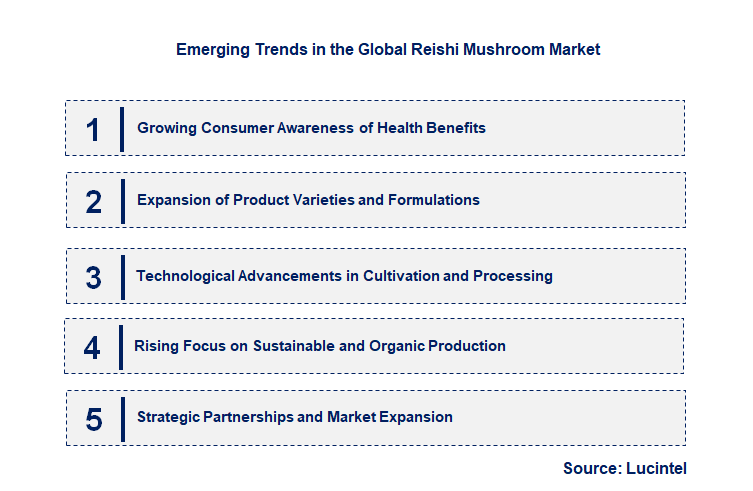
• Growing Consumer Awareness of Health Benefits: Increasing knowledge about Reishi mushrooms medicinal properties, such as immune support and stress reduction, is driving demand. Consumers are actively seeking natural supplements to improve overall health, leading to a surge in product popularity. This trend is supported by educational campaigns and scientific research, which validate health claims and boost consumer confidence. As awareness spreads, more health-conscious individuals incorporate Reishi into their wellness routines, expanding the market base and encouraging product innovation.
• Expansion of Product Varieties and Formulations: The market is witnessing diversification with new product formats like capsules, powders, teas, and extracts. This variety caters to different consumer preferences and usage occasions, making Reishi more accessible. Innovative formulations, including flavored teas and functional beverages, are also emerging, enhancing consumer appeal. This trend allows brands to target broader demographics, from traditional supplement users to modern beverage consumers, thereby increasing market penetration and sales opportunities.
• Technological Advancements in Cultivation and Processing: Modern cultivation techniques, such as controlled environment farming and organic practices, are improving yield quality and consistency. Advanced processing methods, including extraction and drying technologies, preserve bioactive compounds more effectively. These innovations ensure higher potency and purity of Reishi products, boosting consumer trust and satisfaction. Additionally, technology-driven traceability and quality assurance measures are becoming standard, reinforcing product credibility and supporting regulatory compliance.
• Rising Focus on Sustainable and Organic Production: Consumers are increasingly prioritizing eco-friendly and organic products, prompting producers to adopt sustainable cultivation practices. Organic Reishi mushrooms are gaining popularity due to their perceived health and environmental benefits. Sustainable farming methods reduce environmental impact and appeal to eco-conscious buyers. This trend encourages industry players to invest in eco-friendly infrastructure and certifications, which can serve as a competitive advantage and foster long-term market growth.
• Strategic Partnerships and Market Expansion: Companies are forming alliances with health and wellness brands, research institutions, and distribution channels to expand their reach. These collaborations facilitate product innovation, enhance credibility, and open new markets, including emerging economies. Digital marketing and e-commerce platforms are also playing a crucial role in reaching global consumers directly. Such strategic efforts are accelerating market penetration, increasing brand visibility, and fostering a more competitive landscape. These trends are collectively transforming the reishi mushroom market by enhancing product diversity, improving quality, and expanding consumer access. They are fostering innovation, sustainability, and strategic growth, positioning the industry for sustained expansion and increased consumer engagement in the coming years.
• Growing Consumer Awareness of Health Benefits: The increasing recognition of Reishi mushrooms immune-boosting, anti-inflammatory, and antioxidant properties is fueling demand. Consumers are seeking natural remedies, which has led to a surge in supplement and functional food sales. This trend is encouraging producers to innovate and expand product lines, ultimately broadening market reach and boosting sales. The heightened interest also attracts new entrants, intensifying competition and encouraging quality improvements.
• Advances in Cultivation and Processing Techniques: Innovations such as controlled environment cultivation and extraction methods have improved yield, consistency, and potency of Reishi products. These technological advancements reduce costs and enhance product quality, making Reishi more accessible and appealing to consumers. Improved processing also allows for diverse formats like powders, capsules, and teas, catering to different preferences. This progress supports market expansion and helps meet increasing global demand efficiently.
• Expansion into New Geographic Markets: Companies are targeting emerging markets in Asia, North America, and Europe to capitalize on rising health consciousness. Strategic partnerships and localized marketing efforts are facilitating market entry and growth. This geographic diversification reduces dependence on traditional markets and taps into new consumer bases. As awareness and acceptance grow, these regions are expected to become significant contributors to overall market revenue, fostering global industry development.
• Product Diversification and Innovation: The industry is witnessing a rise in innovative Reishi-based products, including beverages, skincare, and functional foods. These new offerings appeal to a broader consumer base and meet evolving health and wellness trends. Companies are investing in R&D to develop unique formulations, enhancing product differentiation. This diversification not only increases market size but also encourages brand loyalty and consumer engagement, driving sustained growth.
• Regulatory Developments and Sustainability Initiatives: Governments are establishing clearer regulations for herbal supplements, ensuring product safety and quality. Sustainability efforts, such as eco-friendly cultivation and harvesting practices, are gaining importance, appealing to environmentally conscious consumers. These initiatives improve industry credibility, foster consumer trust, and open pathways for market expansion. Compliance with regulations and sustainability standards are becoming competitive advantages, shaping a responsible and resilient industry landscape. The overall impact of these developments is a dynamic, expanding reishi mushroom market characterized by increased innovation, broader geographic reach, and heightened consumer trust. Enhanced product quality and diversified offerings are attracting a wider audience, while regulatory and sustainability efforts strengthen industry credibility. These factors collectively are driving sustained growth, increasing market competitiveness, and positioning the industry for long-term success.
• Growing Demand for Natural Health Supplements: The increasing consumer shift towards natural and organic products is boosting the Reishi mushroom market. Its recognized health benefits, including immune support and stress relief, are driving sales in nutraceuticals and functional foods. Manufacturers are capitalizing on this trend by developing innovative formulations and expanding distribution channels, which further accelerates market growth and broadens consumer access to Reishi-based products.
• Expansion of Pharmaceutical Applications: Reishi mushrooms are gaining traction in pharmaceutical research due to their bioactive compounds like polysaccharides and triterpenoids. These compounds exhibit anti-inflammatory, anti-cancer, and immune-modulating properties. Pharmaceutical companies are investing in clinical studies and product development, leading to new drug formulations and supplements. This expansion enhances the therapeutic potential of Reishi, opening new revenue streams and strengthening its position in the healthcare sector.
• Innovations in Cultivation and Processing Techniques: Advances in cultivation methods, such as controlled environment farming and substrate optimization, are increasing yield and quality. Improved processing techniques, including extraction and drying, preserve bioactive compounds more effectively. These innovations reduce costs, ensure consistent product quality, and meet regulatory standards, thereby expanding market supply. Enhanced cultivation and processing also enable producers to meet rising global demand and introduce new product formats.
• Rising Popularity in Functional Foods and Beverages: The incorporation of Reishi mushroom extracts into functional foods and beverages is gaining popularity among health-conscious consumers. Products like teas, coffees, energy drinks, and snack bars infused with Reishi are becoming mainstream. This trend offers manufacturers opportunities to innovate and diversify their product portfolios, tapping into the growing wellness market. The convenience and perceived health benefits of these products are expected to drive further market penetration.
• Strategic Collaborations and Product Diversification: Companies are forming strategic alliances with research institutions and health organizations to develop new Reishi-based products. Diversification into various formats such as capsules, powders, extracts, and skincare products broadens market reach. These collaborations facilitate innovation, improve credibility, and expand distribution networks. As a result, the market benefits from increased consumer trust and product availability, fostering sustained growth and competitive advantage across regions. The overall impact of these opportunities is a robust expansion of the reishi mushroom market, driven by innovation, consumer demand, and strategic industry initiatives. This growth will enhance product diversity, improve quality standards, and expand global reach, ultimately benefiting consumers seeking natural health solutions and strengthening the market’s long-term sustainability.
• Increasing Consumer Awareness of Health Benefits: Growing knowledge about Reishi mushrooms immune-boosting, anti-inflammatory, and anti-cancer properties has significantly increased consumer interest. This awareness, fueled by scientific research and marketing efforts, has led to higher demand for dietary supplements, functional foods, and herbal products containing Reishi. As consumers seek natural alternatives to pharmaceuticals, the market benefits from expanding customer bases across health-conscious demographics. This trend is expected to continue as more research validates health claims, further boosting market growth.
• Technological Advancements in Cultivation and Processing: Innovations in mushroom cultivation, such as controlled environment farming and organic growing methods, have improved yield quality and consistency. Advanced extraction and drying techniques preserve bioactive compounds, enhancing product efficacy. These technological improvements reduce production costs and enable the creation of diverse product formats like capsules, powders, and teas. As a result, manufacturers can meet increasing demand efficiently, expand product portfolios, and enter new markets, thereby fueling overall market expansion.
• Growing Popularity of Natural and Herbal Supplements: The global shift towards holistic health and wellness has increased consumer preference for natural remedies over synthetic drugs. Reishi mushrooms, recognized for their medicinal properties, are increasingly incorporated into herbal supplements, teas, and functional foods. This trend is driven by a desire for preventive healthcare and lifestyle management. The rising acceptance of plant-based products and the influence of traditional medicine systems like Traditional Chinese Medicine (TCM) further support this growth, making Reishi a key ingredient in the expanding natural supplement industry.
• Regulatory Developments and Standardization Efforts: Governments and industry bodies are working to establish clear standards and regulations for herbal and dietary supplements, including Reishi products. These efforts aim to ensure product safety, quality, and efficacy, which build consumer trust and facilitate international trade. Compliance with regulatory standards can also open new markets and attract investment. However, navigating diverse regulatory landscapes remains complex, requiring ongoing adaptation by manufacturers to meet evolving legal requirements, which influences market dynamics.
• Increasing Investment and Market Expansion in Emerging Regions: Emerging markets in Asia-Pacific, Latin America, and Africa are witnessing increased investments in herbal medicine and natural health products. Rising disposable incomes, urbanization, and a growing middle class contribute to expanding consumer bases. Local cultivation initiatives and government support further boost regional supply chains. These developments enable market players to tap into new customer segments, diversify revenue streams, and accelerate global market penetration, thereby supporting overall industry growth. The challenges facing this Market include:
• Regulatory Uncertainties and Compliance Complexities: The herbal supplement industry faces inconsistent regulations across different countries, with varying standards for safety, efficacy, and labeling. This creates barriers to market entry, increases compliance costs, and risks product recalls or bans. Manufacturers must invest in extensive testing and certification processes to meet diverse legal requirements, which can delay product launches and reduce profit margins. Regulatory uncertainties also hinder long-term planning and investment, posing significant challenges to sustained growth and international expansion.
• Supply Chain Disruptions and Raw Material Availability: The cultivation of Reishi mushrooms depends on specific environmental conditions, and supply chain disruptions—due to climate change, pandemics, or logistical issues—can impact raw material availability. Fluctuations in supply can lead to price volatility and product shortages, affecting production schedules and revenue. Additionally, inconsistent quality of raw materials from different sources complicates quality assurance processes. These supply chain challenges threaten the stability and scalability of the market, requiring strategic sourcing and inventory management.
• Market Saturation and Intense Competition: As the popularity of Reishi mushrooms grows, numerous players have entered the market, leading to increased competition. Many products are similar in formulation and branding, making differentiation difficult. Price wars and marketing battles can erode profit margins and hinder innovation. Moreover, counterfeit or substandard products pose risks to consumer trust and brand reputation. To sustain growth, companies must invest in branding, quality assurance, and product innovation, which can be resource-intensive in a crowded marketplace. The reishi mushroom market is driven by technological innovations, rising health consciousness, and expanding regional markets, which collectively foster growth opportunities. However, regulatory hurdles, supply chain issues, and intense competition present significant challenges that could impede progress. Navigating these factors requires strategic planning, investment in quality and compliance, and continuous innovation. Overall, the markets future hinges on balancing these drivers and challenges to capitalize on the increasing global demand for natural health solutions.
• Alphay International Inc.
• Bio-Botanica
• Bristol Botanicals Limited
• DXN Holdings Bhd
• Hokkaido Reishi
• Mushroom Science
• Nammex (North American Medicinal Mushroom Extracts)
• Hokkaido Reishi Co.
• Mushroom Science
• Oriveda BV Inc.
• Organic
• Conventional
• Pharmaceutical
• Dietary Supplements
• Cosmetics
• Others
• North America
• Europe
• Asia Pacific
• The Rest of the World
• United States: The U.S. market has seen a surge in organic Reish products, with increased consumer interest in immune health and wellness supplements. Major companies are investing in research to validate health claims, leading to innovative product formulations such as extracts, capsules, and teas. E-commerce platforms have expanded access, and regulatory agencies are working to standardize quality controls, boosting consumer confidence. Additionally, partnerships between biotech firms and herbal supplement brands are fostering new product development, positioning the U.S. as a key player in global Reishi mushroom innovation.
• China: As the birthplace of Reishi, China continues to dominate production and export. Recent developments include the adoption of advanced cultivation techniques to improve yield and quality, alongside government initiatives promoting traditional medicine. Domestic consumption is rising, driven by increasing awareness of Reishi’s health benefits. Chinese companies are also investing in research to explore new medicinal applications, and there is a growing trend of integrating Reishi into functional foods and beverages. Export markets are expanding, with China strengthening its position as a leading supplier globally.
• Germany: Germany has seen a growing interest in natural and holistic health solutions, fueling demand for Reishi products. The market is characterized by a focus on high-quality, sustainably sourced products, with strict adherence to European Union regulations. German companies are conducting clinical studies to substantiate health claims, enhancing credibility. There is also a trend toward incorporating Reishi into dietary supplements, skincare, and functional foods. Retail channels such as health stores and pharmacies are expanding their offerings, and collaborations with research institutions are advancing scientific understanding of Reishi’s benefits.
• India: The Indian market is witnessing increasing awareness of traditional herbal remedies, including Reishi mushrooms. Local cultivation is expanding, supported by government initiatives promoting organic farming and herbal medicine. Entrepreneurs are developing herbal supplements and teas targeting wellness and immunity. The integration of Reishi into Ayurveda and other traditional systems is gaining traction, with startups focusing on organic and sustainable sourcing. Market growth is also driven by rising health consciousness among consumers and the entry of international brands into the Indian herbal supplement sector.
• Japan: Japan has a long history of using medicinal mushrooms, and Reishi remains a popular component of traditional health practices. Recent developments include scientific research validating Reishi’s immune-boosting properties, leading to increased product innovation. Japanese companies are producing high-quality extracts, capsules, and functional foods, emphasizing purity and efficacy. The market is also influenced by aging demographics seeking health maintenance solutions. Regulatory standards are strict, ensuring product safety and quality. Collaborations between academia and industry are fostering new discoveries, positioning Japan as a leader in medicinal mushroom research and application.


• Alphay International Inc.
• Bio-Botanica
• Bristol Botanicals Limited
• DXN Holdings Bhd
• Hokkaido Reishi
• Mushroom Science
• Nammex (North American Medicinal Mushroom Extracts)
• Hokkaido Reishi Co.
• Mushroom Science
• Oriveda BV Inc. Q6. Which reishi mushroom market segment will be the largest in future? Answer: Lucintel forecasts that, within the nature category, conventional is expected to witness higher growth over the forecast period. Q7. In reishi mushroom market, which region is expected to be the largest in next 5 years? Answer: In terms of region, APAC is expected to witness the highest growth over the forecast period. Q8. Do we receive customization in this report? Answer: Yes, Lucintel provides 10% customization without any additional cost.


Choose a license that fits your team. Instant PDF delivery.
Prices exclude taxes. Instant delivery. Custom licensing available on request.
Market Report · July 22, 2026
Market Report · July 22, 2026
Market Report · July 22, 2026
Trusted partner for strategic intelligence and business growth


Receive a complimentary market analysis tailored to your industry. Our analysts will identify key growth opportunities and competitive dynamics specific to your business.

Market size, growth rate, and key trend analysis for your specific sector.

Top competitor positioning and market share analysis.

Strategic recommendations backed by data-driven insights.
Get curated market intelligence and competitive moves straight to your inbox.
By subscribing, you agree to receive our monthly insights. Unsubscribe anytime.
Receive a complimentary market analysis tailored to your industry. Our analysts will identify key growth opportunities and competitive dynamics specific to your business.
Market size, growth rate, and key trend analysis for your specific sector.
Top competitor positioning and market share analysis.
Strategic recommendations backed by data-driven insights.
Get curated market intelligence, emerging trends, and competitive moves straight to your inbox each month.
By subscribing, you agree to receive our monthly insights. Unsubscribe anytime.
We'll send your sample report shortly.