
Market Report · May 18, 2026

This market report covers trends, opportunities, and forecasts in the global regenerative frequency inverter market to 2031 by technology (digital and simulation), application (industrial motor control, renewable energy systems, automobile, and others), and region (North America, Europe, Asia Pacific, and the Rest of the World)
We'll send your sample report shortly.
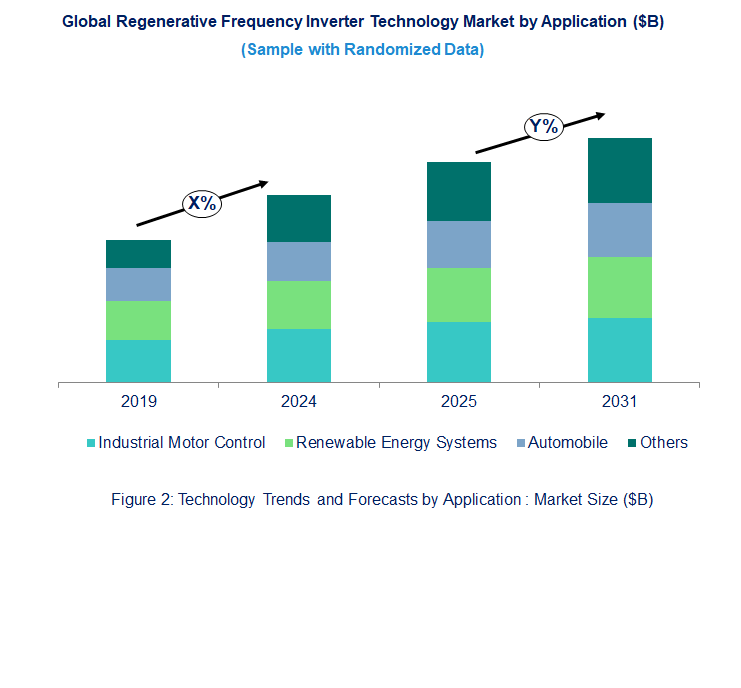
• Shift to Silicon Carbide (SiC) and Gallium Nitride (GaN) Components: The transition from traditional silicon (Si) inverters to SiC and GaN components offers higher efficiency, greater power density, and superior thermal performance, leading to reduced energy losses and operational costs.
• Advanced Digital Control and Artificial Intelligence Integration: Incorporating AI and advanced digital control algorithms enhances system responsiveness, predictive maintenance, and real-time operational optimization, ensuring more reliable and efficient inverter performance.
• Focus on Energy Recovery and Sustainability: Regenerative inverters are increasingly designed with energy recovery mechanisms to capture and reuse energy during deceleration, thereby improving overall system efficiency and reducing waste.
• Compact and Modular Designs: The development of compact and modular inverter designs ensures easier integration into industrial systems and renewable energy installations, saving space while maintaining high performance and scalability.
• Enhanced Communication and Smart Grid Integration: Modern regenerative frequency inverters now come equipped with advanced communication protocols and smart grid compatibility, enabling seamless integration, remote monitoring, and real-time control across distributed energy networks. These emerging trends are reshaping the regenerative frequency inverter technology market by focusing on higher efficiency, sustainability, and integration with smart industrial and energy systems. Innovations in materials like SiC and GaN, coupled with AI-driven control and energy recovery technologies, are driving eco-friendly, cost-effective, and scalable solutions across various applications in industries, energy, and transportation sectors.
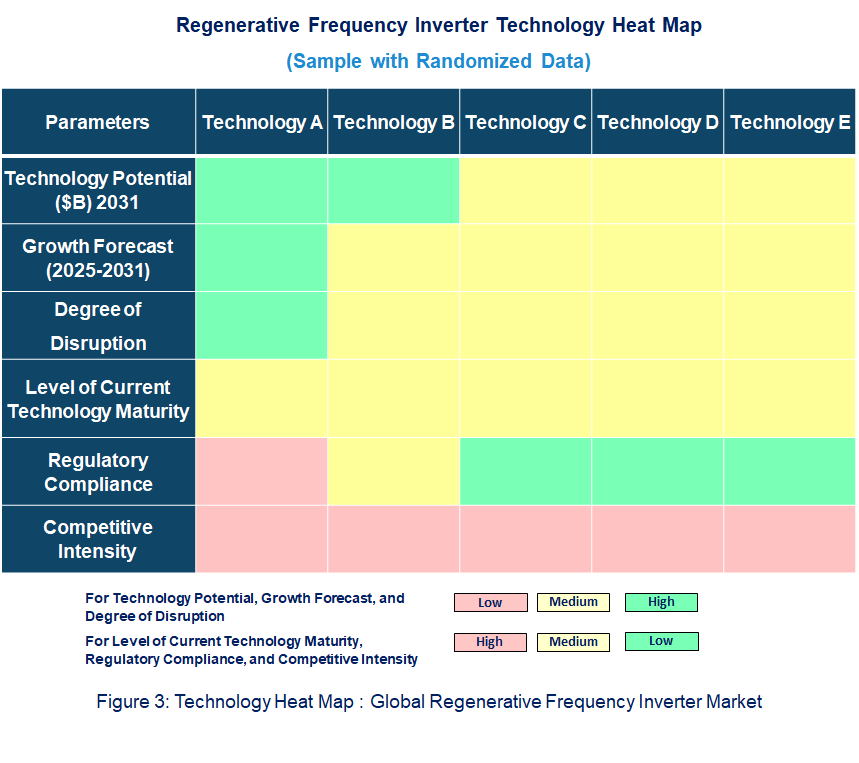
• Technology Potential: The technology offers substantial potential for energy savings and environmental benefits by efficiently converting and reusing energy during deceleration. Integration of silicon carbide (SiC) and gallium nitride (GaN) components enhances performance, offering higher efficiency and reduced losses.
• Degree of Disruption: The market is witnessing disruption with the shift from traditional silicon-based inverters to SiC and GaN technologies, which provide better thermal efficiency and higher power density. Additionally, advanced control algorithms and AI integration improve predictive maintenance and operational optimization.
• Level of Current Technology Maturity: Current technology maturity is well-established for silicon-based regenerative inverters, but significant progress is seen with SiC and GaN integration. Digital control and communication protocols are mature enough to be integrated into the smart grid and industrial applications.
• Regulatory Compliance: Regenerative inverters comply with stringent global energy efficiency and safety standards, such as IEC, ISO, and IEEE regulations. Compliance ensures operational integrity, energy performance, and adherence to environmental and sustainability guidelines.
• Bosch Rexroth: It has made notable strides in regenerative frequency inverter technology with their IndraDrive series. The company has integrated cutting-edge regenerative technology into its industrial drives, providing improved energy efficiency and reducing overall operational costs for industries like manufacturing, automotive, and robotics. Bosch’s development emphasizes high-performance energy recovery systems that significantly reduce energy consumption, enhance process reliability, and minimize environmental impact. This advancement not only offers savings on energy costs but also contributes to sustainable industrial operations.
• Mitsubishi Automation: It continues to lead the way with its FR-F800 Series of regenerative frequency inverters. These inverters are designed to provide higher energy savings by recuperating energy and feeding it back into the system, enabling more efficient power management across manufacturing lines and conveyor systems. Mitsubishi’s latest advancements include enhanced connectivity options, allowing for seamless integration into Industry 4.0 environments. This makes it easier for users to monitor energy usage in real-time, optimize operations, and reduce energy waste.
• Beijer Electronics: It has recently expanded its regenerative frequency inverter offerings with the introduction of the iXON Cloud-based monitoring system. By combining their frequency inverters with IoT capabilities, Beijer has revolutionized how energy data is collected and managed. This integration with IoT allows users to track and control regenerative energy recovery remotely. The development makes Beijer Electronics’ inverters more adaptable to modern, digitalized production environments, and offers companies enhanced energy efficiency, predictive maintenance, and operational transparency through cloud-based insights.
• Lenze SE: It has focused on the development of high-performance regenerative inverters that support its smart motor control solutions. Lenze’s latest regenerative frequency inverters are built to work seamlessly with their automation solutions, reducing energy consumption by recovering energy during braking processes and reusing it. Lenze has implemented an easy-to-use interface and cloud connectivity that facilitates data-driven decisions
• Silicon Carbide (SiC) and Gallium Nitride (GaN) Components integration: The change to SiC and GaN components shows more efficiency, higher power density, and improved thermal performance. These all contribute to reduced energy losses and operational costs for industrial and renewable energy applications.
• Advanced Integration of AI and Digital Control With the incorporation of AI-driven digital control algorithms, predictive maintenance and real-time optimization, together with system adaptability, are improved, which ensures better performance, fewer breakdowns, and efficient recovery of energy during braking.
• Energy Recovery Mechanism for Sustainability Advanced energy recovery systems are present in the regenerative inverters, which capture deceleration energy and reuse it within the system. This minimizes waste and improves energy efficiency to support environmentally friendly operations in manufacturing and transport.
• Smart Grid and Connectivity Integration Regenerative inverters are being integrated with IoT and advanced communication protocols to ensure smooth integration with smart grids and real-time monitoring for optimized operations and better energy management. Challenge
• Emphasis on Environmental and Safety Compliance Compliance with global standards such as IEC, ISO, and IEEE ensures system reliability, safety, and environmental responsibility. This ensures stronger market acceptance and boosts demand in industrial and energy sectors. The growth opportunities are reshaping the market for regenerative frequency inverters through energy efficiency, sustainability, and optimal performance. Technological drivers such as SiC and GaN integration, smart controls, and energy recovery mechanisms ensure cost savings and scalability while serving as an environment-friendly technology in various industries and applications.
• Bosch
• Mitsubishi Automation
• Beijer Electronics
• Lenze SE
• Siemens Safety Integrated
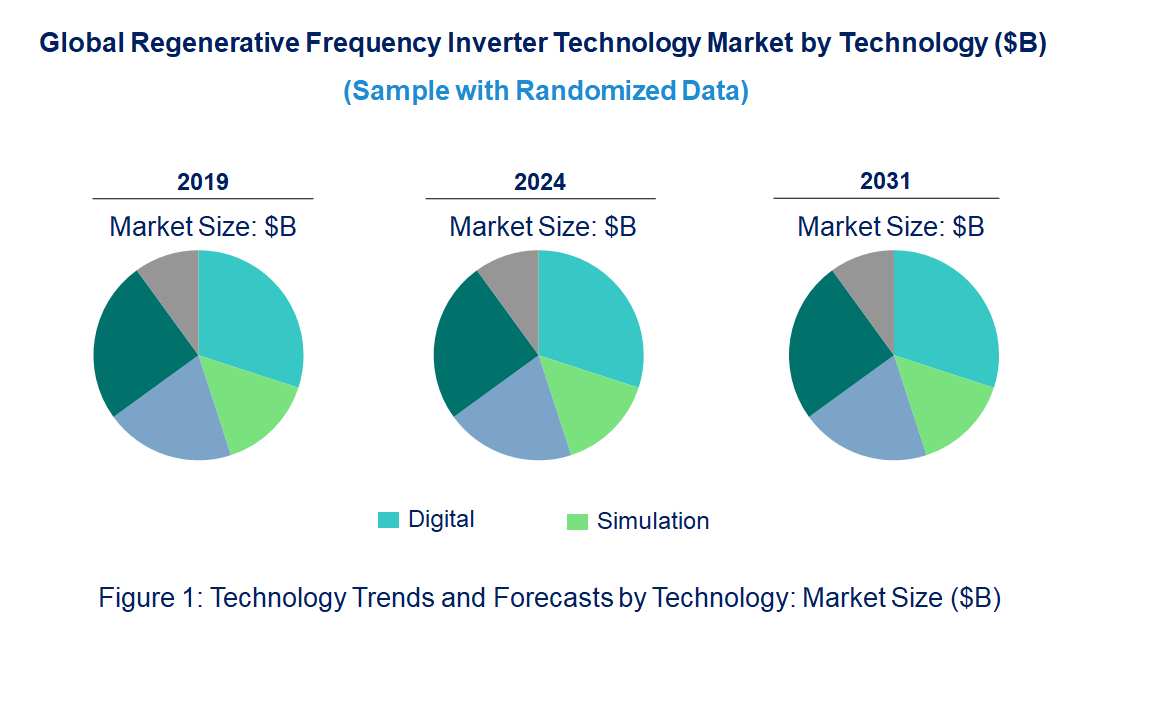
• Technology Readiness by Technology Type: Digital technology in regenerative frequency inverters is mature, with advanced control algorithms with real-time diagnostics, and AI integration already found in many industrial applications to enable efficient energy recovery and predictive maintenance through the smart interfaces. Simulation technology is also being developed. Robust tools are available for modeling, testing, and validating system performance before implementation. Engineers can use simulation software to optimize inverter design, reduce energy losses, and cut operational costs. Digital technology is widely applicable in smart factories, renewable energy plants, and transportation systems, ensuring real-time monitoring and control. Simulation technology finds applications in research and development, product design validation, and system performance optimization. The two technologies contribute to scaling up operations and integrating regenerative inverters with smart grids. Digital interfaces allow for seamless communication and control across industrial networks, enhancing system reliability. Simulation tools help detect any issues long before they impact operations, thus making systems perform for longer periods. Companies prefer digital upgrades and simulation validation to meet environmental and safety compliance requirements. These technologies drive innovation, efficiency, and cost savings in most sectors. Harness digital and simulation tools for enhanced competitiveness while deploying sustainable and scalable inverter technologies.
• Competitive Intensity and Regulatory Compliance of Various Technologies: Competitive intensity is relatively high for digital and simulation technologies since several companies seek to incorporate real-time control and predictive maintenance features. Advanced control interfaces and real-time integration of data are some of the features offered by digital technology, ensuring better operational efficiency. Simulation tools, on the other hand, enable design optimization and cost reduction by predicting potential issues early. The demand for these technologies is driven by the need for performance reliability, energy efficiency, and scalability. Regulatory compliance plays a crucial role, with digital and simulation tools adhering to global safety and environmental standards like IEC, ISO, and IEEE. Companies need to meet stringent performance criteria and environmental standards to compete in international markets. Compliance with these standards ensures that the products are safe, systems are reliable, and the environment is sustainable. The competitive players spend heavily on R&D to include the latest digital control algorithms and simulation validation. As the technologies advance, they can be easily integrated into smart grids and IoT platforms. Compliance with global compliance standards enhances brand reputation and market trust. Companies that focus on excellence in digital integration and simulation-based validation thereby ensure long-term market dominance through competitive advantage.
• Disruption Potential by Technology Type: Digital and simulation technologies have high disruption potential in the regenerative frequency inverter market. Digital technology allows for real-time control, adaptive algorithms, and integration of AI, which enhances efficiency and predictive maintenance. Simulation tools allow engineers to model and optimize inverter performance before deployment, reducing costs. Both technologies enable more sophisticated energy recovery methods, improve operational scalability, and reduce downtime through predictive diagnostics. Simulation-based validation integration accelerates development cycles and results in quick adaptability. The convergence of digital technology and simulation promotes seamless system integration across industrial applications. In short, these technologies foster innovation, minimize environmental impact, and ensure adherence to performance and safety standards. They bring significant improvements in the areas of energy efficiency, scalability, and sustainability. As operation reliability is raised in a particular industry, these two technologies become an absolute must. Its implementation ensures smarter, data-driven decision-making and optimized energy recovery. Ultimately, these tools promote market competitiveness through the improvement of product performance and reduced costs.
• Digital
• Simulation
• Industrial Motor Control
• Renewable Energy Systems
• Automobile
• Others
• North America
• Europe
• Asia Pacific
• The Rest of the World
• Latest Developments and Innovations in the Regenerative Frequency Inverter Technologies
• Companies / Ecosystems
• Strategic Opportunities by Technology Type


Choose a license that fits your team. Instant PDF delivery.
Prices exclude taxes. Instant delivery. Custom licensing available on request.
Market Report · May 18, 2026
Market Report · May 18, 2026
Market Report · May 18, 2026
Trusted partner for strategic intelligence and business growth


Receive a complimentary market analysis tailored to your industry. Our analysts will identify key growth opportunities and competitive dynamics specific to your business.

Market size, growth rate, and key trend analysis for your specific sector.

Top competitor positioning and market share analysis.

Strategic recommendations backed by data-driven insights.
Get curated market intelligence and competitive moves straight to your inbox.
By subscribing, you agree to receive our monthly insights. Unsubscribe anytime.
Receive a complimentary market analysis tailored to your industry. Our analysts will identify key growth opportunities and competitive dynamics specific to your business.
Market size, growth rate, and key trend analysis for your specific sector.
Top competitor positioning and market share analysis.
Strategic recommendations backed by data-driven insights.
Get curated market intelligence, emerging trends, and competitive moves straight to your inbox each month.
By subscribing, you agree to receive our monthly insights. Unsubscribe anytime.
We'll send your sample report shortly.