
Market Report · July 29, 2026

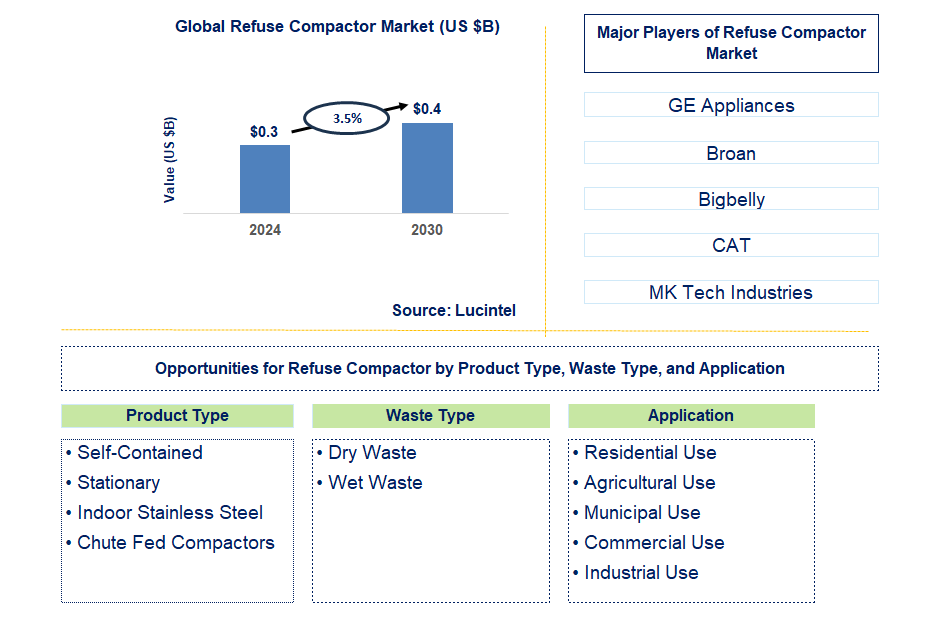
Key data points: The market size in 2030 = $0.4 billion, growth forecast = 3.5% annually next 6 years. Scroll below to get more insights. This market report covers trends, opportunities, and forecast in the global refuse compactor market to 2030 by product type (self-contained, stationary, indoor stainless steel, and chute fed compactors), waste type (dry waste and wet waste), application (residential use, agricultural use, municipal use, commercial use, and industrial use), and region (North America, Europe, Asia Pacific, and the Rest of the World)
We'll send your sample report shortly.
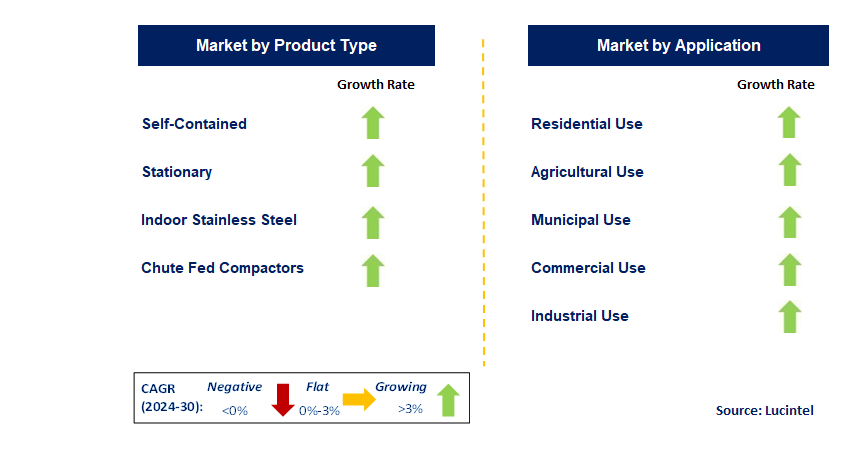
• Lucintel forecasts that stationary will remain the largest segment over the forecast period because it is commonly deployed in commercial and industrial environments, securely anchored to a fixed location, these compactors are generally larger than their portable counterparts capable of compressing waste at rates of up to 150 pounds per cubic yard, as well as tend to come with a higher price tag, making them more suitable choice for businesses that produce substantial daily waste volumes.
• Within this market, commercial use will remain the largest segment over the forecast period because it concentrates on assessing the current status of each application, highlighting the significance of key application values, measuring market share, and evaluating economic growth, as well as rising urbanization in developed economies.
• APAC will remain the largest region over the forecast period due to swift urbanization and surge in construction endeavors particularly in emerging nations like China and India that led to increasing demand for consumer appliances, including compactors in this region. A more than 150-page report is developed to help in your business decisions.
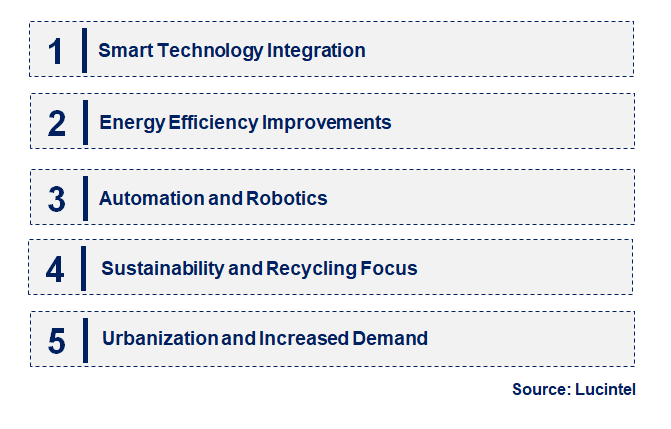
• Smart Technology Integration: Increasing use of IoT and sensors in refuse compactors for real-time data monitoring and management. This trend enhances operational efficiency and enables predictive maintenance, reducing downtime and operational costs.
• Energy Efficiency Improvements: Development of more energy-efficient compaction systems that reduce power consumption and operational costs. This trend supports environmental sustainability by minimizing the carbon footprint of waste management operations.
• Automation and Robotics: Adoption of automated and robotic systems for waste sorting and compaction. These technologies increase efficiency and accuracy, handling diverse waste types and improving overall processing performance.
• Sustainability and Recycling Focus: Enhanced focus on designing compactors that support recycling and waste segregation. This trend aligns with global sustainability goals and regulatory requirements, promoting better waste management practices.
• Urbanization and Increased Demand: Growing urbanization is driving demand for more efficient and scalable refuse compactors. This trend reflects the need for advanced waste management solutions to cope with rising waste volumes in expanding cities. These trends are reshaping the refuse compactor market by driving technological innovation, improving efficiency, and aligning with sustainability goals. As a result, the market is moving towards more advanced, eco-friendly solutions that meet evolving urban waste management needs.
• Advanced Compaction Technology: Introduction of more efficient compaction systems that enhance waste density and reduce transportation costs. These technologies improve the overall effectiveness of waste management operations.
• Smart Refuse Compactors: Deployment of smart compactors equipped with IoT and sensors for real-time monitoring and management. This development helps in optimizing collection schedules and improving operational efficiency.
• Energy-Efficient Designs: Development of compactors with improved energy efficiency to reduce power consumption and lower operational costs. This trend supports environmental sustainability and aligns with regulatory standards.
• Automated Waste Handling: Integration of automation and robotics for sorting and processing waste. These systems enhance the speed and accuracy of waste handling, addressing diverse waste types more effectively.
• Enhanced Durability and Reliability: Advances in materials and engineering have led to more durable and reliable refuse compactors. This development addresses the need for robust equipment capable of handling various waste conditions. These developments are significantly impacting the refuse compactor market by improving efficiency, sustainability, and operational effectiveness. They reflect a shift towards more advanced and environmentally friendly waste management solutions.
• Urban Waste Management: Expanding refuse compactor use in growing urban areas to manage increasing waste volumes. This opportunity aligns with urbanization trends and addresses the need for efficient waste management solutions.
• Smart Compaction Solutions: Growth in demand for smart compactors equipped with IoT for real-time monitoring and management. This opportunity focuses on improving operational efficiency and data-driven decision-making.
• Energy-Efficient Technologies: Developing and offering compactors with enhanced energy efficiency to meet sustainability goals. This opportunity supports environmental compliance and reduces operational costs.
• Recycling and Waste Segregation: Designing compactors that facilitate better waste segregation and recycling. This opportunity aligns with global sustainability initiatives and regulatory requirements.
• Automated Waste Handling Systems: Implementing automated and robotic systems for waste sorting and processing. This opportunity enhances the efficiency and accuracy of waste management operations. These strategic growth opportunities highlight areas for market expansion and technological advancement. They reflect the industry's shift towards more efficient, sustainable, and technologically advanced waste management solutions.
• Technological Advancements: Innovations in compaction technology and smart systems enhance efficiency and effectiveness. This driver supports improved waste management and operational performance.
• Regulatory Compliance: Increasing regulations on waste management and environmental impact drive the adoption of advanced compaction solutions. Compliance with these regulations is crucial for market growth.
• Urbanization: Growing urban areas increase demand for efficient waste management solutions, including refuse compactors. This driver reflects the need for scalable and effective waste handling technologies.
• Sustainability Goals: Emphasis on sustainability and recycling drives the development of eco-friendly refuse compactors. This driver aligns with global environmental initiatives and market expectations.
• Cost Efficiency: The need to reduce operational costs and improve waste processing efficiency promotes the adoption of advanced compaction technologies. This driver supports economic and operational benefits. Challenges in the refuse compactor market are:
• High Initial Costs: The upfront investment in advanced refuse compactors can be a barrier for some markets. High costs may limit adoption, particularly in developing regions. Maintenance and Repair Costs: Ongoing maintenance and repair requirements can impact operational efficiency and cost-effectiveness. This challenge necessitates effective support and service strategies.
• Regulatory Complexity: Navigating varying regulatory requirements across regions can be challenging. Compliance with diverse regulations adds complexity to market operations and expansion.
• GE Appliances
• Broan
• Bigbelly
• CAT
• MK Tech Industries
• Precision Machinery Systems
• Genesis Waste Handling Private
• Electrolux Icon
• Whirlpool
• Self-Contained
• Stationary
• Indoor Stainless Steel
• Chute Fed Compactors
• Dry Waste
• Wet Waste
• Residential Use
• Agricultural Use
• Municipal Use
• Commercial Use
• Industrial Use
• North America
• Europe
• Asia Pacific
• The Rest of the World
• United States: In the U.S., refuse compactors are increasingly incorporating advanced technologies like IoT for remote monitoring and smart operation. There is a focus on enhancing energy efficiency and compliance with stricter environmental regulations, improving overall waste management effectiveness.
• China: China has seen rapid adoption of refuse compactors due to urban expansion and heightened environmental concerns. Recent advancements include improved compaction mechanisms and integration of smart technologies to optimize waste collection and processing, reflecting the country's push towards sustainable waste management.
• Germany: Germany's refuse compactor market is advancing with innovations in waste segregation and automated compaction systems. Emphasis on recycling and sustainability is driving the development of more efficient, eco-friendly compactors that align with Germany's stringent waste management policies.
• India: In India, the focus has been on expanding refuse compactor usage in urban areas to handle increasing waste volumes. Developments include cost-effective compaction solutions and enhanced durability to cope with diverse waste types, addressing the country's growing waste management challenges.
• Japan: Japan is leveraging its technological expertise to enhance refuse compactors with advanced features such as automated sorting and real-time monitoring. These innovations are aimed at improving waste processing efficiency and supporting Japan's commitment to high recycling rates and waste minimization.


• GE Appliances
• Broan
• Bigbelly
• CAT
• MK Tech Industries
• Precision Machinery Systems
• Genesis Waste Handling Private
• Electrolux Icon
• Whirlpool Q6. Which refuse compactor market segment will be the largest in future? Answer: Lucintel forecasts that stationary will remain the largest segment over the forecast period due to it is commonly deployed in commercial and industrial environments, securely anchored to a fixed location, these compactors are generally larger than their portable counterparts capable of compressing waste at rates of up to 150 pounds per cubic yard, as well as tend to come with a higher price tag, making them more suitable choice for businesses that produce substantial daily waste volumes. Q7. In refuse compactor market, which region is expected to be the largest in next 5 years? Answer: APAC will remain the largest region over the forecast period due to swift urbanization and surge in construction endeavors particularly in emerging nations like China and India that led to increasing demand for consumer appliances, including compactors in this region. Q.8 Do we receive customization in this report? Answer: Yes, Lucintel provides 10% customization without any additional cost.


Choose a license that fits your team. Instant PDF delivery.
Prices exclude taxes. Instant delivery. Custom licensing available on request.
Market Report · July 29, 2026
Market Report · July 20, 2026
Market Report · July 20, 2026
Trusted partner for strategic intelligence and business growth


Receive a complimentary market analysis tailored to your industry. Our analysts will identify key growth opportunities and competitive dynamics specific to your business.

Market size, growth rate, and key trend analysis for your specific sector.

Top competitor positioning and market share analysis.

Strategic recommendations backed by data-driven insights.
Get curated market intelligence and competitive moves straight to your inbox.
By subscribing, you agree to receive our monthly insights. Unsubscribe anytime.
Receive a complimentary market analysis tailored to your industry. Our analysts will identify key growth opportunities and competitive dynamics specific to your business.
Market size, growth rate, and key trend analysis for your specific sector.
Top competitor positioning and market share analysis.
Strategic recommendations backed by data-driven insights.
Get curated market intelligence, emerging trends, and competitive moves straight to your inbox each month.
By subscribing, you agree to receive our monthly insights. Unsubscribe anytime.
We'll send your sample report shortly.