
Market Report · July 15, 2026

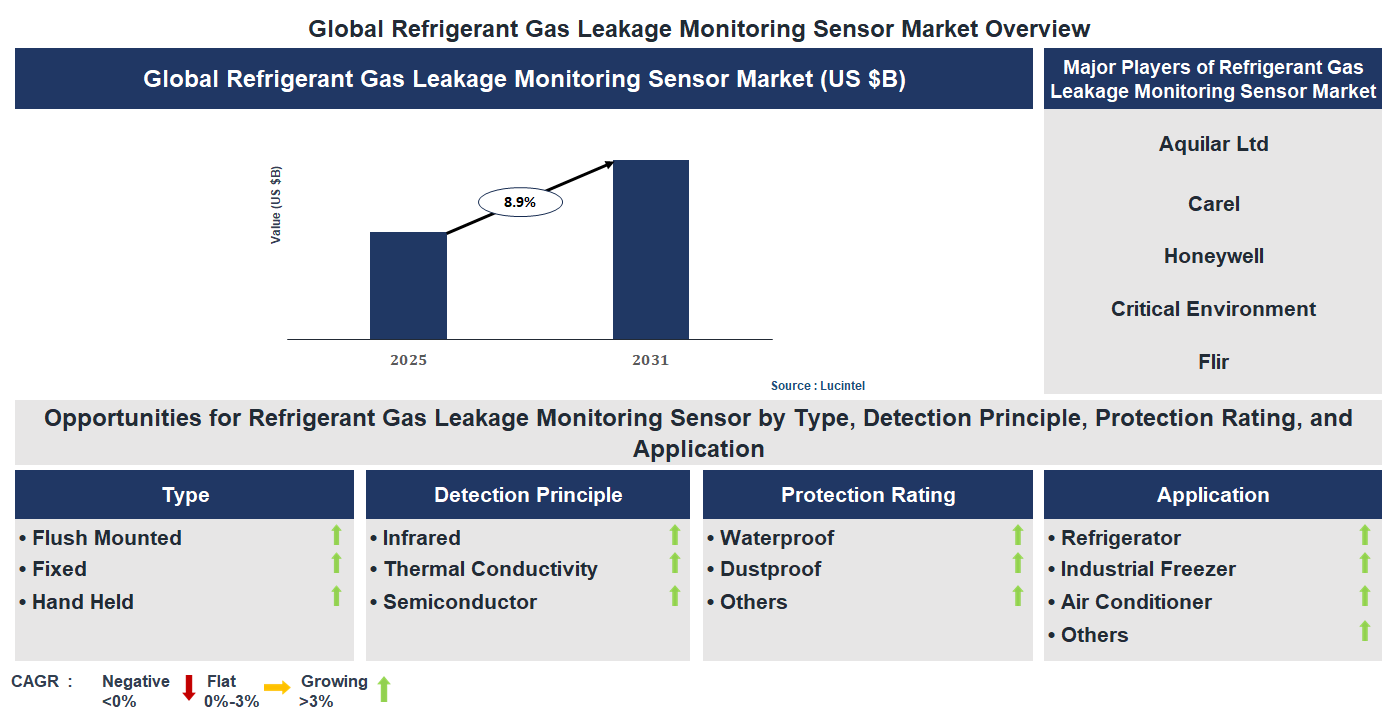
Key data points: The growth forecast = 8.9% annually for the next 6 years. Scroll below to get more insights. This market report covers trends, opportunities and forecasts in refrigerant gas leakage monitoring sensor market to 2031 by type (flush mounted, fixed, and hand held), detection principle (infrared, thermal conductivity, and semiconductor), protection rating (waterproof, dustproof, and others), application (refrigerator, industrial freezer, air conditioner, and others), and region (North America, Europe, Asia Pacific, and the Rest of the World)
We'll send your sample report shortly.
• Lucintel forecasts that, within the type category, flush mounted is expected to witness the highest growth over the forecast period.
• Within the application category, air conditioner is expected to witness the highest growth.
• In terms of region, APAC is expected to witness the highest growth over the forecast period. Gain valuable insights for your business decisions with our comprehensive 150+ page report. Sample figures with some insights are shown below.
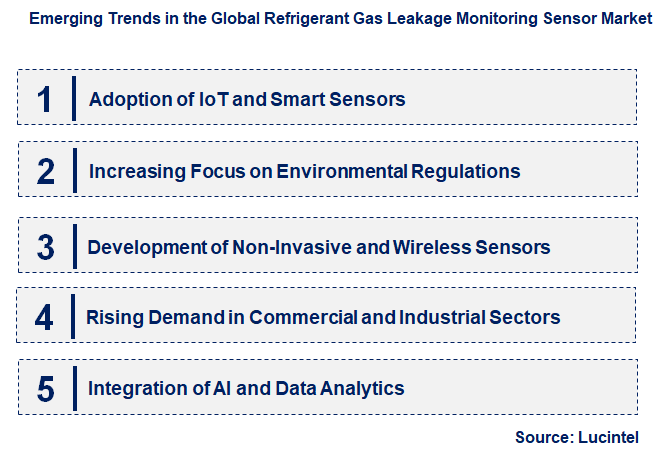
• Adoption of IoT and Smart Sensors: The integration of Internet of Things (IoT) technology with refrigerant gas sensors is revolutionizing leak detection. Smart sensors enable real-time monitoring, remote data access, and automated alerts, significantly reducing response times and preventing environmental damage. This connectivity enhances system efficiency and allows for predictive maintenance, minimizing downtime and operational costs. As IoT adoption grows, the market is shifting towards more intelligent, interconnected monitoring solutions that improve safety and compliance.
• Increasing Focus on Environmental Regulations: Stricter regulations aimed at reducing greenhouse gas emissions are driving demand for advanced leak detection systems. Governments worldwide are imposing penalties for refrigerant leaks and encouraging the adoption of eco-friendly alternatives. This regulatory environment compels industries to invest in reliable sensors that ensure compliance and minimize environmental impact. Consequently, manufacturers are innovating to develop sensors that meet stringent standards, fostering market growth and promoting sustainable practices.
• Development of Non-Invasive and Wireless Sensors: The trend towards non-invasive, wireless refrigerant leak sensors is gaining momentum. These sensors eliminate the need for complex installation procedures and reduce maintenance costs, making them ideal for retrofitting existing systems. Wireless technology allows for flexible placement and easier integration into existing infrastructure. This innovation enhances safety by enabling continuous monitoring without disrupting operations, thereby expanding market reach across various sectors, including HVAC, refrigeration, and industrial applications.
• Rising Demand in Commercial and Industrial Sectors: The commercial and industrial sectors are increasingly adopting refrigerant gas leakage sensors to ensure safety, efficiency, and regulatory compliance. Large-scale refrigeration systems in supermarkets, data centers, and manufacturing plants require reliable leak detection to prevent costly damage and environmental hazards. The growing awareness of safety standards and environmental responsibility is fueling investments in advanced monitoring solutions, expanding the market and encouraging the development of sector-specific sensors tailored to diverse operational needs.
• Integration of AI and Data Analytics: The incorporation of artificial intelligence (AI) and data analytics into refrigerant leak detection systems is enhancing their predictive capabilities. AI algorithms analyze sensor data to identify leak patterns, predict potential failures, and optimize maintenance schedules. This proactive approach reduces downtime, lowers operational costs, and improves system reliability. As AI technology becomes more accessible, its integration into leak monitoring systems is transforming the market by enabling smarter, more efficient, and cost-effective solutions that support sustainability and safety objectives. In summary, these emerging trends are reshaping the refrigerant gas leakage monitoring sensor market by fostering smarter, more sustainable, and regulatory-compliant solutions. The integration of IoT, AI, and wireless technologies, coupled with a focus on environmental standards, is driving innovation and expanding market opportunities across various sectors. These developments are not only improving safety and efficiency but also supporting global efforts toward environmental conservation and sustainable industry practices.
• Integration of IoT Technology: The incorporation of IoT in refrigerant gas sensors enables real-time monitoring and data analytics, improving leak detection accuracy and response times. This integration facilitates predictive maintenance, reduces downtime, and enhances safety protocols. IoT-enabled sensors provide detailed insights into refrigerant levels and leak patterns, empowering industries to proactively address issues. As IoT adoption grows, the market benefits from increased efficiency, lower operational costs, and improved compliance with environmental standards.
• Advancement in Sensor Sensitivity and Accuracy: Recent innovations have led to highly sensitive sensors capable of detecting minute refrigerant leaks with greater precision. These advancements improve early leak detection, minimizing environmental impact and preventing costly damage. Enhanced accuracy reduces false alarms, ensuring reliable operation. The development of compact, durable sensors suitable for various environments broadens application scope across industries such as HVAC, refrigeration, and automotive, thereby expanding market opportunities.
• Rising Demand for Environmentally Friendly Refrigerants: The shift towards eco-friendly refrigerants like HFOs and natural gases has increased the need for compatible leak detection sensors. These sensors are designed to detect specific refrigerant gases, ensuring compliance with environmental regulations. The demand for such sensors is driven by stricter policies aimed at reducing ozone depletion and global warming potential. This trend encourages innovation in sensor materials and detection methods, fostering growth in the market for sustainable solutions.
• Implementation of Regulatory Compliance Standards: Governments and regulatory bodies are establishing stringent standards for refrigerant leak detection and safety. Compliance requirements are prompting industries to adopt advanced monitoring sensors to meet legal obligations. This regulatory push accelerates market growth as companies seek reliable, certified solutions to avoid penalties and ensure safety. The evolving standards also stimulate innovation, leading to the development of more sophisticated, compliant sensor technologies.
• Growth of Automation in HVAC and Refrigeration Systems: Automation in HVAC and refrigeration systems is increasing the demand for integrated leak detection sensors. Automated systems enable continuous monitoring, immediate leak detection, and automatic shut-off, enhancing safety and efficiency. This trend reduces manual intervention, lowers operational costs, and improves system reliability. As automation becomes more prevalent, the market for compatible sensors expands, driven by the need for seamless integration and smart system management. The overall impact of these developments is a more efficient, reliable, and environmentally compliant refrigerant gas leakage monitoring market. Enhanced sensor technologies and integration with digital systems are driving growth, reducing environmental risks, and improving safety standards across industries. This evolution positions the market for sustained expansion, innovation, and increased adoption worldwide.
• Expansion into Smart Building Automation: The integration of refrigerant gas leakage sensors into smart building systems offers significant growth potential. These sensors enable real-time monitoring, automated alerts, and remote management, improving safety and efficiency. As building automation becomes more prevalent, demand for intelligent leak detection solutions will surge, especially in commercial and industrial facilities seeking to optimize energy use and ensure regulatory compliance.
• Adoption of IoT-Enabled Leak Detection Solutions: The rise of Internet of Things (IoT) technology is transforming refrigerant leak monitoring. IoT-enabled sensors provide continuous, real-time data transmission, enabling predictive maintenance and rapid response to leaks. This connectivity enhances operational efficiency, reduces downtime, and minimizes environmental impact, making IoT-based solutions highly attractive across sectors such as HVAC, refrigeration, and manufacturing.
• Growing Focus on Environmentally Friendly Refrigerants: As regulations tighten around the use of high-GWP refrigerants, there is increased demand for sensors compatible with eco-friendly alternatives. Developing sensors that can detect leaks of low-GWP refrigerants will open new markets and help companies meet sustainability goals. This shift encourages innovation in sensor materials and detection technologies tailored to emerging refrigerant types.
• Rising Demand in Industrial and Automotive Sectors: Industrial facilities and automotive manufacturing are increasingly adopting refrigerant leak detection sensors to ensure safety, regulatory compliance, and environmental protection. The need for robust, durable sensors capable of operating in harsh conditions is driving product development. This trend expands market reach beyond traditional HVAC applications, creating new revenue streams and strategic opportunities.
• Implementation of Regulatory Standards and Safety Protocols: Governments and industry bodies are establishing stricter standards for refrigerant leak detection and safety protocols. Compliance drives the adoption of advanced sensors that meet these regulations, fostering market growth. Companies investing in R&D to develop compliant, high-precision sensors will benefit from increased demand and a competitive edge in this regulated environment. The market for refrigerant gas leakage monitoring sensors is poised for substantial growth, driven by technological innovation, regulatory pressures, and expanding application areas. These opportunities will enable companies to enhance safety, reduce environmental impact, and capitalize on emerging industry needs, ultimately shaping a more sustainable and efficient future for refrigerant management.
• Technological Advancements: The development of more sensitive, accurate, and real-time sensors has significantly enhanced leak detection capabilities. Innovations such as IoT-enabled sensors allow for remote monitoring, reducing downtime and preventing environmental damage. These technological improvements make monitoring systems more reliable and cost-effective, encouraging widespread adoption across industries like HVAC, refrigeration, and automotive sectors. As sensor technology continues to evolve, the market is expected to expand rapidly, driven by the need for smarter, more efficient leak detection solutions.
• Stringent Environmental Regulations: Governments worldwide are implementing strict regulations to control refrigerant emissions due to their high global warming potential. Policies such as the Montreal Protocol and subsequent amendments mandate the use of environmentally friendly refrigerants and leak detection systems. These regulations compel industries to adopt advanced monitoring sensors to ensure compliance, thereby fueling market growth. Companies investing in leak detection technology can avoid penalties and contribute to environmental conservation, making regulatory pressure a significant driver for market expansion.
• Growing Awareness of Safety and Environmental Impact: Increasing awareness among consumers and industries about the hazards of refrigerant leaks, including health risks and environmental damage, is driving demand for reliable monitoring solutions. Businesses are proactively adopting sensors to prevent leaks, ensure safety, and reduce carbon footprints. This heightened awareness fosters a market environment where safety standards are prioritized, encouraging manufacturers to innovate and expand their product offerings to meet rising demand.
• Rising Adoption of IoT and Smart Technologies: The integration of IoT and smart technology into refrigerant leak detection systems has revolutionized the market. IoT-enabled sensors facilitate real-time data collection, remote monitoring, and predictive maintenance, leading to improved efficiency and reduced operational costs. The adoption of these advanced systems is particularly prominent in large-scale industrial applications, where continuous monitoring is critical. As IoT technology becomes more affordable and widespread, the market for smart refrigerant gas leakage sensors is poised for substantial growth. The challenges in the refrigerant gas leakage monitoring sensor market are:-
• High Implementation Costs: The deployment of advanced leak detection sensors involves significant capital investment, especially for small and medium-sized enterprises. Costs include sensor procurement, installation, maintenance, and integration with existing systems. These expenses can act as barriers, limiting adoption among budget-constrained organizations. Additionally, the need for specialized personnel to operate and maintain these systems further adds to the overall costs, potentially slowing market growth in cost-sensitive regions.
• Technological Limitations: Despite advancements, current sensor technologies face limitations such as false alarms, limited lifespan, and sensitivity issues in certain environments. Harsh conditions like extreme temperatures, humidity, or the presence of other gases can impair sensor accuracy. These technological constraints hinder the reliability of leak detection systems, leading to potential safety risks and increased maintenance costs. Overcoming these limitations requires ongoing research and development, which can delay widespread adoption and market expansion.
• Regulatory and Standardization Challenges: The market faces complexities related to varying regulations across different regions and industries. Lack of standardized testing protocols and certification processes can create uncertainty for manufacturers and users. Navigating diverse regulatory landscapes increases compliance costs and delays product deployment. Additionally, evolving regulations require continuous updates to sensor technology and documentation, posing ongoing challenges for market players to stay compliant and competitive. In summary, the refrigerant gas leakage monitoring sensor market is driven by technological innovations, regulatory pressures, and increasing safety awareness, all of which promote growth and adoption. However, high costs, technological limitations, and regulatory complexities present significant hurdles that could impede market expansion. The interplay of these factors will shape the future landscape, requiring stakeholders to innovate and adapt strategically. Overall, the markets growth prospects remain promising, provided these challenges are effectively managed through technological advancements and regulatory harmonization.
• Aquilar Ltd
• Carel
• Honeywell
• Critical Environment
• Flir
• MSA Safety
• RC Systems
• Sensirion
• Tek Troniks
• Figaro Engineering
• Flush Mounted
• Fixed
• Hand Held
• Infrared
• Thermal Conductivity
• Semiconductor
• Waterproof
• Dustproof
• Others
• Refrigerator
• Industrial Freezer
• Air Conditioner
• Others
• North America
• Europe
• Asia Pacific
• The Rest of the World
• United States: The US market is witnessing significant advancements with the integration of IoT-enabled sensors that provide real-time leak detection and data analytics. Regulatory agencies are enforcing stricter standards, encouraging industries to adopt more efficient monitoring systems. Major players are investing in R&D to develop more accurate and durable sensors, while government incentives promote adoption in commercial and industrial sectors. The market is also benefiting from increased awareness of environmental impacts and safety concerns, leading to widespread implementation across HVAC and refrigeration systems.
• China: China is experiencing rapid growth in the refrigerant gas leakage monitoring sensor market, driven by stringent government regulations aimed at reducing greenhouse gas emissions. The country is investing heavily in smart city initiatives and industrial automation, which include advanced leak detection solutions. Domestic manufacturers are expanding their product portfolios, focusing on cost-effective and scalable sensors suitable for large-scale deployment. The adoption of IoT and AI technologies is increasing, enhancing the accuracy and efficiency of leak detection systems across various industries, including manufacturing and logistics.
• Germany: Germanys market is characterized by a strong emphasis on sustainability and energy efficiency, prompting the adoption of advanced refrigerant leak detection sensors. The country is a leader in integrating IoT and Industry 4.0 technologies into industrial processes, including HVAC systems. Regulatory frameworks promote the use of environmentally friendly refrigerants and leak prevention systems. German companies are investing in innovative sensor technologies that offer high precision, durability, and integration with existing building management systems, supporting the countrys commitment to environmental standards and energy conservation.
• India: The Indian market is rapidly expanding due to increasing urbanization, industrial growth, and rising awareness of environmental issues. The government’s initiatives toward sustainable development and stricter regulations on refrigerant emissions are driving demand for leak detection sensors. Local manufacturers are developing affordable, scalable solutions suitable for diverse applications, from commercial refrigeration to HVAC systems. The adoption of IoT-enabled sensors is increasing, helping industries improve safety, reduce refrigerant wastage, and comply with environmental standards, thus fueling market growth.
• Japan: Japans market is characterized by high technological innovation and a focus on energy efficiency. The country is adopting smart refrigerant leak detection sensors integrated with IoT and AI for predictive maintenance and real-time monitoring. Strict environmental regulations and a strong emphasis on sustainability are encouraging industries to upgrade their systems with advanced sensors. Japanese companies are investing in R&D to develop highly reliable, compact, and energy-efficient sensors that can be seamlessly integrated into existing infrastructure, supporting the country’s goal of reducing environmental impact and enhancing operational safety.


• Aquilar Ltd
• Carel
• Honeywell
• Critical Environment
• Flir
• MSA Safety
• RC Systems
• Sensirion
• Tek Troniks
• Figaro Engineering Q5. Which refrigerant gas leakage monitoring sensor market segment will be the largest in future? Answer: Lucintel forecasts that, within the type category, flush mounted is expected to witness the highest growth over the forecast period. Q6. In refrigerant gas leakage monitoring sensor market, which region is expected to be the largest in next 5 years? Answer: In terms of region, APAC is expected to witness the highest growth over the forecast period. Q7. Do we receive customization in this report? Answer: Yes, Lucintel provides 10% customization without any additional cost.


Choose a license that fits your team. Instant PDF delivery.
Prices exclude taxes. Instant delivery. Custom licensing available on request.
Market Report · July 15, 2026
Market Report · July 13, 2026
Market Report · July 13, 2026
Trusted partner for strategic intelligence and business growth


Receive a complimentary market analysis tailored to your industry. Our analysts will identify key growth opportunities and competitive dynamics specific to your business.

Market size, growth rate, and key trend analysis for your specific sector.

Top competitor positioning and market share analysis.

Strategic recommendations backed by data-driven insights.
Get curated market intelligence and competitive moves straight to your inbox.
By subscribing, you agree to receive our monthly insights. Unsubscribe anytime.
Receive a complimentary market analysis tailored to your industry. Our analysts will identify key growth opportunities and competitive dynamics specific to your business.
Market size, growth rate, and key trend analysis for your specific sector.
Top competitor positioning and market share analysis.
Strategic recommendations backed by data-driven insights.
Get curated market intelligence, emerging trends, and competitive moves straight to your inbox each month.
By subscribing, you agree to receive our monthly insights. Unsubscribe anytime.
We'll send your sample report shortly.