
Market Report · July 22, 2026

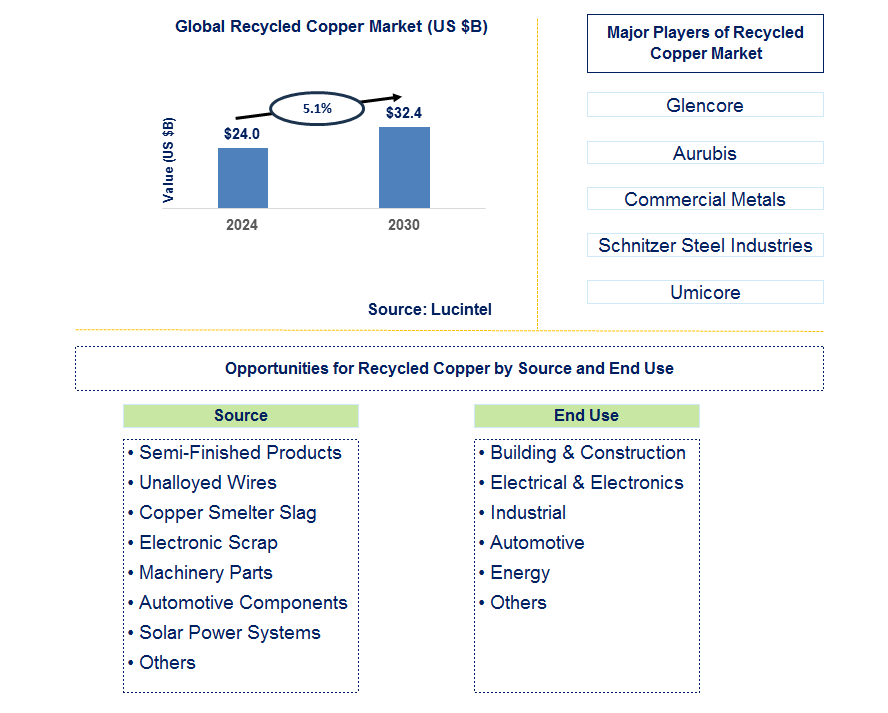
Key data points: The market size in 2030 = $32.4 billion, growth forecast = 5.1% annually for the next 6 years. Scroll below to get more insights. This market report covers trends, opportunities, and forecasts in the global recycled copper market to 2030 by source (semi-finished products, unalloyed wires, copper smelter slag, electronic scrap, machinery parts, automotive components, solar power systems, and others), end use (building & construction, electrical & electronics, industrial, automotive, energy, and others), and region (North America, Europe, Asia Pacific, and the Rest of the World)
We'll send your sample report shortly.
• Lucintel forecasts that, within the source category, unalloyed wire is expected to witness the highest growth over the forecast period due to features like high quality and readily recyclable.
• Within the end use category, electrical & electronic is expected to witness the highest growth due to increasing adoption of copper in wires, cables, motors, circuit boards, and other components.
• In terms of regions, APAC is expected to witness the highest growth over the forecast period due to high consumption of electronic devices and favorable government policies. Gain valuable insights for your business decisions with our comprehensive 150+ page report.

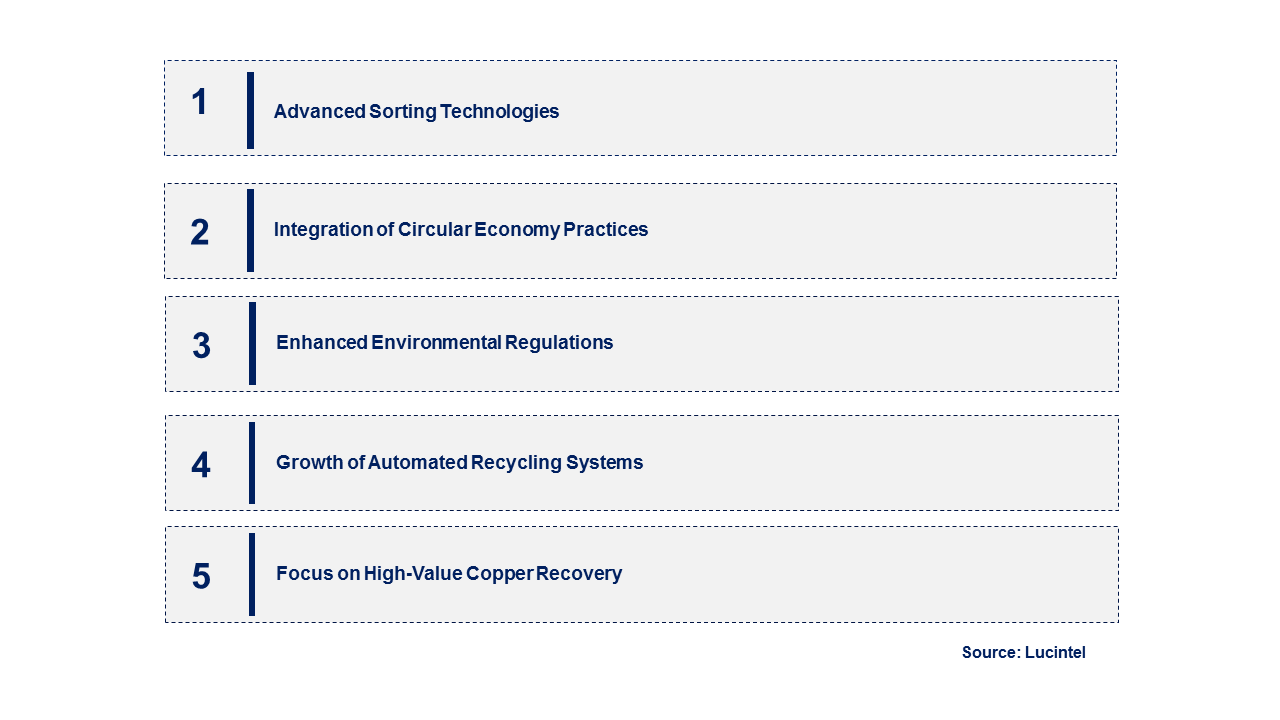
• Advanced Sorting Technologies: Emerging sorting technologies, such as optical-based systems and those involving lasers, can increase the separation efficiency of copper scraps. This facilitates high-quality recycled copper and increases yields, making recycling more efficient and cost-effective.
• Integration of Circular Economy Practices: The reuse of copper within production cycles is being promoted through the adoption of circular economy principles. Sustainability is achieved through reduced waste, minimized reliance on raw materials, and the establishment of systems that aid in retrieving and reusing copper.
• Enhanced Environmental Regulations: Stricter environmental regulations necessitate more efficient and cleaner recycling processes. The need to comply with these laws has compelled businesses to invest in new technologies and adopt practices that help reduce environmental impact and enhance recycling standards.
• Growth of Automated Recycling Systems: The rise of automated recycling systems is transforming the copper recycling industry by increasing processing speed and accuracy. Automation lowers labor costs while improving material recovery, contributing to a more efficient and scalable recycling operation.
• Focus on High-Value Copper Recovery: High-value copper recovery from scrap is increasingly emphasized, especially through advanced extraction technologies. This approach makes recycled copper economically viable and supports efforts to improve the profitability and efficiency of recycling processes. These trends have driven technological advancement, promoted sustainability, and increased efficiency in the recycled copper market. The focus on advanced technology, regulatory compliance, and circular economy practices is setting new standards and promoting growth in the recycling industry.
• Introduction of High-Efficiency Recycling Technologies: New high-efficiency recycling technologies, such as automatic shredding machines and advanced sorting systems, improve processing for copper scrap. These advancements increase recovery rates, reduce operational costs, and lead to growth in the recycled copper market.
• Expansion of Recycling Infrastructure: The expansion of recycling facilities and investment in infrastructure are driving up capacity for handling copper scrap. This development improves net efficiencies and increases the overall rate across the recycling business.
• Implementation of Stricter Environmental Regulations: Tougher environmental rules have resulted in compliance with higher standards for recycling measures. In response, firms have been compelled to adopt greener solutions, such as purchasing cleaner equipment, to reduce environmental harm and align with regulatory policies.
• Focus on Domestic Processing Capabilities: Countries are looking to strengthen domestic recycling capabilities to reduce reliance on imports for copper. The growing market and increasing demand for material recovery have led to investment in local processing infrastructure and technology.
• Integration of Circular Economy Practices: The integration of circular economy principles allows copper materials to be reutilized or recycled. This approach reduces waste and facilitates the recovery of valuable resources within the production cycle, promoting sustainability. These developments are impacting the recycled copper market by improving technology, increasing infrastructure, and promoting sustainability. Thus, efficiency, regulatory compliance, and domestic processing are determining the future of this sector.
• Expansion of Recycling Facilities: Investing in new and improved facilities enhances capacity and increases efficiency. Expanding infrastructure supports higher demand for copper and improves overall industry performance.
• Adoption of Advanced Sorting Technologies: The use of advanced sorting technologies, like optical sorters with laser-based systems, mitigates low material recovery rates and leads to cost savings during processing. These technologies make recycling operations more efficient and effective.
• Development of Domestic Processing Capabilities: Stronger capacities for local processing decrease dependence on imported copper and support recycling initiatives in the country. This strategic priority generates growth by increasing the availability of processed copper and promoting local economic development.
• Integration of Circular Economy Practices: The adoption of circular approaches emphasizes how copper can be reused instead of disposed of after its lifecycle ends. This method helps achieve sustainability and creates opportunities for growth while aligning with global environmental goals and regulatory frameworks.
• Focus on High-Value Material Recovery: Investing in technologies for recovering high-value copper from scrap enhances the economic value of recycled materials. This emphasis increases profitability, driving growth and facilitating efficient recycling processes. Thus, these strategic opportunities shape the recycled copper market through technological advancements, infrastructure expansion, and sustainable operations. Efficiency, material recovery, and localized processing are key drivers behind its development, supporting its growth and evolution over time.
• Technological Advancements: Improvements in recycling technologies, such as automated sorting systems and high-performance processing systems, boost efficiency in recovering copper metal. These advances upgrade material quality standards while reducing costs, thus expanding market size.
• Tighter Environmental Regulations: Stringent environmental regulations have prompted recycling firms to adopt cleaner disposal techniques. Compliance with these rules drives momentum toward sustainable practices, leading to better recycling protocols and stimulating market expansion.
• Growing Demand for Sustainable Practices: Increased sustainability awareness is a significant factor behind the rise in popularity of recycled copper. Companies are investing in technologies aligned with green goals, encouraging more ethical mining practices and contributing to the development of the recycled copper market.
• Economic Benefits of Recycling: The economic advantages of recycling, such as cost savings on raw materials and waste disposal, encourage investments in recycled copper. These financial incentives support market growth and drive technological advancements.
• Increasing Vehicle and Electronics Scraps: A growing number of scrapped cars and electronic devices guarantee a sufficient supply of scrap copper. This has led to heightened demand for recycled copper and the expansion of the market. Challenges in the recycled copper market include:
• High Initial Investment Costs: Capital costs associated with incorporating advanced recycling technologies can be substantial, inhibiting some companies from adopting them. Consequently, high initial investment requirements may prevent many firms from embracing these systems, negatively impacting industry growth.
• Quality Control Issues: Maintaining quality standards across different inputs poses challenges in ensuring purity levels. Copper material sourced from various locations may contain impurities, making it difficult to control quality and reducing the value of recycled material.
• Regulatory Compliance Complexity: The complexity of navigating different standards among jurisdictions complicates compliance for businesses. Managing diverse standard operating procedures becomes critical and affects operational efficiency. Technological shifts, regulations, and underlying economic factors are the main forces driving developments within the recycled copper market. However, addressing issues related to investment costs, quality assurance, and regulatory adherence will be crucial for the continued expansion of this sector in the coming years.
• Glencore
• Aurubis
• Commercial Metals
• Schnitzer Steel Industries
• Umicore
• Kuusakoski
• Sims Metal Management
• OmniSource
• Elgin Recycling
• Pacific Metal
• Semi-Finished Products
• Unalloyed Wires
• Copper Smelter Slag
• Electronic Scrap
• Machinery Parts
• Automotive Components
• Solar Power Systems
• Others
• Building & Construction
• Electrical & Electronics
• Industrial
• Automotive
• Energy
• Others
• North America
• Europe
• Asia Pacific
• The Rest of the World
• United States: In the United States, circular economy principles and advancements in recycling technology for copper scraps are driving growth in the recycled copper industry. Firms have invested in highly efficient recycling systems aimed at increasing product recovery rates. Regulatory initiatives and sustainability practices promote better quality materials through improved recycling infrastructure.
• China: China is modernizing its recycling facilities and enhancing environmental standards within its recycling sector to advance copper recycling capacity. Increased efficiency is achieved through automated sorting technologies and improved logistics for collecting scrap copper. This focuses on reducing import dependency by developing domestic recycling capacities and processing infrastructure.
• Germany: Germany remains at the forefront of advanced high-tech recyclers and robust regulatory mechanisms supporting the recycled copper business. Recent developments include setting up sophisticated sorting systems that exploit modern technology and energy-saving techniques during processing. Strict compliance with reuse standards ensures optimal recovery rates for metals, contributing to sustainable development goals.
• India: India supports environmental waste management through the construction of new facilities and widespread use of cost-effective technologies. Recycling rates have improved due to government incentives and enacted laws. The market is also driven by the need to integrate the informal sector into the mainstream recycling process.
• Japan: Japan has enhanced recycling efficiency through innovative technological approaches, including mechanized recovery systems for copper. Recent initiatives focus on expanding advanced recyclers and improving material purity. Consequently, emphasis is placed on regulatory compliance and reducing environmental impacts, shaping its recycling market.


• Glencore
• Aurubis
• Commercial Metals
• Schnitzer Steel Industries
• Umicore
• Kuusakoski
• Sims Metal Management
• OmniSource
• Elgin Recycling
• Pacific Metal Q6. Which recycled copper market segment will be the largest in future? Answer: Lucintel forecasts that unalloyed wire is expected to witness the highest growth over the forecast period due to features like high quality and readily recyclable. Q7. In recycled copper market, which region is expected to be the largest in next 5 years? Answer: APAC is expected to witness highest growth over the forecast period due to high consumption of electronic devices and favorable government policies. Q.8 Do we receive customization in this report? Answer: Yes, Lucintel provides 10% customization without any additional cost.


Choose a license that fits your team. Instant PDF delivery.
Prices exclude taxes. Instant delivery. Custom licensing available on request.
Market Report · July 22, 2026
Market Report · July 22, 2026
Market Report · July 22, 2026
Trusted partner for strategic intelligence and business growth


Receive a complimentary market analysis tailored to your industry. Our analysts will identify key growth opportunities and competitive dynamics specific to your business.

Market size, growth rate, and key trend analysis for your specific sector.

Top competitor positioning and market share analysis.

Strategic recommendations backed by data-driven insights.
Get curated market intelligence and competitive moves straight to your inbox.
By subscribing, you agree to receive our monthly insights. Unsubscribe anytime.
Receive a complimentary market analysis tailored to your industry. Our analysts will identify key growth opportunities and competitive dynamics specific to your business.
Market size, growth rate, and key trend analysis for your specific sector.
Top competitor positioning and market share analysis.
Strategic recommendations backed by data-driven insights.
Get curated market intelligence, emerging trends, and competitive moves straight to your inbox each month.
By subscribing, you agree to receive our monthly insights. Unsubscribe anytime.
We'll send your sample report shortly.