
Market Report · July 29, 2026

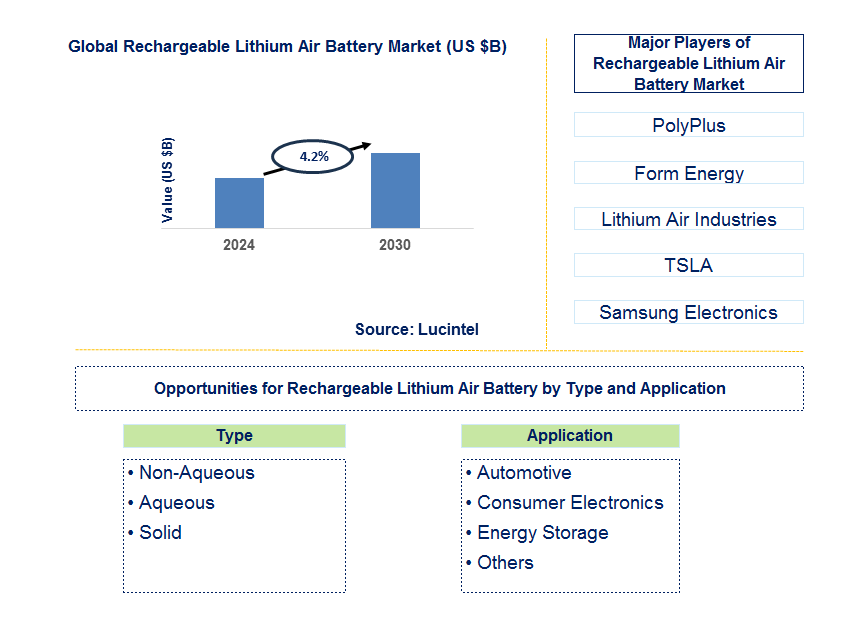
Key data points: The growth forecast = 4.2% annually for the next 6 years. Scroll below to get more insights. This market report covers trends, opportunities, and forecasts in the global rechargeable lithium air battery market to 2030 by type (non-aqueous, aqueous, and solid), application (automotive, consumer electronics, energy storage, and others), and region (North America, Europe, Asia Pacific, and the Rest of the World)
We'll send your sample report shortly.
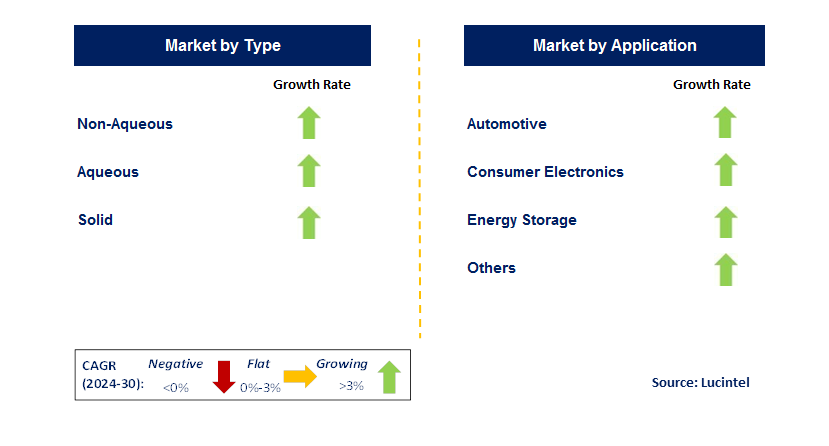
• Lucintel forecasts that, within the type category, non-aqueous is expected to witness the highest growth over the forecast period.
• Within the application category, automotive is expected to witness the highest growth.
• In terms of regions, APAC is expected to witness highest growth over the forecast period. Gain valuable insights for your business decisions with our comprehensive 150+ page report.
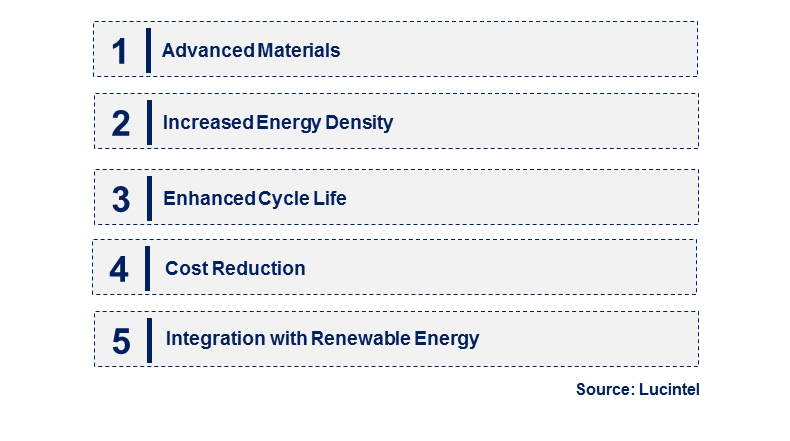
• Advanced materials: Research focuses on developing new materials for air electrodes and electrolytes to enhance energy density and stability.
• Increased energy density: There is a significant push towards achieving higher energy densities to make lithium-air batteries competitive with existing technologies.
• Enhanced cycle life: Innovations aim to improve the longevity and rechargeability of lithium-air batteries, addressing one of the major limitations of the technology.
• Cost reduction: Efforts are made to lower production costs through improved manufacturing processes and the use of more abundant materials.
• Integration with renewable energy: Lithium-air batteries are explored for integration with renewable energy sources such as solar and wind for efficient energy storage.
• Collaboration and partnerships: Increased collaboration between academia, industry, and government agencies drives research and accelerates the development of lithium-air batteries. The rechargeable lithium-air battery market evolves with trends such as advanced materials and increased energy density, driving innovation and addressing key challenges in energy storage.
• Breakthrough materials: Researchers developed new materials for air electrodes and electrolytes that significantly improve battery performance and efficiency.
• Improved cycle stability: Advances in battery design led to enhancements in cycle stability, addressing one of the critical challenges of lithium-air technology.
• Cost-effective production: New manufacturing techniques are explored to reduce the cost of lithium-air batteries, making them more commercially viable.
• Integration with EVs: Several automotive companies integrate lithium-air batteries into electric vehicles, focusing on increasing energy density and reducing weight.
• Government funding: Governments in various countries provide funding and support for research projects aimed at advancing lithium-air battery technology.
• Collaborative research: Increased collaboration between industry leaders, research institutions, and startups drives innovation and accelerates the development of lithium-air batteries. Recent developments in the rechargeable lithium-air battery market, including breakthroughs in materials and cost-effective production, advance the technology and enhance its commercial potential.
• Electric vehicles: Lithium-air batteries offer high energy density, making them suitable for electric vehicles where range and weight are critical factors.
• Renewable energy storage: The technology holds promise for large-scale energy storage solutions, enhancing the efficiency of solar and wind power systems.
• Consumer electronics: Advances in lithium-air batteries could lead to more efficient and longer-lasting batteries for consumer electronics such as smartphones and laptops.
• Grid energy storage: Lithium-air batteries are explored for grid energy storage, providing a solution for balancing supply and demand in electrical grids.
• Medical devices: The technology has potential applications in medical devices, where high energy density and long battery life are important.
• Military and aerospace: Lithium-air batteries offer lightweight and high-capacity energy storage solutions for military and aerospace applications. The rechargeable lithium-air battery market presents strategic growth opportunities in applications such as electric vehicles and renewable energy storage, driven by the technology's high energy density and potential for cost reduction.
• Technological advancements: Innovations in materials and battery design enhance the performance and feasibility of lithium-air batteries.
• Rising energy demand: Increasing demand for high-capacity energy storage solutions in sectors like electric vehicles and renewable energy drives market growth.
• Government support: Funding and support from governments worldwide accelerate research and development efforts in lithium-air battery technology.
• Environmental concerns: The push for cleaner and more efficient energy storage solutions drives interest in lithium-air batteries as a sustainable alternative.
• Growing consumer electronics market: The need for longer-lasting and more efficient batteries in consumer electronics fuels research and investment in lithium-air technology. Challenges in the rechargeable lithium-air battery market are:
• Limited cycle life: One of the major challenges is improving the cycle life of lithium-air batteries, which currently limits their practical applications.
• High production costs: The cost of producing lithium-air batteries remains high, impacting their commercial viability.
• Technical complexity: The complexity of developing efficient and stable lithium-air battery systems presents significant technical challenges.
• Material scarcity: Some materials used in lithium-air batteries are rare or expensive, affecting the overall cost and scalability.
• Regulatory hurdles: Navigating regulatory requirements and standards for new battery technologies can be challenging and time-consuming.
• Market competition: The presence of established battery technologies such as lithium-ion creates strong competition and challenges for market entry. The rechargeable lithium-air battery market is driven by technological advancements and rising energy demand but faces challenges related to cycle life, production costs, and technical complexity. Addressing these challenges while leveraging key drivers will be crucial for the market's growth and adoption.
• PolyPlus
• Form Energy
• Lithium Air Industries
• TSLA
• Samsung Electronics
• Non-Aqueous
• Aqueous
• Solid
• Automotive
• Consumer Electronics
• Energy Storage
• Others
• North America
• Europe
• Asia Pacific
• The Rest of the World
• USA: In the USA, recent advancements in rechargeable lithium-air batteries focus on improving energy density and cycle life. Major research institutions and companies like IBM and MIT develop new materials and technologies to enhance performance. Innovations include the use of advanced catalysts and electrolyte materials to overcome existing limitations in efficiency and stability. Companies also explore scalable production techniques to reduce costs. The US Department of Energy funds research projects aimed at pushing the boundaries of lithium-air battery technology, supporting both academic and industrial research to accelerate commercialization.
• Germany: Germany has seen significant developments in the rechargeable lithium-air battery sector, driven by its strong emphasis on renewable energy and automotive technologies. Companies like BASF and Fraunhofer Institute work on enhancing the efficiency and safety of lithium-air batteries. Research focuses on improving the performance of air electrodes and optimizing battery chemistry to increase lifespan and rechargeability. Germany's investment in green technologies fosters collaborations between industry and research institutions to advance lithium-air battery technology. The market also benefits from Germany's robust support for sustainable energy solutions and innovative battery technologies.
• China: China is rapidly advancing in the rechargeable lithium-air battery market, with significant investments from both private and public sectors. Major companies like CATL and BYD lead efforts to improve battery performance, focusing on increasing energy density and developing cost-effective manufacturing processes. Research institutions in China explore new materials and designs to enhance the efficiency and stability of lithium-air batteries. The Chinese government supports these advancements through funding and policy incentives aimed at fostering innovation in energy storage technologies, reflecting a strategic push towards leadership in the global battery market.
• India: India is emerging as a growing player in the rechargeable lithium-air battery market, with increasing interest from research institutions and startups. Recent developments include the exploration of novel electrode materials and electrolyte solutions to address the challenges of energy density and battery life. Indian companies and academic institutions collaborate on research projects aimed at making lithium-air batteries more viable for large-scale applications, including electric vehicles and renewable energy storage. The Indian government also provides support through funding and initiatives to promote research and development in advanced battery technologies.
• Japan: Japan has a strong presence in the rechargeable lithium-air battery market, with leading companies such as Panasonic and Toyota investing in research and development. Recent developments focus on enhancing the safety and performance of lithium-air batteries by improving materials and battery design. Japan's emphasis on innovation in energy storage is reflected in its efforts to integrate advanced technologies into electric vehicles and renewable energy systems. Collaborative projects between industry and research institutions push the boundaries of lithium-air battery technology, aiming for breakthroughs in energy density and cycle stability.


• PolyPlus
• Form Energy
• Lithium Air Industries
• TESLA
• Samsung Electronics Q5. Which rechargeable lithium air battery market segment will be the largest in future? Answer: Lucintel forecasts that non-aqueous is expected to witness the highest growth over the forecast period. Q6. In rechargeable lithium air battery market, which region is expected to be the largest in next 5 years? Answer: APAC is expected to witness highest growth over the forecast period. Q.7. Do we receive customization in this report? Answer: Yes, Lucintel provides 10% customization without any additional cost.


Choose a license that fits your team. Instant PDF delivery.
Prices exclude taxes. Instant delivery. Custom licensing available on request.
Market Report · July 29, 2026
Market Report · July 20, 2026
Market Report · July 20, 2026
Trusted partner for strategic intelligence and business growth


Receive a complimentary market analysis tailored to your industry. Our analysts will identify key growth opportunities and competitive dynamics specific to your business.

Market size, growth rate, and key trend analysis for your specific sector.

Top competitor positioning and market share analysis.

Strategic recommendations backed by data-driven insights.
Get curated market intelligence and competitive moves straight to your inbox.
By subscribing, you agree to receive our monthly insights. Unsubscribe anytime.
Receive a complimentary market analysis tailored to your industry. Our analysts will identify key growth opportunities and competitive dynamics specific to your business.
Market size, growth rate, and key trend analysis for your specific sector.
Top competitor positioning and market share analysis.
Strategic recommendations backed by data-driven insights.
Get curated market intelligence, emerging trends, and competitive moves straight to your inbox each month.
By subscribing, you agree to receive our monthly insights. Unsubscribe anytime.
We'll send your sample report shortly.