
Market Report · May 18, 2026

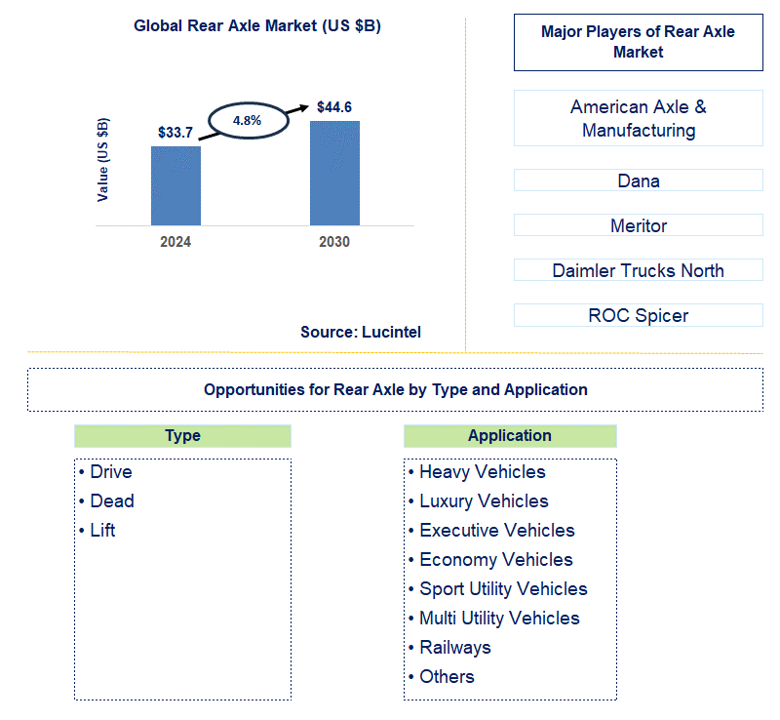
Key data points: The market size in 2030 = $44.6 billion, growth forecast = 4.8% annually for the next 6 years. Scroll below to get more insights. This market report covers trends, opportunities, and forecast in the global rear axle market to 2030 by type (drive, dead, and lift), application (heavy vehicles, luxury vehicles, executive vehicles, economy vehicles, sport utility vehicles, multi utility vehicles, railways, and others), and region (North America, Europe, Asia Pacific, and the Rest of the World)
We'll send your sample report shortly.
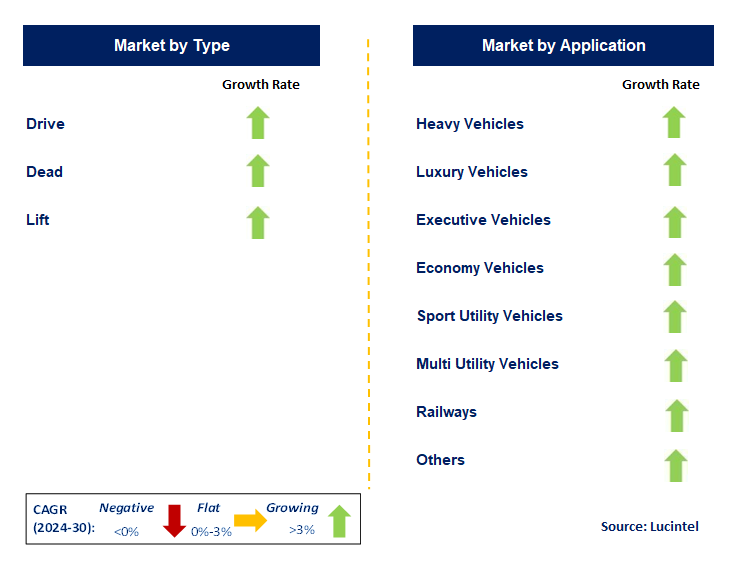
• Lucintel forecasts, within the type category, that dead will remain the largest segment over the forecast period due to the growing global transportation network that improves connectivity.
• Within the application category, luxury vehicle is expected to witness the highest growth due to developments in automotive telematics and drive axle technology.
• In terms of regions, North America will remain the largest region over the forecast period due to the increasing adoption of all wheel drive vehicles in the region. Gain valuable insight for your business decisions with our comprehensive 150+ page report
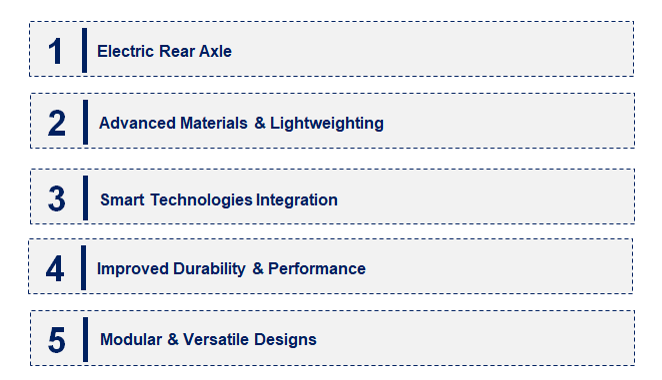
• Electric Rear Axle: The advent of electric and hybrid cars has accelerated the uptake of electric rear axles. Such systems ensure higher energy efficiency and require minimal maintenance compared to traditional mechanical axles. By directly integrating electric motors into their rear axles, producers can enhance vehicle performance while reducing mass. This trend is transforming the market by establishing new standards of efficiency, thereby promoting a transition towards greener transport solutions.
• Advanced Materials and Lightweighting: To meet increasing requirements for fuel economy and improved overall vehicle performance, high-strength steels and carbon fiber composites are gaining popularity in the rear axle business. These materials reduce axle weight without sacrificing strength or durability. This weight reduction allows for better handling on curves and lower fuel consumption, making vehicles more competitive in a performance-efficient market. Consequently, this trend has brought about innovations in axle designs and manufacturing methodologies.
• Smart Technologies Integration: Contemporary smart technological advancements, such as sensors and real-time diagnostics, have been integrated into modern rear axle systems. Smart technologies enable monitoring for better performance and predictive maintenance, enhancing the reliability and safety of vehicles that operate independently with minimal human involvement. A smart rear axle can adjust to different driving situations, delivering a responsive driving experience. This change relates to automotive systems becoming both connected and intelligent, thus improving driver satisfaction and vehicle longevity.
• Improved Durability and Performance: The durability and performance of rear axles must be enhanced to support increased weights and rough terrains. Several rear axle manufacturers are developing reinforced axle designs with advanced lubrication systems to increase overall lifespan and reliability. This change has been necessitated by the need to carry heavier loads over tougher terrains that vehicles can traverse today but could not in the past, thus making them compliant with modern vehicle demands.
• Modular and Versatile Designs: One current trend is the modularization and adaptability of rear axle designs, which allows for customized solutions for different vehicle types and applications. This modular approach enables axles to be modified or upgraded easily depending on performance or efficiency requirements. Therefore, market demands can now be better met in terms of customization, leading to leaner production runs by manufacturers and enhancing market responsiveness, which results in greater customer satisfaction. Some of these trends include electrification, lightweighting, smart technology integration, improved durability, and modularity within the rear axle market. They aim to achieve better vehicular performance, fuel economy, and adaptability; this corresponds with general shifts in automotive technology and changing consumer preferences. These are among the more important trends shaping the future of rear axle systems within the automotive industry.
• Advanced Materials Integration: The production of rear axles is increasingly utilizing lightweight materials, such as carbon fiber and aluminum alloys, which makes them lighter, reduces fuel consumption, and eases steering. These materials also help manufacturers meet stricter emission standards while maintaining durability and strength.
• Electric Vehicle (EV) Axle Innovations: The increased popularity of EVs has necessitated changes in the design of rear axles to accommodate electric drivetrains. Motor integration designs and improved torque management systems are examples of these innovations. With such developments, EVs become more energy efficient, thus responding to the demand for e-mobility and contributing to global environmental objectives.
• Enhanced Safety Features: Today's state-of-the-art rear axles possess sophisticated enhancements like electronic stability control and integrated braking systems, among others. These features enhance vehicle stability during motion, reducing the possibility of accidents. The integration of these provisions by producers addresses consumer concerns about safety aspects of vehicles conforming to stringent automobile safety regulations.
• Manufacturing Process Improvements: Recent advances in manufacturing technology, involving precision machining and automated assembly, have greatly enhanced production processes for rear axles. These steps lead to higher quality, consistency, and efficiency in axle production, in addition to allowing streamlined processes that reduce production costs and shorten lead times, enabling manufacturers to offer competitively priced and reliable products.
• Focus on Sustainability: Sustainability issues currently drive research into designing and producing rear axles, including low-cost recycling programs for car parts and environmentally friendly manufacturing practices. The use of more environmentally friendly practices by manufacturers will help achieve a cleaner planet and support the automotive industry in reducing its carbon footprint. Materials, design, safety, manufacturing, and sustainability are evolving in the rear axle market. These developments are part of efforts to improve vehicle performance, meet safety requirements, and address environmental concerns, aligning with contemporary automotive industry trends and regulatory frameworks. As these innovations continue, they will shape the future of rear axle technology and contribute to overall progress within the automotive sector.
• Electric Vehicle Integration: As the automotive industry shifts toward electric vehicles (EVs), rear axle designs are evolving to accommodate electric drivetrains. Integrating electric motors into rear axles enhances performance and reduces vehicle weight. This trend boosts efficiency and supports the broader adoption of EVs by addressing range and power concerns.
• Autonomous Driving Technologies: The rise of autonomous vehicles is creating a demand for advanced rear axles that support sophisticated driving systems. Integrating sensors and control systems into rear axles ensures precise handling and stability. This adaptation not only enhances vehicle safety but also aligns with the industry's push toward fully autonomous driving.
• Enhanced Durability and Performance: Increased focus on durability and performance is driving innovations in rear axle materials and designs. Advanced composites and manufacturing techniques are enhancing the strength and lifespan of rear axles. This development improves vehicle reliability and performance, particularly in high-demand applications like off-road and heavy-duty vehicles.
• Weight Reduction Initiatives: Weight reduction remains a priority in automotive engineering to improve fuel efficiency and vehicle dynamics. Rear axles are being redesigned with lighter materials and optimized structures to reduce overall vehicle weight. This trend contributes to better fuel economy and improved handling, aligning with environmental regulations and consumer preferences.
• Adaptive Suspension Systems: Adaptive suspension systems are becoming integral to modern rear axles, offering dynamic adjustments based on driving conditions. This innovation enhances ride comfort and handling by automatically adjusting axle settings in real time. It meets consumer expectations for superior driving experiences and supports the trend toward more personalized vehicle performance. The rear axle market is experiencing growth driven by innovations in electric vehicle integration, autonomous driving technologies, durability improvements, weight reduction, and adaptive suspension systems. These developments enhance vehicle performance, efficiency, and safety, meeting evolving consumer expectations and regulatory requirements. As these opportunities shape the market, stakeholders must adapt to remain competitive and leverage these advancements to drive future growth.
• Technological Advancements: Innovative changes in the designs of rear axles, such as integrating electronic control systems and advanced materials, enhance their performance and efficiency. These advances lead to high demand for passenger and commercial vehicles due to improved fuel efficiency, safety features, and better handling. As new technologies come into play, manufacturers must embrace new rear axle solutions to maintain their competitive edge by satisfying customer needs.
• Increasing Vehicle Production: The rise in global automobile manufacturing, driven by increasing consumer demand and urbanization, stimulates growth within the rear axle market. Consequently, there is an increase in demand for rear axles due to the rising volumes of production of both new vehicles and replacement parts. This trend is particularly evident in emerging markets where automotive sales are growing rapidly, indicating huge market potential.
• Stringent Emissions Regulations: Governments around the world have implemented stringent emission regulations to address environmental pollution issues. These regulations require manufacturers to develop rear axles that favor advanced emission control technologies, such as electrification or hybridization drivetrains. Besides driving innovation, adherence to these standards ensures that motor vehicles meet prescribed environmental requirements, thus escalating demand for superior rear axle systems.
• Rising Demand for Enhanced Vehicle Safety: Growing awareness among consumers, coupled with a desire for better vehicle safety features, has led to significant innovations in rear axle systems. Advanced stability controls and anti-lock brake systems are integrated into them, leading to better vehicle control and accident avoidance. This development has seen a rapid proliferation of sophisticated types of rear axle technologies.
• Growth in E-Commerce and Logistics: The flourishing e-commerce and logistics sectors have had a substantial impact on the rear axle market. Commercial vehicles require advanced rear axles to manage heavier loads and improve durability to meet the high demand for efficient transportation and delivery. This growth in logistics and freight transport is driving the need for more robust and reliable rear axle solutions. Challenges in the rear axle market include:
• High Production Costs: Manufacturers face challenges related to the high costs of producing advanced rear axle systems due to expensive materials and complicated manufacturing processes. This can hinder the affordability of vehicles, as these costs are often passed on to consumers. While operating in a highly competitive marketplace, manufacturers must strike a balance between cost and performance while trying to maintain profitability.
• Fluctuating Raw Material Prices: The unpredictable price volatility of raw materials like steel and aluminum places significant demands on the industry providing rear axles for vehicles. Fluctuations in these prices may affect production costs, leading to lower profits. Manufacturers need effective supply chain management strategies and alternative materials to cope with changes in raw material prices.
• Regulatory Constraints: Meeting evolving and diverse regulatory frameworks across different regions can be quite challenging for manufacturers of rear axles. Compliance with safety, emissions, and environmental regulations requires continuous innovation and adjustment, resulting in complex manufacturing processes. Moreover, navigating these regulations has increased operational expenses, complicating the manufacturing process. Technological advancements, ever-increasing automobile manufacturing, and stringent emission regulations have shaped the rear axle market, leading to a rise in demand for advanced and efficient axle mechanisms. Nevertheless, these drivers face challenges such as high production costs, volatile raw material prices, and regulatory pressures. Manufacturers must therefore strike a balance between these two forces to remain competitive and meet customer needs. In the next few years, how well industry players respond to these dynamics will determine the future performance of this sector.
• American Axle & Manufacturing
• Dana
• Meritor
• Daimler Trucks North America
• ROC Spicer
• Talbros Engineering
• GNA Axles
• Drive
• Dead
• Lift
• Heavy Vehicles
• Luxury Vehicles
• Executive Vehicles
• Economy Vehicles
• Sport Utility Vehicles
• Multi Utility Vehicles
• Railways
• Others
• North America
• Europe
• Asia Pacific
• The Rest of the World
• United States: The US rear axle market is moving toward the adoption of advanced materials and technologies such as lightweight aluminum and carbon fiber composites to enhance fuel efficiency. Moreover, a rise in electric and hybrid vehicles necessitates innovations required for improving the performance of the entire automobile through new designs of rear axles.
• China: In China, the integration of rear axle systems into electric vehicle platforms is being emphasized. The country has witnessed remarkable growth in its electric rear axles market, as well as advanced drive technologies to support its ambitious goals for EV adoption. Significant investments have been made in research and development by Chinese manufacturers to boost durability and efficiency.
• Germany: The German rear axle market aligns with its global leadership position in automotive engineering and sustainability. It incorporates modern advanced rear axle systems that enhance driving dynamics with a positive effect on fuel efficiency. There have also been innovative advances in adaptive rear axle systems, which align with Germany’s strategy toward high-performing green cars.
• India: In India, a change is occurring in the Indian rear axle market toward low-cost yet long-lasting solutions that suit local driving conditions. Rear axle manufacturers aim to create enhanced load-carrying capacities to meet the increasing demand for commercial vehicles and SUVs.
• Japan: Technological changes affecting Japanese hybrids and electric vehicles also impact their respective rear axle markets, where they command global leadership. Other recent developments involve sophisticated back-end systems meant for hybrid powertrains that improve overall stability control and handling characteristics of motor vehicles. Japanese firms have also researched active rear axle systems to boost drive performance.


• What is the rear axle market size? Answer: The global rear axle market is expected to reach an estimated $44.6 billion by 2030. Q2. What is the growth forecast for rear axle market? Answer: The global rear axle market is expected to grow with a CAGR of 4.8% from 2024 to 2030. Q3. What are the major drivers influencing the growth of the rear axle market? Answer: The major drivers for this market are rising demand of fuel-efficient vehicles, growing popularity of off-road vehicles, and increasing demand for safety and comfort among consumers. Q4. What are the major segments for rear axle market? Answer: The future of the rear axle market looks promising with opportunities in the heavy vehicle, luxury vehicle, executive vehicle, economy vehicle, sport utility vehicle, multi utility vehicle, and railway markets. Q5. Who are the key rear axle market companies? Answer: Some of the key rear axle companies are as follows:
• American Axle & Manufacturing
• Dana
• Meritor
• Daimler Trucks North America
• ROC Spicer
• Talbros Engineering
• GNA Axles Q6. Which rear axle market segment will be the largest in future? Answer: Lucintel forecasts that dead will remain the largest segment over the forecast period due to the growing global transportation network that improves connectivity. Q7. In rear axle market, which region is expected to be the largest in next 5 years? Answer: North America will remain the largest region over the forecast period due to the increasing adoption of all wheel drive vehicles in the region. Q.8 Do we receive customization in this report? Answer: Yes, Lucintel provides 10% customization without any additional cost.


Choose a license that fits your team. Instant PDF delivery.
Prices exclude taxes. Instant delivery. Custom licensing available on request.
Market Report · May 18, 2026
Market Report · May 18, 2026
Market Report · May 18, 2026
Trusted partner for strategic intelligence and business growth


Receive a complimentary market analysis tailored to your industry. Our analysts will identify key growth opportunities and competitive dynamics specific to your business.

Market size, growth rate, and key trend analysis for your specific sector.

Top competitor positioning and market share analysis.

Strategic recommendations backed by data-driven insights.
Get curated market intelligence and competitive moves straight to your inbox.
By subscribing, you agree to receive our monthly insights. Unsubscribe anytime.
Receive a complimentary market analysis tailored to your industry. Our analysts will identify key growth opportunities and competitive dynamics specific to your business.
Market size, growth rate, and key trend analysis for your specific sector.
Top competitor positioning and market share analysis.
Strategic recommendations backed by data-driven insights.
Get curated market intelligence, emerging trends, and competitive moves straight to your inbox each month.
By subscribing, you agree to receive our monthly insights. Unsubscribe anytime.
We'll send your sample report shortly.