
Market Report · July 22, 2026

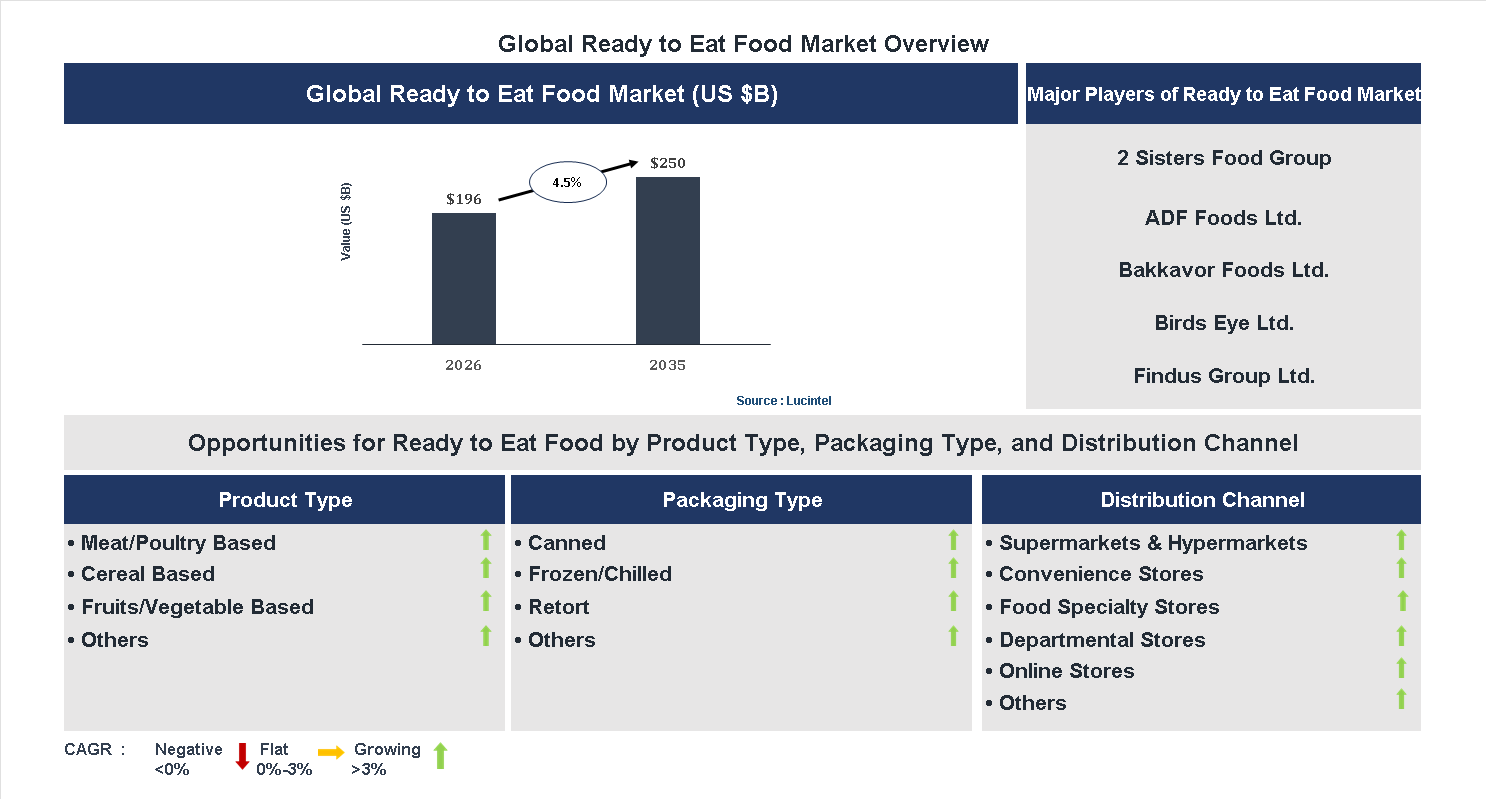
Key data points: The market size in 2035 = $250 billion, growth forecast = 4.5% annually for the next 8 years. Scroll below to get more insights. This market report covers trends, opportunities and forecasts in ready to eat food market to 2035 by product type (meat/poultry based, cereal based, fruits/vegetable based, and others), packaging type (canned, frozen/chilled, retort, and others), distribution channel (supermarkets & hypermarkets, convenience stores, food specialty stores, departmental stores, online stores, and others), and region (North America, Europe, Asia Pacific, and the Rest of the World)
We'll send your sample report shortly.
• Lucintel forecasts that, within the packaging type category, frozen/chilled is expected to witness the highest growth over the forecast period.
• Within the distribution channel category, supermarket & hypermarket is expected to witness the highest growth.
• In terms of region, APAC is expected to witness the highest growth over the forecast period. Gain valuable insights for your business decisions with our comprehensive 150+ page report. Sample figures with some insights are shown below.
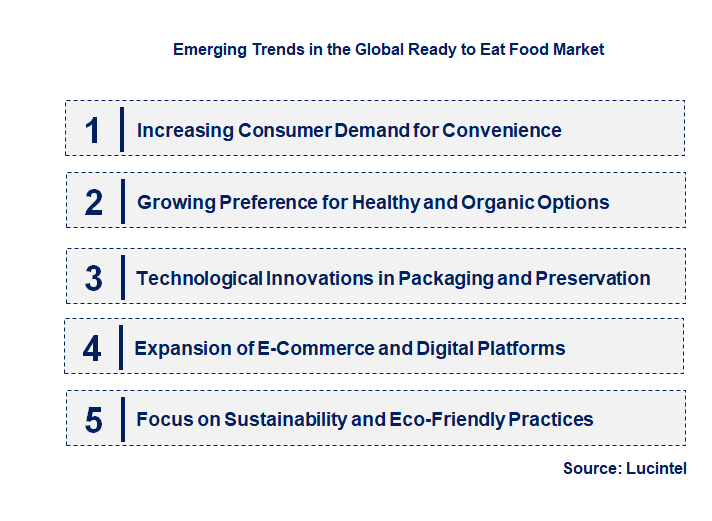
• Increasing Consumer Demand for Convenience: The modern consumer prioritizes time-saving solutions, leading to a surge in ready-to-eat products. Busy lifestyles, dual-income households, and urbanization drive the need for quick, easy-to-prepare meals. Companies are responding by expanding product lines that cater to on-the-go consumption, including portable packaging and single-serve options. This trend enhances market growth by making ready-to-eat foods more accessible and appealing to a broader demographic, including working professionals and students.
• Growing Preference for Healthy and Organic Options: Consumers are increasingly seeking nutritious, organic, and clean-label ready-to-eat foods. This shift is driven by rising health consciousness, awareness of food safety, and concerns over additives and preservatives. Manufacturers are innovating with healthier ingredients, such as plant-based proteins, whole grains, and natural preservatives. This trend is reshaping the market by encouraging product diversification and positioning ready-to-eat foods as a healthier alternative, thereby attracting health-conscious consumers and expanding market segments.
• Technological Innovations in Packaging and Preservation: Advances in packaging technology, such as vacuum sealing, modified atmosphere packaging, and biodegradable materials, are enhancing product shelf life and safety. These innovations reduce food waste, improve convenience, and meet sustainability goals. Additionally, smart packaging with QR codes and freshness indicators provides transparency and enhances consumer trust. This trend is pivotal in ensuring product quality, reducing environmental impact, and differentiating brands in a competitive market.
• Expansion of E-commerce and Digital Platforms: The rise of online grocery shopping and food delivery apps has revolutionized distribution channels for ready-to-eat foods. Consumers now prefer the convenience of ordering from home, leading to increased online sales and direct-to-consumer models. Companies are leveraging digital marketing, subscription services, and app-based promotions to reach wider audiences. This trend is reshaping the market landscape by enabling rapid product launches, personalized offerings, and real-time consumer engagement, thus expanding market reach and sales channels.
• Focus on Sustainability and Eco-friendly Practices: Environmental concerns are prompting companies to adopt sustainable sourcing, eco-friendly packaging, and waste reduction initiatives. Consumers are increasingly favoring brands that demonstrate environmental responsibility. This trend influences product development, supply chain management, and branding strategies, fostering a market environment that values sustainability. It also encourages innovation in biodegradable packaging and responsible sourcing, aligning market growth with global sustainability goals. These emerging trends are fundamentally reshaping the ready to eat food market by emphasizing convenience, health, technological advancement, digital integration, and sustainability. Together, they are driving innovation, expanding consumer bases, and fostering a more sustainable and responsive industry landscape.
• Growing Urbanization and Busy Lifestyles: The rapid urbanization worldwide has led to busier lifestyles, increasing demand for convenient meal options. Consumers prefer ready-to-eat foods that save time without compromising on nutrition. This shift has prompted manufacturers to innovate with diverse product offerings, including healthy, organic, and ethnic cuisines. The convenience factor is a key driver, expanding market reach across demographics and regions. As urban populations grow, the market is expected to see sustained demand, fostering industry growth and diversification.
• Technological Innovations in Food Processing: Advances in food processing technology have enhanced product quality, safety, and shelf life. Techniques such as high-pressure processing, vacuum packaging, and modified atmosphere packaging preserve freshness and nutrients. These innovations enable manufacturers to develop a wider variety of ready-to-eat options, including fresh, frozen, and minimally processed foods. Improved packaging also reduces waste and enhances convenience for consumers. As technology evolves, the market benefits from increased product innovation, better safety standards, and expanded distribution channels.
• Rising Health Consciousness and Demand for Nutritious Options: Consumers are increasingly prioritizing health and wellness, seeking nutritious, low-calorie, and functional foods. The market responds with offerings like organic, gluten-free, and plant-based ready-to-eat meals. This trend encourages companies to develop healthier formulations and transparent labeling to meet consumer expectations. The focus on health has also driven demand for allergen-free and clean-label products. As health awareness grows, the market is poised for continued expansion into premium and specialized segments.
• Expansion of E-commerce and Online Retail Channels: The growth of e-commerce platforms has revolutionized the distribution of ready-to-eat foods. Online retail offers consumers convenience, wider product selection, and doorstep delivery, boosting sales. Digital marketing and targeted advertising further enhance brand visibility and consumer engagement. The pandemic accelerated this trend, making online channels a primary purchase point. Retailers and manufacturers are investing in direct-to-consumer models, subscription services, and app-based ordering, which are expected to sustain growth and diversify market access.
• Increasing Focus on Sustainability and Eco-friendly Packaging: Environmental concerns are prompting companies to adopt sustainable practices and eco-friendly packaging solutions. Biodegradable, recyclable, and minimal packaging materials reduce environmental impact and appeal to eco-conscious consumers. Sustainable sourcing and waste reduction initiatives also enhance brand reputation. This focus on sustainability influences product development, supply chain management, and marketing strategies. As consumers become more environmentally aware, the market is shifting towards greener practices, fostering innovation and responsible growth within the industry. These developments are significantly transforming the ready to eat food market by enhancing product innovation, expanding distribution channels, and aligning with consumer values. The integration of technology, health consciousness, and sustainability initiatives is driving growth and competitiveness. As these trends continue, the market is expected to experience sustained expansion, offering diverse opportunities for stakeholders. Overall, these advancements are shaping a more dynamic, consumer-centric industry poised for long-term success.
• Expansion of Health-Conscious and Organic Product Lines: The rising consumer focus on health and wellness is creating a significant opportunity for brands to develop organic, low-calorie, and nutrient-rich ready-to-eat options. Incorporating superfoods, natural ingredients, and allergen-free products can attract health-conscious consumers. Companies can leverage clean-label trends and transparent sourcing to differentiate their offerings, thereby expanding their market share in premium segments and catering to dietary restrictions.
• Innovation in Packaging for Extended Shelf Life and Convenience: Advancements in packaging technology, such as vacuum sealing, modified atmosphere packaging, and biodegradable materials, enhance product freshness and shelf life. These innovations improve convenience for consumers by enabling easy handling, portion control, and portability. Investing in sustainable packaging solutions also aligns with environmental concerns, attracting eco-conscious buyers. This opportunity allows brands to reduce waste, minimize spoilage, and expand distribution reach, especially in emerging markets.
• Growing Demand for Ethnic and International Flavors: Consumers are increasingly seeking diverse culinary experiences, creating a demand for ethnic and international ready-to-eat foods. Companies can capitalize on this trend by introducing authentic recipes from various cultures, appealing to adventurous eaters and multicultural populations. This expansion into niche markets can boost sales, enhance brand recognition, and foster customer loyalty through unique flavor profiles and culturally inspired packaging.
• Strategic Expansion into Emerging Markets: Rapid urbanization and rising disposable incomes in developing regions present substantial growth opportunities. Entering emerging markets with tailored product offerings and localized marketing strategies can capture new customer bases. Establishing distribution networks, partnerships, and manufacturing facilities in these regions can reduce costs and improve market penetration. This approach enables companies to diversify revenue streams and establish a competitive presence in high-growth areas.
• Adoption of Digital and E-Commerce Platforms for Direct Consumer Engagement: The proliferation of online shopping and digital marketing offers brands a direct channel to reach consumers. Developing robust e-commerce platforms, subscription services, and mobile apps can enhance customer engagement and loyalty. Digital platforms also facilitate personalized marketing, quick feedback, and data collection for product innovation. Leveraging social media and online advertising can boost brand visibility, drive sales, and adapt swiftly to changing consumer preferences in the ready-to-eat food sector. The overall landscape of the ready to eat food market is poised for significant growth through these opportunities. Embracing health trends, technological innovations, cultural diversity, market expansion, and digital engagement will enable companies to strengthen their market position. Strategic focus on these areas will foster innovation, meet evolving consumer demands, and ensure long-term success in this competitive industry.
• Technological Innovations: The rapid development of food processing and packaging technologies has significantly enhanced product shelf life, convenience, and safety. Innovations such as vacuum packaging, microwaveable containers, and preservative-free formulations have made ready-to-eat foods more appealing and accessible. These advancements enable manufacturers to offer a diverse range of products that meet consumer demands for convenience and quality. Additionally, automation and AI-driven supply chain management improve efficiency, reduce costs, and ensure consistent product quality, further fueling market growth.
• Changing Consumer Lifestyles: Modern consumers increasingly seek quick, convenient meal options due to busy schedules, dual-income households, and urbanization. The shift towards on-the-go lifestyles has heightened demand for ready-to-eat foods that require minimal preparation. Additionally, health-conscious consumers are looking for nutritious, organic, and allergen-free options, prompting manufacturers to innovate and diversify their product offerings. This evolving consumer preference drives market expansion as companies adapt to meet these needs with innovative, health-oriented products.
• Economic Growth and Urbanization: Rising disposable incomes, especially in emerging economies, have increased consumers purchasing power, enabling them to spend more on convenience foods. Urbanization leads to a higher demand for quick meal solutions due to hectic lifestyles and limited home-cooking time. As cities expand, the distribution networks for ready-to-eat foods become more extensive, supporting market growth. Economic development also encourages investment in manufacturing infrastructure, further boosting production capacity and product availability across various regions.
• Product Diversification and Innovation: Companies are continuously developing new flavors, cuisines, and dietary options to cater to diverse consumer preferences. The introduction of ethnic, organic, gluten-free, and plant-based ready-to-eat products broadens the market scope. Innovation in packaging, such as eco-friendly materials and resealable containers, enhances consumer appeal and sustainability. This diversification not only attracts a wider customer base but also allows brands to differentiate themselves in a competitive landscape, fostering sustained growth. The challenges in the ready to eat food market are:-
• Stringent Food Safety and Regulatory Standards: Governments worldwide impose strict regulations concerning food safety, labeling, and quality standards. Compliance requires significant investment in quality control, testing, and certification processes, which can increase operational costs. Non-compliance risks product recalls, legal penalties, and damage to brand reputation. Navigating diverse regulatory environments across regions adds complexity for international companies, potentially hindering market entry and expansion.
• Supply Chain Complexities: The perishable nature of ready-to-eat foods necessitates an efficient, cold, and well-managed supply chain. Disruptions such as transportation delays, raw material shortages, and logistical inefficiencies can lead to product spoilage and increased costs. Maintaining freshness and quality during distribution is challenging, especially in remote or developing regions. Supply chain issues can limit product availability, impact profitability, and hinder the ability to meet rising consumer demand.
• Increasing Consumer Health Consciousness: Growing awareness about nutrition and health concerns prompts consumers to scrutinize ingredient lists and opt for healthier options. This shift challenges manufacturers to reformulate products with lower preservatives, sodium, and artificial additives, which can be technically demanding and costly. Additionally, the demand for organic and allergen-free products requires sourcing premium ingredients and adhering to strict standards, potentially increasing production costs and complicating product development. The ready to eat food market is driven by technological advancements, changing lifestyles, economic growth, and product innovation, which collectively foster expansion. However, regulatory hurdles, supply chain issues, and health-conscious consumer preferences pose significant challenges. These factors create a dynamic environment requiring strategic adaptation. Companies that effectively leverage technological progress and innovation while addressing regulatory and health concerns are positioned for sustained growth. Overall, the markets future depends on balancing these drivers and challenges to meet evolving consumer demands and maintain competitive advantage.
• 2 Sisters Food Group
• ADF Foods Ltd.
• Bakkavor Foods Ltd.
• Birds Eye Ltd.
• Findus Group Ltd.
• General Mills Inc.
• Greencore Group Plc.
• ITC Limited
• McCain Foods
• MTR Foods Pvt Ltd.
• Meat/Poultry Based
• Cereal Based
• Fruits/Vegetable Based
• Others
• Canned
• Frozen/Chilled
• Retort
• Others
• Supermarkets & Hypermarkets
• Convenience Stores
• Food Specialty Stores
• Departmental Stores
• Online Stores
• Others
• North America
• Europe
• Asia Pacific
• The Rest of the World
• United States: The US market has seen a surge in organic and plant-based ready-to-eat options, driven by health-conscious consumers. Innovations in packaging, such as eco-friendly materials, are gaining popularity. Convenience remains a key factor, with an increase in meal kits and portable snacks. Major players are expanding their product lines to include gluten-free and allergen-free options, aligning with dietary trends. E-commerce sales of ready-to-eat foods are rising rapidly, supported by advancements in delivery logistics. The focus on sustainability and transparency is influencing product development and marketing strategies.
• China: The Chinese market is experiencing rapid growth, fueled by urbanization and rising disposable incomes. Traditional flavors are being integrated into modern ready-to-eat products, appealing to local tastes. There is a significant increase in demand for health-oriented options, such as low-sodium and low-fat foods. E-commerce platforms are playing a crucial role in distribution, with online sales channels expanding swiftly. Innovative packaging and convenience formats are being adopted to cater to busy urban lifestyles. The government’s focus on food safety and quality standards is driving industry improvements and consumer confidence.
• Germany: The German market emphasizes organic, sustainable, and high-quality ready-to-eat foods. There is a growing preference for vegetarian and vegan options, reflecting increasing awareness of environmental and health issues. Retailers are expanding their product ranges to include gluten-free and allergen-free choices. Convenience is balanced with a focus on nutritional value, with many products offering added health benefits. The adoption of eco-friendly packaging and sustainable sourcing practices is prominent. Digital marketing and online shopping are gaining traction, facilitating easier access to diverse product offerings. Regulatory standards are strict, ensuring product safety and quality.
• India: The Indian ready to eat food market is expanding rapidly, driven by urbanization, changing lifestyles, and a young population. Traditional flavors are being modernized for convenience, with a focus on taste and affordability. There is a rising demand for healthy options, including low-fat and low-sugar products. The growth of e-commerce and food delivery apps is boosting sales and accessibility. Local and regional cuisines are gaining popularity, with innovative packaging making products suitable for on-the-go consumption. The market is also witnessing increased investment in product innovation, quality assurance, and branding to cater to diverse consumer preferences.
• Japan: The Japanese market is characterized by a focus on health, safety, and premium quality. Ready-to-eat meals often incorporate traditional ingredients with modern twists, appealing to health-conscious consumers. Functional foods with added health benefits, such as probiotics and vitamins, are gaining popularity. Convenience is enhanced through innovative packaging and portion control. The market is also seeing a rise in organic and allergen-free options. Sustainability practices, including eco-friendly packaging, are increasingly important. Digital platforms and subscription services are expanding, providing consumers with easy access to a wide range of products. Regulatory compliance and food safety standards remain a priority.


• 2 Sisters Food Group
• ADF Foods Ltd.
• Bakkavor Foods Ltd.
• Birds Eye Ltd.
• Findus Group Ltd.
• General Mills Inc.
• Greencore Group Plc.
• ITC Limited
• McCain Foods
• MTR Foods Pvt Ltd. Q6. Which ready to eat food market segment will be the largest in future? Answer: Lucintel forecasts that, within the packaging type category, frozen/chilled is expected to witness the highest growth over the forecast period. Q7. In ready to eat food market, which region is expected to be the largest in next 5 years? Answer: In terms of region, APAC is expected to witness the highest growth over the forecast period. Q8. Do we receive customization in this report? Answer: Yes, Lucintel provides 10% customization without any additional cost.


Choose a license that fits your team. Instant PDF delivery.
Prices exclude taxes. Instant delivery. Custom licensing available on request.
Market Report · July 22, 2026
Market Report · July 22, 2026
Market Report · July 22, 2026
Trusted partner for strategic intelligence and business growth


Receive a complimentary market analysis tailored to your industry. Our analysts will identify key growth opportunities and competitive dynamics specific to your business.

Market size, growth rate, and key trend analysis for your specific sector.

Top competitor positioning and market share analysis.

Strategic recommendations backed by data-driven insights.
Get curated market intelligence and competitive moves straight to your inbox.
By subscribing, you agree to receive our monthly insights. Unsubscribe anytime.
Receive a complimentary market analysis tailored to your industry. Our analysts will identify key growth opportunities and competitive dynamics specific to your business.
Market size, growth rate, and key trend analysis for your specific sector.
Top competitor positioning and market share analysis.
Strategic recommendations backed by data-driven insights.
Get curated market intelligence, emerging trends, and competitive moves straight to your inbox each month.
By subscribing, you agree to receive our monthly insights. Unsubscribe anytime.
We'll send your sample report shortly.