
Market Report · July 22, 2026

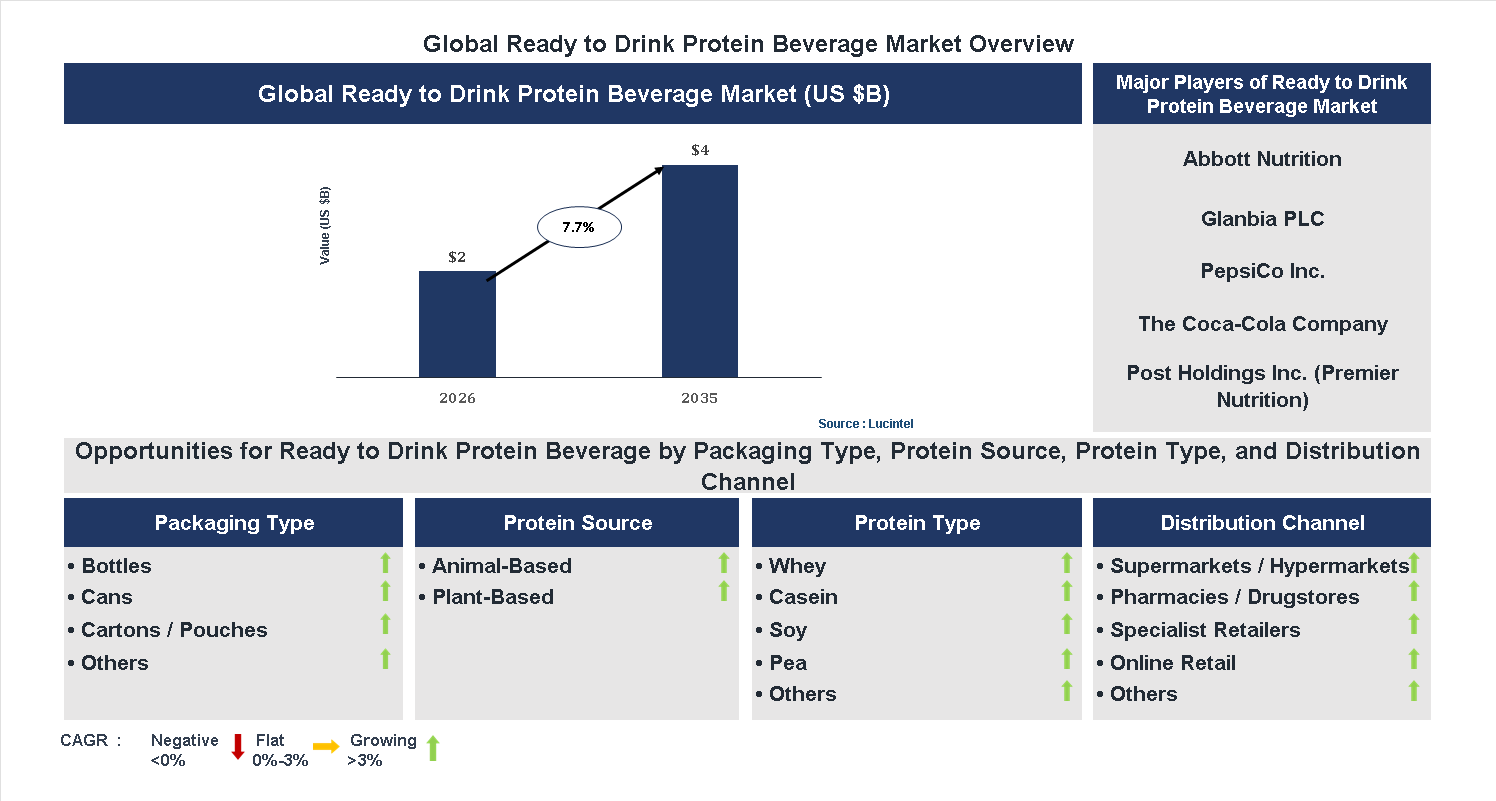
Key data points: The market size in 2035 = $4 billion, growth forecast = 7.7% annually for the next 8 years. Scroll below to get more insights. This market report covers trends, opportunities and forecasts in ready to drink protein beverage market to 2035 by packaging type (bottles, cans, cartons / pouches, and others), protein source (animal-based and plant-based), protein type (whey, casein, soy, pea, and others), distribution channel (supermarkets / hypermarkets, pharmacies / drugstores, specialist retailers, online retail, and others), and region (North America, Europe, Asia Pacific, and the Rest of the World)
We'll send your sample report shortly.
• Lucintel forecasts that, within the packaging type category, bottle is expected to witness the highest growth over the forecast period.
• Within the protein type category, whey is expected to witness the highest growth.
• In terms of region, APAC is expected to witness the highest growth over the forecast period. Gain valuable insights for your business decisions with our comprehensive 150+ page report. Sample figures with some insights are shown below.
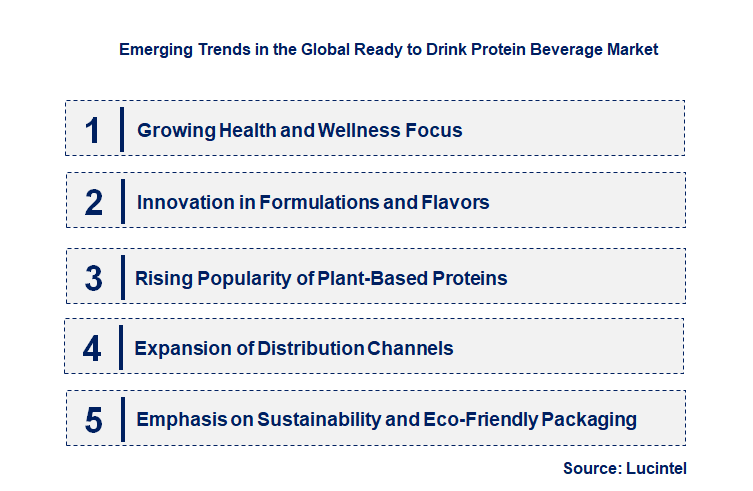
• Growing Health and Wellness Focus: Consumers are prioritizing health and wellness, leading to increased demand for nutritious, functional beverages. RTD protein drinks are seen as convenient solutions for muscle recovery, weight management, and overall health. This trend encourages brands to formulate products with natural ingredients, low sugar content, and added health benefits, thereby expanding their consumer base and fostering brand loyalty.
• Innovation in Formulations and Flavors: Companies are investing in R&D to develop innovative formulations that cater to diverse dietary needs, such as plant-based, gluten-free, and low-calorie options. Unique flavors and functional ingredients like superfoods, adaptogens, and probiotics are being incorporated to enhance taste and health benefits. This trend helps brands differentiate themselves in a competitive market and attract a broader audience.
• Rising Popularity of Plant-Based Proteins: The shift towards plant-based diets is significantly impacting the RTD protein beverage market. Plant-derived proteins like pea, rice, and hemp are gaining popularity due to their sustainability, digestibility, and allergen-free properties. This trend aligns with consumer preferences for ethical and environmentally friendly products, expanding market opportunities for plant-based RTD drinks.
• Expansion of Distribution Channels: The market is witnessing a shift from traditional retail outlets to online platforms, gyms, and specialty stores. E-commerce provides convenience and wider access, especially among younger consumers. Additionally, collaborations with fitness centers and health clubs are increasing product visibility and credibility, facilitating rapid market penetration and consumer engagement.
• Emphasis on Sustainability and Eco-Friendly Packaging: Consumers are increasingly concerned about environmental impact, prompting brands to adopt sustainable practices. Eco-friendly packaging, such as biodegradable bottles and recyclable materials, is becoming standard. This trend not only enhances brand image but also appeals to environmentally conscious consumers, influencing purchasing decisions and fostering long-term loyalty. These emerging trends are fundamentally transforming the ready to drink protein beverage market by emphasizing health, innovation, sustainability, and strategic distribution. They are driving product diversification, expanding consumer bases, and fostering sustainable growth, ultimately reshaping the competitive landscape and setting new industry standards.
• Growing Health Consciousness: The increasing awareness of health benefits associated with protein intake is driving consumers toward RTD protein beverages. This trend is supported by rising obesity rates and a focus on wellness, prompting demand for convenient, nutritious options. Companies are responding with innovative formulations that cater to specific dietary needs, such as low sugar or plant-based proteins. The market benefits from a broader consumer base seeking quick, healthful solutions, which boosts sales and encourages product diversification.
• Innovation in Product Formulations: Advances in ingredients and flavor profiles are enabling brands to develop more appealing RTD protein drinks. Incorporating plant-based, organic, and functional ingredients enhances product attractiveness. These innovations improve taste, texture, and nutritional value, appealing to a wider audience, including vegans and those with dietary restrictions. As a result, companies can differentiate their products, increase consumer loyalty, and expand their market share, fostering overall industry growth.
• Packaging and Sustainability Initiatives: Eco-friendly packaging solutions are gaining prominence as consumers become more environmentally conscious. Brands are adopting recyclable, biodegradable, and lightweight containers to reduce environmental impact. These initiatives not only meet consumer expectations but also comply with regulatory standards, enhancing brand reputation. Sustainable packaging attracts eco-minded consumers, encouraging brand loyalty and supporting market expansion through responsible practices.
• Strategic Partnerships and Market Expansion: Collaborations between beverage companies, fitness brands, and health organizations are facilitating market penetration and product innovation. These partnerships enable access to new distribution channels and consumer segments. Additionally, expanding into emerging markets with tailored marketing strategies is boosting global reach. Such collaborations foster innovation, increase brand visibility, and accelerate growth, making the RTD protein beverage market more competitive and diverse.
• Technological Advancements and Personalization: The integration of technology, such as AI and data analytics, allows brands to offer personalized nutrition solutions. Customized beverages based on individual health data are gaining popularity, enhancing consumer engagement. Digital platforms facilitate direct-to-consumer sales and targeted marketing. These technological innovations improve product relevance, foster loyalty, and open new revenue streams, significantly impacting the markets evolution toward more tailored, consumer-centric offerings. The overall impact of these developments is a robust, innovative, and sustainable market landscape. Increased consumer interest, product diversification, and technological integration are driving growth, expanding market reach, and fostering competitive differentiation. As a result, the RTD protein beverage market is poised for sustained expansion, benefiting both consumers and industry stakeholders through improved offerings and increased accessibility.
• Expansion into Emerging Markets: The growing middle class and increasing health awareness in regions like Asia-Pacific and Latin America present significant opportunities for market expansion. Localized product offerings tailored to regional tastes and preferences can drive adoption. Infrastructure improvements and rising disposable incomes further support market penetration. Companies investing in regional distribution channels and marketing strategies can capitalize on these demographic shifts, establishing a strong foothold in high-growth areas and boosting overall market revenue.
• Innovation in Functional Ingredients and Formulations: Incorporating novel ingredients such as adaptogens, superfoods, and probiotics enhances product appeal and efficacy. Developing formulations that address specific health concerns like immunity, digestion, and muscle recovery can differentiate brands. Advances in ingredient technology enable longer shelf life and better taste profiles, attracting health-conscious consumers. Continuous R&D efforts to create innovative, science-backed products will foster consumer trust and loyalty, fueling market growth through product differentiation and premium offerings.
• Growing Demand for Plant-Based and Clean-Label Products: Consumers increasingly prefer plant-based proteins and transparent ingredient lists, driving demand for clean-label beverages. Developing plant-based protein options like pea, rice, and hemp caters to vegetarian, vegan, and flexitarian consumers. Emphasizing natural, non-GMO, and allergen-free ingredients aligns with health and sustainability trends. Brands that effectively communicate these attributes can capture a larger share of the health-conscious demographic, expanding market reach and encouraging product innovation in this segment.
• Strategic Collaborations and Acquisitions: Partnerships between beverage companies, ingredient suppliers, and fitness brands can accelerate product development and distribution. Mergers and acquisitions enable access to new technologies, markets, and consumer bases, strengthening competitive positioning. Collaborative marketing campaigns can enhance brand visibility and credibility. Such strategic moves facilitate faster innovation cycles, broaden product portfolios, and enable companies to respond swiftly to evolving consumer preferences, thereby driving overall market growth.
• Adoption of Sustainable Packaging and Eco-Friendly Practices: Consumers are increasingly concerned about environmental impact, prompting brands to adopt sustainable packaging solutions like biodegradable bottles and recyclable materials. Implementing eco-friendly manufacturing processes reduces carbon footprint and appeals to environmentally conscious buyers. Transparency about sustainability efforts can enhance brand reputation and customer loyalty. As sustainability becomes a key purchasing criterion, companies investing in green initiatives will gain competitive advantage, fostering long-term growth and aligning with global environmental goals. The overall market outlook is positively influenced by these growth opportunities, which collectively drive innovation, expand geographic reach, and meet evolving consumer demands. Embracing these strategies will enable industry players to capitalize on emerging trends, enhance competitiveness, and sustain long-term growth in the competitive ready to drink protein beverage market.
• Technological Innovation: The development of advanced processing and packaging technologies has enabled manufacturers to produce longer-lasting, convenient, and appealing protein beverages. Innovations such as microencapsulation and aseptic packaging preserve product freshness and nutritional integrity, attracting health-conscious consumers. These technological advancements facilitate product diversification, including plant-based and functional beverages, thereby expanding market reach. As technology continues to evolve, companies can introduce novel formulations that meet consumer demands for taste, convenience, and health benefits, significantly boosting market growth.
• Rising Health Awareness: Increasing awareness about fitness, nutrition, and wellness has led consumers to seek convenient protein sources to support active lifestyles. The growing prevalence of obesity, diabetes, and other lifestyle-related health issues further fuels demand for nutritious, high-protein beverages. Consumers are now more inclined to choose ready-to-drink options over traditional supplements due to ease of consumption and portability. This shift in consumer behavior is driving manufacturers to innovate and expand their product portfolios, thereby propelling market growth.
• Economic Growth and Urbanization: Rapid economic development and urbanization in emerging markets have increased disposable incomes and changed lifestyles, leading to higher consumption of convenience foods and beverages. Urban consumers prefer ready-to-drink protein beverages for their portability and quick nutrition, aligning with busy schedules. The expansion of retail channels, including supermarkets and online platforms, has made these products more accessible. This economic and demographic shift creates a favorable environment for market expansion, especially in developing regions.
• Regulatory Environment and Health Claims: Stringent regulations regarding health claims, ingredient disclosures, and labeling standards influence product formulation and marketing strategies. Compliance with these regulations ensures consumer trust and product credibility but can also increase operational costs. Companies must navigate complex regulatory landscapes across different regions, which can delay product launches or restrict certain ingredients. Nonetheless, transparent labeling and adherence to regulations can serve as competitive advantages, fostering consumer confidence and supporting market growth.
• Consumer Preference for Plant-Based Proteins: The rising demand for plant-based and organic ingredients is reshaping the market landscape. Consumers are increasingly seeking vegan, gluten-free, and non-GMO options due to health, ethical, and environmental concerns. This trend encourages manufacturers to develop plant-based protein beverages using ingredients like pea, rice, and hemp proteins. The shift towards plant-based products not only broadens consumer base but also aligns with sustainability goals, thereby driving innovation and growth within the market. The challenges in the ready to drink protein beverage market are:
• Regulatory Complexity and Compliance Costs: Navigating diverse regulatory frameworks across regions poses significant challenges for market players. Stringent rules regarding health claims, ingredient disclosures, and labeling can delay product launches and increase compliance costs. Non-compliance risks include fines, product recalls, and damage to brand reputation. Smaller companies may find it particularly difficult to meet these requirements, limiting market entry and innovation. Ensuring regulatory adherence while maintaining product quality and profitability remains a critical challenge for sustained growth.
• Intense Market Competition: The market is highly competitive, with numerous established brands and new entrants vying for consumer attention. Differentiating products through flavor, formulation, and branding becomes increasingly difficult as competitors adopt similar strategies. Price wars and promotional activities can erode profit margins, while innovation cycles demand continuous investment. This competitive pressure can hinder market expansion for smaller players and necessitate significant marketing expenditure for brand loyalty, posing a substantial challenge to sustainable growth.
• Consumer Skepticism and Ingredient Transparency: Despite rising health consciousness, some consumers remain skeptical about the nutritional claims and ingredient quality of ready-to-drink protein beverages. Concerns over artificial additives, preservatives, and undisclosed ingredients can hinder trust and purchase intent. Transparency in ingredient sourcing and labeling is crucial but can increase production costs and complexity. Overcoming consumer skepticism requires effective communication and certification, which can be resource-intensive, impacting overall market growth. The ready to drink protein beverage market is shaped by technological advancements, health trends, economic growth, regulatory frameworks, and consumer preferences. While these drivers present significant opportunities for expansion, challenges such as regulatory compliance, intense competition, and consumer skepticism must be strategically managed. The interplay of these factors will determine the markets future trajectory, with innovation and transparency being key to overcoming obstacles and capitalizing on emerging opportunities. Overall, the market is poised for growth, driven by evolving consumer needs and technological progress, provided companies effectively address regulatory and competitive challenges.
• Abbott Nutrition
• Glanbia PLC
• PepsiCo Inc.
• The Coca-Cola Company
• Post Holdings Inc. (Premier Nutrition)
• Danone SA
• Nestle S.A.
• Halen Brands Inc.
• Koia Inc.
• Labrada Nutrition
• Bottles
• Cans
• Cartons / Pouches
• Others
• Animal-Based
• Plant-Based
• Whey
• Casein
• Soy
• Pea
• Others
• Supermarkets / Hypermarkets
• Pharmacies / Drugstores
• Specialist Retailers
• Online Retail
• Others
• North America
• Europe
• Asia Pacific
• The Rest of the World
• United States: The US market has seen a surge in plant-based protein drinks, driven by vegan and vegetarian consumer segments. Major brands are launching innovative flavors and functional ingredients like probiotics and adaptogens. E-commerce sales are expanding rapidly, and there is increased focus on clean-label and organic products. Strategic partnerships with fitness centers and influencers are boosting brand visibility. Regulatory standards are evolving to ensure product transparency and safety, fostering consumer trust. Overall, the US remains a leader in product innovation and market penetration.
• China: China’s market is experiencing rapid growth due to rising health awareness and urbanization. Local brands are gaining popularity by offering affordable, locally flavored options. The demand for sports nutrition and functional beverages is increasing among young consumers. E-commerce platforms like Alibaba and JD.com are crucial distribution channels. Companies are investing in marketing campaigns targeting fitness enthusiasts and health-conscious urban populations. Regulatory policies are becoming stricter, emphasizing product safety and labeling. The market is also witnessing a shift towards natural and organic ingredients, aligning with global trends.
• Germany: The German market is characterized by a strong preference for organic and sustainably sourced products. Consumers are increasingly interested in high-quality, minimally processed beverages. Innovation focuses on dairy-free and vegan options, with a growing number of plant-based protein drinks. Retail chains are expanding shelf space for functional beverages, and online sales are growing steadily. Regulatory frameworks emphasize transparency and environmental sustainability. The market also benefits from a well-established fitness culture, encouraging product innovation tailored to active lifestyles. Overall, Germany’s market emphasizes health, sustainability, and quality.
• India: India’s market is witnessing rapid expansion due to rising health consciousness and increasing disposable incomes. Local brands are innovating with traditional ingredients like turmeric and ashwagandha, blending them with modern formulations. The urban middle class is driving demand for convenient, nutritious beverages. E-commerce and modern retail outlets are key distribution channels. The government’s focus on wellness and nutrition policies supports market growth. Consumers are showing interest in natural, organic, and plant-based products. The market is also influenced by global brands entering through partnerships and acquisitions, expanding product variety and availability.
• Japan: Japan’s market is characterized by a focus on functional benefits, such as energy, immunity, and skin health. Consumers prefer low-sugar, low-calorie options with added health benefits. Innovation includes incorporating traditional ingredients like matcha and seaweed. The aging population drives demand for products supporting health and longevity. Retail channels include convenience stores and online platforms, with a focus on premium and artisanal products. Regulatory standards emphasize safety and ingredient transparency. The market is also influenced by a strong culture of health and wellness, encouraging continuous product innovation and premiumization.


• Abbott Nutrition
• Glanbia PLC
• PepsiCo Inc.
• The Coca-Cola Company
• Post Holdings Inc. (Premier Nutrition)
• Danone SA
• Nestle S.A.
• Halen Brands Inc.
• Koia Inc.
• Labrada Nutrition Q6. Which ready to drink protein beverage market segment will be the largest in future? Answer: Lucintel forecasts that, within the packaging type category, bottle is expected to witness the highest growth over the forecast period. Q7. In ready to drink protein beverage market, which region is expected to be the largest in next 5 years? Answer: In terms of region, APAC is expected to witness the highest growth over the forecast period. Q8. Do we receive customization in this report? Answer: Yes, Lucintel provides 10% customization without any additional cost.


Choose a license that fits your team. Instant PDF delivery.
Prices exclude taxes. Instant delivery. Custom licensing available on request.
Market Report · July 22, 2026
Market Report · July 22, 2026
Market Report · July 22, 2026
Trusted partner for strategic intelligence and business growth


Receive a complimentary market analysis tailored to your industry. Our analysts will identify key growth opportunities and competitive dynamics specific to your business.

Market size, growth rate, and key trend analysis for your specific sector.

Top competitor positioning and market share analysis.

Strategic recommendations backed by data-driven insights.
Get curated market intelligence and competitive moves straight to your inbox.
By subscribing, you agree to receive our monthly insights. Unsubscribe anytime.
Receive a complimentary market analysis tailored to your industry. Our analysts will identify key growth opportunities and competitive dynamics specific to your business.
Market size, growth rate, and key trend analysis for your specific sector.
Top competitor positioning and market share analysis.
Strategic recommendations backed by data-driven insights.
Get curated market intelligence, emerging trends, and competitive moves straight to your inbox each month.
By subscribing, you agree to receive our monthly insights. Unsubscribe anytime.
We'll send your sample report shortly.