
Market Report · July 31, 2026

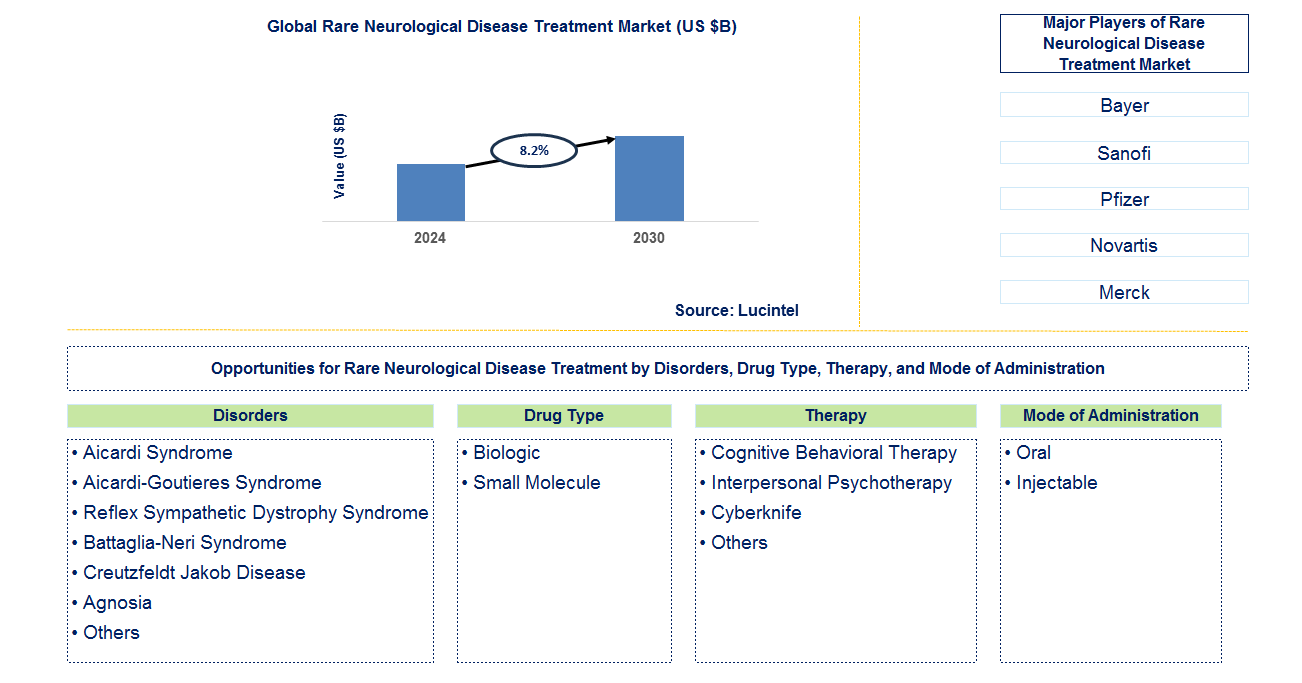
Key data points: The growth forecast = 8.2% annually for the next 6 years. Scroll below to get more insights. This market report covers trends, opportunities, and forecasts in the global rare neurological disease treatment market to 2030 by disorders (aicardi syndrome, aicardi-goutieres syndrome, reflex sympathetic dystrophy syndrome, battaglia-neri syndrome, creutzfeldt jakob disease, agnosia, and others), drug type (biologic and small molecule), therapy (cognitive behavioral therapy, interpersonal psychotherapy, cyberknife, and others), mode of administration (oral and injectable), and region (North America, Europe, Asia Pacific, and the Rest of the World)
We'll send your sample report shortly.
• United States: Recent developments include FDA approvals for gene therapies and orphan drugs targeting rare neurological disorders. These approvals are supported by incentives for research in rare diseases, fostering innovation in treatment approaches.
• China: China expands its focus on rare diseases through regulatory reforms and drug development incentives. Recent partnerships with global pharmaceutical firms drive clinical trials and accelerate the introduction of cutting-edge treatments.
• Germany: Germany has been a leader in fostering rare disease research through collaborations between universities, research institutes, and pharmaceutical companies. Recent developments include advancements in precision medicine and neuromodulation therapies for rare neurological conditions.
• India: India makes progress in improving access to treatments for rare neurological diseases by implementing policy changes, such as the Rare Diseases Policy, and fostering collaboration between public and private sectors to facilitate clinical research.
• Japan: On-going advancements include increasing the availability of advanced therapies for rare neurological disorders, supported by its national health insurance system. Recent initiatives focus on gene therapy and patient-centric care models.
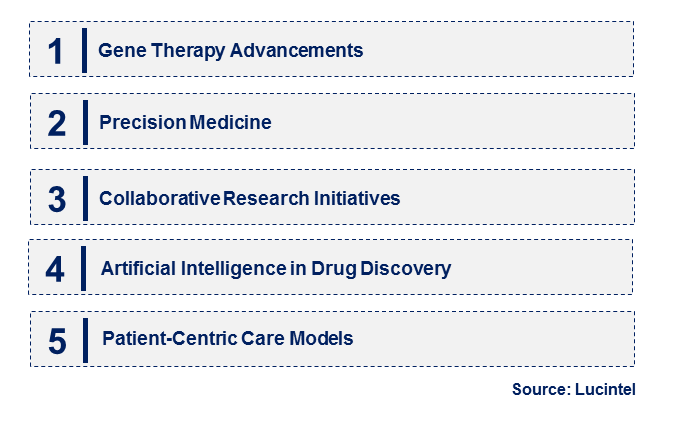
• Gene Therapy Advancements: The rise of gene therapy in treating rare neurological diseases has brought hope for potential cures. Advances in gene-editing technologies, such as CRISPR, provide targeted treatments that address the underlying genetic causes of diseases.
• Precision Medicine: Tailored treatments based on individual genetic profiles are becoming more prominent. Precision medicine enables more effective therapies, particularly in complex neurological disorders, improving patient outcomes by offering targeted solutions.
• Collaborative Research Initiatives: Increased collaboration between pharmaceutical companies, research institutions, and governments is accelerating the development of treatments. These partnerships drive innovation and bring therapies to market more quickly.
• Artificial Intelligence in Drug Discovery: AI is being leveraged to streamline drug discovery processes, allowing for faster identification of potential treatments. This trend speeds up the development of therapies for rare neurological conditions by analyzing complex biological data.
• Patient-centric Care Models: A focus on holistic care, including mental health and long-term support, is emerging as a key trend. This shift ensures that treatment not only addresses the physical symptoms of neurological diseases but also the overall well-being of patients. These trends are reshaping the rare neurological disease treatment market by providing more personalized and efficient care while accelerating the development of innovative therapies.
• FDA approvals for New Therapies: The FDA has recently approved multiple gene and cell therapies targeting rare neurological diseases, such as spinal muscular atrophy, which significantly improve patient outcomes and set new standards in treatment.
• Expansion of Orphan Drug Programs: Various countries expand their orphan drug programs, offering tax incentives and regulatory support to companies developing treatments for rare neurological diseases, encouraging more investment and research.
• Advances in Neuroprosthetics: Innovations in neuroprosthetic devices provide new options for patients with rare neurological disorders, offering enhanced mobility and cognitive support. These developments improve the quality of life for affected individuals.
• Collaborations in R&D: Partnerships between global pharmaceutical companies and local research institutions accelerate the discovery of novel treatments. These collaborations are essential for developing therapies in countries with emerging markets.
• Telemedicine for Neurological Care: The rise of telemedicine platforms enables better management of rare neurological diseases, particularly in remote areas. This development expands access to specialists and provides continuous care for patients. These developments push the boundaries of how rare neurological diseases are treated, offering new hope to patients and transforming healthcare approaches globally.
• Gene Therapy Applications: The growing application of gene therapy in rare neurological disease treatment creates substantial growth opportunities, especially in targeting previously untreatable genetic disorders. These therapies offer long-term solutions by addressing the root causes of diseases.
• Biopharmaceutical Innovation: Advances in biologics, such as monoclonal antibodies and enzyme replacement therapies, create opportunities for more targeted treatment options. Biopharmaceuticals become key tools in treating rare neurological conditions.
• AI-driven Diagnostics: Artificial intelligence revolutionizes diagnostics for rare neurological diseases, enabling early detection and personalized treatment plans. This provides significant growth opportunities in improving disease management and outcomes.
• Telemedicine and Remote Monitoring: The integration of telemedicine and remote monitoring solutions expands access to care, particularly in underserved regions. This opportunity allows patients with rare neurological diseases to receive ongoing care and specialist consultations more efficiently.
• Clinical Trial Expansion: Expanding clinical trials for rare neurological diseases is critical for developing new therapies. Governments and companies invest in broadening trial access, enabling more patients to participate and facilitating the discovery of novel treatments. These strategic growth opportunities pave the way for more innovative and effective treatments in the rare neurological disease treatment market.
• Advances in Gene Therapy: Innovations in gene therapy revolutionize treatment approaches for rare neurological diseases, providing new opportunities for long-term cures.
• Increased Government Funding: Governments allocate more funds for rare disease research, offering incentives that promote the development of new treatments.
• Orphan Drug Designations: Regulatory frameworks supporting orphan drug designations encourage pharmaceutical companies to invest in rare disease treatments by offering financial and legal incentives.
• Technological Advancements in diagnostics: Improvements in diagnostic technologies, such as AI-powered tools, enable earlier and more accurate detection of rare neurological disorders.
• Global Collaborations: International research collaborations drive faster innovation and development of treatments by pooling resources and expertise across borders. Challenges in the rare neurological disease treatment market are:
• High Treatment Costs: The cost of developing and delivering treatments for rare neurological diseases is often prohibitive, limiting access for many patients.
• Limited Patient Populations: Small patient populations make it challenging for pharmaceutical companies to justify large-scale investments in research and development.
• Regulatory Hurdles: Navigating complex regulatory environments in different countries can delay the approval and availability of new therapies. These drivers and challenges shape the trajectory of the rare neurological disease treatment market, influencing the availability and effectiveness of therapies globally.
• Bayer
• Sanofi
• Pfizer
• Novartis
• Merck
• CSL
• Johnson & Johnson Services
• Allergan
• Aquestive Therapeutics
• Kedrion Biopharma
• Aicardi Syndrome
• Aicardi-Goutieres Syndrome
• Reflex Sympathetic Dystrophy Syndrome
• Battaglia-Neri Syndrome
• Creutzfeldt Jakob Disease
• Agnosia
• Others
• Biologic
• Small Molecule
• Cognitive Behavioral Therapy
• Interpersonal Psychotherapy
• Cyberknife
• Others
• Oral
• Injectable
• North America
• Europe
• Asia Pacific
• The Rest of the World
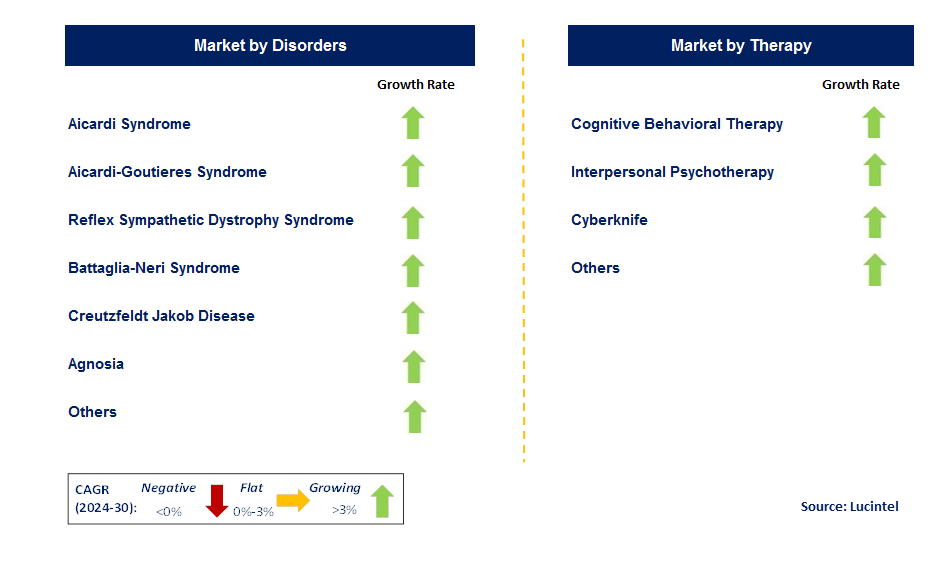
• Lucintel forecasts that, within the disorder types category, aicardi syndrome is expected to witness the highest growth over the forecast period.
• Within the therapy category, cognitive behavioral therapy will remain the largest segment over the forecast period.
• In terms of regions, North America is expected to witness the highest growth over the forecast period.


• Bayer
• Sanofi
• Pfizer
• Novartis
• Merck
• CSL
• Johnson & Johnson Services
• Allergan
• Aquestive Therapeutics
• Kedrion Biopharma Q5. Which rare neurological disease treatment market segment will be the largest in future? Answer: Lucintel forecasts that aicardi syndrome is expected to witness the highest growth over the forecast period. Q6. In rare neurological disease treatment market, which region is expected to be the largest in next 5 years? Answer: North America is expected to witness the highest growth over the forecast period. Q.7 Do we receive customization in this report? Answer: Yes, Lucintel provides 10% customization without any additional cost.


Choose a license that fits your team. Instant PDF delivery.
Prices exclude taxes. Instant delivery. Custom licensing available on request.
Market Report · July 31, 2026
Market Report · July 31, 2026
Market Report · July 31, 2026
Trusted partner for strategic intelligence and business growth


Receive a complimentary market analysis tailored to your industry. Our analysts will identify key growth opportunities and competitive dynamics specific to your business.

Market size, growth rate, and key trend analysis for your specific sector.

Top competitor positioning and market share analysis.

Strategic recommendations backed by data-driven insights.
Get curated market intelligence and competitive moves straight to your inbox.
By subscribing, you agree to receive our monthly insights. Unsubscribe anytime.
Receive a complimentary market analysis tailored to your industry. Our analysts will identify key growth opportunities and competitive dynamics specific to your business.
Market size, growth rate, and key trend analysis for your specific sector.
Top competitor positioning and market share analysis.
Strategic recommendations backed by data-driven insights.
Get curated market intelligence, emerging trends, and competitive moves straight to your inbox each month.
By subscribing, you agree to receive our monthly insights. Unsubscribe anytime.
We'll send your sample report shortly.