
Market Report · May 18, 2026

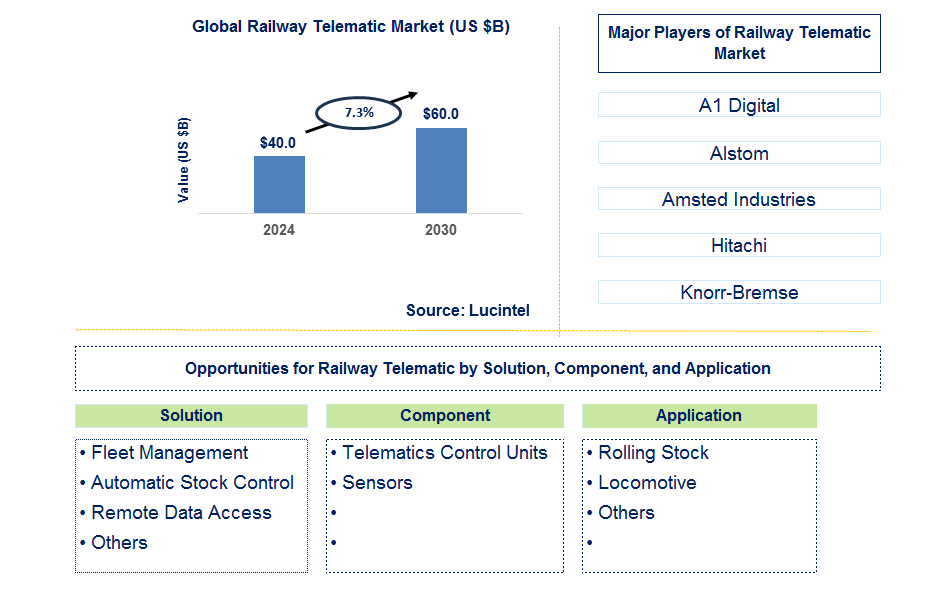
Key data points: The market size in 2030 = $7.8 billion, growth forecast = 7.3% annually for the next 6 years. Scroll below to get more insights. This market report covers trends, opportunities, and forecasts in the global railway telematic market to 2030 by solution (fleet management, automatic stock control, remote data access, and others), component (telematics control units and sensors), application (rolling stock, locomotive, and others), end use (passenger transit, freight, and others), and region (North America, Europe, Asia Pacific, and the Rest of the World)
We'll send your sample report shortly.
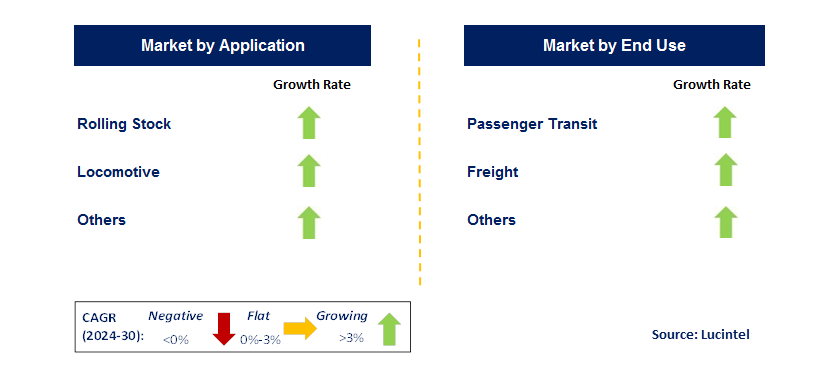
• Lucintel forecasts that, within the solution category, fleet management is expected to witness the highest growth over the forecast period due to its significant use in railway sector to maximize resource usage and boost operational effectiveness.
• Within the application category, rolling stock will remain the largest segment due to growing demand for telematics in this settings to enable real-time train tracking and monitoring.
• In terms of region, North America is expected to witness the highest growth over the forecast period due to significant growth of freight and logistic sector and presence of key players in the region. Gain valuable insights for your business decisions with our comprehensive 150+ page report.
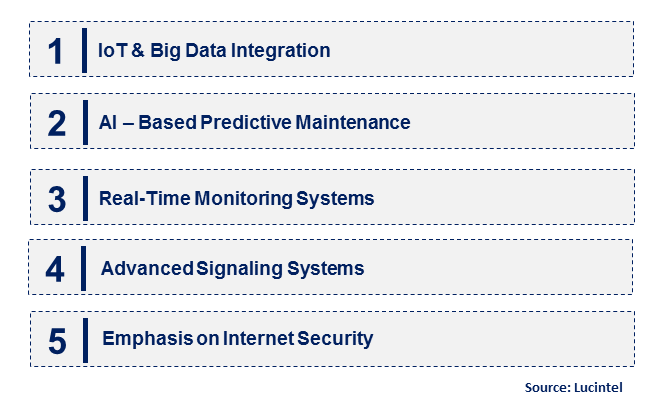
• IoT & Big Data Integration: For railway telematics, the integration of IoT and big data analytics is becoming critical. Internet of Things (IoT) devices collect real-time data from various sources, while big data analytics enable predictive maintenance and operational optimization. This leads to better decision-making, improved effectiveness, and reduced costs associated with equipment failure or downtime.
• AI-Based Predictive Maintenance: The use of AI technologies for predictive maintenance is increasing within railways worldwide. Through the analysis of both historical data and real-time events, AI algorithms can predict when equipment failures might occur, allowing enough time for maintenance actions before disruptions happen. This trend increases reliability and safety levels throughout rail systems.
• Real-Time Monitoring Systems: The implementation of real-time monitoring systems is aimed at monitoring train performance, track conditions, and passenger information. This data can be used instantly for optimizing train schedules, enhancing safety, and improving the system's efficiency.
• Advanced Signaling Systems Development: The development of advanced signaling systems with the integration of telematics solutions is gaining interest. These systems provide accurate and real-time information on train movements and track conditions, thus improving train control, safety, and reducing delays.
• Emphasis on Internet Security: Cybersecurity is a major concern in an era where railways are becoming smarter. Strong cybersecurity measures must be taken to protect telematic systems from cyber threats and preserve the accuracy of operational data.
• Smart Railways and Infrastructure Growth: Smart railways envision integrating smart infrastructure with telecommunications for sustainability and efficiency. Effective resource management, energy reduction efforts, and sustainable transport support are achieved through smart railway innovations that incorporate modern technology.
• Cloud-Based Solutions Expansion: These solutions include centralized data management capacity and real-time access to information, making it possible to run rail operations efficiently as all stakeholders collaborate on a single platform called cloud-based telematics solutions. These trends are shaping the Railway Telematics market by enhancing operational efficiency, safety, and sustainability. Innovative transportation management has been made possible through the adoption of advanced technologies such as AI, IoT, and cloud computing.
• Integrated IoT Platforms Deployment: Integrated IoT platforms have revolutionized the railway telematics landscape. By connecting various sensors and devices across the railway network, they enable comprehensive data collection regarding train performance, track conditions, and the environment. This, in turn, has led to better real-time monitoring and improved operational efficiency.
• Advances in Predictive Maintenance Technologies: With the help of AI and machine learning, predictive maintenance has reached a new level where the components of a train are constantly analyzed to forecast potential failures. By keeping up with this system, scheduling is always timely, resulting in very few instances of unexpected breakdowns.
• Advanced Signaling Systems Implementation: To improve train control and safety, advanced signaling systems like ETCS and CBTC (Communication-Based Train Control) are being used. These systems provide accurate control over the movement of trains, reduce delays, and increase network capacity.
• Improved Passenger Information Systems Introduction: Enhanced passenger information systems provide live updates on train schedules, delays, and other useful information. These systems improve the customer experience during travel and help manage movement during peak periods.
• Smart Rail Infrastructural Development: Smart rail infrastructure projects aimed at optimizing resource use through telematics integration with advanced technology are being implemented. Smart signaling systems that support real-time decision-making and track monitoring systems are some examples.
• Cloud-Based Telecommunication Solutions Expansion: Cloud-based telecommunication solutions, which centralize data management for rail operators, have been deployed. Such solutions offer scalable and flexible data storage, access, and analysis capabilities.
• Focus on Energy Efficiency and Sustainability: There is a growing focus on integrating telematics with energy management systems geared toward sustainability. These systems help optimize energy consumption and mitigate the environmental effects of railway operations. These developments are enhancing safety, efficiency, and passenger experience, leading to significant improvements in railway operations. The future of the Railway Telematics market is being shaped by the integration of advanced technologies and an emphasis on sustainability.
• Smart Ticketing and Passenger Experience: Smart ticketing solutions with integrated telematic systems provide an opportunity to improve the passenger experience. These solutions ensure smooth bookings, offer real-time updates, and provide personalized services, thereby improving customer satisfaction and enhancing operational efficiency.
• Integration with Smart City Initiatives: Railway telematics can be integrated with smart city initiatives to support efficient transportation and urban mobility. This integration helps manage rail networks as part of a broader smart transportation ecosystem, improving overall urban infrastructure.
• Expansion in Developing Markets: The Railway Telematics market presents vast growth potential within developing markets, particularly in Asia Pacific (APAC) and African countries. Rail modernization projects, along with investments in rail infrastructure development, have resulted in surging demands for sophisticated telematic solutions to enhance operational efficiencies while maintaining safety levels.
• Development of Advanced Safety Systems: Advanced safety systems, including collision avoidance systems, could be developed for deployment. These systems provide early warnings and enhance the overall reliability of the rail transport business.
• Focus on Sustainable and Green Technologies: Focusing on green technology supports telematic solutions that facilitate the environmentally friendly use of energy and sustainable growth. This growth can be driven by developing telematics systems that integrate with energy management and environmental monitoring solutions. These growth opportunities are driving innovation and expansion in the Railway Telematics market. Through technology-oriented initiatives, integration with broader practices, and sustainable actions, companies can boost their market presence and contribute to more efficient and safer rail operations.
• Technological Advancements: Continuous advancements in technology, such as IoT, AI, and cloud computing, have led to an increase in the uptake of telematics systems within this industry. These technologies enhance data collection, analysis, and real-time monitoring, which ultimately result in improved railway operations.
• Demand for Operational Efficiency: The increased need for operational efficiency has led to the adoption of telematic solutions within the rail sector. Train scheduling optimization systems reduce downtimes, thereby enhancing asset management and translating into cost savings and better performance levels.
• Focus on Safety and Compliance: Increased emphasis on safety, coupled with regulatory compliance, necessitates the acquisition of sophisticated telematic devices. This system provides real-time monitoring and predictive maintenance, assisting rail operators in complying with safety standards and regulatory requirements.
• Expansion of Rail Infrastructure: The expansion of rail infrastructure globally creates demand for advanced telematics solutions. New rail projects, along with modernization initiatives, require sophisticated systems for effective operations monitoring and management purposes.
• Growth of Smart Transportation Initiatives: The adoption of telematics solutions is supported by growth in smart transportation and smart city initiatives, enhancing the overall efficiency and connectivity of rail systems through integration with wider smart infrastructure. Challenges in the railway telematics market include:
• High Implementation Costs: For some railway operators, the expenditure involved in deploying advanced telematics systems may be an obstacle. Budget allocation and return on investment could be affected if significant initial expenditures on technology and infrastructure are incurred.
• Data Security Concerns: Managing data security and privacy within telematics systems is a challenge. Strong cybersecurity measures should be employed to safeguard sensitive information and prevent data breaches, enhancing trust in the market.
• Integration with Legacy Systems: Connecting new telematics solutions to existing legacy systems can be complicated. Compatibility and smooth operation between new technology and older systems pose obstacles for companies in the rail sector. Railway telematics drivers promote growth, innovation, improved efficiency, safety, and sustainability. Solutions must address these challenges to overcome barriers that may hinder effective implementation. This balance is essential for the further development of railway telematics.
• A1 Digital
• Alstom
• Amsted Industries
• Hitachi
• Knorr-Bremse
• Orbcomm
• Rail nova
• Robert Bosch
• SAVVY Telematics Systems
• Siemens
• Wabtec
• Fleet Management
• Automatic Stock Control
• Remote Data Access
• Others
• Telematics Control Units
• Sensors
• Rolling Stock
• Locomotive
• Others
• Passenger Transit
• Freight
• Others
• North America
• Europe
• Asia Pacific
• The Rest of the World
• United States: In the US, the railway telematics industry is making progress by incorporating IoT and AI technologies into its operational systems for real-time monitoring and predictive maintenance. A few major developments are worth mentioning, including the use of telematics systems that track train performance, optimize scheduling, and improve security protocols. A number of key rail operators are targeting connected solutions to provide information about train health conditions, traffic conditions along the tracks, and passenger data in real-time to enhance operational efficiency while reducing downtime.
• Chinese: China has experienced massive growth in the rail telematics industry due to large investments in railway infrastructure and smart transportation systems. These include high-speed rail (HSR) telematics solutions integrated into China’s extensive rail network. Such systems provide real-time tracking, auto-train control, and improved safety features. As the country focuses on building smart cities through an inevitable digital transformation process, telematics has introduced new technologies that can increase efficiency and safety levels within railway operations.
• Germany: Efforts to improve operational efficiency and ensure safety have led to developments within the German railways’ telematics marketplace. Real-time monitoring systems that support predictive maintenance and control traffic are part of the advanced telematics solutions deployed in Germany. Digital signaling is being integrated with telematics systems, which will help improve train control and reduce delays. Some of these updates feature the adoption of European Train Control System (ETCS) technology that aims to provide better communication and a safer mode of operation for high-speed rail networks.
• Indian: The Indian telecommunications market is experiencing growth, particularly aimed at modernization and improved operational efficiency in railway telematics. A couple of significant changes worth mentioning include the introduction of GPS-based tracking systems and automated signaling solutions that can improve train scheduling and safety. To modernize its infrastructure, improve passenger services, and better manage freight operations, Indian Railways is investing in telematics. These developments are expected to help tackle the problems of undercapacity and aging infrastructure.
• Japan: The focus in Japan’s railway telematics market is more on precision than on reliability. The integration of telematics systems into Japanese rail infrastructure has given it a competitive edge in real-time train tracking, auto-train control systems, and the provision of passenger information services, among other things. Advanced data analytics for predictive maintenance, together with enhanced network management, are some areas where innovations have taken place due to Japan’s expertise in high-speed rail and telematics.


• A1 Digital
• Alstom
• Amsted Industries
• Hitachi
• Knorr-Bremse
• Orbcomm
• Rail nova
• Robert Bosch
• SAVVY Telematics Systems
• Siemens Q6. Which railway telematic market segment will be the largest in future? Answer: Lucintel forecasts that fleet management is expected to witness highest growth over the forecast period due to its significant use in railway sector to maximize resource usage and boost operational effectiveness. Q7. In railway telematic market, which region is expected to be the largest in next 5 years? Answer: North America is expected to witness highest growth over the forecast period due to significant growth of freight and logistic sector and presence of key players in the region. Q.8 Do we receive customization in this report? Answer: Yes, Lucintel provides 10% customization without any additional cost.


Choose a license that fits your team. Instant PDF delivery.
Prices exclude taxes. Instant delivery. Custom licensing available on request.
Market Report · May 18, 2026
Market Report · May 18, 2026
Market Report · May 18, 2026
Trusted partner for strategic intelligence and business growth


Receive a complimentary market analysis tailored to your industry. Our analysts will identify key growth opportunities and competitive dynamics specific to your business.

Market size, growth rate, and key trend analysis for your specific sector.

Top competitor positioning and market share analysis.

Strategic recommendations backed by data-driven insights.
Get curated market intelligence and competitive moves straight to your inbox.
By subscribing, you agree to receive our monthly insights. Unsubscribe anytime.
Receive a complimentary market analysis tailored to your industry. Our analysts will identify key growth opportunities and competitive dynamics specific to your business.
Market size, growth rate, and key trend analysis for your specific sector.
Top competitor positioning and market share analysis.
Strategic recommendations backed by data-driven insights.
Get curated market intelligence, emerging trends, and competitive moves straight to your inbox each month.
By subscribing, you agree to receive our monthly insights. Unsubscribe anytime.
We'll send your sample report shortly.