
Market Report · May 18, 2026

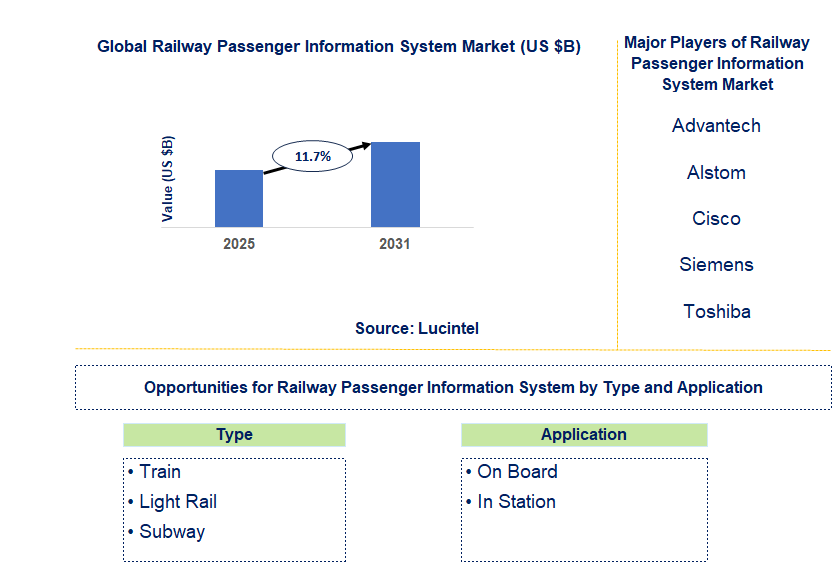
Key data points: The growth forecast = 11.7% annually for the next 7 years. Scroll below to get more insights. This market report covers Trends, opportunities and forecasts in railway passenger information system market to 2031 by type (train, light rail, and subway), application (on board and in station), and region (North America, Europe, Asia Pacific, and the Rest of the World)
We'll send your sample report shortly.
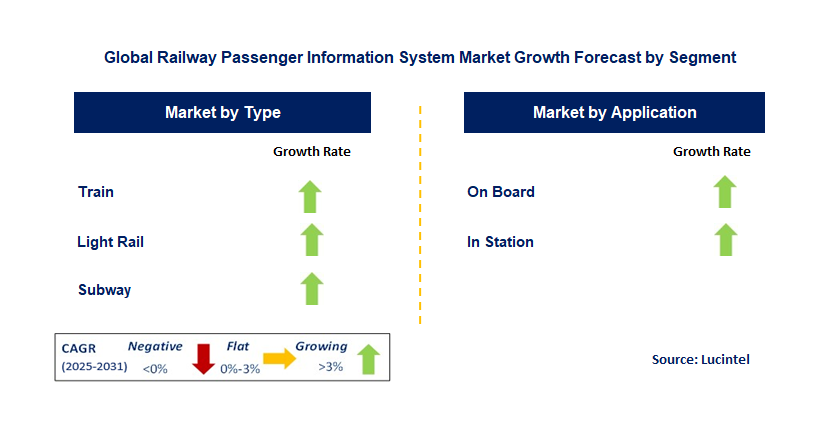
• Lucintel forecasts that, within the type category, subway is expected to witness the highest growth over the forecast period.
• Within the application category, in station is expected to witness the highest growth.
• In terms of region, APAC is expected to witness the highest growth over the forecast period.
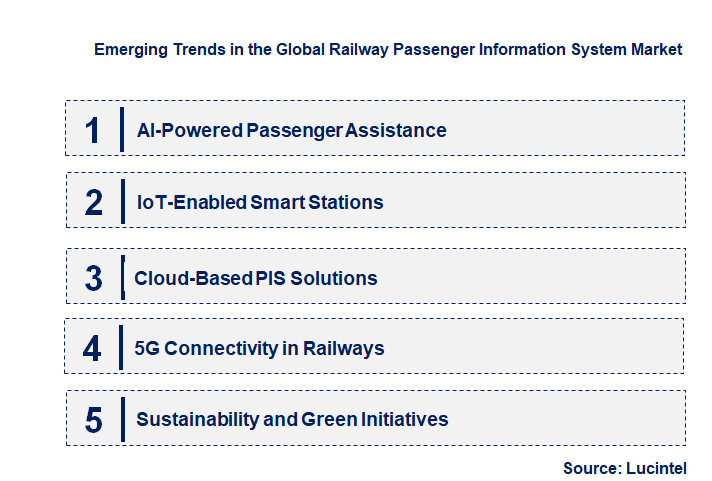
• AI-Powered Passenger Assistance: Railway operators are integrating AI chatbots and virtual assistants to provide real-time journey updates, ticketing support, and travel recommendations. Predictive analytics enhances route planning by forecasting delays and optimizing passenger flow. AI-driven solutions improve customer service, reduce congestion, and enhance the overall travel experience.
• IoT-Enabled Smart Stations: IoT sensors are improving passenger flow management, security, and train scheduling. Real-time data from IoT devices helps monitor crowd density, optimize platform utilization, and enhance safety. Mobile integration allows passengers to receive personalized travel alerts, reducing wait times and streamlining journeys.
• Cloud-Based PIS Solutions: Cloud computing enables railway operators to manage real-time passenger information remotely. Cloud-based systems enhance scalability, reduce infrastructure costs, and facilitate seamless updates across stations. Data analytics from cloud platforms support better decision-making, ensuring operational efficiency and improved passenger communication.
• 5G Connectivity in Railways: The introduction of 5G networks enhances real-time data transmission, improving passenger communication, security, and operational efficiency. High-speed Wi-Fi, ultra-fast ticket validation, and real-time video surveillance are improving the travel experience. 5G technology also supports autonomous train operations and predictive maintenance.
• Sustainability and Green Initiatives: Railway operators are adopting eco-friendly digital displays, paperless ticketing, and energy-efficient passenger information systems. These initiatives align with global environmental goals and reduce carbon footprints. Sustainable PIS solutions enhance energy efficiency and promote green transportation infrastructure. The railway PIS market is rapidly evolving with AI, IoT, 5G, and cloud-based innovations driving efficiency and passenger convenience. The adoption of these technologies ensures seamless connectivity, enhanced security, and a more sustainable railway system.
• Implementation of Artificial Intelligence and Predictive Maintenance: Artificial intelligence and predictive maintenance are gaining popularity in railway systems to improve passenger experience and efficiency. AI can predict possible failures of equipment ahead of time using real-time data from sensors and IoT devices. Predictive maintenance can then be done, enhancing the efficiency of operations and reducing service disruptions. The approach minimizes downtime and maintains accurate operations with regard to passenger updates, improving service reliability. With AI integrated into PIS, information can be personalized and provided to the passengers in accordance with their preferences.
• Deployment of 5G and LTE-R for Enhanced Connectivity: 5G and LTE-R technologies are equally transforming railway communications. Such high-speed networks allow real-time updates for passenger information and operational dialogues throughout the journeys. A good example is the LTE-R safety and communication enhancements that Indian Railways’ Kavach 4.0 system utilizes. These new technologies enable high-capacity internet on trains where services like information streaming, entertainment, and sophisticated train control systems are offered.
• Enhancement of Multimodal Integration and Mobility-as-a-Service: MaaS systems are rapidly emerging while integrating all transport forms, such as buses, cars, and bicycles alongside trains. This blend enables passengers to manage their entire trip with a single mobile application, allowing payments for one transaction. This convenience fosters an increase in flexibility and ease, which railway management systems are adopting by adding real-time situation features and customizable travel options. Not only does this enhance the overall rider experience but also promotes the utilization of public transport, which is beneficial for the environment.
• Advancements in Cloud-based and Mobile Passenger Information Systems: MaaS systems are rapidly emerging while integrating all transport forms such as buses, cars, and bicycles alongside trains. This blend enables passengers to manage their entire trip with a single mobile application, allowing payments for one transaction. This convenience fosters an increase in flexibility and ease, which railway management systems are adopting by adding real-time situation features and customizable travel options. Not only does this enhance the overall rider experience but also promotes the utilization of public transport, which is beneficial for the environment.
• Strategic Partnerships and Investments in Passenger Information Systems: Toshiba and Wabtec's latest partnerships with Siemens Mobility seek to improve real-time information processes to enhance passenger experiences through strategic system information upgrades. This showcases the ongoing dedication within the industry to utilize technological advancements in adapting to fast-paced demands from passengers. Technological advancements, coupled with increased accessibility, are propelling the Railway Passenger Information System market toward rapid growth. The integration of AI technology with advanced communication networks and the adoption of multimodal platforms, along with strategic partnerships across industries, are combinatorial forces that are transforming railway transportation. These changes address not only safety and operational effectiveness but also the contemporary traveler's expectation of real-time, tailored, and effortless travel. With the ongoing transformation of the industry, the embrace of these technological shifts will only help determine the future of railway services.
• AI-Based Passenger Communication: AI-powered chatbots and virtual assistants are enhancing real-time passenger interactions. Predictive analytics helps railway operators anticipate disruptions and provide timely alerts, ensuring a smooth travel experience.
• Smart Ticketing and Contactless Payments: Digital wallets, NFC-based ticketing, and biometric authentication are revolutionizing railway ticketing systems. These solutions improve efficiency, reduce queues, and offer a seamless boarding experience.
• Real-Time Multimodal Connectivity: Integrating railway PIS with bus, metro, and ride-sharing services enhances seamless travel. The real-time synchronization of different transport modes improves passenger convenience and operational efficiency.
• Predictive Maintenance and IoT Analytics: IoT-enabled sensors help monitor train components and infrastructure, reducing breakdowns and maintenance costs. Predictive analytics enhances safety and improves train reliability.
• Cloud-Based Data Management: Cloud computing allows railway operators to manage PIS remotely, providing scalable solutions for real-time data access, system updates, and passenger insights. Growth opportunities in AI-driven communication, contactless ticketing, multimodal integration, predictive maintenance, and cloud-based data management are driving the expansion of the railway PIS market.
• Advantech
• Alstom
• Cisco
• Siemens
• Toshiba
• Hitachi
• Mitsubishi Electric
• Train
• Light Rail
• Subway
• On Board
• In Station
• North America
• Europe
• Asia Pacific
• The Rest of the World
• United States: The U.S. is integrating AI-driven analytics, real-time tracking, and cloud-based passenger information systems. Amtrak and regional transit networks are adopting mobile applications for dynamic travel updates. Federal funding is supporting infrastructure upgrades, including high-speed rail projects. Cybersecurity enhancements ensure safe digital communication. AI-powered predictive maintenance is reducing delays, optimizing train schedules, and improving passenger satisfaction.
• China: China is expanding 5G-enabled smart stations, integrating facial recognition for seamless boarding, and enhancing multilingual digital displays for international travelers. The China Railway Corporation is leveraging big data analytics and cloud computing to optimize train schedules and enhance passenger experiences. AI-powered virtual assistants and chatbots are improving real-time communication and customer service. Autonomous train technology is being tested to increase efficiency.
• Germany: Deutsche Bahn (DB) is modernizing its railway PIS with AI-driven passenger flow management and IoT-based predictive maintenance. Germany is integrating mobile ticketing and digital journey planning tools. The country is also emphasizing sustainability through energy-efficient digital displays and eco-friendly ticketing solutions. Efforts to enhance cross-border connectivity within Europe are improving international travel experiences.
• India: Indian Railways is investing in centralized train control systems, AI-powered scheduling, and biometric-based ticketing. The "Digital India" initiative is accelerating the adoption of cloud-based PIS solutions. Smart station initiatives include AI-driven kiosks, real-time passenger alerts, and cybersecurity enhancements. Investments in high-speed rail projects, such as the Mumbai-Ahmedabad bullet train, are further transforming the passenger experience.
• Japan: Japan Railways (JR) is leading in AI-driven passenger information, smart ticketing, and 5G-based real-time travel updates. Multilingual digital displays and voice-based information systems cater to global travelers. IoT-based monitoring systems and autonomous train operations are optimizing efficiency and safety, and Shinkansen networks are integrating advanced digital signage and crowd management solutions.


• Advantech
• Alstom
• Cisco
• Siemens
• Toshiba
• Hitachi
• Mitsubishi Electric Q5. Which railway passenger information system market segment will be the largest in future? Answer: Lucintel forecasts that, within the type category, subway is expected to witness the highest growth over the forecast period. Q6. In railway passenger information system market, which region is expected to be the largest in next 5 years? Answer: In terms of region, APAC is expected to witness the highest growth over the forecast period. Q7. Do we receive customization in this report? Answer: Yes, Lucintel provides 10% customization without any additional cost.


Choose a license that fits your team. Instant PDF delivery.
Prices exclude taxes. Instant delivery. Custom licensing available on request.
Market Report · May 18, 2026
Market Report · May 18, 2026
Market Report · May 18, 2026
Trusted partner for strategic intelligence and business growth


Receive a complimentary market analysis tailored to your industry. Our analysts will identify key growth opportunities and competitive dynamics specific to your business.

Market size, growth rate, and key trend analysis for your specific sector.

Top competitor positioning and market share analysis.

Strategic recommendations backed by data-driven insights.
Get curated market intelligence and competitive moves straight to your inbox.
By subscribing, you agree to receive our monthly insights. Unsubscribe anytime.
Receive a complimentary market analysis tailored to your industry. Our analysts will identify key growth opportunities and competitive dynamics specific to your business.
Market size, growth rate, and key trend analysis for your specific sector.
Top competitor positioning and market share analysis.
Strategic recommendations backed by data-driven insights.
Get curated market intelligence, emerging trends, and competitive moves straight to your inbox each month.
By subscribing, you agree to receive our monthly insights. Unsubscribe anytime.
We'll send your sample report shortly.