
Market Report · May 18, 2026

This market report covers trends, opportunities, and forecasts in the global railway overhead catenary system (ocs) market to 2031 by technology (simple catenary, stitched catenary, and compound catenary), application (metro, light rail, and high-speed rail), and region (North America, Europe, Asia Pacific, and the Rest of the World)
We'll send your sample report shortly.
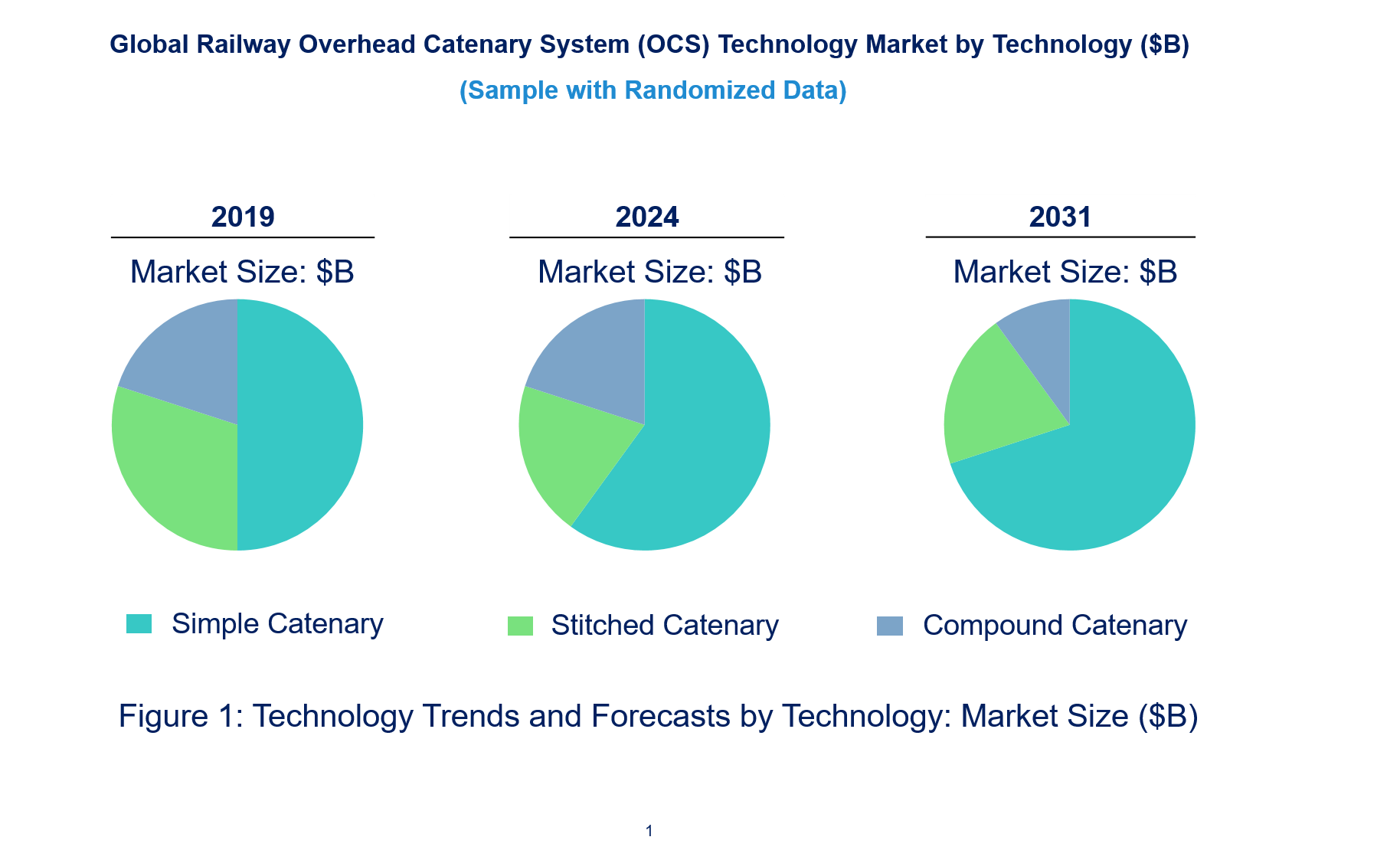
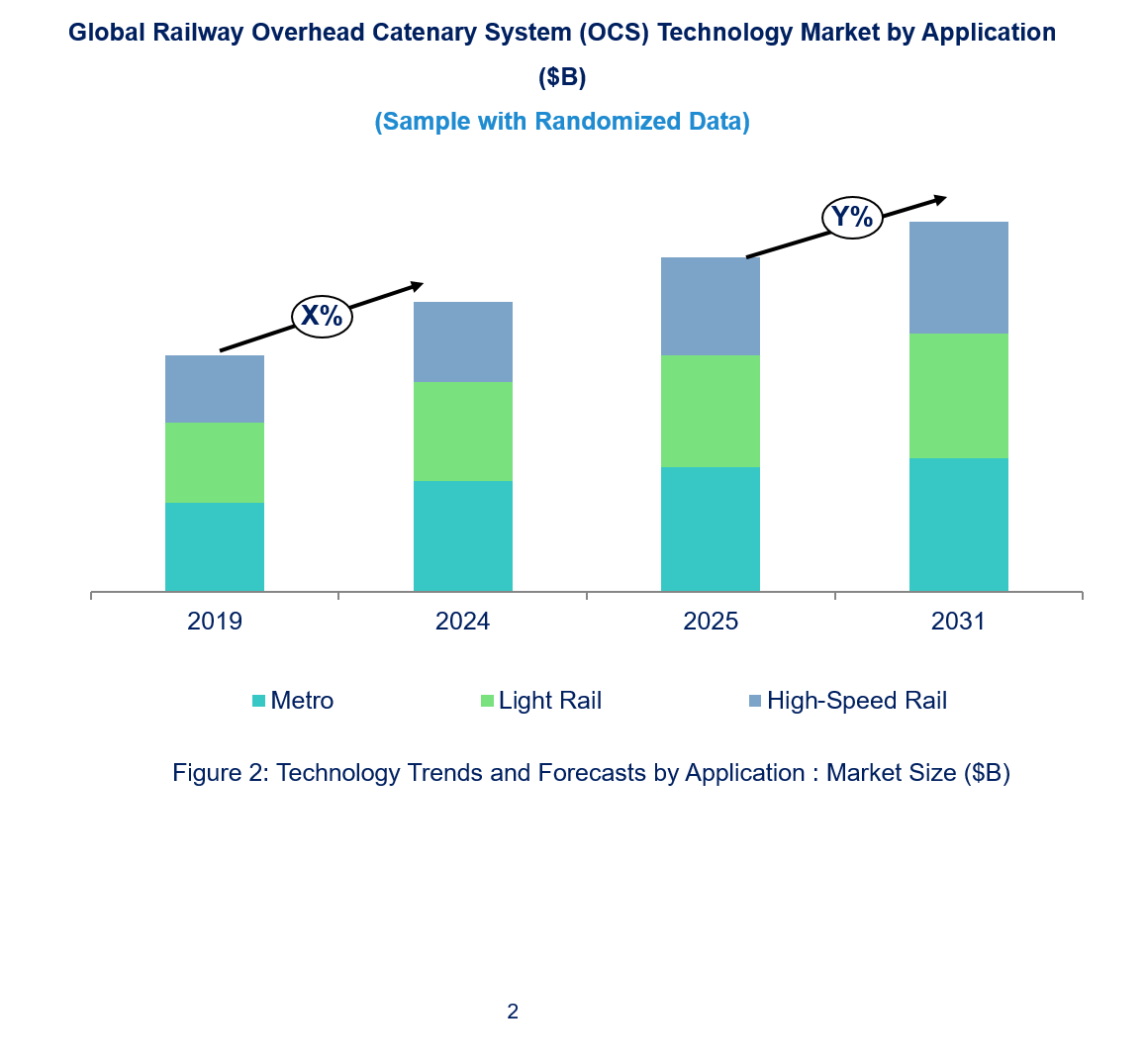
• Integration of Digital Technologies (IoT and Sensors): Digitalization is becoming a dominant trend in the railway overhead catenary system market, with the integration of Internet of Things (IoT) devices and sensors into overhead catenary systems. These sensors enable real-time monitoring of the catenary wire, detecting issues such as wear, tension, and alignment problems before they lead to failures.
• Shift Toward High-Speed Rail Electrification: With increasing investment in high-speed rail networks, there is a growing need for advanced railway overhead catenary system solutions. High-speed trains demand more efficient and reliable overhead catenary systems that can handle the higher speeds and power requirements.
• Adoption of Green and Sustainable Technologies: As sustainability becomes a central focus in the transport sector, the railway overhead catenary system market is seeing a shift towards environmentally friendly materials and technologies. This includes the use of recyclable components, low-energy catenary systems, and innovative energy recovery mechanisms.
• Advances in Automation and AI for railway overhead catenary system Monitoring and Maintenance: Automation and artificial intelligence (AI) are being increasingly incorporated into railway overhead catenary system maintenance and monitoring. AI-powered systems can predict wear and tear based on patterns in the operational data, enabling proactive rather than reactive maintenance.
• Focus on Hybrid and Dual-Mode Trains: The development of hybrid and dual-mode trains, which can operate both on electrified tracks (via railway overhead catenary system) and non-electrified tracks (using diesel power), is gaining traction. This trend is leading to new design considerations for the railway overhead catenary system, which must be adaptable to a wider variety of train systems. These trends are shaping the future of the railway overhead catenary system market by driving innovation, sustainability, and efficiency. The integration of digital technologies and the adoption of green solutions are making railway overhead catenary system systems more reliable and environmentally friendly. At the same time, advancements in automation, AI, and the shift toward hybrid train systems are reducing operational costs and enhancing system performance. Overall, these emerging trends are not only improving the railway overhead catenary system infrastructure but are also transforming the broader rail transportation landscape.
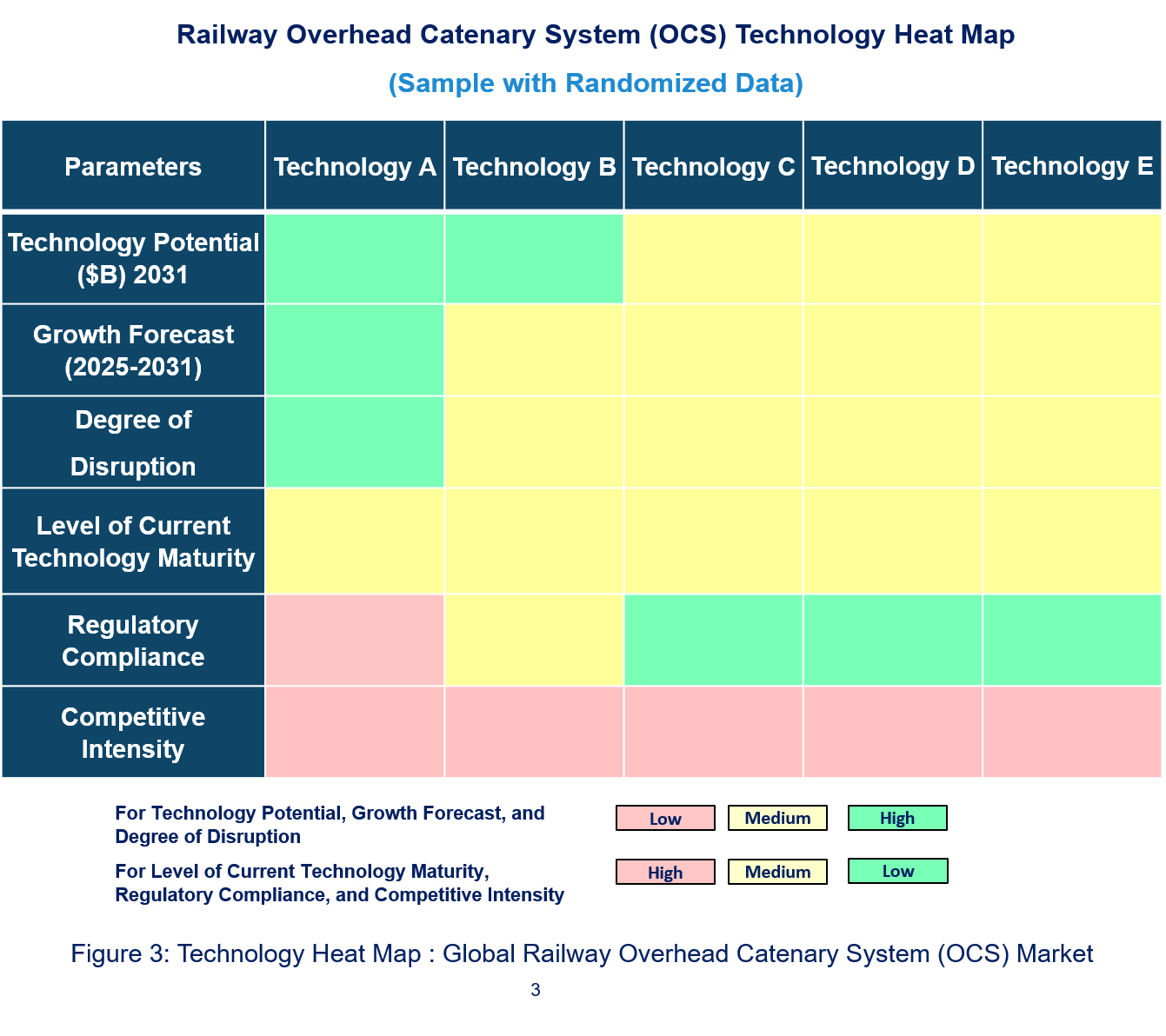
• Potential in Technology: The technology potential for railway overhead catenary system is vast, driven by advancements in digitalization, automation, and sustainable materials. The integration of Internet of Things (IoT) sensors, AI for predictive maintenance, and automation tools such as drones holds significant promise for enhancing overhead catenary system performance and efficiency. These innovations can provide real-time monitoring, reduce downtime, and optimize energy usage, making overhead catenary system systems more reliable and cost-effective.
• Degree of Disruption: The degree of disruption is high, as these technologies transform traditional rail infrastructure. IoT and AI-driven systems are changing how overhead catenary system maintenance and performance monitoring are approached, reducing reliance on manual inspections and improving predictive capabilities. Moreover, the shift to green technologies is encouraging a fundamental rethink of overhead catenary system design, with sustainable materials and energy recovery systems becoming increasingly prevalent.
• Current Technology Maturity Level: The current technology maturity level varies, with IoT, sensors, and AI being well-established in other industries but still developing in overhead catenary system applications. Digitalization and automation are becoming more mainstream, but widespread adoption is still underway.
• Regulatory compliance: Regulatory compliance is crucial, as safety standards for overhead catenary system must be met, particularly in high-speed rail applications. As environmental concerns grow, there is also increasing pressure for compliance with sustainability regulations, driving the use of recyclable materials and energy-efficient systems in overhead catenary system technologies.
• Siemens: Siemens has been advancing its portfolio in the railway overhead catenary system market with the integration of digital technologies, including IoT sensors for real-time monitoring of catenary systems. This development helps improve predictive maintenance and reduce downtime, contributing to more efficient operations and cost savings. Siemens Mobility also focuses on high-speed rail electrification, enhancing the performance of railway overhead catenary systems in high-speed train networks.
• ABB Group: ABB Group has been working on improving energy efficiency through its electrification solutions for rail networks. Their railway overhead catenary system innovations include energy recovery systems that help optimize electricity use by capturing regenerative energy from braking systems, reducing overall energy consumption. ABB’s solutions also emphasize smart grid technologies, integrating renewable energy sources with the railway overhead catenary system for more sustainable rail transport.
• Alstom: Alstom’s recent developments in the railway overhead catenary system market focus on sustainable rail solutions, integrating green technologies like lightweight catenary systems and recyclable materials. The company is also exploring advanced automation and AI for railway overhead catenary system maintenance, ensuring that systems are more resilient, and maintenance costs are minimized. These initiatives align with Alstom's broader commitment to decarbonizing rail transport.
• Hitachi: Hitachi has been focusing on enhancing the efficiency of its railway overhead catenary system technology by introducing hybrid systems that allow trains to operate on both electrified and non-electrified tracks. This dual-mode capability increases operational flexibility, particularly in regions where full electrification is not feasible. Additionally, Hitachi is advancing its automation tools for railway overhead catenary system inspection and maintenance, contributing to lower operational costs.
• CRRC Corporation: CRRC Corporation, a leading player in the Chinese rail market, has been focusing on developing advanced catenary systems to support high-speed and freight trains. The company’s railway overhead catenary system solutions are designed for high durability and minimal energy loss, ensuring long-term efficiency. CRRC has also been active in expanding its international presence, working on projects that integrate advanced electrification technologies for various rail networks globally.
• NKT: NKT, a global leader in power cables, has been innovating in the manufacturing of advanced catenary wires and cables. Their products are designed for high performance, with a focus on lightweight materials and reduced energy losses. NKT's contribution to the railway overhead catenary system market includes providing flexible and reliable power transmission solutions that can handle the demanding requirements of both urban and high-speed rail systems.
• Siemens Mobility: Siemens Mobility, a subsidiary of Siemens, continues to push forward with advancements in the digitalization of railway overhead catenary systems, including the use of AI and machine learning to optimize energy consumption and improve maintenance schedules. Their solutions also focus on upgrading infrastructure for more sustainable, energy-efficient rail transport, leveraging their expertise in high-speed rail systems.
• Wabtec Corporation: Wabtec Corporation has been driving innovations in catenary systems by developing energy-efficient and durable railway overhead catenary system solutions. Their focus on smart infrastructure includes integrating sensors and automated systems for real-time monitoring and predictive maintenance. These developments are enhancing railway overhead catenary system efficiency and helping rail operators reduce operational costs and extend system lifespans.
• Schneider Electric: Schneider Electric has been advancing smart grid solutions for rail networks, integrating renewable energy sources with railway overhead catenary system systems. Their emphasis on energy optimization and sustainability aims to reduce operational costs and carbon footprints. Schneider is also leading the way in smart monitoring and analytics, providing rail operators with data-driven insights to enhance railway overhead catenary system performance.
• Enphase Energy: Enphase Energy is contributing to the railway overhead catenary system market with its expertise in solar energy solutions. Their recent developments focus on integrating solar power systems into rail electrification, helping to supplement the energy requirements of railway overhead catenary systems and reduce dependency on the grid. Enphase’s approach supports the growing trend towards greener and more self-sufficient rail systems. These developments by key players highlight the ongoing evolution of the railway overhead catenary system (railway overhead catenary system ) market. Through the integration of digital technologies, sustainability efforts, and energy efficiency measures, these companies are enhancing the performance, flexibility, and environmental impact of rail networks globally.
• Growing Demand for Electrified Rail Networks: The increasing emphasis on reducing carbon emissions and improving energy efficiency is driving the demand for electrified rail systems. Electrification through the railway overhead catenary system helps reduce dependence on fossil fuels, making rail transport a more sustainable option. This shift is accelerating investments in railway overhead catenary system technologies to expand and modernize rail infrastructure.
• Technological Advancements in Catenary Systems: Innovations in digital technologies, such as IoT sensors and AI-powered monitoring, are improving the reliability and efficiency of railway overhead catenary system systems. These advancements enable real-time monitoring, predictive maintenance, and energy optimization, reducing operational costs and extending system lifespans. As these technologies mature, they present significant opportunities for modernization and automation in rail networks.
• Support for High-Speed Rail Networks: The expansion of high-speed rail networks is a major driver of railway overhead catenary system adoption. High-speed trains require highly efficient, durable, and reliable catenary systems to handle the increased power demand and operational speeds. Investments in railway overhead catenary system are critical to supporting these growing high-speed rail networks worldwide, particularly in Europe and Asia.
• Sustainability and Environmental Regulations: Stricter environmental regulations are pushing governments and rail operators to prioritize green solutions. railway overhead catenary system systems contribute to reduced emissions by supporting electric trains, which are cleaner than diesel-powered alternatives. The growing focus on sustainable transportation solutions is creating opportunities for railway overhead catenary system market growth, particularly in regions with ambitious climate goals. Challenges in the railway overhead catenary system (railway overhead catenary system) market are:
• High Initial Capital Investment: One of the key challenges in the railway overhead catenary system market is the significant upfront investment required for the installation of catenary systems. The cost of infrastructure development, including the installation of wires, masts, and substations, can be a major hurdle, particularly for rail operators with limited budgets or in regions with less-developed rail networks.
• Maintenance and Operational Costs: While railway overhead catenary system systems reduce long-term fuel costs, the maintenance and operational costs can still be substantial. Ensuring the reliability of catenary systems through regular maintenance, inspections, and repairs can be resource-intensive. Additionally, the need for specialized personnel to maintain these systems adds to the overall costs, challenging operators in terms of budget allocation.
• Challenges with Non-Electrified Rail Sections: In many regions, large sections of the rail network remain non-electrified, making full electrification impractical. Dual-mode or hybrid trains are required to operate in these areas, which can complicate railway overhead catenary system integration. The need for a seamless transition between electrified and non-electrified tracks presents a significant challenge for the market.
• Geographical and Environmental Constraints: The installation of railway overhead catenary system systems can be hindered by geographical and environmental factors, such as mountainous terrain, urban settings, and extreme weather conditions. These constraints can increase the complexity and cost of installation and maintenance, especially in regions where infrastructure development is more challenging. The railway overhead catenary system market is being significantly shaped by opportunities driven by electrification, technological innovations, and sustainability regulations. These drivers are expanding the demand for modern, efficient rail networks. However, challenges such as high initial costs, maintenance requirements, and geographical limitations continue to impact market growth. Despite these challenges, the growing focus on sustainable transport and the continuous improvement in railway overhead catenary system technologies are enabling long-term growth and transforming the railway infrastructure landscape globally.
• Siemens
• ABB Group
• Alstom
• Hitachi
• CRRC Corporation
• NKT
• Technology Readiness by Technology Type: The technology readiness of simple, stitched, and compound catenary systems varies. Simple catenary systems are highly mature and ready for deployment globally, particularly in regions with established rail networks. Stitched catenary systems, while more advanced, are still gaining traction and are widely used in high-speed and urban rail applications, indicating moderate maturity. Compound catenary systems are emerging technologies that offer the highest innovation potential but are still in the development and testing phase in certain regions. Competitive levels are highest for simple catenary due to widespread use, but compound catenary has a growing market share as rail operators push for improved reliability and performance. All three systems must comply with strict safety and environmental regulations, but compound catenary and stitched systems are often preferred where stringent performance standards are required.
• Competitive Intensity and Regulatory Compliance: The competitive intensity in the railway overhead catenary system market for simple, stitched, and compound catenary systems is high, with multiple players vying for dominance by improving performance and reducing costs. Simple catenary systems dominate the market due to their cost-effectiveness but face stiff competition from more advanced technologies like stitched and compound catenary systems, which offer better efficiency and durability. Regulatory compliance is stringent across all system types, with requirements for safety, performance, and environmental sustainability. Stitched and compound catenary systems are often favored in regions with more demanding regulations and higher performance standards, while simple catenary systems remain prevalent in less-regulated or budget-conscious markets.
• Disruption Potential of Different Technologies: The disruption potential of simple, stitched, and compound catenary systems in the railway overhead catenary system market varies. Simple catenary systems are widely used but are less efficient in handling dynamic loads at higher speeds, limiting their disruption potential. Stitched catenary systems, with enhanced stability and reduced wear, offer better performance, particularly in high-speed rail, leading to moderate disruption. Compound catenary systems, combining the advantages of both simple and stitched systems, provide higher stability and reliability, making them suitable for high-speed and high-load applications. The potential for disruption is highest with compound systems, as they can address challenges in both passenger and freight rail operations, offering a significant upgrade in performance and sustainability.
• Simple Catenary
• Stitched Catenary
• Compound Catenary
• Metro
• Light Rail
• High-Speed Rail
• North America
• Europe
• Asia Pacific
• The Rest of the World
• Latest Developments and Innovations in the Railway Overhead Catenary System (OCS) Technologies
• Companies / Ecosystems
• Strategic Opportunities by Technology Type




Choose a license that fits your team. Instant PDF delivery.
Prices exclude taxes. Instant delivery. Custom licensing available on request.
Market Report · May 18, 2026
Market Report · May 18, 2026
Market Report · May 18, 2026
Trusted partner for strategic intelligence and business growth


Receive a complimentary market analysis tailored to your industry. Our analysts will identify key growth opportunities and competitive dynamics specific to your business.

Market size, growth rate, and key trend analysis for your specific sector.

Top competitor positioning and market share analysis.

Strategic recommendations backed by data-driven insights.
Get curated market intelligence and competitive moves straight to your inbox.
By subscribing, you agree to receive our monthly insights. Unsubscribe anytime.
Receive a complimentary market analysis tailored to your industry. Our analysts will identify key growth opportunities and competitive dynamics specific to your business.
Market size, growth rate, and key trend analysis for your specific sector.
Top competitor positioning and market share analysis.
Strategic recommendations backed by data-driven insights.
Get curated market intelligence, emerging trends, and competitive moves straight to your inbox each month.
By subscribing, you agree to receive our monthly insights. Unsubscribe anytime.
We'll send your sample report shortly.