
Country Research · January 31, 2024

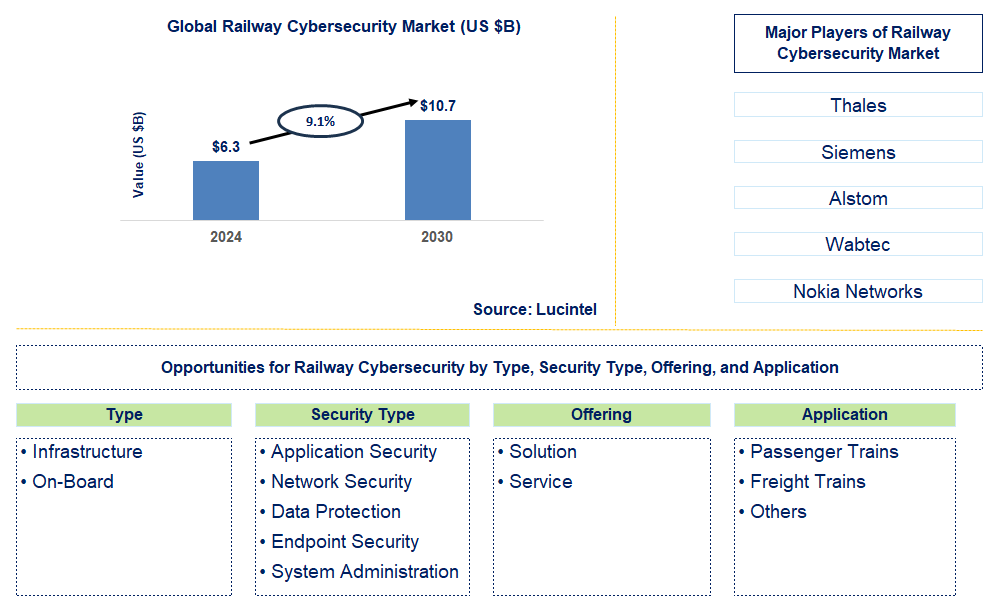
Key data points: The market size in 2030 = $10.7 billion, growth forecast = 9.1% annually for the next 6 years. Scroll below to get more insights. This market report covers trends, opportunities, and forecast in the global railway cybersecurity market to 2030 by type (infrastructure and on-board), security type (application security, network security, data protection, endpoint security, and system administration), offering (solution and service), application (passenger trains, freight trains, and others), and region (North America, Europe, Asia Pacific, and the Rest of the World)
We'll send your sample report shortly.
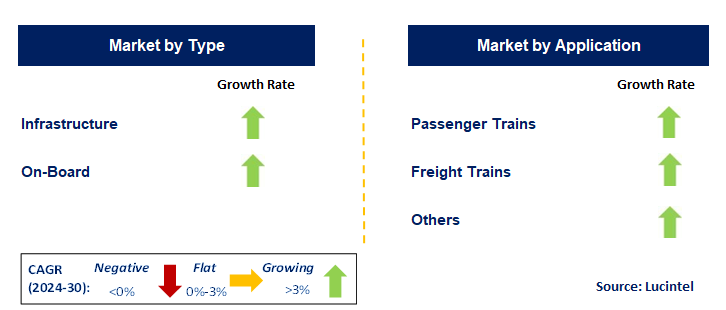
• Lucintel forecasts, within the type category, that infrastructure is expected to witness a higher growth over the forecast period due to increased investments in smart railway technologies.
• Within the application category, passenger train will remain a larger segment due to increasing government's initiative for the security of passengers.
• In terms of regions, APAC is expected to witness highest growth over the forecast period due to rising population, growing penetration of advanced technologies, and increasing investments in railway infrastructure. Gain valuable insight for your business decisions with our comprehensive 150+ page report
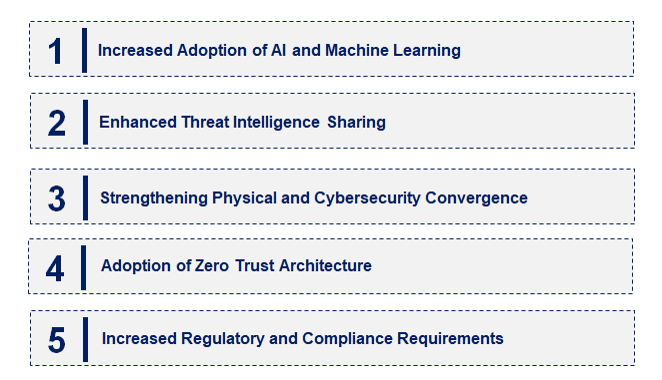
• Increased Adoption of AI and Machine Learning: The use of AI and machine learning has been increasingly adopted in railways for improved cybersecurity. Real-time threat detection, predictive analytics, and automated response mechanisms to potential breaches are some of the capabilities provided by these technologies. This has made it possible to utilize artificial intelligence in the identification of patterns that may be risky or indicate potential threats accurately, thus reducing risks from cyberattacks.
• Enhanced Threat Intelligence Sharing: Cooperative sharing of threat intelligence among railway operators, governments, and cybersecurity companies is on the increase. This trend involves exchanging information about emerging threats, vulnerabilities, and attack vectors. Such sharing allows stakeholders to create a strong defense system collectively, find better ways to fight against hackers, and quickly react to new dangers, enhancing the overall cybersecurity situation in the industry.
• Strengthening Physical and Cybersecurity Convergence: This growing movement is characterized by fusing physical and network security implementations into one defensive approach. For instance, surveillance cameras and access controls become part of a comprehensive strategy that also includes making use of specific procedures developed for Internet security. In doing so, railways can develop an all-inclusive scheme that would respond promptly to both digital sabotage and physical threats, thus guaranteeing a solid shield over critical infrastructure.
• Adoption of Zero Trust Architecture: Zero Trust Architecture (ZTA) is becoming popular in railway cybersecurity circles. The model works under the principle of "never trust, always verify," where each access request is treated as if it originates from an untrusted network. This ensures constant implementation enforcement without users having access or making unauthorized movements that would weaken security structures.
• Increased Regulatory and Compliance Requirements: Stricter cybersecurity regulations are being imposed on the railway industry by governments and other relevant authorities. This trend includes mandates for regular security audits, incident reporting, and adherence to specific cybersecurity standards. By following such rules, railways can advance their safety features, mitigate risks, and avoid any legal or financial penalties that could arise from noncompliance, which ultimately provides a safer operating environment. These emerging trends profoundly influence rail cybersecurity through the integration of sophisticated technologies, enhanced cooperation, and enforcement of strict guidelines. Train transport is undertaking a shift towards detection driven by artificial intelligence, a unified approach to security, and adherence to regulatory requirements to create more resilient systems. These developments are essential in ensuring that strong defenses against cyberattacks are established to protect critical infrastructure as threats continue to evolve over time.
• Advanced Threat Detection Systems: Artificial intelligence (AI)-based threat detection systems that can recognize potential dangers in real-time are now used by many railway operating companies. These systems apply large amounts of data analysis to identify abnormal patterns that could suggest a cyberattack, thus leading to early mitigation and reduced possible system breaches.
• Integration of Blockchain Technology: To increase data integrity and security, blockchain technology is being incorporated into railway cybersecurity products. With a decentralized immutable ledger, blockchain prevents unauthorized access or tampering with vital information, like train schedules and signaling details, ensuring proper operational accuracy and reliability.
• Enhanced Encryption Protocols: Communication channels within rail networks will be protected with new encryption protocols that ensure that transmitted information between trains, control centers, and other infrastructures remains confidential and secure against eavesdropping or tampering, thus not compromising sensitive operational information.
• Development of Industry Standards and Regulations: More attention is given to the formulation of specific railway cybersecurity standards and regulations. The guidelines indicate how railway systems can be secured while promoting uniformity in dealing with cybercrimes across different regions or operators, thereby increasing overall resilience against such attacks.
• Increased Collaboration and Information Sharing: Railway firms are working closely with cybersecurity experts and government agencies, thereby boosting collaboration and sharing of information among them. By sharing the latest tactics employed by attackers alongside their counterparts across various sectors globally, this will help improve defenses collectively within the industry while enabling them to address growing threats more efficiently than before. These advancements substantially enhance railway cybersecurity through sophisticated threat detection tools, data integrity assurance, secure communication channels, established norms, and associations. Consequently, these measures are strengthening the robustness of rail systems against cyber threats, maintaining operational integrity, and improving the safety and efficiency of rail transport across the world.
• Advanced Threat Detection Systems: To identify and mitigate cyber threats in real-time, it is crucial to implement sophisticated threat detection systems based on AI and machine learning. These systems can scrutinize huge amounts of data, which allows them to detect anomalies and potential attacks earlier, thus improving the security posture of railway operations and averting disruptions.
• Secure Communication Protocols: Developing and deploying secure communication protocols ensures that all data transmitted between trains, control centers, or any other infrastructure is encrypted and safe from interception. This prevents unauthorized access while maintaining communication integrity, ultimately ensuring the safety and effectiveness of rail operations.
• Integrated Security Platforms: Adopting integrated security platforms that combine different cybersecurity measures into one system helps streamline security management as well as response efforts. By providing a single interface for monitoring activities, automatic threat response mechanisms, along with total coverage across all railway network components, they contribute to an overall higher level of security efficiency.
• Cybersecurity Training and Awareness Programs: Investing in cybersecurity training and awareness programs for railway personnel helps build a knowledgeable workforce capable of recognizing and responding to cyber threats. This ongoing education about emerging risks enhances resilience against potential attacks within the entire rail network.
• Regulatory Compliance Solutions: Developing solutions that ensure compliance with evolving cybersecurity regulations and standards helps rail operators meet legal requirements and industry best practices. Such solutions also facilitate regular audits, risk assessments, and adherence to various security protocols, thereby minimizing vulnerability factors and leading to a better overall cybersecurity posture. This market offers numerous opportunities that are expected to enhance resilience and safety in railway systems, including advanced threat detection systems, secure communication protocols, integrated security platforms, comprehensive training programs, and regulatory compliance solutions. Together, they will address the growing cyber threats and ensure that critical rail infrastructures are operated securely.
• Increased digitalization and connectivity: The increasing integration of IoT and digital technologies into railway systems enhances efficiency but widens the attack surface for cyber threats. This driver necessitates advanced cybersecurity solutions that can safeguard sensitive information from being accessed illegally or compromising system integrity, thereby pushing organizations to invest in cybersecurity infrastructure and technologies.
• Rising cyber threats and attacks: Increasingly sophisticated cyber attacks on critical infrastructure such as railways call for enhanced cybersecurity measures. With their central role in transportation logistics, railways make excellent targets. The escalating threat environment forces railway operators to adopt comprehensive cybersecurity strategies to protect against possible disruptions as well as data breaches.
• Regulatory compliance requirements: Strict regulatory frameworks and standards regarding cybersecurity prevail in the railway sector, especially those imposed by national and international entities. These regulations promote demand oriented toward compliance-based approaches for cybersecurity. Businesses must follow these rules or risk penalties, which fosters compliant cybersecurity technology sales.
• Government initiatives and funding: Governments are increasingly recognizing the need to invest funds into improving railway asset management systems, as these link to all other systems within a country's infrastructure framework, including power grids and telecommunication networks. Enhancing railway cybersecurity initiatives is supported by public investments that allow the deployment of more advanced forms of technology, creating opportunities for expansion in this industry through innovation.
• Growing public and private sector awareness: In both the public and private sectors, there has been enhanced recognition of the importance of securing businesses from potential harm caused by cyber criminals using various methods. As a result, many stakeholders are recognizing the importance of having strong cybersecurity frameworks to drive growth in this market. Challenges in the railway cybersecurity market are:
• Complexity of securing legacy systems: Many railway systems are built on outdated infrastructure that does not meet the security requirements needed for cybersecurity. These legacy systems are difficult to secure since they require extensive retrofitting or replacement and may not be compatible with modern cybersecurity solutions, making it more complex to address the overarching security strategy.
• Budget constraints and cost issues: Implementing full-scale cybersecurity measures can be expensive, and most railway operators face budget constraints. This poses a problem as companies try to balance state-of-the-art security technologies on one hand and their limited financial budgets on the other, leading to insufficient investments in critical cybersecurity improvements and ultimately resulting in a greater risk of attacks.
• Evolving cyber threat landscape: The constant development of railways exposes them to numerous threats from cybercrime. The rapid technological changes that occur every day, coupled with emerging methods for attacking network systems, necessitate frequent upgrades and changes to ensure appropriate cybersecurity strategies, thus creating challenges around maintaining effective protection over time. The market for cybersecurity in railways has changed dynamically through the interaction of drivers and obstacles. The key factors propelling market growth include increased digitalization, rising cyber threats, regulatory requirements, government assistance, and increased awareness of such threats. However, challenges such as legacy system security, financial limitations, and changing threat landscapes further compound the situation. It is essential to address these challenges effectively while capitalizing on the driving forces to develop a strong cybersecurity framework for the railway industry that guarantees the safety and efficiency of operations alike.
• Thales
• Siemens
• Alstom
• Wabtec
• Nokia Networks
• Infrastructure
• On-Board
• Application Security
• Network Security
• Data Protection
• Endpoint Security
• System Administration
• Solution
• Service
• Passenger Trains
• Freight Trains
• Others
• North America
• Europe
• Asia Pacific
• The Rest of the World
• United States: This has led to increased spending on identifying and rectifying any weak points that may be exposed to cyber threats. These measures include the introduction of advanced threat detection systems and regular security audits to reveal vulnerabilities. The Federal Railroad Administration (FRA) recently developed guidelines aimed at making US rail operations more resilient against cyber hazards.
• China: Over the years, China has been upgrading its railway cybersecurity by incorporating artificial intelligence (AI) into real-time threat detection and response. National standards for cybersecurity within critical infrastructure, such as railways, have already been established, while government agencies have been cooperating with stakeholders from the private sector.
• Germany: Consequently, Germany has invested in next-generation encryption technologies and holistic incident response strategies as measures aimed at revamping its railway cybersecurity. Deutsche Bahn (DB) has launched various initiatives aimed at improving network supervision, data safeguarding, and cross-border cooperation within the EU to strengthen the defenses of rail systems.
• India: As part of India's effort on railway cybersecurity, it is developing a National Rail Safety and Security System (NRSSS). So far, such efforts include the deployment of state-of-the-art cybersecurity solutions for railway signaling systems and enhancement of data protection protocols. In order to secure Indian railways, it also partners with overseas companies that specialize in providing private safety services.
• Japan: Pursuant to this policy drive, Japan is presently integrating sophisticated measures for protecting itself against cyber attacks, such as encryption techniques that guarantee complete immunity from unauthorized access and intrusion detection systems. The Japan Railway Group is partnering with experts to develop strategies for addressing new forms of cyber threats and protecting its extensive rail network.


• What is the railway cybersecurity market size? Answer: The global railway cybersecurity market is expected to reach an estimated $10.7 billion by 2030. Q2. What is the growth forecast for railway cybersecurity market? Answer: The global railway cybersecurity market is expected to grow with a CAGR of 9.1% from 2024 to 2030. Q3. What are the major drivers influencing the growth of the railway cybersecurity market? Answer: The major drivers for this market are significantly growing digitalization and interconnectedness, rising cyberattacks and threats, increasing demand for passenger and freight capacity, and surge in number of railway projects globally. Q4. What are the major segments for railway cybersecurity market? Answer: The future of the railway cybersecurity market looks promising with opportunities in the passenger train and freight train markets. Q5. Who are the key railway cybersecurity market companies? Answer: Some of the key railway cybersecurity companies are as follows:
• Thales
• Siemens
• Alstom
• Wabtec
• Nokia Networks Q6. Which railway cybersecurity market segment will be the largest in future? Answer: Lucintel forecasts that infrastructure is expected to witness the higher growth over the forecast period due to increased investments in smart railway technologies. Q7. In railway cybersecurity market, which region is expected to be the largest in next 5 years? Answer:
• In terms of regions, APAC is expected to witness highest growth over the forecast period due to rising population, growing penetration of advanced technologies, and increasing investments in railway infrastructure. Q.8 Do we receive customization in this report? Answer: Yes, Lucintel provides 10% customization without any additional cost.


Choose a license that fits your team. Instant PDF delivery.
Prices exclude taxes. Instant delivery. Custom licensing available on request.
Country Research · January 31, 2024
Trusted partner for strategic intelligence and business growth


Receive a complimentary market analysis tailored to your industry. Our analysts will identify key growth opportunities and competitive dynamics specific to your business.

Market size, growth rate, and key trend analysis for your specific sector.

Top competitor positioning and market share analysis.

Strategic recommendations backed by data-driven insights.
Get curated market intelligence and competitive moves straight to your inbox.
By subscribing, you agree to receive our monthly insights. Unsubscribe anytime.
Receive a complimentary market analysis tailored to your industry. Our analysts will identify key growth opportunities and competitive dynamics specific to your business.
Market size, growth rate, and key trend analysis for your specific sector.
Top competitor positioning and market share analysis.
Strategic recommendations backed by data-driven insights.
Get curated market intelligence, emerging trends, and competitive moves straight to your inbox each month.
By subscribing, you agree to receive our monthly insights. Unsubscribe anytime.
We'll send your sample report shortly.