
Market Report · July 22, 2026

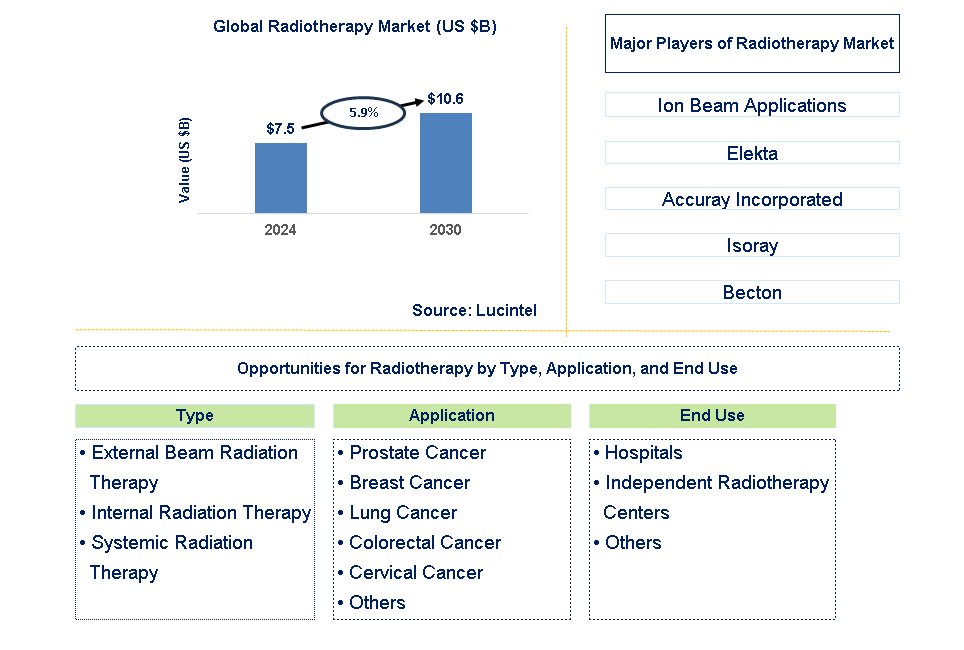
Key data points: The market size in 2030 = $10.6 billion, growth forecast = 5.9% annually next 6 years. Scroll below to get more insights. This market report covers trends, opportunities, and forecast in the global radiotherapy market to 2030 by type (external beam radiation therapy, internal radiation therapy, and systemic radiation therapy), application (prostate cancer, breast cancer, lung cancer, colorectal cancer, cervical cancer, and others), end use (hospitals, independent radiotherapy centers, and others), and region (North America, Europe, Asia Pacific, and the Rest of the World)
We'll send your sample report shortly.
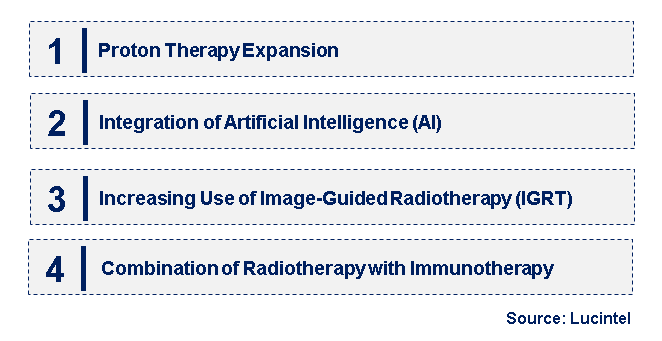
• Proton Therapy Expansion: Proton therapy is emerging as one of the leading approaches in the treatment of specific tumor types, especially those located close to critical organs such as the brain and spinal cord. This trend stems from the fact that high doses of radiation can be delivered within a shorter distance from the tumor while inflicting less or no damage to normal tissue. Several proton therapy facilities are being established globally, thereby increasing the accessibility of advanced treatment to a growing pool of patients. More facilities and manpower are expected to be developed for the administration of proton therapy, further diversifying the radiotherapy industry and improving outcomes.
• Integration of Artificial Intelligence (AI): Artificial intelligence is changing the landscape of the radiotherapy market by increasing the precision and speed of treatment planning and delivery. Complex images are analyzed, the optimal radiation dose is determined, and the outcomes for each patient are predicted as accurately as possible, thanks to specially developed AI algorithms. This approach is also helping to shorten the treatment planning phase, reducing the waiting period for patients before treatment commences. Improvements in AI will enhance integration in radiotherapy, with expectations for greater precision in treatments, fewer adverse effects, and better results for patients.
• Increasing Use of Image-Guided Radiotherapy (IGRT): Recently, there has been a significant advent of new technology in Image-Guided Radiotherapy (IGRT). IGRT includes the availability of live images, such as Computed Tomography (CT) or MRI-guided tumor volume imaging, during radiotherapy delivery. This allows for adjustments during treatment to accommodate tumor movements or patient repositioning. The increasing use of IGRT is enhancing treatment accuracy, lowering unintended radiation doses to patients, and improving the prospects of radiation therapy for more types of cancer.
• Combination of Radiotherapy with Immunotherapy: Integrating radiotherapy with immunotherapy is a new trend that has high potential and will improve outcomes in cancer treatment. Immunotherapy enhances the body’s immune response to detect and address cancerous tissues, complementing radiotherapy that involves exposure to radiation. This combination treatment strategy is effective for cancers that do not respond to conventional treatment approaches. Research is ongoing, and clinical trials are underway to establish the best combinations and sequences of such treatments to ensure their maximal effect and broaden their clinical applications. Newly developed concepts within the radiotherapy market, such as management of proton therapy by centers, incorporation of AI, the rise in application of IGRT, combination with immunotherapy, and individualization of treatment, stand to change the narrative around cancer treatment. These improvements are not just augmenting the accuracy and efficacy of radiotherapy techniques; they are also expanding the scope of radiotherapy usage for more patients with various oncological diseases. As these trends advance, they are poised to propel the growth of the radiotherapy market and improve the prognosis for patients diagnosed with cancer worldwide.
• Advancement in Proton Therapy: Proton therapy has developed significantly and has emerged as a breakthrough in the radiotherapy market, as it offers better chances of targeting tumor regions without harming healthy tissues. Recently, efforts have focused on making proton therapy more viable and addressing existing limitations in the number of centers offering this therapy due to high costs. These trends encourage the use of proton therapy for many more malignancies, even those currently treated solely with surgical methods or those resistant to conventional radiotherapy. The rise in the availability of proton therapy services is anticipated to have substantial potential in the radiotherapy market by reaching more patients.
• Integration of Artificial Intelligence in Treatment Planning: The use of artificial intelligence (AI) in the planning of radiotherapy treatments is changing the market for the better by increasing the efficiency and accuracy of treatment protocols. Recently, AI is being applied to manage patient information, optimize radiation doses, and predict outcomes. This evolution not only shortens the duration of treatment planning but also facilitates greater individualization in treatment approaches. Continued advancements in AI will further enhance its effectiveness in radiotherapy, contributing to market growth.
• Expansion of Stereotactic Body Radiotherapy (SBRT): Stereotactic Body Radiotherapy (SBRT) is quickly becoming the conventional option for managing specific types of cancer, particularly carcinomas of the lung, liver, and spine. Delivery of SBRT typically occurs in three to five treatment sessions rather than the numerous fractions traditionally offered, resulting in fewer complications compared to surgical approaches. The last decade has focused on improving SBRT modalities, refining patient selection, and broadening its application for additional oncological indications. Given the clinically satisfactory results achieved, the market for these systems is expected to grow as more patients seek effective yet less harmful treatment through SBRT.
• Development of MR-Linac Technology: The advancement of Magnetic Resonance Linear Accelerator (MR-Linac) technology represents a revolutionary advance in radiation oncology. MR-Linac allows for tumor visualization while directing radiation, leveraging the benefits of MRI and the linear accelerator. This technology enhances radiation delivery to the tumor and allows for adjustments based on tumor movement, making treatment more effective and minimizing side effects. The emergence of MR-Linac technology improves the effectiveness of radiotherapy for complex and mobile tumors, thus positively contributing to the growth of the radiotherapy market. Recent trends in the radiotherapy market, such as the advent of proton therapy, incorporation of artificial intelligence, expansion of SBRT, MR-Linac technology, and hypofractionated radiotherapy, are transforming cancer treatment. These developments are not only increasing the accuracy and efficacy of radiotherapy but also enhancing the affordability and convenience of this treatment.
• Expansion of Proton Therapy Centers: The expansion of proton therapy centers presents an attractive growth opportunity in the radiotherapy industry. Demand for such therapy is increasing as the advantages of proton therapy, such as lower side effects and higher targeting precision, become more recognized. New proton therapy centers are being established worldwide, especially in countries where advanced cancer treatments are limited, such as in the US. Therefore, it is predicted that the growth of the radiotherapy market will be driven by increased proton therapy usage, making it affordable to a larger population and encouraging its acceptance.
• Growth in the Use of AI for Personalized Treatment: There is growing market interest in utilizing AI for clinical radiation therapy planning. AI can evaluate many variables, allowing for the creation of individualized therapies that maximize efficacy and minimize adverse effects. Continued developments in AI will lead to broader applications in radiotherapy, further improving the effectiveness of procedures and patient care. This trend is fueling the growth of new AI-based products and software that are likely to play a central role in the future of the radiotherapy market.
• Expansion of Hypofractionated Radiotherapy: The use of hypofractionated radiotherapy continues to grow as clinicians and patients seek better and faster treatment methods. Hypofractionation involves delivering treatment over a shorter time span, easing the burden on the healthcare system and improving patient experience. This is particularly favorable for treating cancers with shorter, higher radiation doses. With the increasing adoption of hypofractionated radiotherapy, market expansion is anticipated, as this is a low-cost and less cumbersome treatment option, especially for populations with diverse health concerns.
• Radiotherapy Expansion in Emerging Markets: Emerging markets offer significant opportunities for the growth of radiotherapy services. With improvements in healthcare infrastructure in these regions, the demand for advanced cancer therapies, including radiotherapy, is rising. Governments and private health sectors in emerging markets are investing heavily in building radiotherapy centers and deploying modern technology. This escalation is expected to support the radiotherapy market by providing advanced cancer treatment to more patients than ever before on a global scale. As these markets continue to develop, they are likely to play a vital role in the overall growth and development of the radiotherapy market. Strategic growth opportunities in the radiotherapy market are being driven by the establishment of new proton therapy centers, the integration of artificial intelligence in personalized treatment, the expansion of hypofractionated radiotherapy, growth in developing economies, and collaboration with immunotherapy to significantly improve cancer treatment. Strategies targeting these opportunities are not just widening the scope of radiotherapy; they are also enhancing its efficacy and improving patient outcomes. These changes are anticipated to develop in the near future and will influence the growth of the radiotherapy market toward delivering personalized cancer management therapies efficiently to more patients.
• Rising Cancer Incidence: The global increase in cancer cases is a significant driver of the radiotherapy market. With an aging population and lifestyle factors contributing to cancer risk, the demand for effective treatment options is escalating. As cancer cases rise due to various factors like lifestyle changes, population aging, and environmental influences, the need for radiotherapy becomes more pronounced.
• Technological Advancements: Rapid advancements in radiation technology, such as the development of proton therapy, MR-Linac systems, and AI integration, are enhancing the effectiveness and efficiency of radiotherapy. These technologies are making treatments safer, more accurate, and accessible to a broader patient population.
• Government Initiatives and Funding: Governments are increasingly investing in healthcare initiatives aimed at improving cancer treatment infrastructure and expanding access to radiotherapy. These initiatives contribute significantly to market growth by enhancing awareness and increasing the number of available treatment centers.
• Patient Awareness and Acceptance: The growing awareness of cancer treatments and the benefits of radiotherapy is encouraging more patients to seek treatment. This shift in perception is positively influencing market demand. However, the radiotherapy market faces challenges that may impede growth, including:
• High Costs of Equipment and Treatment: The initial setup costs for advanced radiotherapy equipment are substantial, making it difficult for some healthcare facilities, especially in emerging markets, to adopt new technologies. This high expense can limit access to modern radiotherapy options.
• Shortage of Trained Professionals: A shortage of qualified radiation oncologists, medical physicists, and other trained personnel may hinder the effective implementation of advanced radiotherapy techniques. This gap can delay patient access to treatment and affect outcomes.
• Regulatory Challenges: The radiotherapy industry must navigate complex regulatory landscapes, which can vary by country. Compliance with stringent regulations may lead to delays in product launches and increase the costs associated with new technology adoption.
• Patient-Specific Factors: Individual patient health conditions and genetic predispositions can influence treatment outcomes. Understanding these factors is essential for personalizing radiotherapy, yet challenges remain in adequately addressing them within treatment protocols. In conclusion, while the radiotherapy market is driven by several growth factors, it also faces significant challenges. Balancing these elements is critical for advancing the field and ensuring patients receive the most effective and accessible treatments possible.
• Ion Beam Applications
• Elekta
• Accuray Incorporated
• Isoray
• Becton
• Dickinson and Company
• Siemens Healthineers
• ICAD
• Nordion
• MEVION MEDICAL SYSTEMS
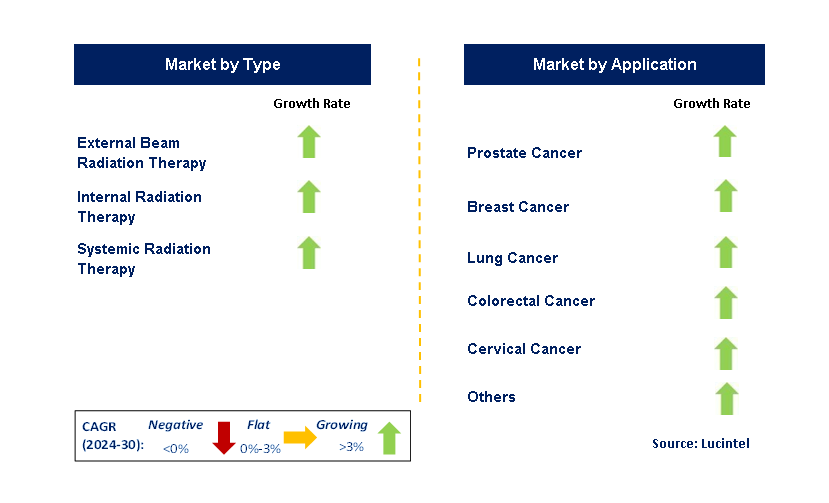
• External Beam Radiation Therapy
• Internal Radiation Therapy
• Systemic Radiation Therapy
• Prostate Cancer
• Breast Cancer
• Lung Cancer
• Colorectal Cancer
• Cervical Cancer
• Others
• Hospitals
• Independent Radiotherapy Centers
• Others
• North America
• Europe
• Asia Pacific
• The Rest of the World
• United States: Among some of the more recent changes in the radiotherapy industry in the United States is the quick adoption of advanced technologies, including proton therapy and SBRT. These modes allow for very precise delivery of radiation to the tumor with minimal damage to the surrounding healthy tissues. Further, the use of artificial intelligence in the treatment planning and delivery mechanisms has boosted the efficiency of radiotherapy, generating commendable results in patients. Finally, the US market is also committing itself to further investments that widen the scope of provision of radiotherapy services, for example, in terms of geography to include rural and clinically underserved regions, in both government and private initiatives.
• China: The radiotherapy market in China is also growing rapidly due to increasing cases of cancer, as well as considerable governmental investments in the healthcare system. Recent developments include improved control of x-ray treatment, where IMRT and IGRT techniques are extensively utilized. Besides, there is considerable activity in the form of building more cancer treatment centers with the best available radiotherapy equipment in China. Collaborations between Chinese institutes and foreign healthcare corporations will also help in the transfer of newer radiotherapy methods and technologies back to China so that it can provide more advanced cancer therapy.
• Germany: Within the German market of radiotherapy, one has to admit that the country's healthcare is gradually leaning towards models of precision medicine, as well as models that advocate for personalized treatment in generic radiotherapy. Trends such as the growing popularity of using molecular imaging techniques together with radiotherapy to target tumor cells while sparing normal tissues are also underway. Germany is involved in examining strategies that combine radiotherapy with immunotherapy, thereby widening the possibilities for the immune response to tumors. Additionally, the country is working on eliminating geographic barriers for radiotherapy services by increasing the number of specialized centers and adopting state-of-the-art radiotherapy equipment.
• India: There has been significant development in the radiotherapy market in India due to increased awareness, government participation, and public-private partnerships in the cancer treatment sector. This development has led to more complex models evolving in payment structures, which intensify the introduction of advanced radiotherapy methods in cancer hospitals, such as stereotactic radiosurgery (SRS) or brachytherapy. There is also an increased focus on training, education, and orientation of personnel so that professionals can utilize modern radiotherapy technologies. Additionally, there is geographical imbalance in radiotherapy availability. New centers are being created in underserved areas to reduce disparities in cancer treatment across the country.
• Japan: The Japanese radiotherapy market is on an upward trajectory due to the incorporation of newer treatment techniques, including drug delivery using protons and heavy ions for distant and difficult-to-operate tumors. Recent developments also include the use of AI and machine learning in treatment planning, wherein the targeting dose is further improved. Efforts are being made to develop the radiotherapy infrastructure in Japan, with new cancer treatment facilities being built in response to the rising demand for modern cancer treatment services. In addition, there is a greater focus on research and development in the area of radiotherapy, with studies currently being undertaken to combine conventional forms of treatment with others, such as immunotherapy.


• Ion Beam Applications
• Elekta
• Accuray Incorporated
• Isoray
• Becton
• Dickinson and Company
• Siemens Healthineers
• ICAD
• Nordion
• MEVION MEDICAL SYSTEMS Q6. Which radiotherapy market segment will be the largest in future? Answer: Lucintel forecasts that external beam radiation therapy will remain the largest segment over the forecast period due to the accuracy of the direct beams at the cancerous cells, which results in less damage to normal tissues, while allowing oncologists to use higher doses of radiotherapy for treatment. Q7. In radiotherapy market, which region is expected to be the largest in next 5 years? Answer: APAC is expected to witness highest growth over the forecast period due to the growing awareness about radiotherapy, rising healthcare expenditure, and increasing geriatric population in the region. Q.8 Do we receive customization in this report? Answer: Yes, Lucintel provides 10% customization without any additional cost.


Choose a license that fits your team. Instant PDF delivery.
Prices exclude taxes. Instant delivery. Custom licensing available on request.
Market Report · July 22, 2026
Market Report · July 22, 2026
Market Report · July 22, 2026
Trusted partner for strategic intelligence and business growth


Receive a complimentary market analysis tailored to your industry. Our analysts will identify key growth opportunities and competitive dynamics specific to your business.

Market size, growth rate, and key trend analysis for your specific sector.

Top competitor positioning and market share analysis.

Strategic recommendations backed by data-driven insights.
Get curated market intelligence and competitive moves straight to your inbox.
By subscribing, you agree to receive our monthly insights. Unsubscribe anytime.
Receive a complimentary market analysis tailored to your industry. Our analysts will identify key growth opportunities and competitive dynamics specific to your business.
Market size, growth rate, and key trend analysis for your specific sector.
Top competitor positioning and market share analysis.
Strategic recommendations backed by data-driven insights.
Get curated market intelligence, emerging trends, and competitive moves straight to your inbox each month.
By subscribing, you agree to receive our monthly insights. Unsubscribe anytime.
We'll send your sample report shortly.