
Market Report · July 31, 2026

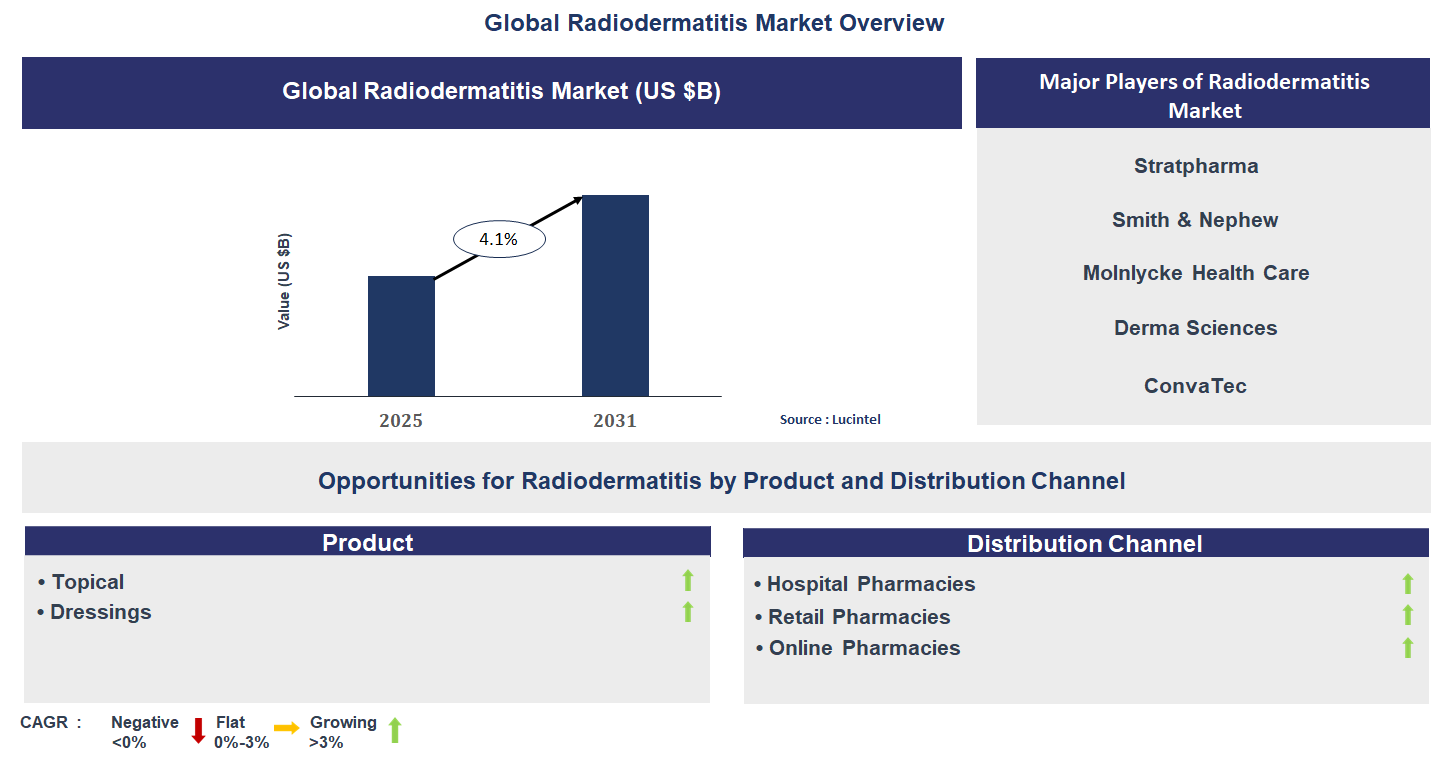
Key data points: The growth forecast = 4.1% annually for the next 7 years. Scroll below to get more insights. This market report covers trends, opportunities and forecasts in radiodermatitis market to 2031 by product (topical and dressings), distribution channel (hospital pharmacies, retail pharmacies, and online pharmacies), and region (North America, Europe, Asia Pacific, and the Rest of the World)
We'll send your sample report shortly.
• Lucintel forecasts that, within the product category, topical is expected to witness higher growth over the forecast period.
• Within the distribution channel category, retail pharmacy is expected to witness the highest growth.
• In terms of region, North America is expected to witness the highest growth over the forecast period. Gain valuable insights for your business decisions with our comprehensive 150+ page report. Sample figures with some insights are shown below.
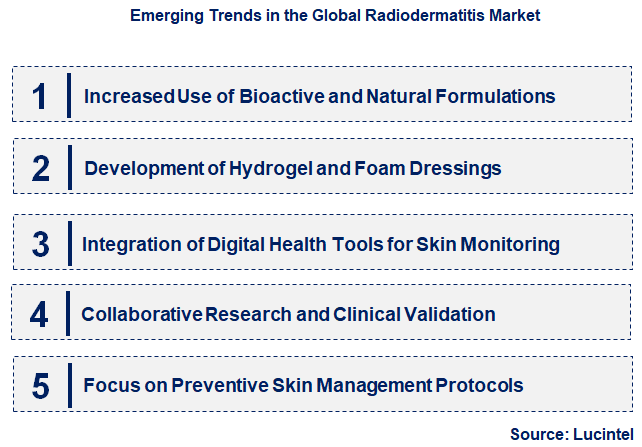
• Increased Use of Bioactive and Natural Formulations: The market is witnessing higher adoption of bioactive creams and plant-based ingredients to prevent skin damage caused by radiation. These formulations enhance tissue regeneration and reduce inflammation without harmful side effects.
• Development of Hydrogel and Foam Dressings: Innovative dressings with moisture-balancing properties are being introduced to promote faster healing and comfort. These products protect the skin from further radiation exposure and infection.
• Integration of Digital Health Tools for Skin Monitoring: AI-based mobile applications and imaging technologies help healthcare providers track skin changes in real time, allowing early intervention and better management.
• Collaborative Research and Clinical Validation: Increased collaboration between dermatologists, oncologists, and research institutions is ensuring product safety and efficacy. Clinical trials are supporting global standardization of radiodermatitis treatments.
• Focus on Preventive Skin Management Protocols: Healthcare providers are adopting preventive care protocols using pre-radiation skin conditioning and protective treatments to reduce severity and enhance patient experience. Emerging trends in the radiodermatitis market are transforming patient care through preventive measures, digital monitoring, and innovative product development. The introduction of natural and technologically advanced formulations is improving treatment efficiency. Growing research collaborations and data-driven care models are enhancing clinical outcomes. These trends indicate a strong move toward proactive skin health management during radiotherapy, leading to improved patient satisfaction and reduced treatment interruptions.
• Launch of Bioactive Topical Formulations: New products containing peptides, antioxidants, and herbal extracts are being launched to accelerate skin healing.
• Advancement in Moisture-Retaining Dressings: Companies are developing hydrogel and foam dressings with antimicrobial features for enhanced wound protection.
• Integration of AI in Skin Health Tracking: Hospitals are implementing AI tools to assess radiation-induced skin reactions and optimize treatment strategies.
• Expansion of Clinical Research in Radiodermatitis: Ongoing studies aim to identify optimal care protocols and evaluate new products for various radiation doses.
• Strategic Collaborations Between Pharma and Oncology Centers: Joint initiatives focus on developing evidence-backed products and enhancing patient access to advanced care solutions. Recent developments highlight the integration of biotechnology, AI, and evidence-based clinical practices in radiodermatitis management. The introduction of advanced dressings, bioactive formulations, and digital tracking tools is improving prevention and treatment outcomes. These advancements contribute to better patient safety, reduced treatment delays, and higher recovery rates.
• Topical Creams and Gels: Development of multifunctional creams that combine anti-inflammatory, soothing, and regenerative properties.
• Advanced Wound Dressings: Growth in foam and hydrogel-based dressings designed for radiation skin protection.
• Digital Skin Monitoring Solutions: Use of AI-enabled systems for continuous skin assessment during radiotherapy.
• Preventive Skin Protection Regimens: Adoption of pre-treatment skincare programs to reduce the risk of radiation damage.
• Hospital and Oncology Center Collaborations: Partnerships enabling faster clinical testing and market approval for innovative products. Strategic growth opportunities are focused on enhancing prevention, comfort, and recovery for radiotherapy patients. The growing adoption of AI, digital tracking, and bioactive formulations is creating a strong foundation for long-term market expansion. These opportunities are driving the development of holistic care solutions that improve quality of life and clinical efficiency.
• Stratpharma
• Smith & Nephew
• Molnlycke Health Care
• Derma Sciences
• ConvaTec
• BMG Pharma
• Acelity
• Topical
• Dressings
• Hospital Pharmacies
• Retail Pharmacies
• Online Pharmacies
• North America
• Europe
• Asia Pacific
• The Rest of the World
• United States: In the United States, strong investments in oncology care and radiation therapy advancements are shaping the radiodermatitis market. Pharmaceutical companies and research organizations are developing evidence-based skin care products and clinical guidelines to reduce radiation-related skin damage. FDA-approved products featuring advanced wound-healing technologies and bioactive compounds are gaining traction. Collaboration between hospitals and biotech firms supports clinical testing of innovative creams and hydrogel dressings. The emphasis on patient comfort and skin recovery during cancer therapy is leading to the adoption of integrated skin management protocols.
• China: China’s radiodermatitis market is expanding rapidly with the growth of cancer treatment centers and increased adoption of radiation therapy. Government initiatives aimed at improving oncology infrastructure are creating opportunities for local and international manufacturers. Research institutions are developing herbal-based and bioactive compounds for managing radiation-induced skin injuries. Rising awareness about skin care during radiotherapy is boosting demand for preventive and soothing products. Domestic companies are investing in clinical validation to improve product credibility.
• Germany: Germany’s radiodermatitis market is progressing through advanced clinical practices and research-backed treatment innovations. Hospitals are incorporating radiation skin management into comprehensive cancer care protocols. The focus on evidence-based treatments and dermatological collaboration has resulted in improved formulations for radiation skin reactions. German manufacturers are emphasizing biocompatible creams and dressings with strong safety profiles. The integration of patient-centered care models and digital monitoring systems is improving early diagnosis and treatment adherence. The presence of global healthcare leaders and research institutions ensures steady growth and continuous innovation in radiation dermatitis management.
• India: India’s radiodermatitis market is witnessing growth due to an increasing number of cancer cases and expanded access to radiotherapy. Public and private hospitals are adopting advanced skin management solutions to enhance patient recovery and comfort. Local pharmaceutical companies are introducing affordable formulations using herbal and natural ingredients to prevent radiation-induced skin irritation. Government initiatives under national cancer control programs are improving awareness of radiation side effects.
• Japan: Japan’s radiodermatitis market benefits from its highly developed healthcare system and strong focus on cancer treatment. The country’s research institutions and pharmaceutical firms are developing next-generation topical formulations that accelerate skin healing and minimize radiation side effects. Advanced hydrogel dressings, antioxidant creams, and protective barrier products are being used widely. Japan’s aging population and increasing cancer prevalence are driving demand for effective radiotherapy care products.


• Stratpharma
• Smith & Nephew
• Molnlycke Health Care
• Derma Sciences
• ConvaTec
• BMG Pharma
• Acelity Q5. Which radiodermatitis market segment will be the largest in future? Answer: Lucintel forecasts that, within the product category, topical is expected to witness higher growth over the forecast period. Q6. In radiodermatitis market, which region is expected to be the largest in next 5 years? Answer: In terms of region, North America is expected to witness the highest growth over the forecast period. Q7. Do we receive customization in this report? Answer: Yes, Lucintel provides 10% customization without any additional cost.


Choose a license that fits your team. Instant PDF delivery.
Prices exclude taxes. Instant delivery. Custom licensing available on request.
Market Report · July 31, 2026
Market Report · July 31, 2026
Market Report · July 31, 2026
Trusted partner for strategic intelligence and business growth


Receive a complimentary market analysis tailored to your industry. Our analysts will identify key growth opportunities and competitive dynamics specific to your business.

Market size, growth rate, and key trend analysis for your specific sector.

Top competitor positioning and market share analysis.

Strategic recommendations backed by data-driven insights.
Get curated market intelligence and competitive moves straight to your inbox.
By subscribing, you agree to receive our monthly insights. Unsubscribe anytime.
Receive a complimentary market analysis tailored to your industry. Our analysts will identify key growth opportunities and competitive dynamics specific to your business.
Market size, growth rate, and key trend analysis for your specific sector.
Top competitor positioning and market share analysis.
Strategic recommendations backed by data-driven insights.
Get curated market intelligence, emerging trends, and competitive moves straight to your inbox each month.
By subscribing, you agree to receive our monthly insights. Unsubscribe anytime.
We'll send your sample report shortly.