
Market Report · July 31, 2026

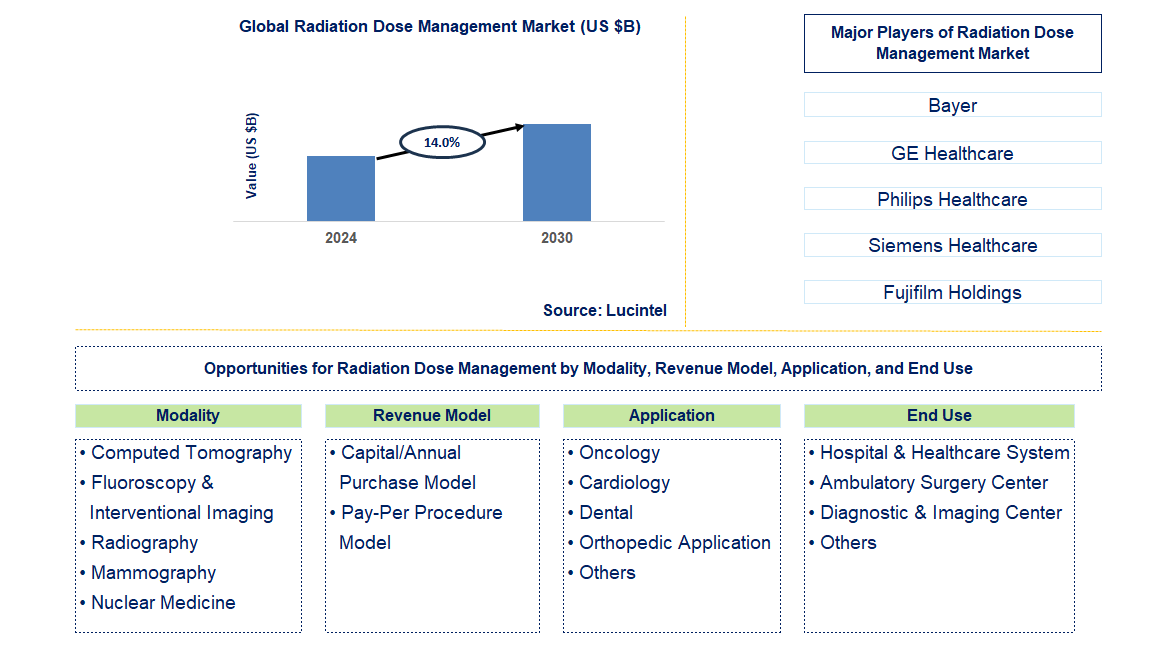
Key data points: The growth forecast = 14.0% annually for the next 6 years. Scroll below to get more insights. This market report covers trends, opportunities, and forecast in the global radiation dose management market to 2030 by modality (computed tomography, fluoroscopy & interventional imaging, radiography, mammography, and nuclear medicine), revenue model (capital/annual purchase model and pay-per procedure model), application (oncology, cardiology, dental, orthopedic application, and others), end use (hospital & healthcare system, ambulatory surgery center, diagnostic & imaging center, and others), and region (North America, Europe, Asia Pacific, and the Rest of the World)
We'll send your sample report shortly.
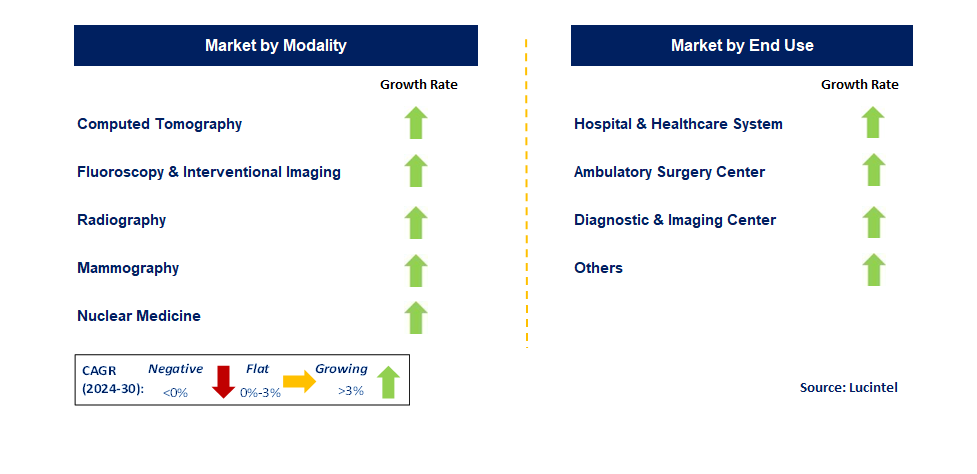
• Lucintel forecasts that, within the modality category, computed tomography is expected to witness the largest growth.
• Within the end-use category, the hospital is expected to witness the largest growth.
• In terms of regions, North America is expected to witness remain the largest region. A more than 150-page report is developed to help in your business decisions.
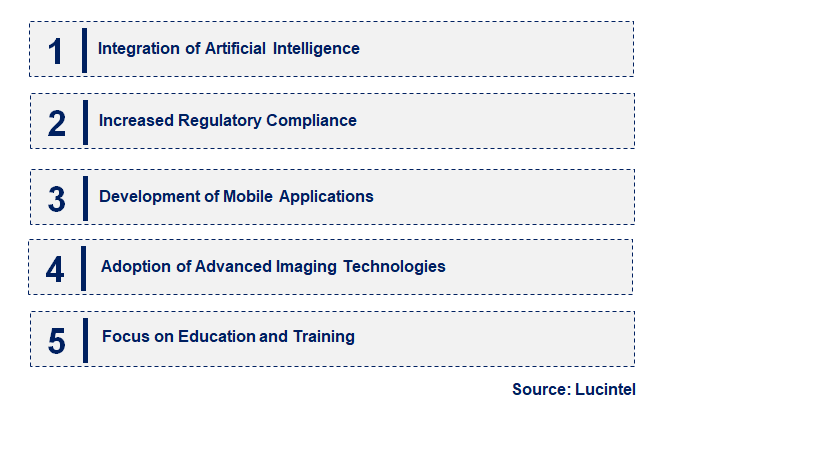
• Integration of Artificial Intelligence: AI is being utilized to analyze radiation exposure data, providing real-time insights and predictive analytics to improve safety protocols.
• Increased Regulatory Compliance: Stricter regulations worldwide are compelling healthcare facilities to adopt comprehensive dose management systems to ensure compliance and enhance patient safety.
• Development of Mobile Applications: Mobile dose management applications are emerging, allowing healthcare providers to track and manage radiation exposure conveniently, enhancing accessibility and usability.
• Adoption of Advanced Imaging Technologies: New imaging modalities with lower radiation doses are gaining traction, improving diagnostic capabilities while significantly reducing patient exposure.
• Focus on Education and Training: There is a growing emphasis on training healthcare professionals in radiation safety practices, ensuring that all staff members are equipped to manage and mitigate exposure effectively. The radiation dose management market is evolving rapidly, with technological advancements and regulatory pressures driving significant changes in how healthcare providers approach patient safety and radiation exposure.
• Implementation of Real-Time Dose Monitoring: Hospitals are increasingly adopting real-time dose monitoring systems that provide instant feedback to healthcare providers, allowing for immediate adjustments during procedures to reduce exposure.
• Launch of Advanced Dose Management Software: New software solutions are being introduced that utilize machine learning algorithms to analyze radiation dose data, offering predictive insights that help healthcare facilities optimize imaging protocols.
• Regulatory Changes Promoting Dose Tracking: New regulations in various countries mandate the implementation of comprehensive dose tracking systems in medical facilities, enhancing transparency and accountability in radiation use.
• Development of Low-Dose Imaging Techniques: Innovations in imaging technology, such as digital X-rays and advanced CT scans, are leading to significant reductions in radiation doses without compromising diagnostic quality.
• Rise of Collaborative Research Initiatives: Increased collaboration between academic institutions and healthcare organizations is fostering research aimed at developing innovative dose management solutions, enhancing safety protocols across the industry. Recent developments in the radiation dose management market highlight a concerted effort to improve safety and compliance, leveraging technology and regulatory frameworks to protect patients while ensuring effective medical imaging practices.
• Expansion into Emerging Markets: Developing countries are investing in healthcare infrastructure, creating opportunities for radiation dose management solutions that can enhance safety in newly established imaging centers.
• Development of User-Friendly Mobile Applications: Creating intuitive mobile applications for dose tracking and management can enhance usability for healthcare providers, allowing them to monitor radiation exposure more effectively on the go.
• Integration of AI and Machine Learning: Leveraging AI and machine learning technologies can improve data analysis and predictive modeling, allowing healthcare facilities to optimize radiation protocols and enhance patient outcomes.
• Collaboration with Regulatory Bodies: Partnering with regulatory agencies can help companies influence guidelines and standards, ensuring their solutions are compliant and positioned as industry benchmarks.
• Customization of Solutions for Specialized Needs: Offering tailored dose management solutions for specific medical specialties, such as pediatrics or oncology, can address unique challenges and enhance safety measures for vulnerable populations. Strategic growth opportunities in the radiation dose management market are abundant, and stakeholders can leverage technology, emerging markets, and regulatory collaboration to drive innovation and enhance patient safety in healthcare settings.
• Rising Awareness of Radiation Risks: Growing awareness among patients and healthcare professionals regarding the potential risks associated with radiation exposure is driving demand for effective dose management solutions.
• Regulatory Compliance Requirements: Stricter regulations and guidelines from health authorities worldwide are compelling healthcare organizations to adopt comprehensive radiation dose management systems to ensure compliance and enhance patient safety.
• Technological Advancements: Innovations in imaging technology, such as digital radiography and improved algorithms, are enabling lower radiation doses while maintaining diagnostic accuracy, further boosting demand for dose management solutions.
• Increasing Imaging Procedures: The rising number of diagnostic imaging procedures, driven by an aging population and growing prevalence of chronic diseases, is increasing the need for effective radiation dose management to safeguard patient health.
• Focus on Patient-Centered Care: A growing emphasis on patient-centered care and safety in healthcare settings is pushing organizations to implement robust radiation dose management practices, enhancing patient trust and satisfaction. Challenges in the radiation dose management market are:
• High Implementation Costs: The initial costs associated with implementing advanced radiation dose management systems can be a barrier for many healthcare facilities, particularly in resource-constrained environments.
• Need for Ongoing Training: Continuous education and training for healthcare professionals on the latest dose management technologies and best practices are essential but can be challenging to implement consistently.
• Data Integration Issues: Integrating radiation dose management systems with existing healthcare IT infrastructure can pose technical challenges, potentially hindering effective data sharing and utilization across platforms. The radiation dose management market is driven by increasing awareness, regulatory demands, and technological advancements, yet faces challenges such as implementation costs and the need for ongoing education. Addressing these challenges will be crucial for realizing the full potential of this market.
• Bayer
• GE Healthcare
• Philips Healthcare
• Siemens Healthcare
• Fujifilm Holdings
• Canon
• Pacshealth
• Sectra
• Bracco Imaging
• Qaelum
• Computed Tomography
• Fluoroscopy & Interventional Imaging
• Radiography
• Mammography
• Nuclear Medicine
• Capital/Annual Purchase Model
• Pay-Per Procedure Model
• Oncology
• Cardiology
• Dental
• Orthopedic Application
• Others
• Hospital & Healthcare System
• Ambulatory Surgery Center
• Diagnostic & Imaging Center
• Others
• North America
• Europe
• Asia Pacific
• The Rest of the World
• United States: The US is enhancing radiation dose management through AI-driven software that provides real-time monitoring and alerts for healthcare providers.
• China: China is expanding its radiation dose management initiatives, focusing on integrating advanced imaging technologies to optimize patient safety during diagnostics.
• Germany: Germany has implemented stringent regulations mandating the use of dose tracking systems in hospitals, promoting transparency and accountability in radiation use.
• India: India is witnessing growth in radiation dose management technologies, with startups developing cost-effective solutions to monitor exposure in rural healthcare settings.
• Japan: Japan is leveraging advanced data analytics to improve radiation dose management, enhancing protocols for patient safety in both diagnostic and therapeutic procedures.


• Bayer
• GE Healthcare
• Philips Healthcare
• Siemens Healthcare
• Fujifilm Holdings
• Canon
• Pacshealth
• Sectra
• Bracco Imaging
• Qaelum Q5. Which radiation dose management market segment will be the largest in the future? Answer: Lucintel forecasts that computed tomography is expected to witness the largest growth. Q6. In the radiation dose management market, which region is expected to be the largest in the next 5 years? Answer: In terms of regions, North America is expected to witness the largest region. Q.7 Do we receive customization in this report? Answer: Yes, Lucintel provides 10% customization without any additional cost.


Choose a license that fits your team. Instant PDF delivery.
Prices exclude taxes. Instant delivery. Custom licensing available on request.
Market Report · July 31, 2026
Market Report · July 31, 2026
Market Report · July 31, 2026
Trusted partner for strategic intelligence and business growth


Receive a complimentary market analysis tailored to your industry. Our analysts will identify key growth opportunities and competitive dynamics specific to your business.

Market size, growth rate, and key trend analysis for your specific sector.

Top competitor positioning and market share analysis.

Strategic recommendations backed by data-driven insights.
Get curated market intelligence and competitive moves straight to your inbox.
By subscribing, you agree to receive our monthly insights. Unsubscribe anytime.
Receive a complimentary market analysis tailored to your industry. Our analysts will identify key growth opportunities and competitive dynamics specific to your business.
Market size, growth rate, and key trend analysis for your specific sector.
Top competitor positioning and market share analysis.
Strategic recommendations backed by data-driven insights.
Get curated market intelligence, emerging trends, and competitive moves straight to your inbox each month.
By subscribing, you agree to receive our monthly insights. Unsubscribe anytime.
We'll send your sample report shortly.