
Report Feature
Radar Target Echo Simulator Trends and Forecast
The future of the global radar target echo simulator market looks promising with opportunities in the automobile industrial, aviation & aerospace, and ship industrial markets. The global radar target echo simulator market is expected to grow with a CAGR of 6.5% from 2024 to 2030. The major drivers for this market are the growing adoption of radar systems in the defense and aerospace industries, the increasing need for realistic simulation of radar echoes for training and testing, and the rising investments in military modernization and radar system upgrades.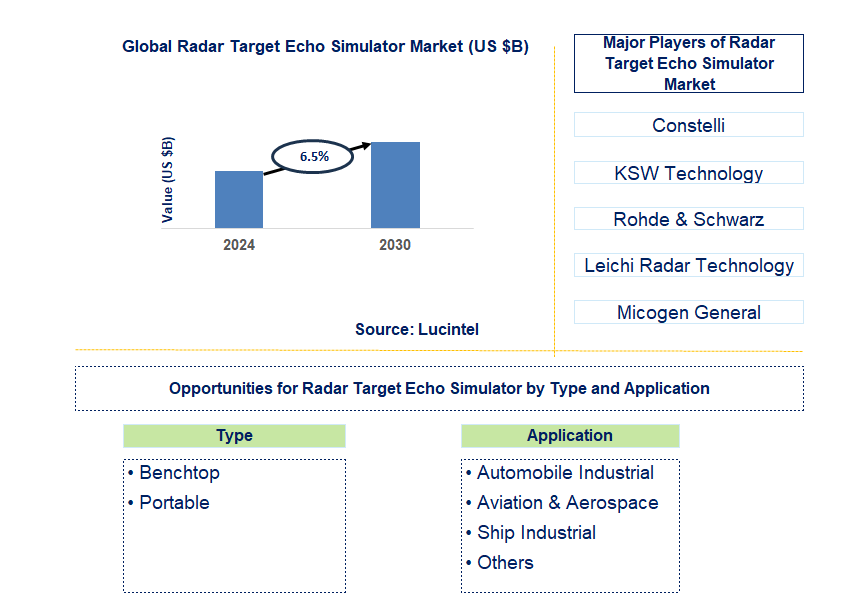
Country Wise Outlook for the Radar Target Echo Simulator Market
Major players in the market are expanding their operations and forming strategic partnerships to strengthen their positions. The below image highlights recent developments by major radar target echo simulator producers in key regions: the USA, Chinese, Indian, Japanese, and German.• United States: Recent developments in the U.S. include the introduction of advanced radar target simulation systems with enhanced signal fidelity, allowing for more accurate testing of radar systems. Companies are focusing on integrating AI algorithms to improve target recognition capabilities and simulate complex scenarios effectively.
• Chinese: China is rapidly advancing its radar target echo simulation technology by developing systems that can simulate a wide range of radar signatures. The government has increased funding for defense technology, leading to faster deployment of sophisticated simulators in military applications, improving the country’s radar testing capabilities.
• Germany: Germany’s focus on automotive radar applications has led to the development of high-fidelity simulators for autonomous vehicles. Recent advancements include integrating simulation tools with real-time data processing to enhance the reliability of radar systems in complex driving scenarios, thus supporting the growing demand for autonomous technologies.
• Indian: India is investing in radar simulation technologies for defense and aerospace sectors. Recent developments include indigenous simulators designed for testing military radar systems, enhancing operational readiness. This push towards self-reliance in defense technology aims to reduce dependency on foreign systems while improving domestic capabilities.
• Japan: Japan’s recent focus on dual-use technologies has prompted developments in radar target echo simulators that cater to both military and civilian applications. The integration of advanced signal processing techniques has improved the accuracy of simulations, making them essential for developing next-generation radar systems in various sectors.
Emerging Trends in the Radar Target Echo Simulator Market
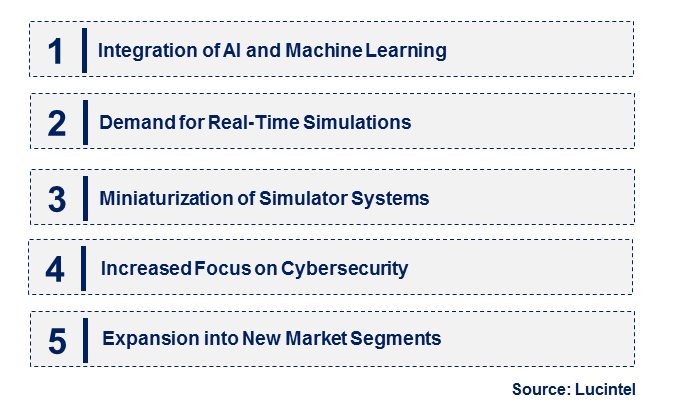
The radar target echo simulator market is undergoing transformative changes driven by technological advancements and evolving customer needs. Below are five key trends that are shaping the market landscape:• Integration of AI and Machine Learning: The incorporation of AI algorithms in radar simulators is enhancing the accuracy of simulations, allowing for complex scenarios to be modeled and analyzed more effectively. This trend is reshaping testing protocols, leading to improved radar system designs.
• Demand for Real-Time Simulations: There is a growing need for real-time simulation capabilities in various applications, particularly in defense and autonomous vehicles. This trend enables immediate feedback during testing, facilitating quicker iterations in design and development processes.
• Miniaturization of Simulator Systems: Miniaturization efforts are leading to compact radar simulators that can be used in diverse environments, enhancing portability and accessibility. This trend supports mobile applications and field testing, making it easier for engineers to conduct assessments on-site.
• Increased Focus on Cybersecurity: As radar systems become more interconnected, there is an increased emphasis on cybersecurity in simulation tools. This trend addresses the growing threat of cyberattacks on critical radar systems, ensuring that simulators include robust security measures to safeguard against vulnerabilities.
• Expansion into New Market Segments: The radar target echo simulator market is expanding beyond traditional military applications into sectors like automotive and aerospace. This trend is driven by the rising demand for advanced radar systems in autonomous vehicles and drones, opening new growth opportunities for manufacturers. These trends indicate a dynamic shift in the radar target echo simulator market, enhancing the capabilities and applications of radar technology across various sectors.
Recent Developments in the Radar Target Echo Simulator Market
The radar target echo simulator market is witnessing critical developments that enhance testing capabilities and system performance. Below are five significant developments that highlight these changes:• Advancements in Signal Processing Technologies: The introduction of cutting-edge signal processing techniques has led to improved accuracy in radar simulations. Enhanced algorithms can now replicate complex target signatures, providing manufacturers with better data for radar system evaluation and development.
• Development of Multi-Function Simulators: Recent trends show a shift towards developing multi-functional radar simulators that can emulate various types of targets and environmental conditions. This versatility is crucial for comprehensive testing, allowing for a broader range of scenarios in military and civilian applications.
• Collaboration with Research Institutions: Collaborations between radar technology companies and research institutions are becoming more common, leading to innovations in simulation technologies. Such partnerships aim to leverage academic research and commercial expertise, accelerating the development of next-generation radar simulation systems.
• Emergence of Cloud-Based Solutions: Cloud technology is increasingly being integrated into radar simulation systems, allowing for remote access and collaboration. This development enables engineers to run simulations from various locations, streamlining workflows and improving efficiency in system testing and development.
• Regulatory Compliance Innovations: New developments in simulation technologies are increasingly focused on ensuring compliance with international standards and regulations. This trend is crucial for global manufacturers, allowing them to meet the diverse requirements of different markets and maintain a competitive edge. These developments are significantly enhancing the capabilities of the radar target echo simulator market, allowing for more precise and versatile radar system testing.
Strategic Growth Opportunities for Radar Target Echo Simulator Market
The radar target echo simulator market presents numerous growth opportunities across various applications. Below are five key growth opportunities by application:• Military Applications: The defense sector remains a significant growth area for radar target simulators. As nations invest in advanced military technologies, the demand for accurate radar simulation systems for training and testing is expected to rise, providing robust opportunities for manufacturers.
• Automotive Sector: The increasing adoption of radar technologies in autonomous vehicles presents a lucrative growth opportunity. Radar target simulators are essential for testing and validating radar systems used in advanced driver-assistance systems (ADAS), driving demand in this expanding market segment.
• Aerospace Industry: The aerospace sector is increasingly adopting radar technologies for air traffic control and aircraft safety. The demand for simulators to test these systems is growing, offering manufacturers an opportunity to develop tailored solutions for this critical application.
• Telecommunications and IoT: As the telecommunications industry evolves with 5G and IoT advancements, the need for radar simulations to ensure system interoperability is becoming more critical. This trend opens up opportunities for simulators to support the testing of new communication technologies.
• Research and Development: Academic and research institutions are continually seeking advanced simulation tools to study radar technologies. This sector presents growth opportunities for suppliers who can provide high-fidelity radar target echo simulators for experimental and developmental projects. These growth opportunities highlight the diverse applications and potential for expansion in the radar target echo simulator market, driven by technological advancements and increasing demand across multiple industries.
Radar Target Echo Simulator Market Driver and Challenges
The radar target echo simulator market is influenced by various technological, economic, and regulatory factors that serve as drivers and challenges. Understanding these dynamics is essential for stakeholders aiming to navigate this evolving market landscape. The factors responsible for driving the radar target echo simulator market include:• Technological Advancements: Continuous improvements in radar technology are driving demand for sophisticated simulation systems. Enhanced capabilities enable more accurate testing and development, encouraging manufacturers to invest in advanced simulation tools.
• Rising Defense Budgets: Increased military spending in various countries is fueling growth in the radar target simulator market. Governments are investing in modernizing defense capabilities, driving demand for advanced testing systems to ensure operational readiness.
• Growing Automotive Sector: The automotive industry's shift towards autonomous driving technology is significantly increasing the demand for radar target simulators. Accurate testing of radar systems is critical for ensuring vehicle safety and compliance with regulations.
• Need for System Integration: As radar systems become more integrated with other technologies, there is a heightened need for accurate simulation tools that can replicate complex interactions. This integration drives demand for sophisticated simulators capable of handling multifaceted scenarios.
• Focus on Research and Development: Growing investment in R&D across various sectors is leading to increased demand for radar target echo simulators. Companies are seeking advanced tools to validate and test innovative radar technologies, enhancing market growth prospects. Challenges in the radar target echo simulator market are:
• High Development Costs: The complexity and high costs associated with developing advanced radar simulators can deter investment. Smaller manufacturers may find it challenging to compete against larger companies with more resources, limiting market entry opportunities.
• Rapid Technological Changes: The fast-paced evolution of radar technologies necessitates continuous updates to simulation systems. Keeping up with these changes can be challenging for manufacturers, requiring ongoing investment and innovation.
• Regulatory Compliance Issues: Navigating diverse international regulations can pose challenges for radar simulator manufacturers. Ensuring compliance with various standards requires significant effort and resources, impacting market agility. In summary, the interplay of these drivers and challenges significantly impacts the radar target echo simulator market, influencing growth trajectories and competitive dynamics as stakeholders adapt to an evolving landscape.
List of Radar Target Echo Simulator Companies
Companies in the market compete on the basis of product quality offered. Major players in this market focus on expanding their manufacturing facilities, R&D investments, infrastructural development, and leverage integration opportunities across the value chain. Through these strategies radar target echo simulator companies cater increasing demand, ensure competitive effectiveness, develop innovative products & technologies, reduce production costs, and expand their customer base. Some of the radar target echo simulator companies profiled in this report include-• Constelli
• KSW Technology
• Rohde & Schwarz
• Leichi Radar Technology
• Micogen General Technology
• Xian Standard Information Technology
• Hwa Create Company
Radar Target Echo Simulator by Segment
The study includes a forecast for the global radar target echo simulator market by type, application, and region.Radar Target Echo Simulator Market by Type [Analysis by Value from 2018 to 2030]:
• Benchtop
• Portable
Radar Target Echo Simulator Market by Application [Analysis by Value from 2018 to 2030]:
• Automobile Industrial
• Aviation & Aerospace
• Ship Industrial
• Others
Radar Target Echo Simulator Market by Region [Analysis by Value from 2018 to 2030]:
• North America
• Europe
• Asia Pacific
• The Rest of the World
Radar Target Echo Simulator Market Insights
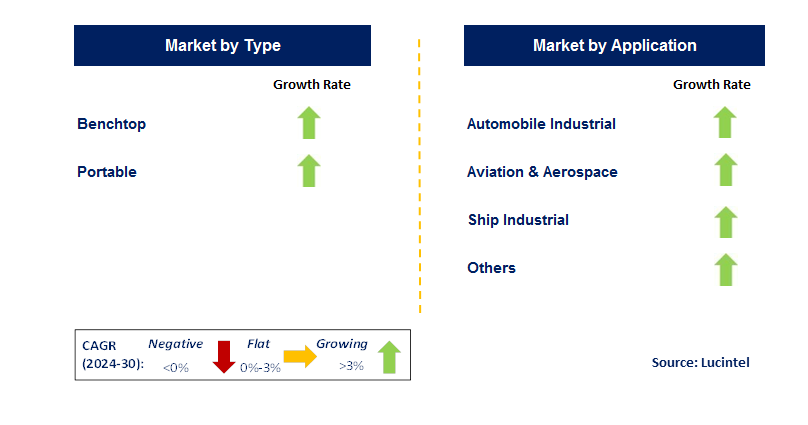
• Lucintel forecasts that, within the type category, benchtop is expected to witness a higher growth over the forecast period.
• Within the application category, automobile industrial is expected to witness the highest growth.
• In terms of regions, APAC is expected to witness the highest growth over the forecast period.

Features of the Global Radar Target Echo Simulator Market
Market Size Estimates: Radar target echo simulator market size estimation in terms of value ($B). Trend and Forecast Analysis: Market trends (2018 to 2023) and forecast (2024 to 2030) by various segments and regions. Segmentation Analysis: Radar target echo simulator market size by type, application, and region in terms of value ($B). Regional Analysis: Radar target echo simulator market breakdown by North America, Europe, Asia Pacific, and Rest of the World. Growth Opportunities: Analysis of growth opportunities in different type, application, and regions for the radar target echo simulator market. Strategic Analysis: This includes M&A, new product development, and competitive landscape of the radar target echo simulator market. Analysis of competitive intensity of the industry based on Porter’s Five Forces model.If you are looking to expand your business in this or adjacent markets, then contact us. We have done hundreds of strategic consulting projects in market entry, opportunity screening, due diligence, supply chain analysis, M & A, and more.

FAQ
Q1. What is the growth forecast for radar target echo simulator market? Answer: The global radar target echo simulator market is expected to grow with a CAGR of 6.5% from 2024 to 2030. Q2. What are the major drivers influencing the growth of the radar target echo simulator market? Answer: The major drivers for this market are the growing adoption of radar systems in the defense and aerospace industries, the increasing need for realistic simulation of radar echoes for training and testing, and the rising investments in military modernization and radar system upgrades. Q3. What are the major segments for radar target echo simulator market? Answer: The future of the radar target echo simulator market looks promising with opportunities in the automobile industrial, aviation & aerospace, and ship industrial markets. Q4. Who are the key radar target echo simulator market companies? Answer: Some of the key radar target echo simulator companies are as follows:• Constelli
• KSW Technology
• Rohde & Schwarz
• Leichi Radar Technology
• Micogen General Technology
• Xian Standard Information Technology
• Hwa Create Company Q5. Which radar target echo simulator market segment will be the largest in future? Answer: Lucintel forecasts that benchtop is expected to witness a higher growth over the forecast period. Q6. In radar target echo simulator market, which region is expected to be the largest in next 5 years? Answer: APAC is expected to witness the highest growth over the forecast period. Q.7 Do we receive customization in this report? Answer: Yes, Lucintel provides 10% customization without any additional cost.
Table of Contents
Methodology
- In-depth interviews of the major players in this market
- Detailed secondary research from competitors’ financial statements and published data
- Extensive searches of published works, market, and database information pertaining to industry news, company press releases, and customer intentions
- A compilation of the experiences, judgments, and insights of Lucintel’s professionals, who have analyzed and tracked this market over the years.


Buy Now
Choose a license that fits your team. Instant PDF delivery.
Prices exclude taxes. Instant delivery. Custom licensing available on request.
Key Questions
- • What are some of the most promising, high-growth opportunities for the radar target echo simulator market by type (benchtop and portable), application (automobile industrial, aviation & aerospace, ship industrial, and others), and region (North America, Europe, Asia Pacific, and the Rest of the World)?
- • Which segments will grow at a faster pace and why?
- • Which region will grow at a faster pace and why?
- • What are the key factors affecting market dynamics? What are the key challenges and business risks in this market?
- • What are the business risks and competitive threats in this market?
- • What are the emerging trends in this market and the reasons behind them?
- • What are some of the changing demands of customers in the market?
- • What are the new developments in the market? Which companies are leading these developments?
- • Who are the major players in this market? What strategic initiatives are key players pursuing for business growth?
- • What are some of the competing products in this market and how big of a threat do they pose for loss of market share by material or product substitution?
- • What M&A activity has occurred in the last 5 years and what has its impact been on the industry? For any questions related to Radar Target Echo Simulator Market, Radar Target Echo Simulator Market Size, Radar Target Echo Simulator Market Growth, Radar Target Echo Simulator Market Analysis, Radar Target Echo Simulator Market Report, Radar Target Echo Simulator Market Share, Radar Target Echo Simulator Market Trends, Radar Target Echo Simulator Market Forecast, Radar Target Echo Simulator Market Companies, write Lucintel analyst at email: helpdesk@lucintel.com. We will be glad to get back to you soon.


