
Market Report · July 22, 2026

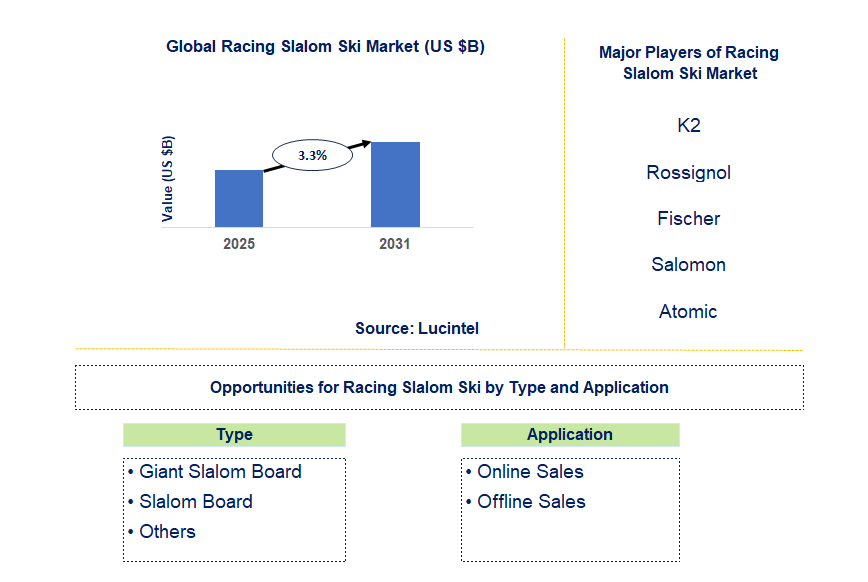
Key data points: The growth forecast = 3.3% annually for the next 7 years. Scroll below to get more insights. This market report covers Trends, opportunities and forecasts in racing slalom ski market to 2031 by type (giant slalom board, slalom board, and others), application (online sales and offline sales), and region (North America, Europe, Asia Pacific, and the Rest of the World)
We'll send your sample report shortly.
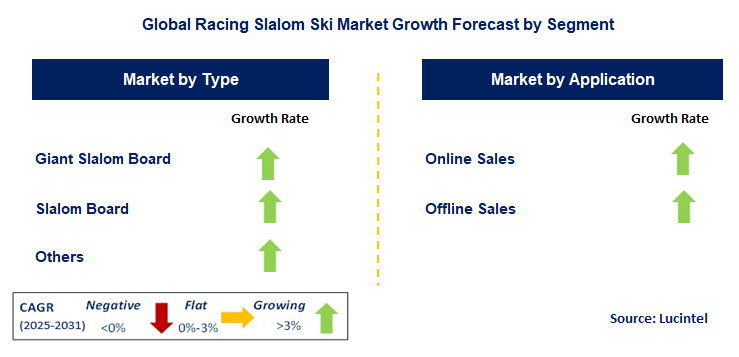
• Lucintel forecasts that, within the type category, giant slalom board is expected to witness higher growth over the forecast period due to the growing popularity in professional competitions & recreational use.
• Within the application category, online sale is expected to witness higher growth due to the increasing preference for convenience & wider product.
• In terms of region, Europe is expected to witness the highest growth over the forecast period.
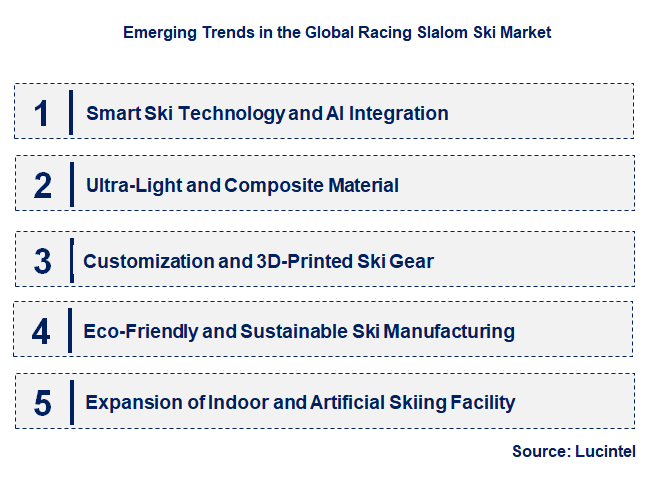
• Smart Ski Technology and AI Integration: Performance analysis of skis and snowboards has been revolutionized through the use of artificial intelligence and smart sensors. The skiing industry is adopting AI ski goggles, motion-tracking ski poles, and embedded sensors in skis to report speed, angles of turns, and pressure measurements during activity. This information is vital for professional racers as they refine their performance. Moreover, AI-equipped devices can monitor and evaluate a person's skiing and provide tailored suggestions for improvement. Countries like the United States and Japan are embracing these high technologies, transforming ski training methodologies.
• Ultra-Light and Composite Material: The demand for lighter and stronger materials continues to drive innovation in the ski industry. Advanced carbon composites and titanium strips make skis easier to handle while increasing their flexibility, stability, and durability. This allows for effortless movement during skiing, enabling tighter control during sharp turns. German and United States companies lead this innovation, focusing on competitive racing slalom skis to enhance responsiveness and precision in rapid slalom skiing.
• Customization and 3D-Printed Ski Gear: Manufacturers are now offering custom-tailored skis, boots, and bindings that align with a skier's style, enhancing comfort and precision. Specialized ski components can now be produced through 3D printing, optimizing weight distribution and flexibility to ensure peak performance. This trend is most common in Japan and Germany, where custom sports gear is in high demand. Such advancements allow skiers to enhance overall comfort and efficiency on the slopes, leading to improved direct-to-consumer production models.
• Eco-Friendly and Sustainable Ski Manufacturing: Ski manufacturing technologies and strategies have evolved towards sustainability. Brands now use recycled materials, biodegradable ski wax, and non-toxic coatings, reducing their carbon footprint. Additionally, these companies strive for carbon-neutral production and transition to renewable energy sources for ski manufacturing. Sustainable skiing gear is on the rise in Europe and Germany, fueled by a growing eco-conscious population. Green innovation will shape the ski industry's future by integrating sustainable design and production principles.
• Expansion of Indoor and Artificial Skiing Facility: Due to climate change, natural snowfall is becoming less predictable, creating a need for year-round training. Consequently, indoor skiing and snow machines are becoming essential. China and Japan are investing in indoor ski domes that allow athletes to train regardless of the season. This, in turn, creates greater demand for skis designed specifically for artificial snow. Additionally, ski manufacturers are improving product slopes to further propel advances in ski engineering. With growing interest in indoor skiing, the market for racing slalom skis optimized for such environments is bound to expand. The racing slalom ski market is rapidly evolving due to new technologies, sustainability initiatives, and increased access to skiing competitions. The industry is transforming with smart ski technology, AI performance trackers, lightweight materials, and eco-friendly production. User experience is being reshaped by customization and 3D-printed ski equipment, while the construction of new indoor ski resorts enables year-round training. Eco-conscious and high-performance ski equipment is driving innovation, supporting professional and recreational slalom skiers worldwide.
• Improvement in Ski Materials and Designs: Innovative construction techniques, such as those utilizing carbon fiber composites and lightweight alloys, enhance ski agility, durability, and speed. Strike Technologies, in particular, uses composite materials because of their superior energy transfer capabilities. Slalom athletes can now perform at their best with the most effective energy transfer. With these factors in mind, slalom ski manufacturers are investing more in developing engineering materials where lightness does not compromise strength and flexibility. Structural advancements in skis create a competitive advantage for professional and amateur racers while increasing consumer demand for high-performance slalom skis.
• Acquisition of Smart Ski Technology: Athlete training is being revolutionized by the integration of smart sensors and real-time performance tracking technology into racing slalom skis. Ski-mounted sensors measure speed, angle, and pressure placement, providing insightful skiing data. This advancement benefits professional athletes and their coaches who focus on improving skier performance. The growing expectation is that this accessible technology will increase the demand for connected ski gear in the coming years.
• Ski Manufacturing Sustainability: The adoption of new materials, eco-friendly production processes, and environmentally sustainable practices is becoming a major focus. To support these efforts, manufacturers have increased the use of bio-based resins, recyclable paints, trims, and coatings to reduce their environmental footprint. Some brands have also started implementing circular economy models, encouraging consumers to trade in used skis for discounts on new products. These initiatives, along with sustainable marketing efforts, attract eco-conscious consumers while helping brands expand their customer base.
• Enhanced Safety Equipment and Protective Gear: Protective gear such as ski helmets made of impact-resistant materials, shock-absorbing body armor, and improved ski bindings are now designed for better safety in competitive skiing. Switching from regular to ski boots with better ankle support and a customizable fit significantly lowers the risk of injury in high-speed slalom events. Increased confidence among skiers stems from these developments, improving racing safety and accessibility while expanding market prospects.
• Market Expansion and Development of Training and Simulation Technologies: The use of virtual reality and artificial intelligence within the skiing world is on the rise. Skiers can now refine their reflexes and perfect their racing tactics with advanced training systems, reducing the need to spend excessive hours on the snow. These systems encourage practice in simulated scenarios. These advanced technologies are especially beneficial for professional teams wishing to maintain optimal training levels during the off-season or when weather conditions are unfavorable. Market growth will accelerate with the rapid adoption of these solutions. Perfection is the guiding principle in Racing Slalom Ski development. These advancements optimize performance, safety, and sustainability standards. Smart technologies and simulation tools improve training techniques, delivering better results, while material innovations enhance ski efficiency. Furthermore, sustainable manufacturing policies improve brand reputation and consumer appeal. Companies that adopt these policies will be well-positioned in the evolving market.
• Developing Skis for Competitive Athletes: With the rise of professional skiing competitions, the demand for advanced, high-performance slalom skis is increasing. Precision engineering is essential in designing skis for elite athletes, incorporating advanced materials and aerodynamic designs. Significant revenue can be generated by selling specialized products to professional teams and ski academies.
• Creating Smart Training Systems for Skiers: There is an opportunity to develop smart ski training systems with technological advancements in the sports sector. Wearable sensors, interactive training apps, and AI-driven coaching systems can enhance athlete performance. Companies focusing on digitized training solutions will serve a new market segment looking to improve performance through data analytics.
• Growth in Recreational and Amateur Racing Segment: The rise in ski tourism and amateur racing competitions is increasing the demand for mid-range racing slalom skis. Manufacturers can tap into this market by producing high-quality, reasonably priced equipment that appeals to recreational skiers. Collaborations with ski resorts and rental services can maximize market penetration.
• Customization and Personalization Trend: Skiers have unique racing styles and increasingly seek equipment that meets their specifications. Brands can differentiate themselves by offering custom-fit ski boots, personalized ski graphics, and adjustable bindings. Companies providing customization create significant value and build strong customer loyalty, driving premium revenue.
• Sustainability and Eco-Friendly Product Line: Growth potential in the ski industry can be leveraged by developing eco-friendly ski products. Biodegradable ski wax, recyclable components, and sustainable packaging appeal to environmentally conscious customers. Brands that prioritize sustainability will establish a long-term competitive advantage. These strategic initiatives will help businesses expand their market share while fostering product development and innovation. A focus on performance apparel, smart training aids, and eco-friendly frameworks aligns with evolving consumer expectations. Companies embracing these trends will secure a strong position in the competitive Racing Slalom Ski sector.
• K2
• Rossignol
• Fischer
• Salomon
• Atomic
• Volkl
• Black Diamond
• Elan
• Scott
• Tecnica Group
• Giant Slalom Board
• Slalom Board
• Others
• Online Sales
• Offline Sales
• North America
• Europe
• Asia Pacific
• The Rest of the World
• United State: Carbon fiber ski construction and AI-powered performance analysis tools are becoming available in the United States. These technologies are expected to change the racing slalom ski market as they replace conventional bindings and improve precision functionality. The rapid expansion of collegiate skiing leagues, along with ski programs at high schools, is helping widen the pool of customers. Enhanced competition is driving ski brands to offer better-tailored products, which also advance sustainability goals as they shift towards bio-based and recycled composites. The availability of ski equipment and accessories online is increasing in value, which benefits sustainability-focused slalom ski enthusiasts.
• China: The Chinese racing slalom ski industry is expanding quickly due to increased government spending on sports infrastructure and the development of new ski resorts. The country's marketing drive for winter sports following the Beijing 2022 Winter Olympics has stimulated demand for racing slalom skis. Local manufacturers are expanding their production capacity to provide alternatives to foreign brands. Additionally, smart skiing technologies, such as real-time motion analytics and integrated safety features, are being adopted by professionals and enthusiasts alike. However, the market is limited by the lack of adequate ski coaching and training facilities.
• Germany: Germany remains a primary market for racing slalom skis and is known for precision and durability. Strong focus is placed on constructing high-performance skis from advanced lightweight-durable materials like ultra-high molecular weight polyethylene and titanium-reinforced composites. German ski manufacturers are the most advanced in the field of aerodynamics, optimizing ski shapes to enhance speed control and maneuverability. Additionally, the increasing popularity of ski racing academies and training programs has led to a rise in demand for specialized equipment. Political efforts to improve the image of eco-activism are also increasing, as some brands introduce sustainable waxes, recyclable ski materials, and lower-carbon production models.
• India: The skiing industry in India is at an early stage but is gaining momentum due to growing interest in winter sports. The government is developing ski resorts in Himachal Pradesh and Uttarakhand, increasing the number of skiers. The ski industry is mostly dominated by imported skis, as foreign companies meet the needs of elite athletes and adventure sports enthusiasts. Market growth is still limited by the high cost of equipment, lack of trained professionals, irregular snowfall, and limited professional training opportunities. However, ski training camps and rental services are helping introduce more people to the sport.
• Japan: The Japanese racing slalom ski market is thriving alongside the country's strong winter sports culture and cutting-edge innovations in ski technology. High-quality ski manufacturers in Japan, such as Austria Tec, incorporate shock absorbers and edge control systems to improve slalom performance. Japan is home to both competitive and recreational skiers, supported by well-maintained ski resorts and racing circuits. Moreover, the implementation of artificial snow technology and indoor ski facilities is extending the ski season, boosting demand for racing slalom gear. The demand for lightweight and flexible ski equipment also contributes to this trend.


• K2
• Rossignol
• Fischer
• Salomon
• Atomic
• Volkl
• Black Diamond
• Elan
• Scott
• Tecnica Group Q5. Which racing slalom ski market segment will be the largest in future? Answer: Lucintel forecasts that, within the type category, giant slalom board is expected to witness higher growth over the forecast period due to the growing popularity in professional competitions & recreational use. Q6. In racing slalom ski market, which region is expected to be the largest in next 5 years? Answer: In terms of region, Europe is expected to witness the highest growth over the forecast period. Q7. Do we receive customization in this report? Answer: Yes, Lucintel provides 10% customization without any additional cost.


Choose a license that fits your team. Instant PDF delivery.
Prices exclude taxes. Instant delivery. Custom licensing available on request.
Market Report · July 22, 2026
Market Report · July 16, 2026
Market Report · May 18, 2026
Trusted partner for strategic intelligence and business growth


Receive a complimentary market analysis tailored to your industry. Our analysts will identify key growth opportunities and competitive dynamics specific to your business.

Market size, growth rate, and key trend analysis for your specific sector.

Top competitor positioning and market share analysis.

Strategic recommendations backed by data-driven insights.
Get curated market intelligence and competitive moves straight to your inbox.
By subscribing, you agree to receive our monthly insights. Unsubscribe anytime.
Receive a complimentary market analysis tailored to your industry. Our analysts will identify key growth opportunities and competitive dynamics specific to your business.
Market size, growth rate, and key trend analysis for your specific sector.
Top competitor positioning and market share analysis.
Strategic recommendations backed by data-driven insights.
Get curated market intelligence, emerging trends, and competitive moves straight to your inbox each month.
By subscribing, you agree to receive our monthly insights. Unsubscribe anytime.
We'll send your sample report shortly.