
Market Report · July 22, 2026

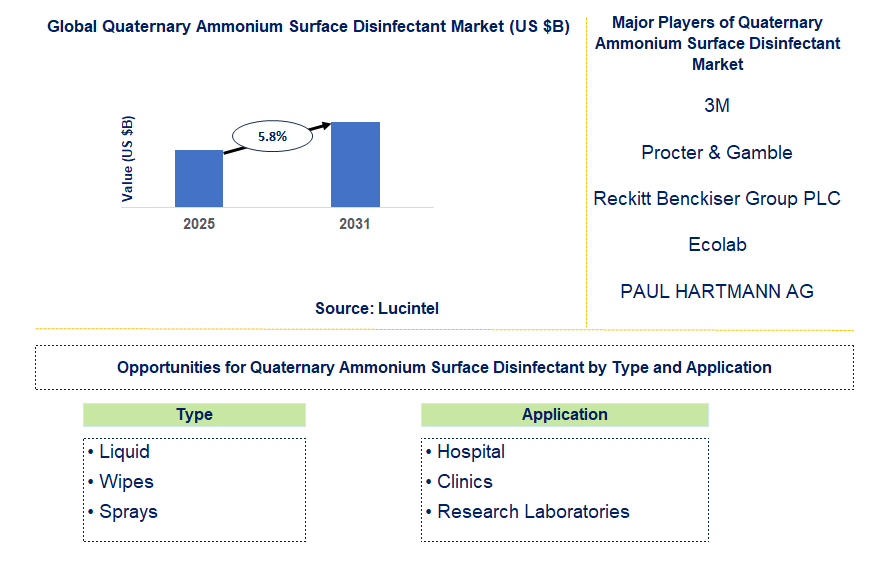
Key data points: The growth forecast = 5.8% annually for the next 7 years. Scroll below to get more insights. This market report covers trends, opportunities and forecasts in quaternary ammonium surface disinfectant market to 2031 by type (liquid, wipes, and sprays), application (hospital, clinics, and research laboratories), and region (North America, Europe, Asia Pacific, and the Rest of the World)
We'll send your sample report shortly.
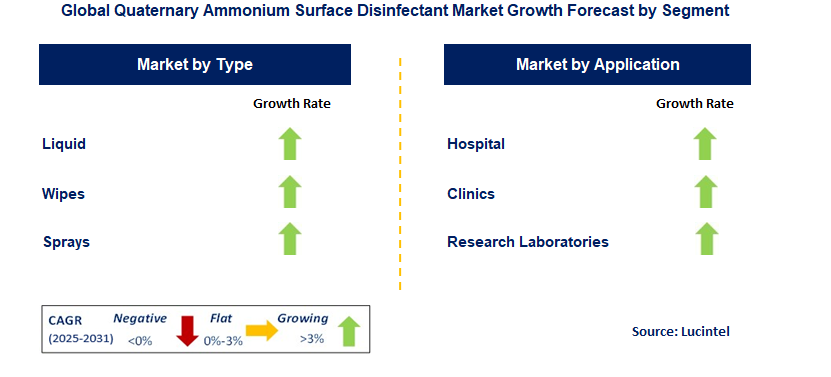
• Lucintel forecasts that, within the type category, wipes will remain the largest segment over the forecast period.
• Within the application category, hospitals is expected to witness the highest growth.
• In terms of region, APAC is expected to witness the highest growth over the forecast period.
• Sustainability Initiatives: There is an increasing focus on environment-friendly products, such as biodegradable disinfectants. This shift is driven by growing concerns about lowering the environmental impact of cleaning agents and aligning with global environmental goals.
• Non-toxic and Eco-friendly Formulations: The general public and industries are seeking greener disinfectants that are non-toxic and harmless to humans. Quaternary ammonium disinfectants are being reformulated to reduce chemical exposure and make them more suitable for sensitive venues like hospitals and schools.
• Increased Use in Healthcare Settings: Quaternary ammonium disinfectants are increasingly used in healthcare due to their effectiveness against a wide array of pathogens. These products have become essential in infection control in hospitals and clinics, which have seen a rise in hygiene standards during outbreaks of infectious diseases.
• Product Innovation: The disinfectant market is rapidly advancing with innovations such as multi-purpose sprays, disinfectant wipes, and novel packaging. These innovations enhance consumer convenience and broaden usage in both residential and commercial sectors.
• Regulatory Compliance and Certifications: Compliance with regulations presents challenges for disinfectant manufacturers who must create products that meet health and safety standards. This has become more pressing as countries implement stricter rules for cleaning and sanitizing products, particularly in the medical and food industries.
These changes are reshaping the quaternary ammonium disinfectant market by increasing demand for cleaner, safer, and more eco-friendly products. These trends allow the market to expand and cater to a wider range of industries while emphasizing resource optimization and sustainability.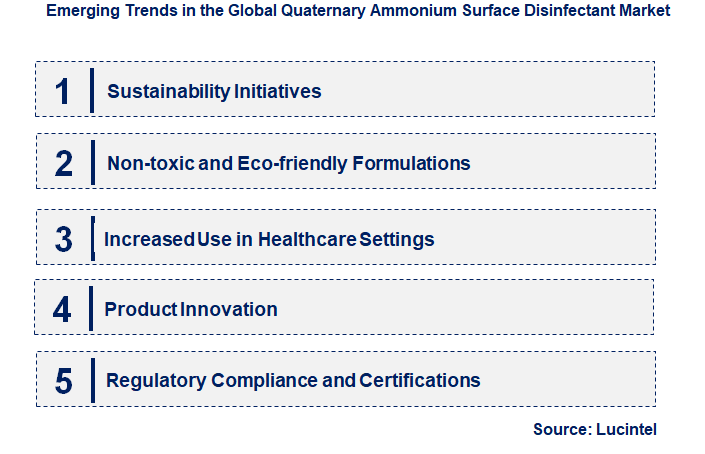
• The Rise in Popularity of Environmentally-Friendly Disinfectants: There is a clear trend toward eco-friendly disinfectants due to environmental concerns. Manufacturers are replacing chemicals with plant-based ingredients without compromising efficacy, appealing to consumers and businesses that embrace sustainability.
• Innovation in the Architecture of Disinfectant Products: Manufacturers are applying new technologies to disinfectant products, such as modern packaging that improves handling and dispensing. Additionally, industries in various sectors are increasingly opting for long-lasting disinfectants that require less frequent application.
• Heightened Regulatory Requirements: Governments are tightening regulations on the chemicals used in disinfectants and calling for safer product formulations. This has resulted in heightened research and development efforts to meet safety and effectiveness standards in Europe, North America, Asia, and other regions.
• Broader Application of Quaternary Ammonium Compounds in the Community: Disinfectants are now being used not only in hospitals but also in schools, restaurants, airports, and other public transportation systems. This reflects the increased focus on public place cleanliness, which was intensified by the pandemic.
• Focusing on Consumer Education and Transparency: Businesses are recognizing the importance of educating consumers to build trust in their products. As consumers become more concerned about the products they use in their homes and workplaces, transparency in ingredient sourcing and product efficacy has become a significant marketing factor.
These changes illustrate a growing emphasis on sustainability, innovation, and regulatory adherence in the quaternary ammonium disinfectant market. Companies are adapting to stay competitive while meeting the emerging demands of consumers and regulations.• Healthcare: This sector is seeing substantial growth due to the increasing demand for sanitation in hospitals and clinics. With an emphasis on infection control, hospitals are purchasing disinfectants with high efficacy against various pathogens, making healthcare a key growth area.
• Food Safety: Disinfectants, particularly for food processing and packaging facilities, are becoming increasingly important as food safety standards tighten. Effective disinfectants are necessary to maintain hygiene and prevent cross-contamination, opening up new opportunities in the food industry.
• Education and Public Spaces: Greater emphasis is being placed on disinfecting schools, universities, and public transportation systems. This sector is experiencing significant demand for disinfectants to maintain hygiene and control outbreaks in large facilities.
• Residential: The residential segment is growing due to increased health consciousness among consumers. Consumers are purchasing more quaternary ammonium disinfectants for home use, particularly for cleaning kitchens and bathrooms, creating significant market opportunities.
• Commercial Cleaning: There is a growing demand for frequent cleaning in office buildings, retail spaces, and hotels. This has led to increased demand for disinfectants, presenting an opportunity for suppliers to target commercial cleaning services.
These opportunities demonstrate the various sectors that will benefit from the use of quaternary ammonium disinfectants, ranging from consumers to businesses that require high cleanliness standards. This growing demand is driving market competition, fostering innovation, and diversifying products and services.• 3M
• Procter & Gamble
• Reckitt Benckiser Group PLC
• Ecolab
• PAUL HARTMANN AG
• BD
• MEDALKAN
• Liquid
• Wipes
• Sprays
• Hospital
• Clinics
• Research Laboratories
• North America
• Europe
• Asia Pacific
• The Rest of the World
• United States: The United States market is particularly focused on innovation and sustainability in relation to quaternary ammonium disinfectants. New products are being developed, for example, SC Johnson introduced a squeeze and pour solution that offers measured delivery without spills, enhancing safety and reducing chemical waste. Some formulators are developing disinfectant surface cleaners for multipurpose use in hospitals, schools, and public transport. There are also regulations addressing exposure risk and formulation standards, so there is emphasis on meeting stricter antimicrobial efficacy and residue limits. The Environmental Protection Agency continues to update the list of approved QAC-based disinfectants, encouraging manufacturers to comply.
• China: Leveraging industrial power, especially in manufacturing and textiles, China has integrated quaternary ammonium compounds into broader antibacterial applications. QACs are now used in surface disinfectants and in textiles to provide durable antimicrobial properties. Local companies are complying with updated health regulations, including mandatory third-party certification for disinfectant products. China is also working on low-toxicity, water-based formulations as part of its clean production initiatives. Research institutions are collaborating with manufacturers to develop more bioavailable and efficient QACs while improving technologies to address environmental degradation concerns.
• Germany: Germany has focused on environmentally sustainable frameworks and regulatory reform. In response to the antimicrobial resistance crisis, German authorities have limited QAC concentrations in both consumer and professional disinfectants. These restrictions have led to the development of hybrid QACs combined with biodegradable polymers. There is a growing emphasis on transparency in compliance with the Biocidal Products Regulation of the European Union. German manufacturers investing in co-formulant enzymes have achieved higher antimicrobial activity with reduced chemical load. Sustainability certifications and lifecycle assessments have become standard in product design due to consumer and government expectations.
• India: In India, the disinfectant market is growing in parallel with developments in the healthcare and textile sectors. QACs remain a key ingredient in hospital-grade disinfectants because they provide a cost-effective option with reliable antimicrobial performance. However, demand for safer variants has increased due to growing concerns about chemical exposure. Textile manufacturers are incorporating QACs into fabrics to provide antimicrobial finishing, particularly for uniforms, hospital linens, and reusable masks. Some Indian startups and academic collaborations are working on nano-enhanced QAC formulations to improve surface adhesion and extend effectiveness. Government health programs are supporting local production of compliant, low-toxicity disinfectants.
• Japan: Japan prioritizes functionality and efficiency in the QAC disinfectant sector. Manufacturers are focusing on producing odorless, non-corrosive formulations with minimal residue and rapid action to meet local preferences. QACs are widely used in healthcare, food service, and public transportation, with recent innovations including aerosolized disinfectant systems designed for crowded areas. Due to strict hygiene standards, the industry has also enhanced the stability and shelf life of QAC formulations. Additionally, research collaborations are exploring combinations of QACs with other disinfecting agents such as silver ions to create more effective multi-functional sanitizing solutions.


• 3M
• Procter & Gamble
• Reckitt Benckiser Group PLC
• Ecolab
• PAUL HARTMANN AG
• BD
• MEDALKAN
Q5. Which quaternary ammonium surface disinfectant market segment will be the largest in future?

Choose a license that fits your team. Instant PDF delivery.
Prices exclude taxes. Instant delivery. Custom licensing available on request.
Market Report · July 22, 2026
Market Report · July 22, 2026
Market Report · July 22, 2026
Trusted partner for strategic intelligence and business growth


Receive a complimentary market analysis tailored to your industry. Our analysts will identify key growth opportunities and competitive dynamics specific to your business.

Market size, growth rate, and key trend analysis for your specific sector.

Top competitor positioning and market share analysis.

Strategic recommendations backed by data-driven insights.
Get curated market intelligence and competitive moves straight to your inbox.
By subscribing, you agree to receive our monthly insights. Unsubscribe anytime.
Receive a complimentary market analysis tailored to your industry. Our analysts will identify key growth opportunities and competitive dynamics specific to your business.
Market size, growth rate, and key trend analysis for your specific sector.
Top competitor positioning and market share analysis.
Strategic recommendations backed by data-driven insights.
Get curated market intelligence, emerging trends, and competitive moves straight to your inbox each month.
By subscribing, you agree to receive our monthly insights. Unsubscribe anytime.
We'll send your sample report shortly.