
Market Report · July 31, 2026

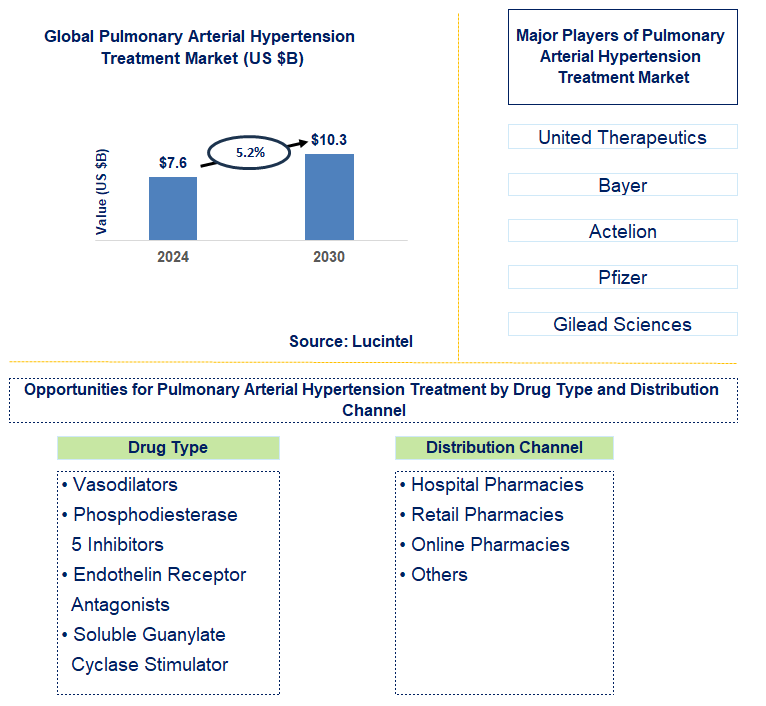
Key data points: The market size in 2030 = $10.3 billion, growth forecast = 5.2% annually for the next 6 years. Scroll below to get more insights. This market report covers trends, opportunities, and forecasts in the global pulmonary arterial hypertension treatment market to 2030 by drug type (vasodilators, phosphodiesterase 5 inhibitors, endothelin receptor antagonists, and soluble guanylate cyclase stimulator), distribution channel (hospital pharmacies, retail pharmacies, online pharmacies, and others), and region (North America, Europe, Asia Pacific, and the Rest of the World)
We'll send your sample report shortly.
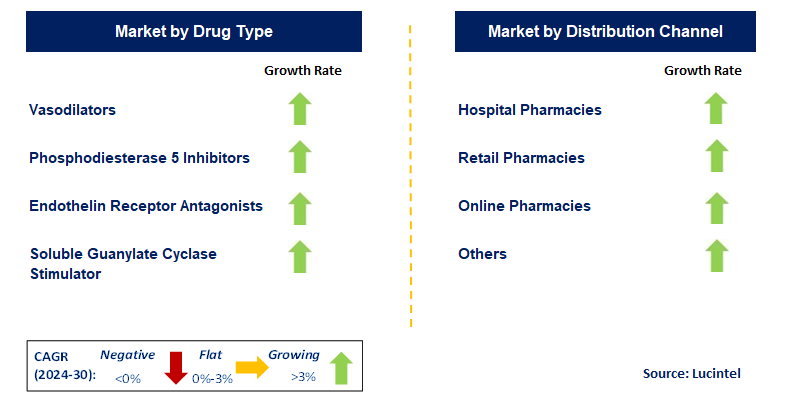
• Lucintel forecasts that, within the drug type category, endothelin receptor antagonist will remain the largest segment over the forecast period due to the efficacy of Endothelin Receptor Antagonist in treating PAH.
• Within the distribution channel category, hospital pharmacy will remain the largest segment due to they often carry a broad variety of drugs, including specific PAH treatments such as endothelin receptor antagonists, prostacyclin analogs, and phosphodiesterase-5 inhibitors.
• In terms of regions, North America will remain the largest region over the forecast period. A more than 150-page report is developed to help in your business decisions.
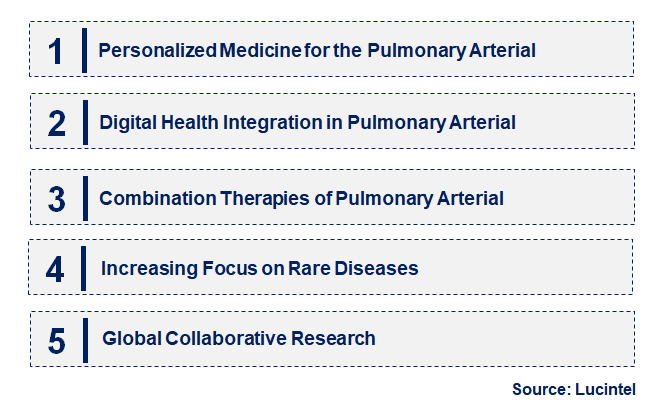
• Personalized Medicine for Pulmonary Arterial Hypertension Treatment: The concepts and practices of personalizing treatment have gained ground in recent years. This ensures that patients are provided with the most suitable treatment options for the specific type of disease they have and helps in reducing adverse effects related to treatment.
• Digital Health Integration in Pulmonary Arterial Hypertension Treatment: Shifting systems of care include the use of a combination of patient-centered technologies such as mobile health applications and telemedicine, changing how patients are managed. This allows for home care, increases treatment compliance, and promotes patient participation, leading to improved healthcare outcomes.
• Combination Therapies for Pulmonary Arterial Hypertension Treatment: Progress in the invention of combination therapies and their approval is on the rise. These therapies utilize several mechanisms of action in an integrated manner to reduce PAH symptoms more effectively than a single agent.
• Increasing Focus on Rare Diseases: Investment in development is driven by increased awareness of PAH as a rare disease. Regulatory frameworks for orphan drugs propel pharmaceutical R&D for new therapies, resulting in wider availability of treatment.
• Global Collaborative Research: With the globalization of PAH treatment research, international collaborations among research organizations and pharmaceutical companies are increasing. Research centers and pharmaceutical companies are working together to share knowledge and create new treatment medicines. These trends are redefining the PAH treatment market through innovation, improved patient care, and better access to treatment. Incorporating personalized medicine and digital health as part of the treatment process will enhance patients' health and quality of life.
• Approval of New Therapies: The recent approval of new treatment agents, such as targeted oral medicines, has expanded therapy options for PAH. These medicines are more effective and safer, improving patient compliance and outcomes.
• Emergence of Combination Therapies: The adoption of combinations of pharmacological agents with different sites of action is increasing. These treatments leverage the advantages of multiple mechanisms of action, improving control of symptoms and disease.
• Digital Health Optimizations: Integrating digital health technologies into PAH management, including telemedicine and mobile applications, improves remote follow-up, reduces non-adherence, and facilitates timely interventions for positive patient outcomes.
• Focus on Research and Development: Increased focus on R&D has led to innovation in the PAH market. Pharmaceutical companies are developing new therapeutic approaches to address the treatment gap in existing medications.
• Regulatory Support for Orphan Drugs: Favorable regulatory policies for orphan drugs encourage drug manufacturers to develop PAH treatments. This has increased the availability of novel treatment modalities, improving patient outcomes. These developments are revolutionizing the PAH treatment market, evolving patient management techniques, and addressing unmet medical needs. With the introduction of new, less expensive therapies, patients can expect better treatment options.
• Emerging Markets: Entering foreign markets provides immense growth potential for PAH treatment strategies. Improved healthcare systems and greater demand for effective treatment make these markets attractive to the pharmaceutical industry.
• Telehealth Solutions: Telehealth solutions offer growth opportunities for managing PAH. These technologies enable better patient involvement, remote monitoring, and adherence to prescribed treatments, becoming integral to healthcare today.
• Personalized Treatment Approaches: Implementing personalized medicine approaches allows companies to compete more favorably in the PAH market. Treatments can be adjusted based on observed patient outcomes, enhancing efficacy.
• Combination Therapy Development: Using combination therapies that target multiple pathways can improve treatment efficacy, better managing the condition and enhancing patients' quality of life.
• Collaborations with Educational and Research Institutions: Partnering with academia and research institutes accelerates the clinical and pharmaceutical development of novel PAH therapies. Such collaborations enable knowledge sharing, acquisition of advanced tools, and creation of new therapy classes. By actively pursuing these growth opportunities, stakeholders in the PAH treatment market can enhance patient care, foster innovation, and increase market share.
• Awareness and Increased Diagnosis: Improved awareness of PAH among patients and medical professionals has facilitated earlier detection and treatment, enhancing patient outcomes.
• Improvement in Research and Development: Continuous R&D efforts have introduced innovative treatment options and combinations, expanding available therapies for patients.
• Regulatory Incentives for Orphan Drugs: Favorable regulations encourage the development of PAH therapies, increasing market entry and improving patient care.
• Technological Advances: Digital health technologies like telemedicine and mobile health applications improve patient compliance through enhanced monitoring and management, leading to better outcomes.
• Increasing Healthcare Expenditure: Rising healthcare spending, especially in emerging countries, supports efficient PAH therapies and expands access to treatments. Challenges in the pulmonary arterial hypertension treatment market are:
• High Therapy Costs: The cost of PAH therapies limits access, particularly in low-income regions, causing disparities in care.
• Limited Awareness in Developing Countries: Insufficient awareness of PAH in developing nations leads to delayed diagnosis and inadequate treatment, hindering market growth.
• Regulatory and Geopolitical Barriers: Stringent regulations and geopolitical issues create challenges for developing and introducing new therapies. Despite these challenges, the PAH treatment market continues to grow due to advancements in research and increased awareness. Addressing barriers such as high costs and regulatory complexities will be crucial for sustained growth.
• United Therapeutics
• Bayer
• Actelion
• Pfizer
• Gilead Sciences
• GlaxoSmithKline
• Teva Pharmaceuticals
• Eli Lilly and Company
• Steady Med
• Johnson & Johnson
• Vasodilators
• Phosphodiesterase 5 Inhibitors
• Endothelin Receptor Antagonists
• Soluble Guanylate Cyclase Stimulator
• Hospital Pharmacies
• Retail Pharmacies
• Online Pharmacies
• Others
• North America
• Europe
• Asia Pacific
• The Rest of the World
• United States: Dynamic changes in PAH treatment include combination therapies and gene therapy exploration. EHealth solutions improve patient compliance and follow-up care. Increased research funding and diversified patient access programs are fostering progress.
• China: Growing awareness and increased income levels drive demand for advanced therapies. Partnerships between local and foreign companies bring new technologies, supported by government efforts targeting orphan diseases.
• Germany: Germany maintains leadership through new treatment developments and clinical studies. Policies supporting remote health services and orphan drugs enhance PAH management and innovation.
• India: Efforts to raise PAH awareness have improved diagnosis and treatment accessibility. Generic formulations reduce costs, while telehealth solutions enhance patient management in rural areas.
• Japan: Japan focuses on new drugs and therapies emphasizing patient orientation. Recent approvals of endothelin receptor antagonists and digital health solutions improve treatment adherence and clinical outcomes.


• United Therapeutics
• Bayer
• Actelion
• Pfizer
• Gilead Sciences
• GlaxoSmithKline
• Teva Pharmaceuticals
• Eli Lilly and Company
• Steady Med
• Johnson & Johnson Q6. Which pulmonary arterial hypertension treatment market segment will be the largest in future? Answer: Lucintel forecasts that endothelin receptor antagonist will remain the largest segment over the forecast period due to the efficacy of Endothelin Receptor Antagonist in treating PAH. Q7. In pulmonary arterial hypertension treatment market, which region is expected to be the largest in next 6 years? Answer: North America will remain the largest region over the forecast period. Q.8 Do we receive customization in this report? Answer: Yes, Lucintel provides 10% customization without any additional cost.


Choose a license that fits your team. Instant PDF delivery.
Prices exclude taxes. Instant delivery. Custom licensing available on request.
Market Report · July 31, 2026
Market Report · July 31, 2026
Market Report · July 31, 2026
Trusted partner for strategic intelligence and business growth


Receive a complimentary market analysis tailored to your industry. Our analysts will identify key growth opportunities and competitive dynamics specific to your business.

Market size, growth rate, and key trend analysis for your specific sector.

Top competitor positioning and market share analysis.

Strategic recommendations backed by data-driven insights.
Get curated market intelligence and competitive moves straight to your inbox.
By subscribing, you agree to receive our monthly insights. Unsubscribe anytime.
Receive a complimentary market analysis tailored to your industry. Our analysts will identify key growth opportunities and competitive dynamics specific to your business.
Market size, growth rate, and key trend analysis for your specific sector.
Top competitor positioning and market share analysis.
Strategic recommendations backed by data-driven insights.
Get curated market intelligence, emerging trends, and competitive moves straight to your inbox each month.
By subscribing, you agree to receive our monthly insights. Unsubscribe anytime.
We'll send your sample report shortly.