
Market Report · July 31, 2026

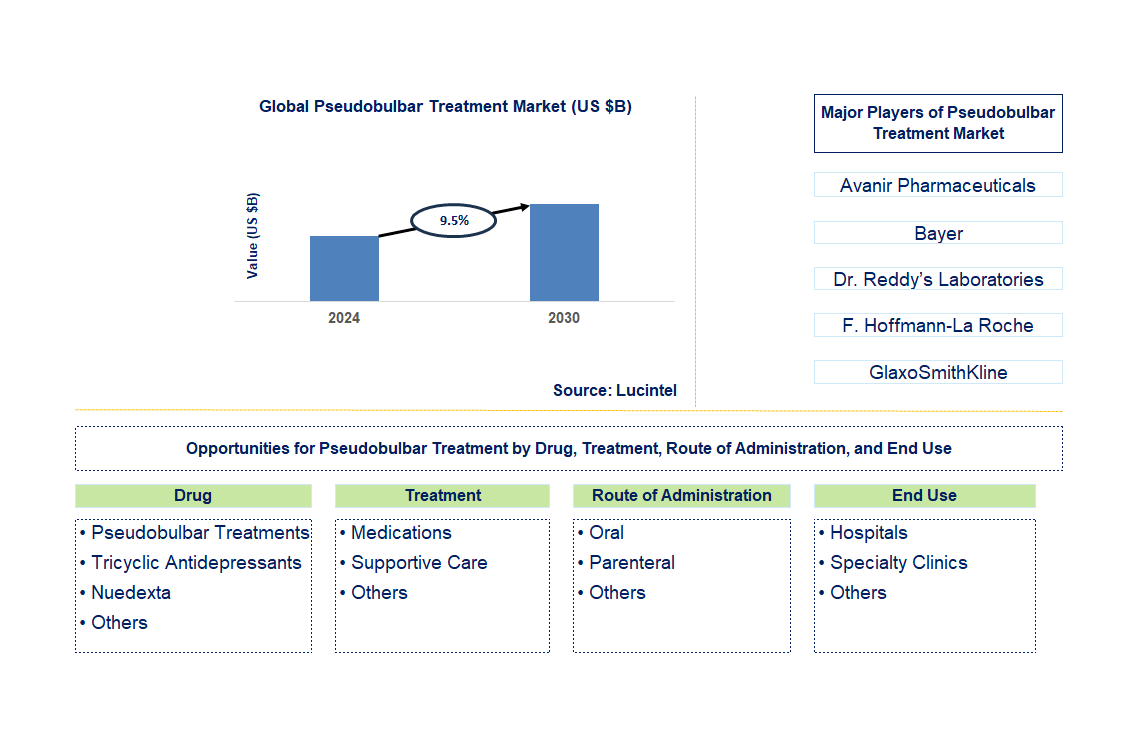
Key` data points: The growth forecast = 9.5% annually for the next 6 years. Scroll below to get more insights. This market report covers trends, opportunities, and forecasts in the global pseudobulbar treatment market to 2030 by drug (pseudobulbar treatments, tricyclic antidepressants, nuedexta, and others), treatment (medications, supportive care, and others), route of administration (oral, parenteral, and others), end use (hospitals, specialty clinics, and others), and region (North America, Europe, Asia Pacific, and the Rest of the World)
We'll send your sample report shortly.
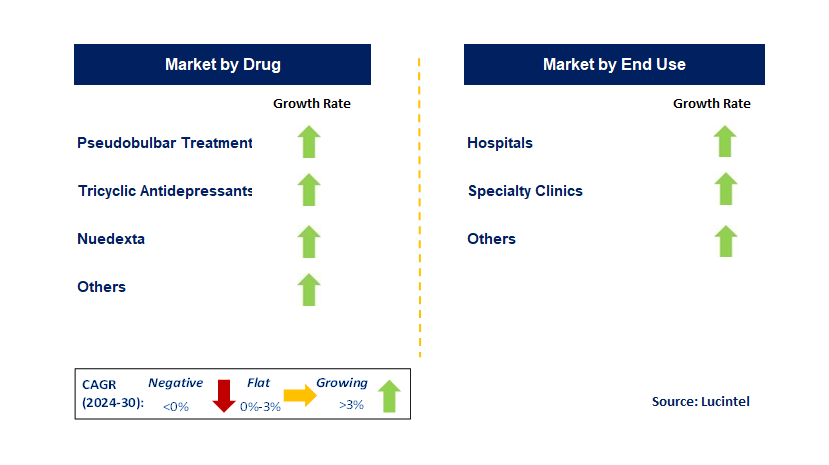
• Lucintel forecasts that, within the treatment category, medication is expected to witness higher growth over the forecast period as it is utilized to treat and cure diseases.
• Within the end-use category, hospitals will remain the largest segment due to the high prevalence of diseases among patients.
• In terms of regions, North America will remain the largest region over the forecast period due to the high prevalence of patients with neurological disorders. Gain valuable insight for your business decisions with our comprehensive 150+ page report.
• Personalized Medicine and Biomarker Identification: The trend here is identifying individual biomarkers to personalize treatment approaches to a patient's unique needs. By examining genetic and neurological information, practitioners can anticipate responses to therapy and adjust drug dosing accordingly. The goal is to reduce adverse effects and achieve maximum therapeutic effect while abandoning the one-size-fits-all approach. This is because there is a need to enhance patient outcomes through the delivery of targeted therapies to treat PBA symptoms better.
• New Drug Therapies and Alternative Drug Forms: Studies are investigating new targets for drugs and creating alternative drug forms of available medications. These involve examining drugs that alter neurotransmitter pathways involved in emotional expression. New delivery systems, such as transdermal patches or sublingual tablets, are also being created to enhance patient compliance and decrease side effects. This represents the desire for more tolerable and effective therapies than those currently available and aims to offer additional alternatives to individuals who have difficulty swallowing pills.
• Integration of Non-Pharmacologic Strategies: In addition to medication, non-pharmacologic interventions, like speech therapy, cognitive behavior therapy (CBT), and mindfulness-based strategies, are increasingly being recognized. These therapies help enhance emotional control, coping methods, and communication abilities, thereby improving overall quality of life. This trend highlights a comprehensive PBA management strategy, recognizing the significance of managing the psychological and social characteristics of the disorder. It also targets the patient, not just the symptoms, in its entirety.
• Increased Awareness and Enhanced Diagnostic Accuracy: Awareness campaigns and educational programs are important for enhancing early diagnosis and timely intervention. Better diagnostic tools, such as standardized questionnaires and neuroimaging methods, are helping in the precise identification of PBA. This trend is countering the problem of underdiagnosis and misdiagnosis, resulting in more patients receiving proper treatment. Increased awareness among healthcare providers and the general public is essential for improved patient outcomes.
• Digital Health and Telemedicine Solutions: Telemedicine solutions and digital health apps are surfacing as effective tools for remote monitoring, patient education, and virtual consultations. These technologies enhance care access, especially for patients in rural areas or with mobility issues. Digital solutions can also support the capture of real-world data, allowing for personalized treatment adjustments. This trend increases patient convenience and accessibility, as well as continuous monitoring and data-informed decision-making. These trends collectively redefine the PBA treatment market toward more individualized, complete, and affordable care. The convergence of sophisticated technologies, innovative therapies, and holistic treatments is creating better patient outcomes and a better quality of life. The market is shifting toward a more patient-oriented model, with a greater focus on individual needs and preferences.
• Advanced Means of Diagnostics: The use of standardized questionnaires along with neuroimaging has improved the precision with which PBA can be diagnosed. This makes it simpler to target appropriate intervals and treatment plans and minimizes the chances of misdiagnosis. These new tools represent real progress in shortening the time for diagnosis and initiating treatment.
• New Pharmacological Avenues: Research is focusing on new targets and mechanisms for more effective drugs than the traditional dextromethorphan/quinidine combination. These include drugs that act on parts of the neurotransmitter system responsible for emotion and behavior control, providing better and more specific treatment options for patients.
• Focus on New Non-Pharmacological Approaches: Current research on possible non-pharmacological approaches for PBA focuses on techniques such as transcranial magnetic stimulation (TMS) and transcranial direct current stimulation (tDCS). These techniques enhance emotional self-regulation through modulation of brain function and are considered supplementary or alternative to drug treatment. They offer hope for patients who do not respond to or cannot tolerate medication.
• Focus on New Digital Health Technologies: New wearable sensors and mobile applications facilitate the use of digital health technologies to remotely monitor symptoms and responses to treatment, allowing real-time treatment modifications and better management of individual patients, even those with movement or access restrictions. This enables these patients to achieve better outcomes through continual monitoring.
• Focus on Increased Awareness of PBA: New campaigns targeting healthcare workers and the general public are currently being implemented to increase health professionals’ awareness and improve the diagnosis of PBA. Educational materials, promotional campaigns, and workshops will provide clear and concise information about the condition and how treatment should be approached. These efforts will ensure that early messages are delivered to improve care for people with PBA. The combination of the aforementioned advances is shifting the PBA therapy market toward a more integrated and holistic approach. Novel methodologies, improved diagnostics, and modern digital health solutions are enhancing the life quality and outcomes of patients. Additional efforts in awareness and education are also crucial for appropriate PBA management and intervention within specific timeframes. There is an emerging trend in the market toward a better understanding and treatment of the underlying neurology of the condition.
• Post-Stroke PBA Management: PBA is often experienced by stroke survivors, greatly affecting their rehabilitation and quality of life. Standardized screening procedures and the incorporation of PBA treatment into post-stroke care pathways can significantly improve patient recovery. This specific focus on stroke patients can enhance the quality of life for stroke survivors.
• MS-Related PBA Interventions: MS patients frequently experience emotional lability, including PBA. Refining intervention strategies to meet the complicated neurological symptomatology of MS, including PBA, will enhance patient satisfaction and minimize the impact of emotional distress. This targeted strategy for MS patients will enhance the patient experience.
• ALS-Associated PBA Treatment: Amyotrophic lateral sclerosis, a progressive neurodegenerative illness, tends to cause PBA. Identifying PBA in ALS patients early can reduce their discomfort and impairment in communication, leading to better end-of-life care. This facilitates better care for ALS patients and provides a more comfortable end-of-life experience.
• TBI-Induced PBA Solutions: Patients surviving a TBI can acquire PBA as an aftermath of neurological impairment. Adopting inclusive rehabilitation therapies involving PBA care can facilitate greater emotional control and social rehabilitation. This helps bring about more effective rehabilitation for TBI survivors.
• Alzheimer's Disease and PBA Care: Emotional dysregulation, such as PBA, can result from Alzheimer's disease. Incorporating PBA assessment and treatment into dementia care plans enhances the quality of life for patients and caregivers by lessening the emotional load of the disease. This enhances the quality of life for Alzheimer's patients and their caregivers. These strategic growth prospects are transforming the PBA treatment market by encouraging focused interventions in selected neurological applications. By targeting these areas, pharmaceutical firms and healthcare providers can enhance treatment effectiveness, increase diagnostic precision, and eventually enhance the quality of life for those suffering from PBA. This focused application strategy enables more patient-specific treatment plans and enhances the overall quality of care.
• Increased Awareness and Diagnosis: With the growing attention toward PBA, there is an increased focus on its recognition and diagnosis. This leads to educational programs and the use of tools that help in early diagnosis, thereby enlarging the patient base and revenue for the market. Improved awareness is vital for patients to receive the correct diagnosis and, therefore, the proper care.
• Aging Population and Neurological Disorders: Market growth is supported by the rising prevalence of other neurological conditions associated with PBA, such as stroke, MS, and ALS. With the global aging population, the prevalence of these conditions continues to rise, increasing the target patient population. This demographic change is one of the reasons for the higher volume of patients seeking treatment.
• Current Methods of Improving PBA Diagnosis: The increased accuracy and efficiency of PBA diagnoses are aided by more advanced neuroimaging techniques and standardized diagnostic questionnaires. These improvements enhance the patient's quality of care by enabling quicker intervention and more tailored PBA treatment strategies. Better diagnostics directly lead to improved patient outcomes.
• Current Methods of Treating PBA: Ongoing research and development efforts have led to the discovery of new potential drug targets and formulations for treating PBA. The scope of this research includes investigating alternative neurotransmitter systems and drug delivery systems, which would ultimately increase available treatment options. There is hope that this optimism will allow more patients to benefit from treatment.
• PBA Treatment: The adoption of digital health solutions, including remote monitoring and telemedicine, is expanding access to PBA care for patients in remote areas or those with reduced mobility. Digital platforms also allow for more efficient collection and education of patients' information, aiding in the customization of treatment. Patients who would otherwise not receive care due to accessibility issues can now receive assistance through telemedicine. Challenges of this market are:
• Limited Awareness and Underdiagnosis: There is still a gap in education and diagnosis of PBA, primarily due to the low awareness of the condition. PBA remains underdiagnosed, especially in primary care, and many patients, as well as healthcare professionals, often mistake its symptoms for depression or other emotional disorders. As a result, patients who could be treated are not treated because of the lack of awareness.
• Market Access and Regulatory Approvals: Obtaining regulatory approval for new PBA therapies can be quite challenging. The need for clinical trials and the variation in regulations across different regions may delay access to therapies for patients. These regulations can hinder the introduction and commercialization of innovative therapies within the market.
• The reimbursement policies, alongside the overall economic conditions of a given country, can greatly restrict access to PBA therapies and necessary services, increasing the financial burden for patients. The affordability and resulting reimbursement or access to insurance facilities determine a country’s market potential. Patients who need care are often unable to receive it due to the prohibitively high costs of treatment. The dynamics of the treatment market are dictated by a multitude of interrelated factors. Global pharmaceutical companies should consider the increasing rates of awareness, technological change, and innovation, as well as the reality of systematic underdiagnosis, restrictive regulations, and challenging reimbursement policies. Multidisciplinary approaches, involving care providers, pharmaceutical companies, and policymakers, are needed to ensure timely access to PBA treatments and improve the affected individuals’ quality of life.
• Avanir Pharmaceuticals
• Bayer
• Dr. Reddy’s Laboratories
• F. Hoffmann-La Roche
• GlaxoSmithKline
• Pseudobulbar Treatments
• Tricyclic Antidepressants
• Nuedexta
• Others
• Medications
• Supportive Care
• Others
• Oral
• Parenteral
• Others
• Hospitals
• Specialty Clinics
• Others
• North America
• Europe
• Asia Pacific
• The Rest of the World
• United States: The market for PBA is most established in the US, where patients can receive Nuedexta (Dextromethorphan/Quinidine), the only FDA-approved PBA medication as of now. New studies are being conducted to create biomarker traces for faster diagnosis and to explore new drug delivery systems for patients. Increased awareness among neurologists and long-term care centers has led to more accurate identification of patients and greater availability of treatments. There is also growing attention to non-prescription alternatives and non-medical treatment methods for PBA.
• China: The market for PBA treatments in China is expanding rapidly due to an aging population and a higher incidence of neurological diseases. Although Nuedexta is still not widely used, domestic pharmaceutical firms are working on developing dextromethorphan generics and new combinations. There is a stronger focus on combining traditional Chinese medicine and Western medicine approaches to treat PBA symptoms. Neurological research funding and healthcare spending are increasing, which supports better market growth.
• Germany: Germany’s healthcare system provides relative ease of access to PBA treatments. German physicians often adopt off-label and customized Nuedexta-based therapies. Optimal patient care through multidisciplinary research, including speech therapy and psychological support, is being emphasized. The improvement of quality of life and management of comorbidities associated with PBA neurological conditions is the primary focus.
• India: The Indian market for PBA treatment is still developing, so there is limited knowledge and availability of necessary specialist interventions. Neurological conditions are typically overlooked, and concomitant PBA symptoms are likely to be missed. While dextromethorphan is available, Nuedexta is not, and sophisticated treatment options are largely inaccessible, particularly in rural regions. Ongoing initiatives aim to boost diagnostic capacity and raise healthcare practitioner awareness through training programs.
• Japan: Demand for effective PBA treatment is driven by an aging population and a high prevalence of neurological conditions in Japan. Nuedexta is available, and there is an emphasis on personalized medicine. Other areas of focus include research into active rehabilitation, robotic-assisted therapy, and non-pharmacologic approaches. The greater emphasis on long-term care within the Japanese healthcare system also translates into a stronger focus on improving the quality of life for individuals with PBA.


• Avanir Pharmaceuticals
• Bayer
• Dr. Reddy’s Laboratories
• F. Hoffmann-La Roche
• GlaxoSmithKline Q5. Which pseudobulbar treatment market segment will be the largest in future? Answer: Lucintel forecasts that medication is expected to witness higher growth over the forecast period as it is utilized to treat and cure diseases. Q6. In pseudobulbar treatment market, which region is expected to be the largest in next 5 years? Answer: North America will remain the largest region over the forecast period due to high prevalence of patients with neurological disorders. Q.7 Do we receive customization in this report? Answer: Yes, Lucintel provides 10% customization without any additional cost.


Choose a license that fits your team. Instant PDF delivery.
Prices exclude taxes. Instant delivery. Custom licensing available on request.
Market Report · July 31, 2026
Market Report · July 31, 2026
Market Report · July 31, 2026
Trusted partner for strategic intelligence and business growth


Receive a complimentary market analysis tailored to your industry. Our analysts will identify key growth opportunities and competitive dynamics specific to your business.

Market size, growth rate, and key trend analysis for your specific sector.

Top competitor positioning and market share analysis.

Strategic recommendations backed by data-driven insights.
Get curated market intelligence and competitive moves straight to your inbox.
By subscribing, you agree to receive our monthly insights. Unsubscribe anytime.
Receive a complimentary market analysis tailored to your industry. Our analysts will identify key growth opportunities and competitive dynamics specific to your business.
Market size, growth rate, and key trend analysis for your specific sector.
Top competitor positioning and market share analysis.
Strategic recommendations backed by data-driven insights.
Get curated market intelligence, emerging trends, and competitive moves straight to your inbox each month.
By subscribing, you agree to receive our monthly insights. Unsubscribe anytime.
We'll send your sample report shortly.