
Market Report · July 31, 2026

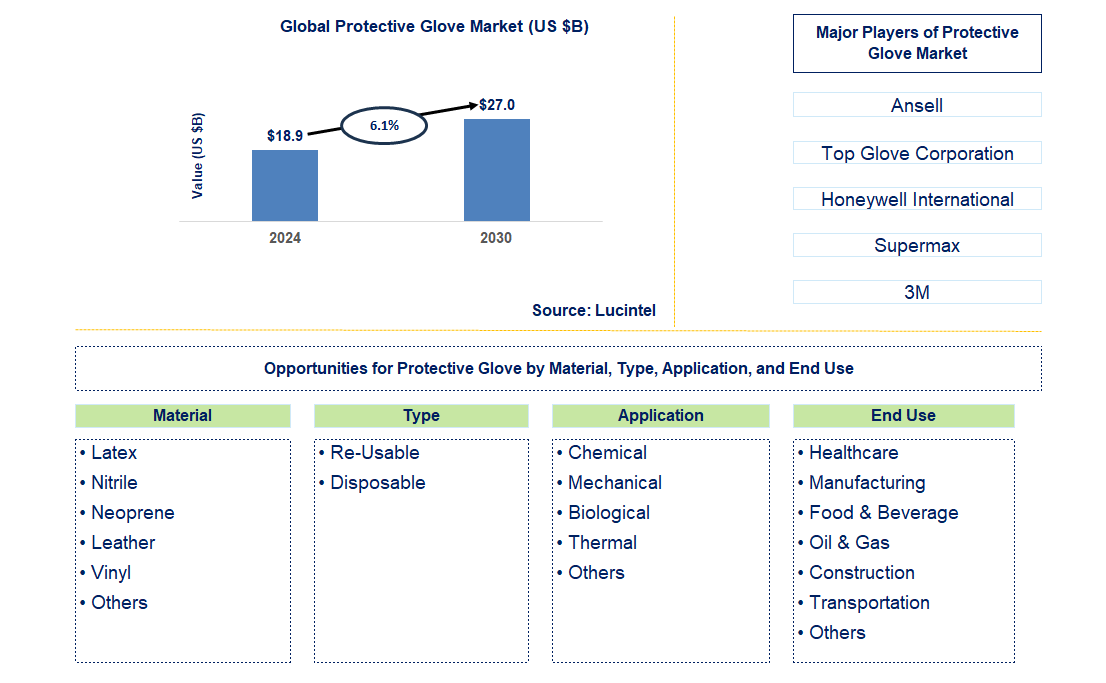
Key data points: The market size in 2030 = $27.0 billion, growth forecast = 6.1% annually next 6 years. Scroll below to get more insights. This market report covers trends, opportunities, and forecast in the global protective glove market to 2030 by material (latex, nitrile, neoprene, leather, vinyl, and others), type (re-usable and disposable), application (chemical, mechanical, biological, thermal, and others), end use (healthcare, manufacturing, food & beverage, oil & gas, construction, transportation, and others), and region (North America, Europe, Asia Pacific, and the Rest of the World)
We'll send your sample report shortly.
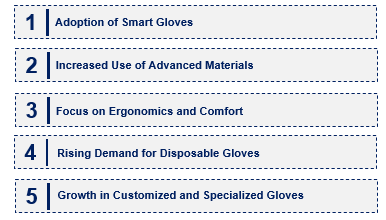
• Adoption of Smart Gloves: Smart gloves equipped with sensors and wearable technology are emerging in the market. These gloves can monitor vital signs, detect environmental hazards, and provide real-time data to users. For instance, in industrial settings, smart gloves can track hand movements and force exerted, improving ergonomics and safety. This trend enhances the functionality of protective gloves by providing valuable data and increasing safety in hazardous environments.
• Increased Use of Advanced Materials: The market is seeing the use of advanced materials such as Kevlar, nitrile, and polyurethane, which offer improved durability, cut resistance, and comfort. These materials enhance the protective capabilities of gloves, making them suitable for a broader range of applications, including high-risk environments. The use of advanced materials also contributes to the development of lighter and more flexible gloves, improving user comfort and safety.
• Focus on Ergonomics and Comfort: There is a growing emphasis on ergonomic design to improve the comfort and fit of protective gloves. Features such as padded palms, adjustable cuffs, and breathable fabrics are becoming more common. By focusing on ergonomics, manufacturers aim to reduce hand fatigue and improve dexterity, which is crucial for users who wear gloves for extended periods. Comfortable gloves not only enhance user performance but also encourage consistent use, contributing to overall safety.
• Rising Demand for Disposable Gloves: The demand for disposable gloves has surged, particularly in healthcare, food handling, and laboratory settings, due to heightened hygiene and infection control measures. Single-use gloves made from materials like latex, nitrile, and vinyl are preferred for their convenience and ability to prevent cross-contamination. This trend is driven by the ongoing emphasis on sanitation and the need to maintain sterile environments, influencing glove production and distribution strategies.
• Growth in Customized and Specialized Gloves: The market is experiencing growth in the availability of customized and specialized gloves designed for specific tasks or industries. For example, gloves tailored for electrical work, chemical handling, or extreme temperatures are becoming more prevalent. Customization allows for tailored protection, ensuring that gloves meet the precise needs of different applications. This trend reflects the increasing demand for specialized protective gear that offers enhanced safety and performance in various work environments. These emerging trends are reshaping the protective glove market by integrating advanced technologies, enhancing materials and design, and responding to evolving user needs. The adoption of smart gloves, use of advanced materials, focus on ergonomics, rising demand for disposables, and growth in customized gloves are driving innovation and improving safety across industries. As these trends continue to evolve, they will further influence product development and market dynamics, offering new opportunities for manufacturers and enhancing protection for users in diverse applications.
• Smart Technology Integration: The recent most significant event is the integration of smart technology into protective gloves. A pair of smart gloves fitted with sensors can monitor vital signs, track hand movement and detect environmental hazards in real-time. To enhance safety and efficiency in high-risk environments such as industrial settings and healthcare, these features have been deployed. These smart gloves provide real-time data and alerts that improve workers safety as well as productivity. This development points to a trend towards the use of digital technology in PPEs thereby, giving them a new dimension.
• Material Science Advancements: Recent developments in material science have resulted in highly durable and comfortable protective gloves. New materials such as synthetic polymers, advanced coatings, and composite fabrics offer better protection against cuts, abrasions, and chemical exposures. Such innovations also make gloves lighter and more flexible thus improving on user comfort and dexterity. The use of advanced materials helps meet the increasing demand for specialized gloves in sectors such as manufacturing, construction, healthcare where high levels of protection are required.
• Disposal Gloves Growth: This has been boosted by an increase in hygiene consciousness together with infection control awareness among people worldwide, which led to an upsurge in demand for disposable gloves. Disposable glove usage has surged due to the ongoing pandemic coupled with heightened standards within healthcare settings. Furthermore, manufacturers are expanding their capacity while producing improved versions of disposable gloves made from nitrile rubber latex or vinyl amongst other materials. These newer models are designed for better fit, higher comfort level during wear time as well as improved barrier protection toward fluids. Therefore this upward trajectory for using single-use hand coverings shows how much thoughtfulness about keeping areas sterile has broadened out across many industries.
• Ergonomic Designs Improved: In order to make workers feel comfortable wearing protective hand devices all day long besides reducing fatigue in hands, there is a growing emphasis on designing gloves with ergonomics in mind. Some of the recent innovations include padded palms, adjustable cuffs and breathable fabrics. Ergonomic gloves are better fitting, more flexible, and provide additional cushioning which is particularly important for workers who use them for long periods of time. Thus by perfecting this aspect of design manufacturers in fact make their products more satisfying to wear as well as safer since they do not hinder movement neither cause pain hence promoting consistency.
• Green Initiatives Supported: The protective glove industry is increasingly focused on sustainability and eco-friendly practices. This includes using recyclable materials, reducing waste during production and creating biodegradable gloves. Organizations are also spending big sums on research that generates greener options to traditional inputs while at the same time striving to ensure that their manufacturing processes become more sustainable. The drive behind this trend comes from both consumers and regulators who want products with fewer negative effects on the environment The recent changes in protective glove market indicate significant advancements in technology, material science, and design.The market is being transformed by smart technology integration, advancements in materials development, disposable gloves growth pattern,sustainability focus as well as enhanced ergonomic designs. These new technologies enhance safety, comfortability and usability whilst addressing new requirements that become accepted as normative within personal protective equipment. As these trends continue to evolve, it will lead to an increase in growth rate resulting into transformation of the protective glove industry as whole.
• Healthcare and Medical Applications: The healthcare sector presents a substantial growth opportunity for protective gloves, driven by increasing hygiene standards and infection control measures. The demand for high-quality disposable gloves, including nitrile and latex variants, continues to rise due to their critical role in preventing cross-contamination and protecting healthcare workers. Innovations in glove design, such as improved barrier protection and enhanced tactile sensitivity, are addressing specific needs in medical settings. Investing in advanced materials and production processes for medical gloves can help manufacturers capture a growing share of this vital market.
• Industrial and Manufacturing Sectors: The industrial and manufacturing sectors offer significant growth potential for protective gloves due to the need for enhanced safety in high-risk environments. Gloves that provide protection against cuts, abrasions, and chemicals are essential for workers in these industries. There is a growing demand for gloves made from advanced materials such as Kevlar and composite fabrics, which offer superior durability and protection. Manufacturers can leverage this opportunity by developing specialized gloves that meet the specific safety requirements of various industrial applications, thereby enhancing worker safety and performance.
• Food Processing and Handling: The food processing and handling industry is a key growth area for protective gloves, driven by stringent hygiene and safety regulations. Disposable gloves are crucial for maintaining sanitary conditions and preventing contamination in food production and preparation. As the industry adapts to increased safety standards, there is a rising demand for high-quality, food-grade gloves that offer durability and comfort. Manufacturers can capitalize on this opportunity by producing gloves that meet industry-specific requirements, including resistance to oils and fats, and by ensuring compliance with food safety regulations.
• Construction and Heavy Industry: The construction and heavy industry sectors represent a significant growth opportunity for protective gloves designed for rugged environments. Workers in these industries require gloves that offer protection against impacts, cuts, and extreme temperatures. There is an increasing demand for gloves with reinforced knuckles, padded palms, and thermal insulation. By focusing on the development of high-performance gloves tailored to the demanding conditions of construction and heavy industry, manufacturers can address safety concerns and improve worker comfort, thereby capturing a larger share of this growing market.
• Electronics and Precision Work: The electronics and precision work sectors require specialized protective gloves that provide dexterity and protection without compromising tactile sensitivity. As technology advances, there is a growing need for gloves that protect against static discharge, contamination, and fine particulate matter. Manufacturers can explore growth opportunities by developing gloves with advanced materials and coatings that meet the stringent requirements of electronics assembly and precision work. Investing in research and innovation to create gloves that offer both protection and high levels of dexterity will address the specific needs of this niche market. Strategic growth opportunities in the protective glove market are expanding across key applications, including healthcare, industrial sectors, food processing, construction, and electronics. By focusing on these areas, manufacturers can address specific needs and enhance safety across various industries. Developing specialized gloves tailored to the unique requirements of each application will help companies capitalize on emerging market trends, drive innovation, and strengthen their competitive position in the evolving protective glove industry
• Ansell
• Top Glove Corporation Berhad
• Honeywell International
• Supermax
• 3M
• Hartalega Holdings
• W.W. Grainger
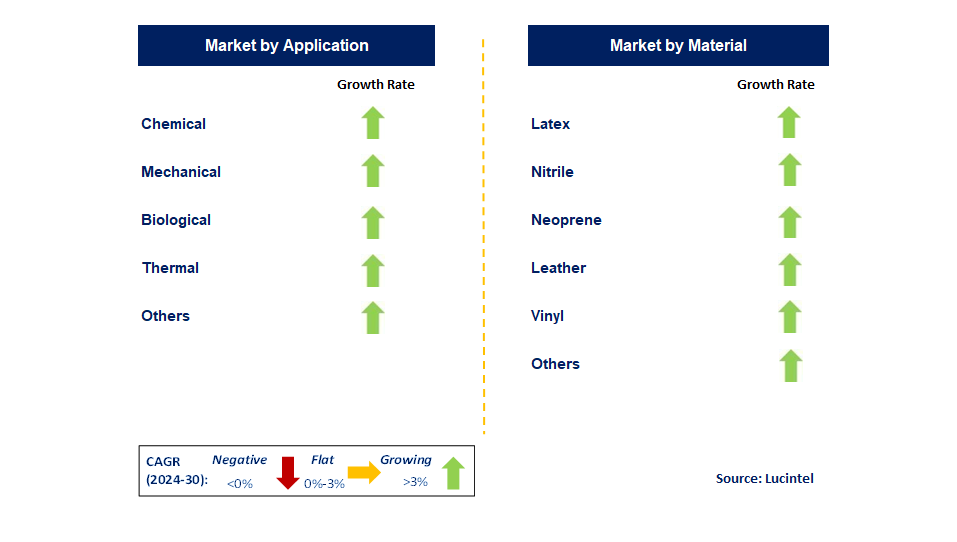
• Latex
• Nitrile
• Neoprene
• Leather
• Vinyl
• Others
• Re-Usable
• Disposable
• Chemical
• Mechanical
• Biological
• Thermal
• Others
• Healthcare
• Manufacturing
• Food & Beverage
• Oil & Gas
• Construction
• Transportation
• Others
• North America
• Europe
• Asia Pacific
• The Rest of the World
• United State: In the U.S., there has been a notable shift towards high-performance protective gloves designed for specific industries, such as healthcare, manufacturing, and construction. Advances include the adoption of smart glove technology that integrates sensors to monitor hand health and safety. The pandemic has accelerated the demand for disposable gloves, leading to increased production capacities and innovations in materials like nitrile and latex. Additionally, there is a growing emphasis on compliance with OSHA regulations and enhanced ergonomic designs to improve worker comfort and safety.
• China: China's protective glove market is expanding rapidly due to the country's industrial growth and heightened safety standards. Recent developments include the advancement of manufacturing technologies that enhance glove durability and performance, particularly in sectors such as construction and automotive. The rise of smart gloves with integrated technology for industrial applications reflects China's focus on improving worker safety and efficiency. Additionally, there has been significant growth in the production of disposable gloves driven by increased healthcare and food service sector demand.
• Germany: In Germany, the focus is on high-quality, specialized protective gloves designed for precision and high-risk applications, such as electronics and automotive industries. German manufacturers are investing in advanced materials like synthetic polymers and advanced coatings to enhance glove performance and protection. There is also a trend towards ergonomic designs that cater to the specific needs of professionals in high-precision fields. Compliance with stringent EU safety regulations and standards drives innovation and ensures high levels of safety and quality in protective glove offerings.
• India: India is seeing significant growth in the protective glove market due to rising industrial activities and stricter safety regulations. Developments include the expansion of glove manufacturing facilities and increased production of disposable gloves to meet the demand in healthcare and food industries. Innovations in materials, such as cost-effective nitrile and latex alternatives, are becoming more prevalent. Additionally, there is a growing emphasis on enhancing glove durability and comfort, driven by the need for reliable protective gear in diverse industrial and healthcare applications.
• Japan: Japan protective glove market is characterized by a focus on advanced technology and high-quality materials. Recent developments include the adoption of smart gloves with integrated sensors for safety monitoring in industrial environments. Japanese manufacturers are also leading in the development of specialized gloves for high-tech industries, including robotics and electronics. Additionally, there is an increasing emphasis on eco-friendly materials and sustainable production practices, reflecting Japan's commitment to environmental responsibility and innovation in safety solutions.
• Ansell
• Top Glove Corporation Berhad
• Honeywell International
• Supermax
• 3M
• Hartalega Holdings
• W.W. Grainger Q6. Which protective glove market segment will be the largest in future? Answer: Lucintel forecasts that chemical will remain the largest segment over the forecast period due to its rising usage to obtain protection against hydrocarbons, organic and inorganic acids, alkali, and other dangerous substances. Q7. In protective glove market, which region is expected to be the largest in next 5 years? Answer: North America will remain the largest region over the forecast period due to extensive demand for protective gloves in chemical and healthcare sectors of the region. Q.8 Do we receive customization in this report? Answer: Yes, Lucintel provides 10% customization without any additional cost.


Choose a license that fits your team. Instant PDF delivery.
Prices exclude taxes. Instant delivery. Custom licensing available on request.
Market Report · July 31, 2026
Market Report · July 31, 2026
Market Report · July 31, 2026
Trusted partner for strategic intelligence and business growth


Receive a complimentary market analysis tailored to your industry. Our analysts will identify key growth opportunities and competitive dynamics specific to your business.

Market size, growth rate, and key trend analysis for your specific sector.

Top competitor positioning and market share analysis.

Strategic recommendations backed by data-driven insights.
Get curated market intelligence and competitive moves straight to your inbox.
By subscribing, you agree to receive our monthly insights. Unsubscribe anytime.
Receive a complimentary market analysis tailored to your industry. Our analysts will identify key growth opportunities and competitive dynamics specific to your business.
Market size, growth rate, and key trend analysis for your specific sector.
Top competitor positioning and market share analysis.
Strategic recommendations backed by data-driven insights.
Get curated market intelligence, emerging trends, and competitive moves straight to your inbox each month.
By subscribing, you agree to receive our monthly insights. Unsubscribe anytime.
We'll send your sample report shortly.