
Market Report · July 16, 2026

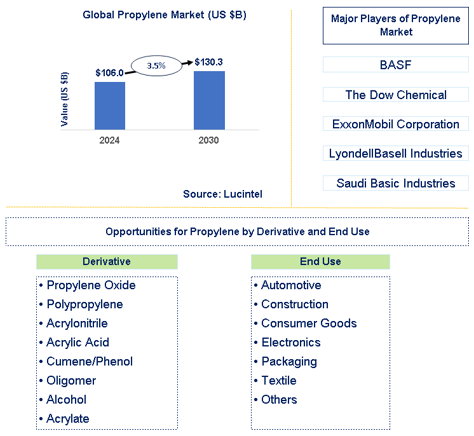
Key data points: The market size in 2030 = $130.3 billion, growth forecast = 3.5% annually for the next 6 years. Scroll below to get more insights. This market report covers trends, opportunities, and forecasts in the global propylene market to 2030 by derivative (propylene oxide, polypropylene, acrylonitrile, acrylic acid, cumene/phenol, oligomer, alcohol, and acrylate), end use (automotive, construction, consumer goods, electronics, packaging, textile, and others), and region (North America, Europe, Asia Pacific, and the Rest of the World)
We'll send your sample report shortly.
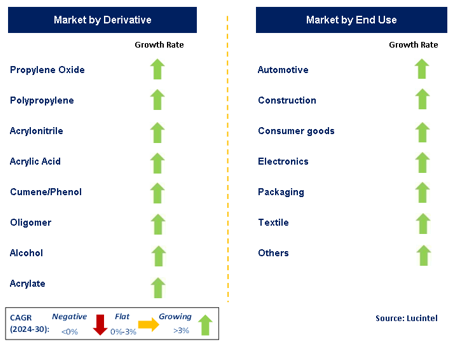
• Lucintel forecasts that, within the type category, within the derivative category propylene oxide is expected to witness the highest growth over the forecast period.
• Within the end use category, automotive is expected to witness the highest growth.
• In terms of regions, APAC is expected to witness the highest growth over the forecast period. Gain valuable insights for your business decisions with our comprehensive 150+ page report.
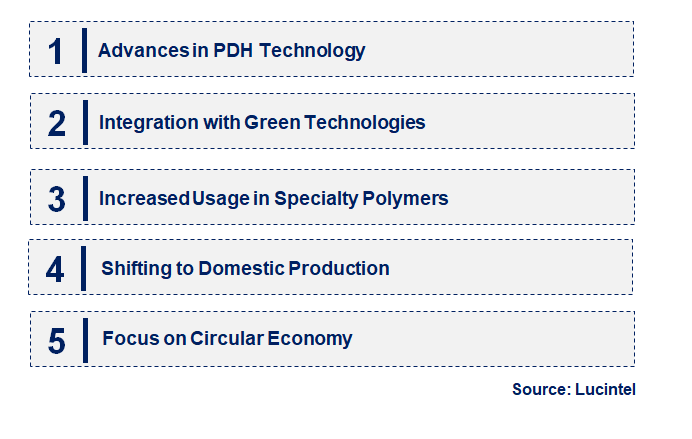
• Advances in PDH Technology: The latest developments in propane dehydrogenation technologies have enabled significant improvements in efficiency and capacity in production. Newer plants utilizing PDH offer superior yields with lower operational costs, making them more viable in the global marketplace.
• Integration with Green Technologies: There is great interest in combining propylene manufacturing with environmentally friendly practices. Companies are investing in green technologies and recyclable methods, addressing environmental legislation requirements and minimizing their carbon footprint.
• Increased Usage in Specialty Polymers: The demand for specialty polymers, particularly polypropylene for high-performance applications, is increasing. The use of propylene in the manufacture of value-added materials is growing in the automotive, medical, and packaging industries.
• Shifting to Domestic Production: Many countries are focusing on increasing domestic propylene production to reduce import dependence. Investments in new facilities and technologies enhance supply security, meeting the growing demand in local markets.
• Focus on Circular Economy: The propylene industry is increasingly adopting circular economy principles related to the recycling and reuse of propylene-based materials. This is mainly driven by regulatory pressures and consumer demand for sustainable products. These trends are continuously changing the propylene market to be more production-efficient, sustainable, and responsive to evolving industry needs. Technological advancements and a focus on environmental practices are driving transformation in the global market.
• PDH Plants Expansion: New PDH plants are being established or are already operational in various parts of the world, increasing propylene production capacity. Advanced technologies are implemented in these plants to enhance efficiency and lower costs, thus meeting the growing requirements for propylene-based products.
• Technological Advances: Improvements in technologies for producing propylene, such as enhanced catalysts and process optimization, are leading to higher production efficiency. These innovations help reduce operational costs and increase yields in propylene manufacturing.
• Smarter Sustainability: The industry is investing in sustainable practices, including adopting green technologies and recycling methods. Changes in carbon emissions and environmental regulations are reshaping market dynamics.
• Growth in Emerging Markets: High growth in propylene consumption is being recorded in emerging markets, particularly in Asia. Increased industrialization and demand for propylene-based products are driving investments in new production facilities in these regions.
• Shifts in Global Trade Dynamics: Changes in global trade dynamics are affecting propylene supply chains. Trade policies and geopolitical factors influence the movement of propylene and its derivatives across international markets. These factors influence the propylene market by increasing production capacities, driving technological advancements, and focusing on sustainability. Growth in emerging markets and shifts in trade dynamics also affect global demand and supply.
• Automotive Sector: Growth in propylene-based polymers is driven by the automotive sector's demand for lightweight and high-performance materials. Opportunities exist for developing advanced polypropylene solutions for automotive parts.
• Packaging Industry: The packaging industry shows strong demand for propylene-based products. This growth creates opportunities for increased propylene utilization in flexible and rigid packaging applications.
• Consumer Goods: The growth in consumption of consumer goods, both durables and non-durables, such as household and personal care products, creates prospects for propylene in the production of various polymers and chemicals.
• Construction Sector: The construction industry requires strong and cost-effective materials, contributing to increased demand for propylene-based products. Material development in construction and building insulation solutions present additional opportunities.
• Medical Applications: Advances in propylene-based medical products meet the demand for high-quality, sterilizable materials in the healthcare industry. There are manufacturing opportunities in producing polypropylene for medical devices and packaging. These growth opportunities highlight the importance of propylene across diverse sectors. Capturing growth opportunities by targeting specific sectors and product development projects will be beneficial for market expansion and innovation.
• Technological Advancements: New technologies in manufacturing processes, such as enhanced PDH processes and catalysts, improve efficiency and decrease costs. These advancements spur market growth due to increased production capacity and competitiveness.
• Increasing Demand in Strategic Industries: Increased demand from sectors such as automotive, packaging, and consumer goods accelerates growth in this market. Fast-paced industrialization and consumer preference for the products involving propylene have been driving the consumption of demand.
• Capacity Expansion: With investments in new production facilities and technologies, the overall supply of propylene is bound to increase. The expansion of capacity allows satisfying worldwide demand and can stabilize the market accordingly.
• Focus on Sustainability: Growth is impacted by the move towards sustainability and green technologies. Companies are using environmentally friendly means of production and recycling processes due to regulation requirements and customer expectations.
• Economic Growth in Emerging Markets: It results in an increase in demand for propylene. Because of rapid industrialization and urbanization, consumption in emerging markets such as Asia is high and continuously on the rise. Challenges in the propylene market are:
• Environmental Regulations: Increased environmental regulations simply mean increased complications in compliance with such regulations. The adherence to stricter regulations requires investments in cleaner technologies and processes, which may have an effect on production cost and operation.
• Price Volatility in Raw Materials: Fluctuations in the prices of raw materials that feed into propylene production affect profitability. Price volatility, together with disruptions to supply, may affect production costs and market stability.
• Health and Safety Concerns: The health and safety hazards arise in the handling of propylene. Safe production and handling practices are required to mitigate the risks and to address the scrutiny arising out of regulation mechanisms. Drivers and challenges in the propylene market have indicated some complications in industry growth. Whereas technological advancement and increasing demand drive the growth, there are considerable challenges from environmental regulations, volatility in raw material prices, and health concerns. Overcoming such factors shall be required to ensure successes in the market and further developments in the future.
• BASF
• The Dow Chemical Company
• ExxonMobil Corporation
• LyondellBasell Industries
• Saudi Basic Industries
• BP
• Sinopec
• Propylene Oxide
• Polypropylene
• Acrylonitrile
• Acrylic Acid
• Cumene/Phenol
• Oligomer
• Alcohol
• Acrylate
• Automotive
• Construction
• Consumer goods
• Electronics
• Packaging
• Textile
• Others
• North America
• Europe
• Asia Pacific
• The Rest of the World
• United States: The rise in shale gas production is boosting the propylene market in the United States. Innovations in propane dehydrogenation technologies further enhance production growth. Additionally, rising demand for polypropylene from the automotive and packaging sectors is driving market expansion.
• China: China is increasing its propylene production capacity to meet growing demand. Propylene is produced through domestic technologies, with a focus on reducing import dependency, supported by rapid growth in the petrochemical sector.
• Germany: The focus is on integrating propylene production with sustainability. Investments in green technologies and recycling processes are advancing this market in response to stringent environmental regulations and a commitment to reducing carbon emissions in the chemical industry.
• India: Increased demand from the automotive and packaging industries is driving propylene demand in India. Recent events, such as the expansion of old refineries and the construction of new facilities, aim to reduce import dependence.
• Japan: The Japanese market is characterized by high-efficiency propylene production technologies. Japan emphasizes innovation and greening its chemical manufacturing processes to maintain a competitive edge in response to global environmental standards.


• BASF
• The Dow Chemical Company
• ExxonMobil Corporation
• LyondellBasell Industries
• Saudi Basic Industries
• BP
• Sinopec Q6. Which propylene market segment will be the largest in future? Answer: Lucintel forecasts that, within the derivative category propylene oxide is expected to witness the highest growth over the forecast period. Q7. In propylene market, which region is expected to be the largest in next 5 years? Answer: In terms of regions, APAC is expected to witness the highest growth over the forecast period. Q.8 Do we receive customization in this report? Answer: Yes, Lucintel provides 10% customization without any additional cost.


Choose a license that fits your team. Instant PDF delivery.
Prices exclude taxes. Instant delivery. Custom licensing available on request.
Market Report · July 16, 2026
Market Report · July 15, 2026
Market Report · July 15, 2026
Trusted partner for strategic intelligence and business growth


Receive a complimentary market analysis tailored to your industry. Our analysts will identify key growth opportunities and competitive dynamics specific to your business.

Market size, growth rate, and key trend analysis for your specific sector.

Top competitor positioning and market share analysis.

Strategic recommendations backed by data-driven insights.
Get curated market intelligence and competitive moves straight to your inbox.
By subscribing, you agree to receive our monthly insights. Unsubscribe anytime.
Receive a complimentary market analysis tailored to your industry. Our analysts will identify key growth opportunities and competitive dynamics specific to your business.
Market size, growth rate, and key trend analysis for your specific sector.
Top competitor positioning and market share analysis.
Strategic recommendations backed by data-driven insights.
Get curated market intelligence, emerging trends, and competitive moves straight to your inbox each month.
By subscribing, you agree to receive our monthly insights. Unsubscribe anytime.
We'll send your sample report shortly.