
Market Report · July 31, 2026

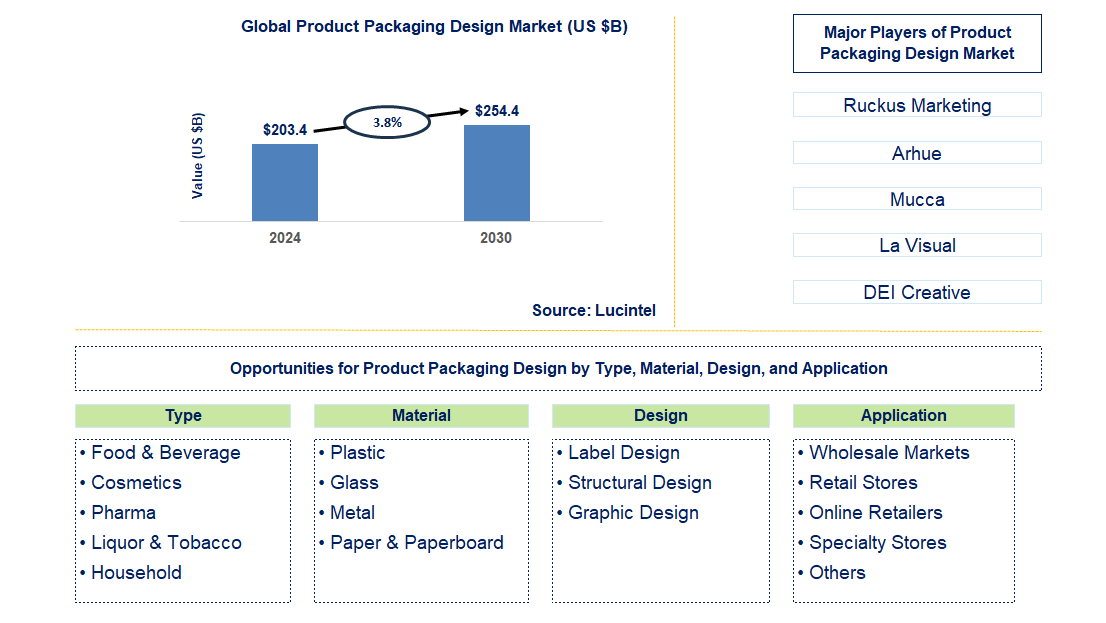
Key data points: The market size in 2030 = $254.4 billion, growth forecast = 3.8% annually for the next 6 years. Scroll below to get more insights. This market report covers trends, opportunities, and forecasts in the global product packaging design market to 2030 by type (food & beverage, cosmetics, pharma, liquor & tobacco, and household), material (plastic, glass, metal, and paper & paperboard), design (label design, structural design, and graphic design), application (wholesale markets, retail stores, online retailers, specialty stores, and others), and region (North America, Europe, Asia Pacific, and the Rest of the World)
We'll send your sample report shortly.
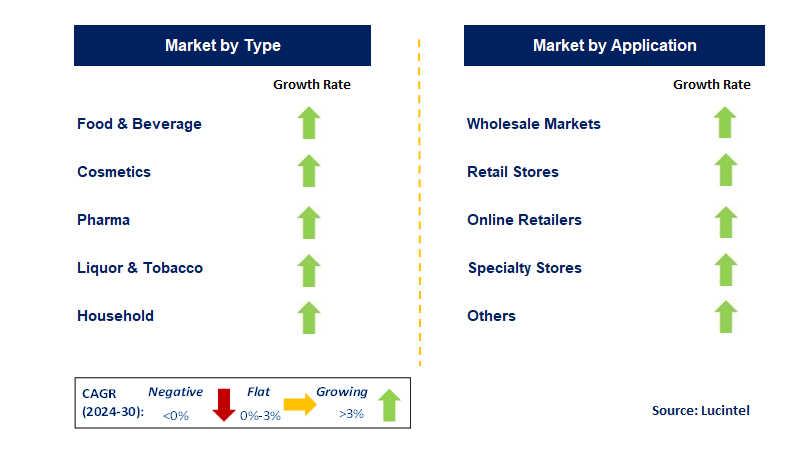
• Lucintel forecasts that, within the type category, food & beverage is expected to witness the highest growth over the forecast period due to the diverse packaging needs and massive consumer base.
• Within this application category, wholesale markets are expected to witness the highest growth due to its large volume of product packaging needs.
• In terms of regions, North America is expected to witness the highest growth over the forecast period due to its expanding middle class and increasing demand for consumer goods. A more than 150-page report is developed to help in your business decisions.
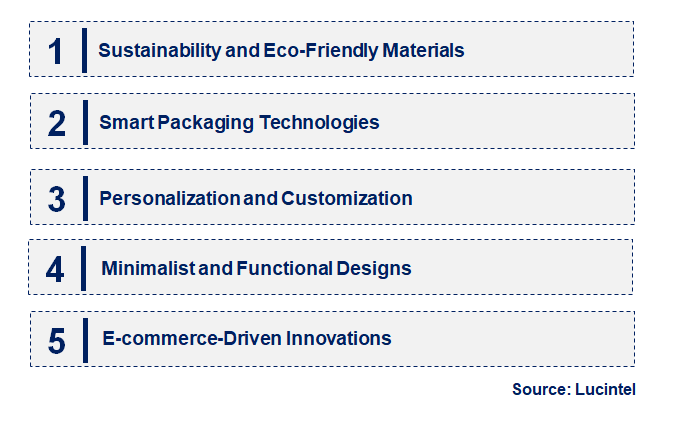
• Sustainability and Eco-friendly Materials: There is a growing shift toward using recyclable, biodegradable, and compostable materials. This trend is driven by increasing consumer demand for environmentally responsible products and regulatory pressures to reduce plastic waste.
• Smart Packaging Technologies: The integration of technologies such as QR codes, RFID, and IoT is enhancing packaging functionality. Smart packaging provides consumers with real-time information, improves supply chain efficiency, and offers interactive experiences.
• Personalization and Customization: Brands are focusing on personalized packaging to create a unique consumer experience. Custom designs, limited editions, and personalized messages help brands stand out and foster stronger customer connections.
• Minimalist and Functional Designs: There is a trend toward minimalist packaging that emphasizes functionality and simplicity. Clean, uncluttered designs are preferred for their aesthetic appeal and ease of use, reflecting a move away from excessive packaging.
• E-commerce-driven Innovations: The rise of e-commerce is influencing packaging design, with an emphasis on durability and user experience. Packaging solutions are being developed to withstand shipping and handling while providing an enhanced unboxing experience. Emerging trends such as sustainability, smart technologies, personalization, minimalist designs, and e-commerce innovations are reshaping the product packaging design market. These trends are driving advancements in materials, functionality, and consumer engagement.
• Adoption of Sustainable Materials: Companies are increasingly using eco-friendly materials such as recycled paper, biodegradable plastics, and plant-based alternatives. This shift is driven by consumer demand for sustainability and regulatory pressures to reduce environmental impact.
• Integration of Smart Packaging Features: The use of smart technologies, including QR codes and RFID tags, is growing. These features enhance product traceability, provide interactive experiences, and improve supply chain management.
• Growth in Customization and Personalization: Brands are investing in customizable packaging options to appeal to individual consumer preferences. Personalized packaging helps build brand loyalty and provides a unique consumer experience.
• Advancements in Digital Printing Technology: Digital printing is allowing for more intricate and high-quality designs. This technology offers greater flexibility and efficiency in packaging production, enabling short runs and rapid prototyping.
• Focus on Enhanced User Experience: There is an increasing emphasis on designing packaging that improves functionality and convenience. Innovations include easy-open features, resealable closures, and ergonomic designs that enhance user interaction. Recent developments in product packaging design include the adoption of sustainable materials, smart technologies, customization, advancements in digital printing, and improved user experiences. These changes are driving innovation and responding to evolving consumer and regulatory demands.
• Investment in Sustainable Packaging Solutions: Companies can capitalize on the growing demand for eco-friendly packaging by investing in sustainable materials and designs. This opportunity aligns with consumer preferences for environmentally responsible products and helps meet regulatory requirements.
• Development of Smart Packaging Technologies: Embracing smart packaging solutions, such as IoT-enabled features and interactive elements, can enhance product functionality and consumer engagement. This trend offers opportunities for differentiation and value-added services.
• Expansion of Personalized Packaging Options: Offering customizable and personalized packaging can attract consumers seeking unique and tailored products. This approach can enhance brand loyalty and create a competitive advantage in the market.
• Adoption of Advanced Printing Techniques: Investing in digital and flexographic printing technologies can improve design quality and production efficiency. These techniques enable high-resolution graphics, shorter production runs, and faster turnaround times.
• Focus on E-commerce-optimized Packaging: Developing packaging solutions designed specifically for e-commerce can address the challenges of shipping and handling. Innovations in durability and user experience can enhance the online shopping experience and reduce product damage. Strategic growth opportunities in the product packaging design market include sustainable solutions, smart technologies, personalization, advanced printing, and e-commerce optimization. Leveraging these opportunities can drive innovation and meet the evolving needs of consumers and businesses.
• Technological Advancements: Innovations in packaging technology, such as smart packaging and digital printing, are driving growth. These advancements improve functionality, enhance consumer engagement, and offer greater design flexibility.
• Consumer Demand for Sustainability: There is increasing consumer demand for eco-friendly and sustainable packaging. This trend is pushing companies to adopt recyclable, biodegradable, and compostable materials to meet environmental expectations.
• Growth of E-commerce: The rise of e-commerce is driving demand for packaging solutions that are durable, easy to handle, and provide a positive unboxing experience. This shift is influencing packaging design and functionality.
• Focus on Brand Differentiation: Companies are investing in innovative and attractive packaging designs to stand out in a competitive market. Unique packaging can enhance brand recognition and appeal to consumer preferences.
• Regulatory Pressures: Stringent regulations on packaging materials and waste management are driving changes in packaging design. Companies are adapting to comply with these regulations and reduce environmental impact. Challenges in the product packaging design market are:
• High Costs of Sustainable Materials: The cost of implementing eco-friendly materials and technologies can be high. Companies may face challenges in balancing sustainability with affordability and maintaining profitability.
• Complex Regulatory Compliance: Navigating diverse and evolving regulations across different regions can be challenging. Compliance requires ongoing monitoring and adaptation to meet varying requirements.
• Supply Chain Disruptions: Global supply chain disruptions can impact the availability and cost of packaging materials. These disruptions can affect production schedules and increase costs. The product packaging design market is driven by technological advancements, consumer demand for sustainability, and e-commerce growth. However, challenges such as high costs, regulatory compliance, supply chain disruptions, and environmental impact need to be addressed. Balancing these factors is crucial for sustainable growth and success in the market.
• Ruckus Marketing
• Arhue
• Mucca
• La Visual
• DEI Creative
• Murmur Creative
• Tank
• Turner Duckworth
• Spindletop Design
• Pulp+Wir
• Food & Beverage
• Cosmetics
• Pharma
• Liquor & Tobacco
• Household
• Plastic
• Glass
• Metal
• Paper & Paperboard
• Label Design
• Structural Design
• Graphic Design
• Wholesale Markets
• Retail Stores
• Online Retailers
• Specialty Stores
• Others
• North America
• Europe
• Asia Pacific
• The Rest of the World
• United States: In the U.S., there is a growing emphasis on sustainability and innovation in packaging design. Companies are adopting eco-friendly materials and advanced technologies like smart packaging and augmented reality to enhance consumer engagement and reduce environmental impact.
• China: The Chinese packaging market is expanding rapidly with a focus on automation and digital printing technologies. The rise of e-commerce is driving demand for innovative packaging solutions that ensure product safety and enhance the unboxing experience for consumers.
• Germany: Germany is leading in the integration of sustainable and circular economy principles into packaging design. There is a strong push toward reducing plastic usage, increasing recyclability, and adopting biodegradable materials to meet stringent environmental regulations.
• India: In India, the packaging design market is growing with a focus on affordability and functionality. The rise of organized retail and consumer demand for aesthetically appealing and convenient packaging is driving innovations in materials and design.
• Japan: The Japanese packaging market is characterized by high precision and attention to detail. Recent developments include advanced materials for improved product preservation and innovative designs that reflect Japanese aesthetics and consumer preferences.
• Ruckus Marketing
• Arhue
• Mucca
• La Visual
• DEI Creative
• Murmur Creative
• Tank
• Turner Duckworth
• Spindletop Design
• Pulp+Wir Q6. Which product packaging design market segment will be the largest in future? Answer: Lucintel forecasts that food & beverage is expected to witness the highest growth over the forecast period due to the diverse packaging needs and massive consumer base. Q7. In product packaging design market, which region is expected to be the largest in next 5 years? Answer: North America is expected to witness the highest growth over the forecast period due to its expanding middle class and increasing demand for consumer goods. Q.8 Do we receive customization in this report? Answer: Yes, Lucintel provides 10% customization without any additional cost.


Choose a license that fits your team. Instant PDF delivery.
Prices exclude taxes. Instant delivery. Custom licensing available on request.
Market Report · July 31, 2026
Market Report · July 31, 2026
Market Report · July 31, 2026
Trusted partner for strategic intelligence and business growth


Receive a complimentary market analysis tailored to your industry. Our analysts will identify key growth opportunities and competitive dynamics specific to your business.

Market size, growth rate, and key trend analysis for your specific sector.

Top competitor positioning and market share analysis.

Strategic recommendations backed by data-driven insights.
Get curated market intelligence and competitive moves straight to your inbox.
By subscribing, you agree to receive our monthly insights. Unsubscribe anytime.
Receive a complimentary market analysis tailored to your industry. Our analysts will identify key growth opportunities and competitive dynamics specific to your business.
Market size, growth rate, and key trend analysis for your specific sector.
Top competitor positioning and market share analysis.
Strategic recommendations backed by data-driven insights.
Get curated market intelligence, emerging trends, and competitive moves straight to your inbox each month.
By subscribing, you agree to receive our monthly insights. Unsubscribe anytime.
We'll send your sample report shortly.