
Market Report · July 22, 2026

Key data points: The market size in 2035 = $11 billion, growth forecast = 11.2% annually for the next 8 years. Scroll below to get more insights. This market report covers trends, opportunities and forecasts in prenatal vitamin supplement market to 2035 by type (vitamins & minerals, essential fatty acids, and others), form (capsules & softgels, tablets, gummies, powders, and others), distribution channel (supermarkets/hypermarkets, specialty & health stores, online retailers, and others), and region (North America, Europe, Asia Pacific, and the Rest of the World)
We'll send your sample report shortly.
• Lucintel forecasts that, within the distribution channel category, specialty & health store is expected to witness the highest growth over the forecast period.
• Within the type category, vitamin & mineral is expected to witness higher growth.
• In terms of region, APAC is expected to witness the highest growth over the forecast period. Gain valuable insights for your business decisions with our comprehensive 150+ page report. Sample figures with some insights are shown below.

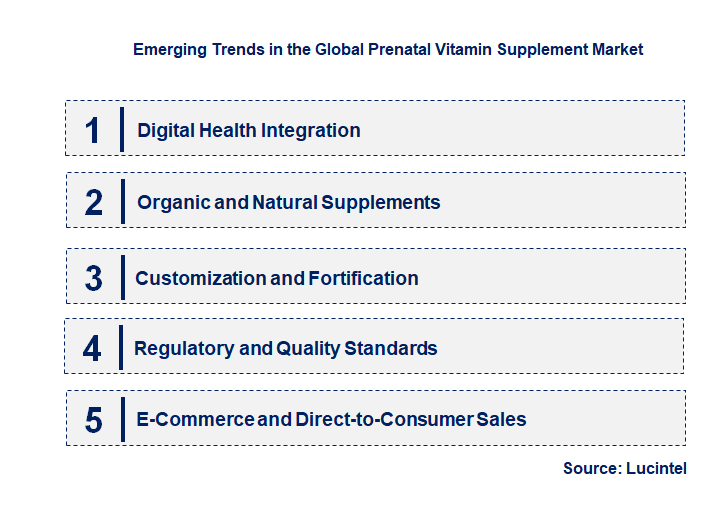
• Digital Health Integration: The market is increasingly incorporating digital health tools such as mobile apps and telehealth services to provide personalized prenatal care. These platforms enable consumers to track their health, receive tailored supplement recommendations, and consult healthcare professionals remotely. This integration enhances user engagement, improves adherence to prenatal routines, and offers valuable data insights for manufacturers. As digital health becomes more mainstream, it is expected to boost market accessibility, especially in remote or underserved areas, and foster a more informed, proactive approach to prenatal health management.
• Organic and Natural Supplements: There is a rising consumer preference for organic, non-GMO, and natural ingredients in prenatal vitamins. This trend is driven by growing awareness of potential chemical exposure and a desire for cleaner, safer products during pregnancy. Manufacturers are responding by developing organic formulations with plant-based ingredients, free from artificial additives and preservatives. This shift not only appeals to health-conscious consumers but also aligns with broader wellness trends, leading to increased demand for premium, clean-label prenatal supplements. The focus on natural ingredients is expected to drive innovation and market differentiation.
• Customization and Fortification: Personalized prenatal vitamins tailored to individual nutritional needs are gaining popularity. Advances in nutrigenomics and blood testing enable brands to offer targeted formulations that address specific deficiencies or health concerns. Fortification with essential nutrients like folate, iron, DHA, and choline is becoming more sophisticated, ensuring optimal fetal development and maternal health. Customization enhances consumer trust and satisfaction, fostering brand loyalty. This trend is transforming the market from generic solutions to highly tailored products, encouraging innovation and expanding the scope of prenatal nutrition.
• Regulatory and Quality Standards: Stricter regulations and quality assurance protocols are shaping the market landscape. Governments and industry bodies are implementing rigorous standards for ingredient safety, labeling, and manufacturing practices. This focus on quality enhances consumer confidence and reduces the risk of contamination or misinformation. Companies investing in compliance and transparent sourcing are gaining a competitive edge. Enhanced regulatory oversight is also encouraging innovation in formulation and packaging, ensuring products meet evolving safety and efficacy benchmarks, ultimately elevating overall market credibility and consumer trust.
• E-commerce and Direct-to-Consumer Sales: The rise of online retail channels is significantly impacting the prenatal vitamin market. E-commerce platforms offer convenience, wider product selection, and access to niche or specialty brands. Direct-to-consumer models enable brands to build stronger relationships with customers through personalized marketing, subscription services, and educational content. This trend is particularly important for reaching younger, tech-savvy expectant mothers. The shift to online sales channels is expanding market reach, reducing distribution costs, and fostering innovation in digital marketing strategies, thereby reshaping how prenatal supplements are marketed and purchased. These emerging trends are collectively transforming the prenatal vitamin supplement market into a more personalized, transparent, and digitally integrated space. They are driving innovation, improving product quality, and expanding access, ultimately enhancing maternal and fetal health outcomes. As these trends continue to evolve, the market is poised for sustained growth, increased competitiveness, and a more consumer-centric approach to prenatal nutrition.
• Innovation in Formulations: Personalized and Organic Options: The market is witnessing a surge in personalized prenatal vitamins tailored to individual nutritional needs, including organic and non-GMO options. This trend enhances consumer trust and satisfaction, leading to increased sales. Companies investing in research are developing formulations that address specific deficiencies, such as folate, iron, and DHA, catering to health-conscious and eco-friendly consumers. These innovations are expanding product portfolios and attracting a broader customer base.
• Digital Health Integration: Telehealth and Mobile Apps: The integration of digital health tools is transforming prenatal care. Telehealth consultations and mobile apps now offer personalized supplement recommendations, adherence tracking, and educational content. This connectivity improves compliance and health outcomes for pregnant women, especially in remote areas. Market players are partnering with tech firms to develop user-friendly platforms, increasing engagement and expanding access to prenatal supplements, thus driving market growth and customer loyalty.
• Growing Demand for Organic and Natural Supplements: Consumers are increasingly seeking organic, non-GMO, and clean-label prenatal vitamins. This shift is driven by heightened health awareness and concerns over synthetic ingredients. Organic certifications and transparent sourcing are becoming key differentiators. The demand is particularly strong in North America and Europe, prompting brands to reformulate products and expand organic lines. This trend boosts premium pricing and market segmentation, fostering innovation and competitive advantage.
• Regulatory Advancements and Quality Standards: Stricter Regulations and Certification: Governments and industry bodies are implementing more rigorous standards for prenatal supplements, emphasizing safety, efficacy, and transparency. Certification processes such as GMP and third-party testing are gaining importance. These regulations enhance consumer confidence and reduce counterfeit products. Companies investing in compliance are gaining market credibility, which can lead to increased sales and expanded market share, especially in highly regulated regions like North America and Europe.
• Expansion of Distribution Channels: E-commerce and Retail Partnerships: The rise of online retail platforms has significantly increased product accessibility. E-commerce offers convenience, detailed product information, and direct-to-consumer sales, boosting market penetration. Additionally, partnerships with pharmacies, supermarkets, and specialty stores are expanding physical availability. This multi-channel approach caters to diverse consumer preferences, enhances brand visibility, and accelerates market growth. The expansion of distribution channels is crucial for reaching a broader demographic, including rural and underserved populations. These developments are collectively transforming the prenatal vitamin supplement market by enhancing product innovation, expanding access, and ensuring safety and quality. The integration of digital tools and the focus on organic, personalized options are driving consumer engagement and loyalty. As regulatory standards tighten, market players are emphasizing transparency and trust. Overall, these advancements are fostering a more dynamic, accessible, and health-focused industry, positively impacting growth prospects and consumer health outcomes worldwide.
• Growing Demand For Organic And Natural Prenatal Vitamins: The increasing consumer preference for organic, non-GMO, and natural ingredients is transforming the prenatal vitamin market. Expectant mothers seek products free from artificial additives, preservatives, and synthetic chemicals. This trend encourages manufacturers to develop organic formulations, plant-based ingredients, and clean-label products. The demand for organic options is particularly strong in North America and Europe, leading to new product launches and expanding the organic segment. This shift enhances market growth and consumer trust.
• Rising Adoption Of Customized Prenatal Supplement Solutions: Personalized nutrition is gaining traction, with consumers seeking tailored prenatal vitamins based on individual health needs, genetic factors, and lifestyle. Companies are developing customized supplement plans, including specific nutrient combinations like folic acid, iron, and DHA. Digital health platforms and direct-to-consumer models facilitate personalized offerings. This approach improves efficacy, compliance, and customer satisfaction, opening new revenue streams. The customization trend is especially prominent among health-conscious, tech-savvy expectant mothers.
• Expansion Of Market Through Emerging Economies: Rapid population growth, increasing healthcare awareness, and rising disposable incomes in emerging economies such as India, China, and Brazil are fueling market expansion. Governments and private sectors are promoting maternal health programs, increasing prenatal care access. Local manufacturers are entering the market with affordable, quality products, while international brands expand distribution channels. This growth presents opportunities for product localization, strategic partnerships, and market penetration, significantly boosting global market size and diversity.
• Innovation In Formulations And Delivery Formats: Advances in supplement technology are leading to innovative formulations, including gummies, liquids, chewables, and effervescent tablets, catering to diverse consumer preferences. Enhanced bioavailability, stability, and taste are key focus areas. Fortification with additional nutrients like probiotics, omega-3s, and antioxidants is also trending. These innovations improve compliance, absorption, and overall effectiveness, attracting a broader consumer base. Continuous R&D investments are vital for staying competitive and meeting evolving consumer demands.
• Increasing Focus On Education And Awareness Campaigns: Educational initiatives by healthcare providers, government agencies, and brands are raising awareness about the importance of prenatal nutrition. Campaigns emphasize early supplementation, proper dosages, and ingredient transparency. Digital platforms, social media, and community programs are used to reach expectant mothers, especially in rural and underserved areas. Enhanced awareness drives demand for high-quality, reliable products and fosters trust. This focus on education supports market growth by encouraging informed purchasing decisions and promoting maternal and fetal health. The overall market landscape is poised for substantial growth driven by these opportunities, with innovation, personalization, and awareness playing pivotal roles. Companies that strategically leverage these trends can expand their market share, improve consumer engagement, and contribute to better maternal health outcomes globally.
• Technological Advancements: The development of innovative manufacturing processes and improved formulations has enhanced the bioavailability and safety of prenatal vitamins. These technological improvements allow for more targeted nutrient delivery, catering to specific needs during pregnancy. As research continues, new ingredients and delivery methods are emerging, boosting consumer confidence and expanding market options. This ongoing innovation encourages manufacturers to invest in R&D, fostering a competitive environment that benefits consumers through better products and increased choices.
• Rising Maternal Age and Prenatal Care Awareness: Women are choosing to have children later in life, often in their 30s and 40s, which increases the need for specialized prenatal nutrition. Additionally, heightened awareness about prenatal health and the importance of early supplementation has led to increased demand for prenatal vitamins. Governments and healthcare providers are promoting prenatal care programs, further emphasizing the importance of proper nutrition during pregnancy. This demographic and educational shift significantly contributes to market growth, as more women seek reliable prenatal supplements to ensure healthy pregnancies.
• Increasing Healthcare Expenditure and Insurance Coverage: Growing healthcare budgets and insurance coverage for maternal health services make prenatal vitamins more accessible and affordable. As healthcare costs rise globally, consumers are more inclined to invest in preventive health measures, including supplements. Insurance policies covering prenatal vitamins reduce out-of-pocket expenses, encouraging higher adoption rates. This economic support facilitates wider distribution channels and availability, especially in emerging markets, thereby expanding the market reach and encouraging manufacturers to develop affordable, high-quality products.
• Regulatory Support and Quality Standards: Governments and regulatory bodies are establishing stringent standards for supplement safety, efficacy, and labeling. These regulations ensure consumer protection and boost confidence in prenatal vitamins. Compliance with such standards often requires innovation and quality assurance measures, which can increase production costs but also elevate product credibility. Regulatory support also encourages market players to adhere to high-quality manufacturing practices, fostering trust among consumers and healthcare providers, ultimately driving market growth through increased demand for certified, safe products.
• Growing E-commerce and Digital Marketing: The rise of online retail platforms and digital marketing strategies has expanded the reach of prenatal vitamins to a broader consumer base. E-commerce offers convenience, detailed product information, and access to international brands, appealing especially to tech-savvy and urban populations. Digital marketing campaigns increase awareness and educate consumers about the benefits of prenatal supplementation, influencing purchasing decisions. This channel expansion reduces reliance on traditional retail outlets, lowers distribution costs, and enables personalized marketing, all of which contribute to accelerated market growth and increased consumer engagement. The challenges facing the prenatal vitamin supplement market include:
• Regulatory Hurdles and Compliance Costs: Navigating complex regulatory landscapes across different regions can be challenging for manufacturers. Stringent approval processes, varying standards, and frequent updates increase compliance costs and time-to-market. Small and new entrants may struggle to meet these requirements, limiting market competition and innovation. Additionally, non-compliance risks product recalls and legal penalties, which can damage brand reputation and financial stability. These regulatory challenges can slow down market growth and restrict the introduction of innovative products, especially in emerging markets with evolving standards.
• Market Saturation and Intense Competition: The prenatal vitamin market is highly competitive, with numerous established brands and new entrants vying for consumer attention. Saturation leads to price wars, reduced profit margins, and increased marketing expenses. Differentiating products becomes difficult, especially when many offerings are similar in composition and branding. This intense competition can hinder innovation and limit opportunities for smaller companies to gain market share. Consumers may also experience confusion due to the plethora of options, which can impact brand loyalty and overall market stability.
• Supply Chain Disruptions and Raw Material Shortages: The global supply chain has faced significant disruptions due to geopolitical tensions, pandemics, and logistical challenges. These issues affect the sourcing of raw materials, manufacturing, and distribution of prenatal vitamins. Shortages of key nutrients or raw ingredients can delay product availability and increase costs. Supply chain instability also impacts quality control and inventory management, risking product shortages or excess. Such disruptions threaten market growth, especially in regions heavily dependent on imported ingredients, and require companies to develop resilient supply strategies to mitigate risks. The prenatal vitamin supplement market is driven by technological innovations, demographic shifts, economic support, regulatory frameworks, and digital marketing. However, it faces challenges from regulatory complexities, market saturation, and supply chain issues. These factors collectively influence the market’s trajectory, requiring stakeholders to adapt strategies that leverage growth opportunities while addressing potential risks. Overall, the market’s future depends on balancing innovation and compliance with supply chain resilience and competitive differentiation, ensuring sustainable growth in maternal health nutrition.
• Bayer AG
• Church & Dwight Co., Inc.
• Abbott Laboratories
• Reckitt Benckiser Group plc
• Otsuka Holdings Co., Ltd.
• Nestlé S.A.
• Piping Rock Health Products, LLC
• Sundance Vitamins
• Pharmavite LLC
• Nordic Naturals, Inc.
• Vitamins & Minerals
• Essential Fatty Acids
• Others
• Capsules & Softgels
• Tablets
• Gummies
• Powders
• Others
• Supermarkets/Hypermarkets
• Specialty & Health Stores
• Online Retailers
• Others
• North America
• Europe
• Asia Pacific
• The Rest of the World
• United States: The US market has seen a surge in organic and non-GMO prenatal vitamins, driven by consumer demand for clean-label products. Major brands are investing in research to develop formulations with higher bioavailability and added nutrients like DHA and choline. E-commerce sales continue to grow, and there is increased focus on personalized supplement plans based on genetic testing. Regulatory agencies are tightening safety standards, encouraging innovation while ensuring product quality. The market also benefits from strong healthcare provider endorsements and widespread awareness campaigns about maternal health.
• China: Chinas prenatal vitamin market is expanding rapidly due to rising birth rates and increasing health consciousness among expectant mothers. Domestic brands are gaining prominence by offering affordable, locally formulated products, while international companies are entering the market through online platforms. There is a growing preference for natural and herbal ingredients, reflecting traditional health practices. Government initiatives to improve maternal healthcare are supporting market growth, alongside increased awareness of the importance of prenatal nutrition. Innovations include fortified formulations tailored to address common deficiencies prevalent in the population.
• Germany: The German market emphasizes high-quality, scientifically backed prenatal supplements. Consumers prefer products with transparent ingredient sourcing and minimal additives. The market is characterized by a strong presence of organic and vegan options, aligning with Germany’s sustainability values. Regulatory standards are strict, ensuring product safety and efficacy. There is a notable trend towards personalized nutrition, with some companies offering tailored supplements based on individual health profiles. Healthcare professionals play a significant role in recommending products, and partnerships with clinics and pharmacies are common distribution channels.
• India: The Indian prenatal vitamin market is witnessing rapid growth due to increasing awareness of maternal health and government initiatives promoting nutrition. Local manufacturers are expanding their product ranges with affordable options that cater to diverse dietary needs. There is a rising demand for fortified supplements containing iron, folic acid, and calcium, essential for maternal health. Urbanization and improved healthcare infrastructure are facilitating wider access. Traditional herbal ingredients are also incorporated into some formulations, blending modern science with traditional practices. The market is expected to continue expanding as awareness and disposable incomes increase.
• Japan: Japan’s prenatal supplement market is characterized by high consumer awareness and preference for premium, scientifically validated products. The focus is on formulations that support fetal development and maternal well-being, including omega-3 fatty acids and folic acid. The market is driven by aging populations and a focus on health maintenance during pregnancy. Innovative delivery formats, such as chewables and liquids, are popular. Regulatory standards are stringent, ensuring product safety. Collaborations between pharmaceutical companies and healthcare providers are common, and there is a growing trend towards personalized nutrition solutions tailored to individual health needs.


• Bayer AG
• Church & Dwight Co., Inc.
• Abbott Laboratories
• Reckitt Benckiser Group plc
• Otsuka Holdings Co., Ltd.
• Nestlé S.A.
• Piping Rock Health Products, LLC
• Sundance Vitamins
• Pharmavite LLC
• Nordic Naturals, Inc. Q6. Which prenatal vitamin supplement market segment will be the largest in future? Answer: Lucintel forecasts that, within the distribution channel category, specialty & health store is expected to witness the highest growth over the forecast period. Q7. In prenatal vitamin supplement market, which region is expected to be the largest in next 8 years? Answer: In terms of region, APAC is expected to witness the highest growth over the forecast period. Q8. Do we receive customization in this report? Answer: Yes, Lucintel provides 10% customization without any additional cost.


Choose a license that fits your team. Instant PDF delivery.
Prices exclude taxes. Instant delivery. Custom licensing available on request.
Market Report · July 22, 2026
Market Report · July 22, 2026
Market Report · July 22, 2026
Trusted partner for strategic intelligence and business growth


Receive a complimentary market analysis tailored to your industry. Our analysts will identify key growth opportunities and competitive dynamics specific to your business.

Market size, growth rate, and key trend analysis for your specific sector.

Top competitor positioning and market share analysis.

Strategic recommendations backed by data-driven insights.
Get curated market intelligence and competitive moves straight to your inbox.
By subscribing, you agree to receive our monthly insights. Unsubscribe anytime.
Receive a complimentary market analysis tailored to your industry. Our analysts will identify key growth opportunities and competitive dynamics specific to your business.
Market size, growth rate, and key trend analysis for your specific sector.
Top competitor positioning and market share analysis.
Strategic recommendations backed by data-driven insights.
Get curated market intelligence, emerging trends, and competitive moves straight to your inbox each month.
By subscribing, you agree to receive our monthly insights. Unsubscribe anytime.
We'll send your sample report shortly.