
Prefabricated Housing Market Trends and Forecast
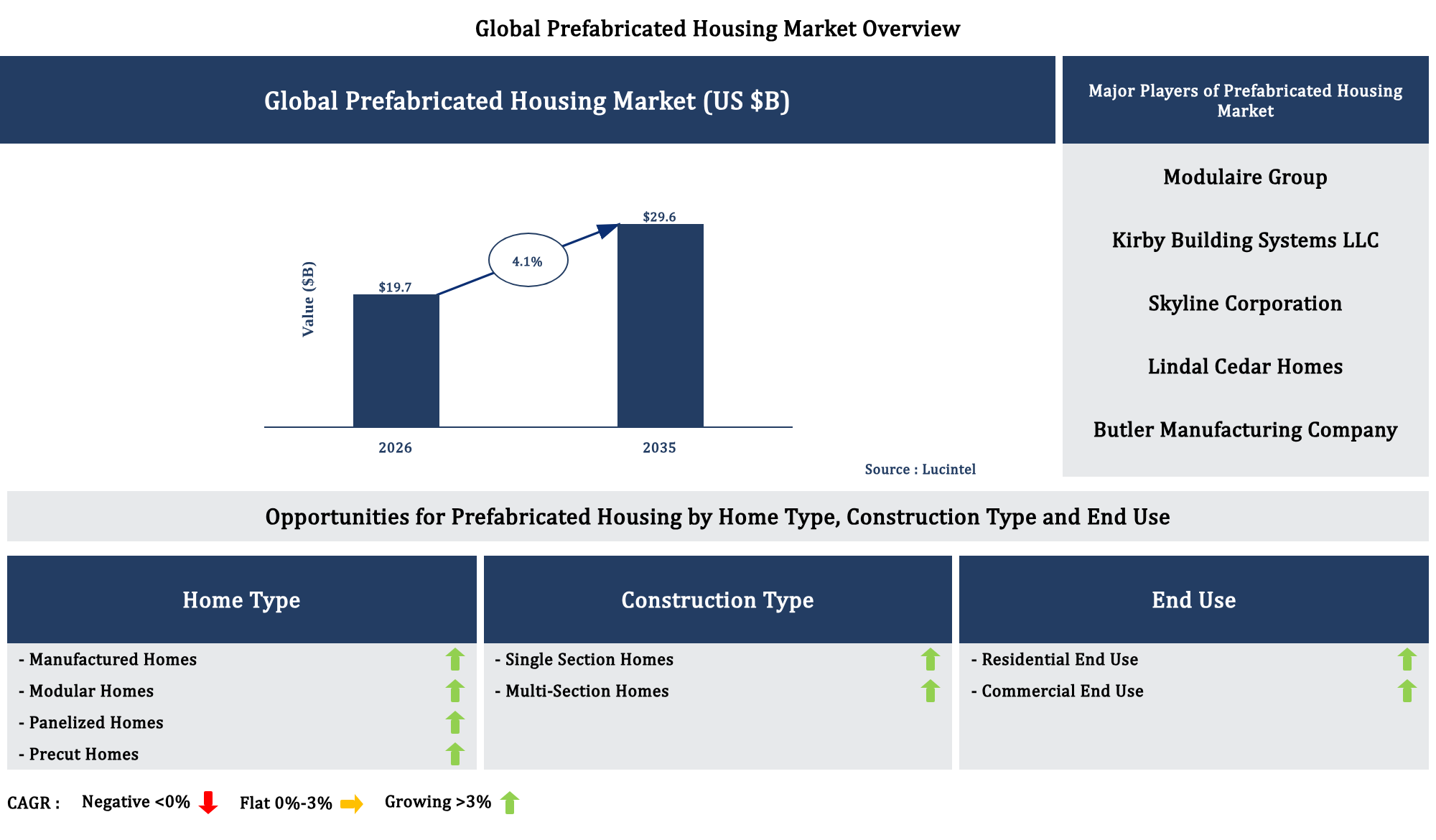
The future of the global prefabricated housing market looks promising with opportunities in the residential end use and commercial end use markets. The global prefabricated housing market is expected to reach an estimated $29,682 million by 2035 with a CAGR of 4.1% from 2026 to 2035. The major drivers for this market are the increasing use of advanced building materials & technologies, the growing adoption of modular & prefabricated construction methods, and the rising labor cost encouraging prefabrication techniques.
• Lucintel forecasts that, within the home type category, modular home is expected to witness the highest growth over the forecast period.
• Within the end use category, residential end use is expected to witness the highest growth.
• In terms of region, APAC is expected to witness the highest growth over the forecast period.
Gain valuable insights for your business decisions with our comprehensive 150+ page report. Sample figures with some insights are shown below.
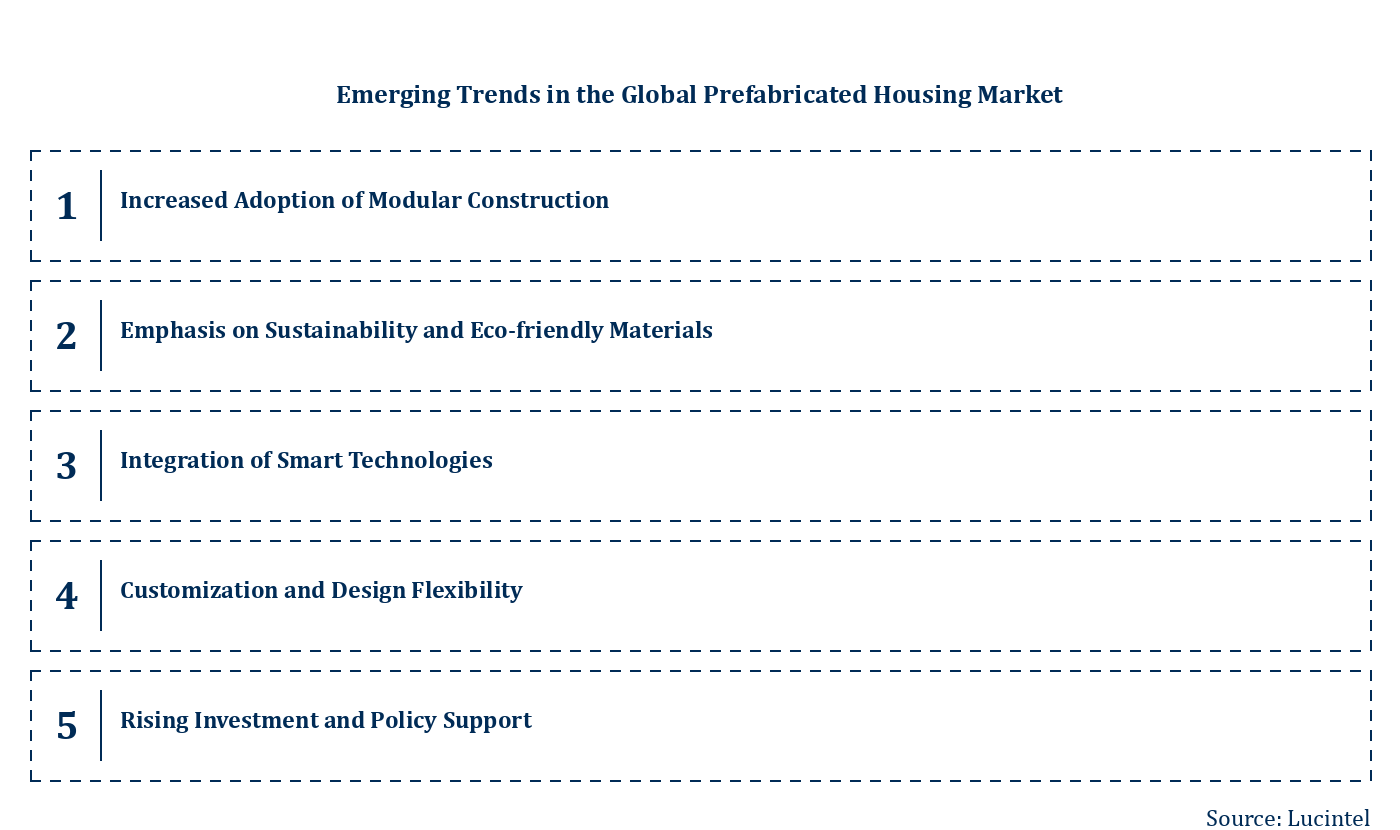
Emerging Trends in the Prefabricated Housing Market
The prefabricated housing market is experiencing rapid growth driven by technological advancements, changing consumer preferences, and the need for sustainable and cost-effective housing solutions. As urbanization accelerates and housing shortages become more acute, innovative construction methods are gaining popularity worldwide. This market is characterized by a shift towards modular, eco-friendly, and customizable homes that can be assembled quickly and efficiently. These developments are transforming traditional construction paradigms, making housing more accessible and adaptable to diverse needs. The following key trends highlight the major forces shaping the future of prefabricated housing and their implications for stakeholders across the industry.
• Increased Adoption of Modular Construction: The trend towards modular construction involves manufacturing building components in factories and assembling them on-site. This approach reduces construction time significantly, often by 30-50%, and minimizes labor costs and material waste. Modular homes offer flexibility in design, allowing customization to meet individual preferences and regulatory requirements. The efficiency and scalability of modular construction make it ideal for addressing housing shortages in urban and rural areas. As technology advances, the quality and complexity of prefabricated modules continue to improve, further boosting adoption across residential, commercial, and institutional sectors.
• Emphasis on Sustainability and Eco-Friendly Materials: Sustainability is a core driver in the prefabricated housing market. Manufacturers are increasingly using eco-friendly materials such as recycled steel, bamboo, and low-impact insulation to reduce environmental footprints. Prefabrication inherently minimizes waste and energy consumption during construction, aligning with global efforts to combat climate change. Additionally, energy-efficient designs, solar integration, and smart home technologies are being incorporated into prefabricated homes, making them more sustainable and cost-effective over their lifecycle. This trend appeals to environmentally conscious consumers and regulatory bodies aiming to promote green building practices.
• Integration of Smart Technologies: The incorporation of smart home features into prefabricated housing is transforming the market. IoT devices, automated systems, and advanced security features are being seamlessly integrated into prefabricated units, enhancing comfort, safety, and energy management. This trend caters to tech-savvy consumers seeking modern, connected living spaces. Smart technology integration also improves building performance, reduces operational costs, and enables remote monitoring and control. As 5G networks expand, the potential for more sophisticated automation and data-driven customization in prefabricated homes will grow, further elevating their appeal and functionality.
• Customization and Design Flexibility: Consumers increasingly demand personalized living spaces that reflect their lifestyles and aesthetic preferences. Prefabricated housing manufacturers are responding by offering a wide range of customizable options, from interior layouts to exterior finishes. Modular systems allow for easy modifications and expansions, providing flexibility for evolving needs. This trend enhances market competitiveness by catering to diverse demographic groups, including millennials, retirees, and remote workers. The ability to deliver tailored solutions quickly and efficiently is reshaping customer expectations and positioning prefabricated housing as a versatile alternative to traditional construction.
• Rising Investment and Policy Support: Governments and private investors are recognizing the potential of prefabricated housing to address housing crises and promote sustainable development. Policy initiatives include subsidies, streamlined permitting processes, and incentives for eco-friendly construction practices. Increased investment in research and development is driving innovation in materials, design, and manufacturing techniques. Public-private partnerships are facilitating large-scale projects, especially in affordable housing sectors. This supportive environment is accelerating market growth, expanding production capacities, and fostering technological advancements, ultimately making prefabricated housing more mainstream and accessible.
These emerging trends are fundamentally reshaping the prefabricated housing market by making it more efficient, sustainable, customizable, and technologically advanced. They are enabling faster construction, reducing costs, and meeting the evolving demands of consumers and policymakers. As these developments continue, the market is poised for significant expansion, offering innovative solutions to global housing challenges and redefining the future of residential construction.
Recent Developments in the Prefabricated Housing Market
The prefabricated housing market is experiencing rapid growth driven by technological advancements, increasing urbanization, and a demand for affordable, sustainable housing solutions. Innovations in manufacturing processes and materials are making prefab homes more customizable and energy-efficient. Governments and private sectors are investing in modular construction to address housing shortages and reduce construction time. This evolving landscape presents significant opportunities for investors, developers, and consumers seeking cost-effective and eco-friendly living options. The following developments highlight key trends shaping this dynamic industry.
• Technological Innovations in Modular Construction: Adoption of advanced manufacturing techniques and automation has streamlined prefab housing production, reducing costs and construction time. These innovations enable higher precision and customization, making prefab homes more appealing to diverse markets. As a result, developers can deliver quality housing faster, meeting urgent demand and expanding market reach. This technological progress is also fostering sustainable practices by minimizing waste and energy consumption during manufacturing.
• Increased Investment in Sustainable Materials: The shift towards eco-friendly building materials is gaining momentum, driven by environmental concerns and regulatory pressures. Use of recycled, biodegradable, and energy-efficient materials enhances the sustainability profile of prefabricated homes. This development attracts environmentally conscious consumers and investors, boosting market growth. Additionally, sustainable materials contribute to lower operational costs and improved indoor air quality, aligning with global efforts to combat climate change and promote green building standards.
• Rising Urbanization and Housing Demand: Rapid urban growth in many regions is creating a critical need for quick, affordable housing solutions. Prefabricated homes offer a viable answer by enabling rapid deployment in densely populated areas. Governments and private developers are increasingly adopting prefab construction to address housing shortages efficiently. This trend is expanding market opportunities, especially in emerging economies, and supporting urban infrastructure development with minimal disruption.
• Policy Support and Regulatory Frameworks: Governments worldwide are implementing policies and incentives to promote prefabricated housing adoption. Streamlined permitting processes, subsidies, and building code adaptations facilitate faster project approvals. These supportive frameworks reduce barriers for developers and encourage innovation within the industry. As a result, market penetration accelerates, and prefab housing becomes a mainstream option for affordable and sustainable urban development.
• Expansion of Customization and Design Options: Advances in design technology and modular systems are allowing greater customization of prefab homes to meet diverse consumer preferences. This flexibility enhances market appeal across different demographics and regions. Developers can now offer tailored solutions that blend aesthetics with functionality, increasing customer satisfaction. The ability to customize also enables the industry to penetrate niche markets, such as luxury prefab homes, further diversifying revenue streams and expanding overall market size.
These developments are transforming the prefabricated housing market into a more innovative, sustainable, and accessible sector. Technological advancements, sustainable materials, supportive policies, and increased customization are driving rapid growth and market acceptance. As these trends continue, the industry is poised to address global housing challenges more effectively, offering cost-efficient, eco-friendly, and adaptable solutions. This evolution is significantly impacting market dynamics, attracting new investors, and expanding opportunities worldwide.
Strategic Growth Opportunities in the Prefabricated Housing Market
The prefabricated housing market is experiencing rapid expansion driven by urbanization, cost efficiency, and technological advancements. Increasing demand for affordable, sustainable, and quick-to-construct housing solutions is fueling growth across various regions. Innovations in modular construction and eco-friendly materials are further enhancing market prospects. Stakeholders are focusing on strategic investments, partnerships, and product diversification to capitalize on emerging opportunities. This dynamic environment presents significant potential for companies to expand their footprint and meet evolving consumer needs effectively.
• Growing Urbanization and Housing Shortages Create Demand for Quick, Scalable Construction Solutions: Prefabricated housing offers rapid deployment, cost savings, and flexibility, making it an ideal solution for urban areas facing housing shortages. Governments and developers are increasingly adopting modular construction to address population growth efficiently. The ability to produce homes off-site reduces construction time and minimizes disruptions, enabling faster occupancy and alleviating housing crises. This trend is expected to continue as urban populations expand globally, driving sustained market growth.
• Technological Innovations in Modular Construction Enhance Efficiency and Customization Options: Advances in manufacturing processes, automation, and digital design tools are improving the quality, precision, and customization of prefabricated homes. These innovations allow for more complex architectural designs and tailored solutions to meet diverse consumer preferences. Enhanced supply chain management and robotics reduce costs and construction time further. As technology evolves, the market will benefit from increased scalability, improved sustainability, and broader application possibilities, attracting more investors and developers.
• Rising Focus on Sustainable and Eco-Friendly Building Materials Boosts Market Appeal: Environmental concerns and regulatory pressures are encouraging the adoption of green materials in prefabricated housing. Use of recycled, biodegradable, and energy-efficient materials reduces the carbon footprint of construction projects. Prefabrication inherently minimizes waste and energy consumption, aligning with sustainability goals. Market players investing in eco-friendly solutions can differentiate themselves and meet the increasing demand from environmentally conscious consumers, governments, and organizations committed to sustainable development.
• Strategic Partnerships and Collaborations Expand Market Reach and Innovation Capacity: Collaborations between manufacturers, architects, and technology providers facilitate the development of innovative, cost-effective, and scalable prefabricated housing solutions. Partnerships enable access to new markets, shared expertise, and resource optimization. Joint ventures with government agencies can also support large-scale affordable housing projects. These strategic alliances accelerate product development, improve supply chain efficiency, and enhance market penetration, positioning companies for sustained growth in a competitive landscape.
• Government Policies and Incentives Promote Adoption of Prefabricated Housing Solutions: Supportive regulatory frameworks, subsidies, and incentives are encouraging the adoption of prefabricated housing worldwide. Governments recognize the potential for rapid, affordable, and sustainable housing development, leading to increased funding and favorable policies. Zoning relaxations and streamlined approval processes further facilitate market entry. These initiatives reduce barriers for developers and investors, fostering market expansion and enabling the prefabricated housing industry to meet rising global housing demands effectively.
The overall impact of these opportunities is a robust growth trajectory for the prefabricated housing market, driven by technological, environmental, and policy factors. Companies that leverage these trends through innovation, strategic alliances, and sustainable practices will be well-positioned to capitalize on emerging demand. As the market evolves, it will play a crucial role in addressing global housing challenges while fostering economic development and environmental sustainability.
Prefabricated Housing Market Driver and Challenges
The prefabricated housing market is influenced by a variety of technological, economic, and regulatory factors that shape its growth and development. Advances in manufacturing technology, increasing demand for affordable and sustainable housing, and supportive government policies are key drivers. Conversely, challenges such as high initial setup costs, regulatory hurdles, and market perception issues pose significant obstacles. Understanding these drivers and challenges is essential for stakeholders to navigate the evolving landscape effectively. As the market continues to expand, balancing innovation with regulatory compliance and addressing cost concerns will be critical for sustained growth and competitiveness.
The factors responsible for driving the prefabricated housing market include:-
• Technological Innovation: The integration of advanced manufacturing techniques, automation, and modular construction methods has revolutionized the prefabricated housing industry. These innovations enable faster construction times, improved quality, and customization options, making prefabricated homes more attractive to consumers and developers. As technology continues to evolve, costs decrease and efficiency increases, further fueling market growth. Additionally, digital tools like Building Information Modeling (BIM) facilitate precise planning and reduce waste, enhancing overall project outcomes. This technological progress positions prefabricated housing as a viable, sustainable alternative to traditional construction, attracting investments and expanding market reach.
• Rising Demand for Affordable Housing: Increasing urbanization, population growth, and economic disparities have heightened the need for cost-effective housing solutions. Prefabricated homes offer a quicker, more affordable alternative to traditional construction, addressing housing shortages in many regions. Governments and private developers are increasingly adopting prefabrication to meet housing demands efficiently. The ability to produce homes at scale while maintaining quality standards makes prefabricated housing an attractive option for affordable housing projects. This demand is further driven by the need for disaster-resistant and energy-efficient homes, aligning with sustainability goals and urban development plans.
• Sustainability and Eco-Friendly Construction: Environmental concerns and the push for sustainable development are significant drivers. Prefabricated housing reduces waste, minimizes construction site disruptions, and often incorporates eco-friendly materials. The precision manufacturing process ensures better insulation and energy efficiency, contributing to lower carbon footprints. Governments worldwide are promoting green building standards, incentivizing the adoption of sustainable prefabricated solutions. As consumers become more environmentally conscious, demand for eco-friendly homes increases. This trend supports the market’s growth by aligning with global sustainability initiatives and offering long-term cost savings for homeowners.
• Economic Growth and Investment: Favorable economic conditions, increased investment in construction, and supportive policies are boosting the prefabricated housing sector. The industry benefits from lower labor costs, faster project completion, and reduced material waste, making it attractive to developers seeking efficiency. Public-private partnerships and incentives for sustainable construction further stimulate growth. Additionally, the global shift towards urbanization and infrastructure development creates new opportunities for prefabricated housing projects. As economies recover and infrastructure investments rise, the market is poised for expansion, attracting both domestic and international investors seeking profitable ventures in innovative housing solutions.
• Regulatory Support and Policy Frameworks: Governments worldwide are recognizing the benefits of prefabricated housing and are implementing policies to promote its adoption. Building codes are being updated to accommodate modular construction, and incentives such as tax breaks and subsidies are being offered to encourage industry growth. Streamlined approval processes reduce project timelines, making prefabricated homes more feasible. Regulatory support also includes standards for quality and safety, which build consumer confidence. These policies create a conducive environment for market expansion, attract new entrants, and facilitate large-scale adoption, ultimately accelerating the transition from traditional to prefabricated housing solutions.
The challenges facing the prefabricated housing market include:-
• High Initial Investment Costs: Despite long-term savings, the upfront costs for setting up manufacturing facilities and establishing supply chains can be substantial. These costs pose a barrier for small and medium-sized enterprises and may deter new entrants. Additionally, the need for specialized equipment and skilled labor increases capital expenditure. This financial hurdle can slow down market penetration, especially in regions with limited access to funding or where investors are risk-averse. Overcoming this challenge requires innovative financing models and government support to lower entry barriers and promote industry growth.
• Regulatory and Building Code Barriers: Although policies are evolving, inconsistent regulations across regions remain a significant obstacle. Many jurisdictions lack clear standards for prefabricated construction, leading to delays and increased compliance costs. Lengthy approval processes and bureaucratic hurdles can negate the time-saving benefits of prefabrication. Furthermore, resistance from traditional construction stakeholders and local authorities can impede adoption. Harmonizing regulations and establishing standardized codes are essential to streamline project approvals and foster industry confidence, but these changes require time and coordinated efforts.
• Market Perception and Acceptance: Despite technological advancements, skepticism about the durability, quality, and aesthetic appeal of prefabricated homes persists among consumers and builders. This perception hampers market expansion, especially in regions where traditional construction is deeply ingrained. Overcoming misconceptions requires extensive awareness campaigns, demonstration projects, and quality assurance measures. Building consumer trust and showcasing the long-term benefits of prefabricated housing are crucial for wider acceptance. Addressing these perception issues is vital for unlocking the full market potential and encouraging broader adoption.
The prefabricated housing market is driven by technological innovation, demand for affordable and sustainable housing, economic growth, and supportive policies. However, high initial costs, regulatory complexities, and perception challenges pose significant hurdles. The interplay of these factors will shape the market’s trajectory, requiring strategic efforts to leverage opportunities while mitigating risks. As stakeholders navigate these dynamics, the market is poised for sustainable growth, provided that technological, regulatory, and perceptual barriers are effectively addressed. This balanced approach will determine the pace and scale of future expansion in the prefabricated housing industry.
List of Prefabricated Housing Companies
Companies in the market compete on the basis of product quality offered. Major players in this market focus on expanding their manufacturing facilities, R&D investments, infrastructural development, and leverage integration opportunities across the value chain. With these strategies prefabricated housing companies cater increasing demand, ensure competitive effectiveness, develop innovative products & technologies, reduce production costs, and expand their customer base. Some of the prefabricated housing companies profiled in this report include-
• Modulaire Group
• Kirby Building Systems LLC
• Skyline Corporation
• Lindal Cedar Homes
• Butler Manufacturing Company
• Astron Buildings
• Red Sea Housing Services
• Bouygues SA
• Ritz Craft Corporation
• Cavco Industries, Inc.
Prefabricated Housing Market by Segment
The study includes a forecast for the global prefabricated housing market by home type, construction type, end use, and region.
Prefabricated Housing Market by Home Type [Value from 2019 to 2035]:
• Manufactured Homes
• Modular Homes
• Panelized Homes
• Precut Homes
Prefabricated Housing Market by Construction Type [Value from 2019 to 2035]:
• Single Section Homes
• Multi-Section Homes
Prefabricated Housing Market by End Use [Value from 2019 to 2035]:
• Residential End Use
• Commercial End Use
Prefabricated Housing Market by Region [Value from 2019 to 2035]:
• North America
• Europe
• Asia Pacific
• The Rest of the World
Country Wise Outlook for the Prefabricated Housing Market
The prefabricated housing market has experienced significant growth globally, driven by urbanization, cost efficiency, and the need for rapid construction solutions. Advances in technology, sustainability initiatives, and government policies have further accelerated development in this sector. Countries are increasingly adopting innovative manufacturing techniques and sustainable materials to meet rising housing demands while reducing environmental impact. The market‘s evolution reflects a shift towards more flexible, affordable, and eco-friendly housing options, with key players expanding their footprints across different regions. This dynamic landscape presents new opportunities and challenges as nations strive to address housing shortages and promote sustainable urban growth.
• United States: The U.S. prefabricated housing market has seen rapid expansion, driven by technological innovations and a focus on sustainability. Companies are integrating smart home features and eco-friendly materials to appeal to environmentally conscious consumers. The government’s support for affordable housing initiatives and streamlined permitting processes have further boosted growth. Modular construction is increasingly used for multifamily and commercial projects, reducing construction time and costs. Additionally, the adoption of 3D printing and automation has improved manufacturing efficiency, making prefabricated homes more accessible and customizable for American consumers.
• China: China remains a leader in prefabricated housing, with government policies actively promoting sustainable urban development. The country has invested heavily in large-scale manufacturing facilities and advanced construction techniques. Prefabricated homes are widely used in urban renewal projects and disaster relief efforts, demonstrating their versatility. Innovations in lightweight materials and digital design tools have enhanced quality and efficiency. The Chinese market also benefits from a large domestic demand for affordable housing, prompting manufacturers to scale up production and reduce costs further. The sector is expected to continue its rapid growth, supported by urbanization and government incentives.
• Germany: Germany’s prefabricated housing market emphasizes quality, energy efficiency, and sustainability. The country’s strict building standards have driven innovations in insulation, ventilation, and eco-friendly materials. Modular construction is popular for both residential and commercial projects, offering flexibility and reduced construction times. German companies are investing in digitalization and automation to improve precision and reduce waste. The government’s focus on energy-efficient buildings and renewable energy integration has spurred the development of green prefabricated homes. The market is characterized by high standards of craftsmanship and a strong emphasis on environmental responsibility.
• India: The prefabricated housing sector in India is gaining momentum as a solution to urban housing shortages and affordability issues. The government’s initiatives for affordable housing and smart cities are encouraging adoption. Local manufacturers are adopting innovative, cost-effective materials and construction techniques to cater to diverse climatic conditions. The use of modular units allows for quick assembly and scalability, making it suitable for rural and urban areas alike. Recent developments include the integration of solar energy systems and sustainable materials. The market is expected to grow significantly as infrastructure development accelerates and demand for affordable, quality housing increases.
• Japan: Japan’s prefabricated housing market is characterized by advanced technology and high standards of safety and durability. The focus on earthquake-resistant designs and energy efficiency is prominent due to the country’s seismic activity. Prefabricated homes are often customized with smart technology and eco-friendly materials. Japanese manufacturers are leveraging robotics and automation to enhance precision and reduce construction time. The government’s policies promoting disaster-resilient and sustainable housing have supported market growth. Additionally, aging population trends are encouraging innovations in modular and adaptable housing solutions to meet diverse demographic needs. The sector continues to evolve with a focus on sustainability and resilience.
Features of the Global Prefabricated Housing Market
Market Size Estimates: Prefabricated housing market size estimation in terms of value ($M).
Trend and Forecast Analysis: Market trends (2019 to 2025) and forecast (2026 to 2035) by various segments and regions.
Segmentation Analysis: Prefabricated housing market size by home type, construction type, end use, and region in terms of value ($M).
Regional Analysis: Prefabricated housing market breakdown by North America, Europe, Asia Pacific, and Rest of the World.
Growth Opportunities: Analysis of growth opportunities in different home type, construction type, end use, and regions for the prefabricated housing market.
Strategic Analysis: This includes M&A, new product development, and competitive landscape of the prefabricated housing market.
Analysis of competitive intensity of the industry based on Porter’s Five Forces model.
FAQ
Q1. What is the prefabricated housing market size?
Answer: The global prefabricated housing market is expected to reach an estimated $29,682 million by 2035.
Q2. What is the growth forecast for prefabricated housing market?
Answer: The global prefabricated housing market is expected to grow with a CAGR of 4.1% from 2026 to 2035.
Q3. What are the major drivers influencing the growth of the prefabricated housing market?
Answer: The major drivers for this market are the increasing use of advanced building materials & technologies, the growing adoption of modular & prefabricated construction methods, and the rising labor cost encouraging prefabrication techniques.
Q4. What are the major segments for prefabricated housing market?
Answer: The future of the prefabricated housing market looks promising with opportunities in the residential end use and commercial end use markets.
Q5. Who are the key prefabricated housing market companies?
Answer: Some of the key prefabricated housing companies are as follows:
• Modulaire Group
• Kirby Building Systems LLC
• Skyline Corporation
• Lindal Cedar Homes
• Butler Manufacturing Company
• Astron Buildings
• Red Sea Housing Services
• Bouygues SA
• Ritz Craft Corporation
• Cavco Industries, Inc.
Q6. Which prefabricated housing market segment will be the largest in future?
Answer: Lucintel forecasts that, within the home type category, modular home is expected to witness the highest growth over the forecast period.
Q7. In prefabricated housing market, which region is expected to be the largest in next 8 years?
Answer: In terms of region, APAC is expected to witness the highest growth over the forecast period.
Q8. Do we receive customization in this report?
Answer: Yes, Lucintel provides 10% customization without any additional cost.
This report answers following 11 key questions:
Q.1. What are some of the most promising, high-growth opportunities for the prefabricated housing market by home type (manufactured homes, modular homes, panelized homes, and precut homes), construction type (single section homes and multi-section homes), end use (residential end use and commercial end use), and region (North America, Europe, Asia Pacific, and the Rest of the World)?
Q.2. Which segments will grow at a faster pace and why?
Q.3. Which region will grow at a faster pace and why?
Q.4. What are the key factors affecting market dynamics? What are the key challenges and business risks in this market?
Q.5. What are the business risks and competitive threats in this market?
Q.6. What are the emerging trends in this market and the reasons behind them?
Q.7. What are some of the changing demands of customers in the market?
Q.8. What are the new developments in the market? Which companies are leading these developments?
Q.9. Who are the major players in this market? What strategic initiatives are key players pursuing for business growth?
Q.10. What are some of the competing products in this market and how big of a threat do they pose for loss of market share by material or product substitution?
Q.11. What M&A activity has occurred in the last 5 years and what has its impact been on the industry?
For any questions related to Prefabricated Housing Market, Prefabricated Housing Market Size, Prefabricated Housing Market Growth, Prefabricated Housing Market Analysis, Prefabricated Housing Market Report, Prefabricated Housing Market Share, Prefabricated Housing Market Trends, Prefabricated Housing Market Forecast, Prefabricated Housing Companies, write Lucintel analyst at email: helpdesk@lucintel.com. We will be glad to get back to you soon.