
Market Report · July 31, 2026

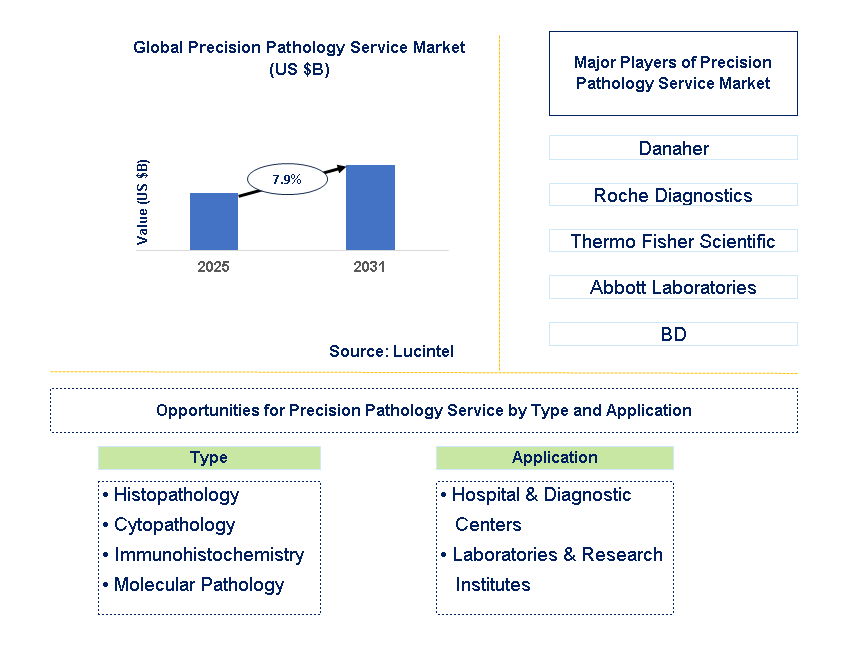
Key data points: The growth forecast = 7.9% annually for the next 7 years. Scroll below to get more insights. This market report covers Trends, opportunity and forecast in precision pathology service market to 2031 by type (histopathology, cytopathology, immunohistochemistry, and molecular pathology), application (hospital & diagnostic centers and laboratories & research institutes), and region (North America, Europe, Asia Pacific, and the Rest of the World)
We'll send your sample report shortly.
• Next-Generation Sequencing in Molecular Diagnostics: NGS technology is revolutionizing molecular diagnostics, offering detailed genetic insights into diseases, particularly cancer. NGS enables pathologists to analyze the genetic makeup of tumors, leading to more accurate diagnoses and personalized treatment plans. This technology is crucial for identifying mutations that may be targeted by specific therapies, enhancing the effectiveness of treatments. As the cost of NGS continues to decrease, its widespread adoption in precision pathology services is expected to grow, making it an indispensable tool in clinical and research applications.
• Digital Pathology and Telepathology: Digital pathology, which involves converting traditional slides into high-resolution digital images, is becoming an essential part of precision pathology services. This technology enables pathologists to collaborate remotely, streamlining workflows and improving access to expert opinions. Telepathology, a subset of digital pathology, is also gaining traction, particularly in underserved or remote areas. This trend is enabling faster diagnosis and improving the accuracy of pathology results, particularly for complex or rare diseases, by facilitating consultations with specialists around the globe.
• Personalized Cancer Care: Personalized cancer care is a major driver of growth in the precision pathology service market. Pathology services are increasingly focusing on tumor profiling and molecular diagnostics to tailor treatment plans based on the genetic and molecular characteristics of individual patients’ tumors. This trend has led to the development of precision oncology, which aims to deliver targeted therapies that improve treatment efficacy and minimize side effects. With growing cancer rates globally, the demand for personalized cancer diagnostics and treatments is likely to expand rapidly.
• Focus on Early Disease Detection: There is a growing focus on the early detection of diseases, especially cancer, through precision pathology services. Early diagnosis allows for more effective treatment and better patient outcomes. Advances in molecular biomarkers and liquid biopsy are making it possible to detect diseases before symptoms appear, which can significantly improve prognosis. As healthcare providers and researchers prioritize preventive care and early detection, the precision pathology service market is expected to see significant growth in applications related to early disease screening. Emerging trends such as AI integration, digital pathology, genomic testing, real-time data analytics, and the global expansion of personalized medicine are reshaping the precision pathology service market. These trends are driving the development of more efficient, accurate, and personalized diagnostic services, improving patient outcomes across the world." src="Emerging Trends in the Precision Pathology Service Market" style="height: auto;width: auto;" title="The precision pathology service market is being shaped by emerging trends that focus on enhancing diagnostic accuracy, optimizing treatment regimens, and reducing healthcare costs. Technological innovations, such as AI and next-generation sequencing (NGS), are key to these trends, which are transforming pathology services from a traditional field into a more data-driven, personalized healthcare service. Below are the top emerging trends reshaping this market.
• Integration of Artificial Intelligence (AI) in Pathology: AI is being integrated into precision pathology services to improve diagnostic accuracy, speed, and efficiency. AI algorithms can analyze large datasets from tissue samples, identifying patterns that might be missed by human pathologists. The growing adoption of AI in digital pathology allows for better detection of cancerous cells, more accurate tissue analysis, and improved patient outcomes. This trend is particularly transformative in oncology, where AI-driven pathology can enable personalized cancer treatments based on genetic and molecular profiles.
• Next-Generation Sequencing in Molecular Diagnostics: NGS technology is revolutionizing molecular diagnostics, offering detailed genetic insights into diseases, particularly cancer. NGS enables pathologists to analyze the genetic makeup of tumors, leading to more accurate diagnoses and personalized treatment plans. This technology is crucial for identifying mutations that may be targeted by specific therapies, enhancing the effectiveness of treatments. As the cost of NGS continues to decrease, its widespread adoption in precision pathology services is expected to grow, making it an indispensable tool in clinical and research applications.
• Digital Pathology and Telepathology: Digital pathology, which involves converting traditional slides into high-resolution digital images, is becoming an essential part of precision pathology services. This technology enables pathologists to collaborate remotely, streamlining workflows and improving access to expert opinions. Telepathology, a subset of digital pathology, is also gaining traction, particularly in underserved or remote areas. This trend is enabling faster diagnosis and improving the accuracy of pathology results, particularly for complex or rare diseases, by facilitating consultations with specialists around the globe.
• Personalized Cancer Care: Personalized cancer care is a major driver of growth in the precision pathology service market. Pathology services are increasingly focusing on tumor profiling and molecular diagnostics to tailor treatment plans based on the genetic and molecular characteristics of individual patients’ tumors. This trend has led to the development of precision oncology, which aims to deliver targeted therapies that improve treatment efficacy and minimize side effects. With growing cancer rates globally, the demand for personalized cancer diagnostics and treatments is likely to expand rapidly.
• Focus on Early Disease Detection: There is a growing focus on the early detection of diseases, especially cancer, through precision pathology services. Early diagnosis allows for more effective treatment and better patient outcomes. Advances in molecular biomarkers and liquid biopsy are making it possible to detect diseases before symptoms appear, which can significantly improve prognosis. As healthcare providers and researchers prioritize preventive care and early detection, the precision pathology service market is expected to see significant growth in applications related to early disease screening. Emerging trends such as AI integration, digital pathology, genomic testing, real-time data analytics, and the global expansion of personalized medicine are reshaping the precision pathology service market. These trends are driving the development of more efficient, accurate, and personalized diagnostic services, improving patient outcomes across the world." />
• AI-Powered Pathology Solutions: AI-powered pathology services have gained significant traction in the market. Companies are incorporating AI algorithms to analyze pathological images and data more efficiently. AI tools help identify key biomarkers and tissue structures, which can improve the accuracy of diagnoses and the speed at which they are delivered. This technology is particularly important in fields like oncology, where early and accurate detection of tumors is critical. By reducing human error, AI-powered solutions are transforming pathology from a traditional field into a high-tech, data-driven service.
• Advancements in Next-Generation Sequencing (NGS): NGS technology has seen significant advancements, especially in the areas of cost reduction and speed. The improved accessibility of NGS is making it a standard tool in precision pathology services, enabling more detailed and comprehensive genetic analysis of diseases. This has paved the way for better understanding of complex diseases like cancer, allowing for more personalized treatment plans. As NGS continues to evolve, it is expected to become a routine diagnostic tool in clinical settings, with its application expanding into various fields of precision medicine.
• Digital and Telepathology Expansion: Digital pathology and telepathology are rapidly expanding, enabling pathologists to digitize traditional glass slides into high-resolution images that can be shared globally. This shift is improving collaboration among pathologists, speeding up diagnoses, and increasing access to specialized expertise. In remote or underserved areas, telepathology is playing a crucial role in providing expert pathology services. These advancements in digital technology have not only enhanced the accuracy and efficiency of pathology services but also democratized access to high-quality diagnostic care.
• Rise of Liquid Biopsy in Early Disease Detection: Liquid biopsy, which involves analyzing blood or other bodily fluids for genetic material, has emerged as a promising tool for early disease detection, particularly in cancer. It offers a non-invasive, quicker alternative to traditional biopsies. Precision pathology services are increasingly incorporating liquid biopsy techniques to detect cancer at early stages when treatment is more effective. This non-invasive approach is expected to revolutionize cancer diagnostics and increase the adoption of precision pathology services for early detection.
• Government Investments in Precision Medicine: Governments around the world, particularly in the U.S., China, and Germany, are making substantial investments in precision medicine and diagnostics. These investments are helping to drive innovation in precision pathology services, funding research into new diagnostic techniques, and promoting the development of personalized treatments. Government-backed initiatives are accelerating the adoption of advanced diagnostic technologies, including genomic testing, AI, and digital pathology, ensuring that precision pathology services continue to improve and expand their reach globally. Recent developments in the precision pathology service market, including the integration of AI, digital pathology, molecular profiling, and telemedicine, are transforming the landscape of diagnostics. These innovations are improving the accuracy, efficiency, and accessibility of pathology services, particularly in cancer care, and are driving the shift toward more personalized treatment approaches.
• Oncology: Oncology is one of the largest growth opportunities for precision pathology services. The increasing prevalence of cancer globally and the need for personalized treatment regimens have led to a growing demand for tumor profiling, genetic testing, and molecular diagnostics. Precision pathology services that provide insights into tumor characteristics, mutations, and response to therapies are essential for personalized cancer care, representing a critical opportunity for growth.
• Genetics and Rare Diseases: Precision pathology is becoming increasingly important in the diagnosis and management of rare genetic disorders. The rise of genetic testing, alongside the availability of targeted therapies, creates an opportunity for precision pathology services to play a key role in diagnosing and treating rare diseases. This market is expected to grow significantly as genetic testing becomes more accessible and effective.
• Cardiology: Precision pathology services are expanding into cardiology, where genetic testing and molecular profiling are used to understand cardiovascular diseases better. With the rise in heart disease worldwide, precision pathology can help identify genetic markers that predict heart disease risk and improve treatment strategies, driving growth in the cardiology market.
• Neurology: Precision pathology services are becoming increasingly important in neurology, particularly for neurodegenerative diseases such as Alzheimer’s and Parkinson’s. With advancements in biomarkers and molecular diagnostics, precision pathology is helping to identify early signs of these conditions and personalize treatment plans. As these diseases become more prevalent due to aging populations, the demand for specialized pathology services is expected to grow.
• Veterinary Medicine: In veterinary medicine, precision pathology services are being applied to diagnose and treat diseases in animals, including cancer and genetic disorders. As pet ownership increases and demand for specialized veterinary care grows, precision pathology services are becoming a crucial tool for veterinarians to deliver personalized treatment for pets, creating a new and expanding market opportunity. The precision pathology service market presents numerous strategic growth opportunities across oncology, genetic testing, AI integration, telepathology, and infectious disease diagnostics. These opportunities are driven by advancements in technology and the growing demand for personalized medicine. Companies that capitalize on these trends will be well-positioned to grow their market share and enhance patient care outcomes.
• Danaher
• Roche Diagnostics
• Thermo Fisher Scientific
• Abbott Laboratories
• BD
• Siemens Healthineers
• Philips
• Phc Holdings
• Agilent
• Sakura Finetek
• Histopathology
• Cytopathology
• Immunohistochemistry
• Molecular Pathology
• Hospital & Diagnostic Centers
• Laboratories & Research Institutes
• North America
• Europe
• Asia Pacific
• The Rest of the World
• United States: The United States continues to lead the precision pathology service market, driven by advancements in genomics, AI integration, and a growing demand for personalized treatment. Major players are increasingly adopting artificial intelligence (AI) to enhance diagnostic accuracy and reduce turnaround times for pathology reports. Precision oncology is a key area of growth, with services focusing on tumor profiling and genetic testing to guide personalized cancer treatments. The market is further supported by increasing investments in molecular diagnostics and advanced imaging technologies, aimed at improving the precision and efficiency of pathology services across various healthcare settings.
• China: China’s precision pathology service market has seen rapid growth in recent years, fueled by government initiatives to improve healthcare infrastructure and expand access to advanced diagnostic tools. With rising cases of chronic diseases such as cancer, there is a growing demand for precision pathology services, particularly in oncology. Chinese companies are increasingly adopting AI-powered pathology tools to enhance diagnostic capabilities, and the government is encouraging investments in precision medicine. Additionally, collaborations between local hospitals and global tech companies have contributed to the development of more sophisticated pathology services, including genetic testing and molecular profiling.
• Germany: Germany is a major player in the European precision pathology service market, with a focus on integrating AI, next-generation sequencing (NGS), and digital pathology into clinical settings. The demand for precision medicine, particularly in cancer care, has been on the rise, with precision pathology services being used to better tailor treatments based on individual patient profiles. German healthcare systems are increasingly investing in digital platforms and AI solutions that enable pathologists to conduct more accurate diagnoses and improve patient outcomes. This is leading to a greater shift towards personalized, data-driven healthcare solutions across the country.
• India: India’s precision pathology service market is growing rapidly, driven by the rising prevalence of lifestyle diseases, cancer, and a burgeoning demand for high-quality diagnostics. With increasing access to affordable genetic testing and molecular profiling, there is a shift towards precision diagnostics in India, particularly in major urban centers. Additionally, India is witnessing a rise in collaborations between local healthcare providers and international players, which is accelerating the adoption of advanced pathology technologies. The government’s focus on improving healthcare access and quality through the National Health Mission is also boosting the demand for precision pathology services in the country.
• Japan: Japan is investing heavily in precision pathology services, with a strong focus on integrating cutting-edge technologies like AI, digital pathology, and molecular diagnostics. The country has a well-established healthcare system, and the aging population is driving the demand for accurate and early disease detection, particularly in cancer. Japanese healthcare institutions are increasingly turning to advanced diagnostic tools, including precision pathology services, to improve clinical decision-making. Additionally, Japan’s robust research infrastructure supports the integration of AI and next-generation sequencing (NGS) into pathology, enhancing the country’s capacity to deliver personalized healthcare solutions.


• Danaher
• Roche Diagnostics
• Thermo Fisher Scientific
• Abbott Laboratories
• BD
• Siemens Healthineers
• Philips
• Phc Holdings
• Agilent
• Sakura Finetek Q5. Which precision pathology service market segment will be the largest in future? Answer: Lucintel forecasts that histopathology is expected to witness the highest growth over the forecast period due to given the high volume of tissue biopsies performed for cancer and other diseases. Q6. In precision pathology service market, which region is expected to be the largest in next 5 years? Answer: North America will remain the largest region over the forecast period due to hospitals, diagnostic centers, and research institutes in the u.s. frequently utilize. Q7. Do we receive customization in this report? Answer: Yes, Lucintel provides 10% customization without any additional cost.


Choose a license that fits your team. Instant PDF delivery.
Prices exclude taxes. Instant delivery. Custom licensing available on request.
Market Report · July 31, 2026
Market Report · July 31, 2026
Market Report · July 31, 2026
Trusted partner for strategic intelligence and business growth


Receive a complimentary market analysis tailored to your industry. Our analysts will identify key growth opportunities and competitive dynamics specific to your business.

Market size, growth rate, and key trend analysis for your specific sector.

Top competitor positioning and market share analysis.

Strategic recommendations backed by data-driven insights.
Get curated market intelligence and competitive moves straight to your inbox.
By subscribing, you agree to receive our monthly insights. Unsubscribe anytime.
Receive a complimentary market analysis tailored to your industry. Our analysts will identify key growth opportunities and competitive dynamics specific to your business.
Market size, growth rate, and key trend analysis for your specific sector.
Top competitor positioning and market share analysis.
Strategic recommendations backed by data-driven insights.
Get curated market intelligence, emerging trends, and competitive moves straight to your inbox each month.
By subscribing, you agree to receive our monthly insights. Unsubscribe anytime.
We'll send your sample report shortly.