
Market Report · July 15, 2026

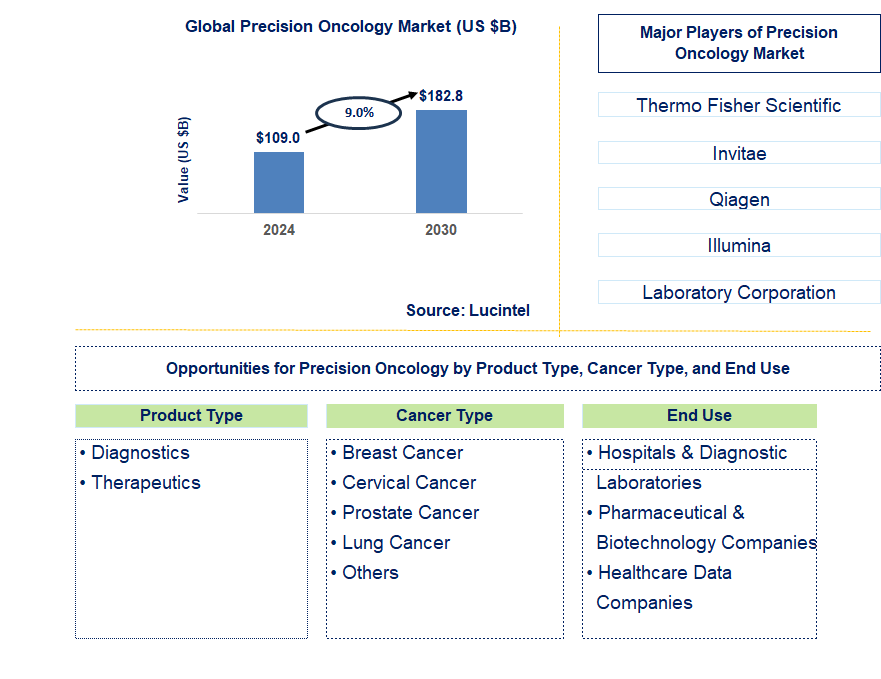
Key data points: The market size in 2030 = $182.8 billion, growth forecast = 9.0% annually next 6 years. Scroll below to get more insights. This market report covers trends, opportunities, and forecast in the global precision oncology market to 2030 by product type (diagnostics and therapeutics), cancer type (breast cancer, cervical cancer, prostate cancer, lung cancer, and others), end use (hospitals & diagnostic laboratories, pharmaceutical & biotechnology companies, and healthcare data companies), and region (North America, Europe, Asia Pacific, and the Rest of the World)
We'll send your sample report shortly.
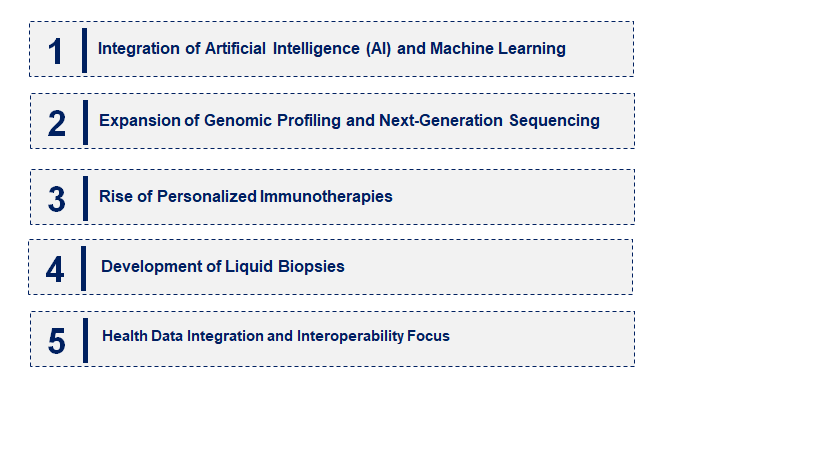
• Integration of Artificial Intelligence (AI) and Machine Learning: Precision oncology is gradually incorporating AI and machine learning techniques that enhance the diagnosis’s accuracy as well as treatment planning process. AI algorithms are capable of interrogating large volumes of information from sequencing, medical records, or imaging studies; they can then identify patterns associated with patient outcomes predictions. Consequently, identification of actionable mutations becomes more precise hence personalizing patient recommendations on best treatments according to their genotypes/phenotypes improves their stratification depending on therapeutic options available for them on any occasion within their diseases’ progression. In parallel, AI-driven tools have enabled optimization of clinical trial design processes as well as bettering development procedures for drugs which has increased focus on specifics during therapeutically successful targeted therapies.
• Expansion of Genomic Profiling and Next-Generation Sequencing (NGS): Genomic profiling and NGS are increasingly employed to provide comprehensive insights into tumor genetics. By sequencing a range of genetic mutations, this evolution paves way for personalized therapy hence more targeted treatment approaches. Technological advances in NGS have reduced both cost per sample as well as turnaround time since that has made genomic analysis feasible at very large number of medical centers. More applications for NGS have prompted the development of new-targeted therapies as well as companion diagnostics designed specifically for individual genetic profiles.
• Rise of Personalized Immunotherapies: Precision oncology is currently marked by the rise in customized immunotherapy. These utilise immune cells in the patient’s body to fight cancer based on its unique characteristics. As scientists understand better which antigens are associated with tumors, they will be able to develop more effective and person-specific immunotherapies. In vivo responses against diverse mutants evolving to meet precision requirements include personalized vaccines, adoptive cell therapies, checkpoint inhibitors etc., all considered within specific genomics/molecular contexts that enhance therapeutic relevance while minimizing adverse events.
• Development of Liquid Biopsies: Liquid biopsies are emerging as strong trends within precision oncology since they provide a non-invasive approach for cancer detection or monitoring purposes. Liquid biopsies can be used to monitor tumour dynamics, genetic alterations through circulating tumor DNA (ctDNA) among other biomarkers present in blood samples obtained from patients suffering from cancer without having to conduct tissue biopsy. Cancer can thus be detected early; minimum residual disease traced during chemotherapy and efficacy treatment evaluated through such tests whereby liquid biopsy development process allows tailored care programs based on how different patients respond towards same therapy regimens.
• Health Data Integration and Interoperability Focus: The convergence of health data using various precision oncology strategies is one of the five important trends. The comprehensive profiling of patients from genomics, EHRs, and other sources to create a unified dataset is being attempted. This information integration enhances precise diagnosis, personalized treatment planning, outcome tracking. In oncology; this enhances evidence-based decision-making while also contributing to large-scale research in support of treatment protocols improvements. The precision oncology market is evolving with emergence trends like AI & machine learning integration, genomic profiling expansion, personalized immunotherapies growth, liquid biopsy development & health data focus. This illustrates steps forward in technology and targeted medicine that lead to innovation as well as better patient outcomes. Stakeholders who take advantage of these developments are therefore more likely to drive the progress of precision oncology in line with changing needs for cancer patients.
• Improvements in Next-Generation Sequencing (NGS): There have been notable advancements made with next-generation sequencing (NGS) including enhanced speed accuracy and cost effectiveness. This type of growth now allows full genomic profiling across tumors allowing for identification of a broad range of genetic mutations or alterations improvement has allowed for more precise therapy choices for patients [1]. It was once regarded as science fiction but now is the reality of targeted therapy that aids in patient stratification, development of targeted therapy and even better outcomes. The significance of NGS cannot be overemphasized for its role in moving precision oncology forward since it enhances diagnostic ability while offering therapeutic options.
• Emergence of Targeted Therapies: An example of major progressions in precision oncology is the introduction of targeted therapies. In order to attack genetic mutations or alterations found specifically on tumors, these drugs have been formulated so that they are more effective and non-toxic than other options. Recent developments include approval of new medicines which target specific cancers and identification of novel “druggable” targets [6]. As indicated by recent studies, patients with various types of cancer have improved chances for survival as a result of targeted therapies making them a central pillar in modern precision oncology.
• Progress in Personalized Immunotherapy: There has been advancement towards personalized immunotherapy involving treatment targeting individual tumor profiles and immune responses. One such innovation is the personalization cancer vaccines, adoptive cell therapies (e.g., CAR-T cell therapy), and checkpoint inhibitors. These all function by increasing immune system’s recognition to cancer cells through exploiting specific genetic or molecular features on the tumor [7]. Previously hard-to-treat malignancies are now being treated with personalized immunotherapy offering hope for patients who had been deemed untreatable.
• Growth of Liquid Biopsies: They have become an important element of precision oncology, creating a non-invasive way for cancer diagnosis, monitoring and also assessment of therapy progress. In the form of analyzing blood samples to detect circulating tumor DNA (ctDNA) or other biomarkers, it provides real-time information about tumor dynamics and genetic changes. The development has resulted in higher sensitivity and specificity thus making liquid biopsies crucial for early cancer detection, minimal residual disease tracking as well as selection of treatment modalities.
• Integration of Artificial Intelligence (AI): Diagnostic accuracy and treatment planning are being improved through integration of artificial intelligence (AI) into precision oncology. Large data sets derived from genome sequencing, imaging studies, and electronic health records are analyzed by AI algorithms. This application assists in identifying actionable mutations, predicting patient outcomes and optimizing treatment strategies among others. AI-based solutions are accelerating drug development processes as well as making clinical trials more efficient thus contributing significantly in enhancing precision oncology techniques on a global scale. Precision oncology market has seen several transformations which include NGS improvements, targeted therapies introduction, personalized immunotherapy options availability, incursion by liquid biopsies and integration with AI technologies amongst others. These innovations have improved diagnostic capabilities and therapeutic interventions thereby leading to the provision of more personalised care approaches that give better results. Such developments will push for further advancements within this field hence improving the outcomes for patients under precision oncology care.
• Genomic profiling: Precision Oncology has a growth opportunity in genomic profiling, allowing for comprehensive analysis of tumor genetic profile. developments in sequencing technologies and bioinformatics are increasing the precision and speed at which genomic profiling is carried out. Genomic profiling identifies specific genetic mutations or alterations that aid in the development of targeted therapies. This opportunity aligns with the rising demand for more precise cancer care and individualized medicine thus making it an excellent area to invest and develop in.
• Targeted therapies: Another growth opportunity lies in targeted therapy development and commercialization. Designer drugs for selective targeting of specific genetic mutations or molecular pathways involved in carcinogenesis. The latest advances in drug discovery and development have led to the emergence of new types of targeted therapy having higher efficiency rates coupled with decreased side effects. Investing in researches related to targeted therapy increases opportunities for treatment discoveries hence improving patients’ lives when dealing with precision oncology diseases.
• Immunotherapy: There are prospects to be exploited within immunotherapy especially on personalized as well as targeted approaches being used currently. These breakthroughs comprise tailored checkpoint inhibitors, personalized cancer vaccines and adoptive cell treatments depending on individual tumor profiles as well as immune responses. Thus, there is room for developing new drugs, enhancing current ones or expanding their use across different tumors under immunotherapy field advancement .The above mentioned is a perfect example of how this domain prioritizes bringing the power of immune system against malignancy
• It is a fact that liquid biopsy development represents a remarkable chance for growth in precision oncology. Biomarkers analysis of blood samples eliminates the need of invasive methods in diagnosing and monitoring cancer conditions. The increased sensitivity and accuracy of liquid biopsies have made them more suitable for early cancer screening, treatment follow-up and individualized therapy planning. Therefore, investing in technologies and applications of liquid biopsy would provide valuable insights about tumor dynamics and improve management of patients within the scope of precision oncology.
• Health Data Integration: There is a tremendous opportunity for growth by integrating and analyzing health data from different sources such as genomic sequencing, electronic medical records, imaging studies among others. Efforts to harmonize and regularize healthcare information allows better diagnosis, personalized therapy designs, as well as outcome monitoring. It has been facilitated by collaborative platforms and data sharing initiatives that are supporting research at large scale levels with evidence-based decisions making. By investing in health data integration technologies as well as solutions may help advance precision oncology which will lead to improved patient outcomes. The precision oncology market growth oppportunities involve genomic profiling, targeted therapies, immunotherapy, liquid biopsies and health data integration strategies. By focusing on these areas stakeholders can drive innovation increase market presence taking care of emerging challenges posed by cancer. Attempting to capitalize on these opportunities is vital for advancing precision medicine while improving patient outcomes.
• Thermo Fisher Scientific
• Invitae
• Qiagen
• Illumina
• Laboratory Corporation
• Exact Sciences
• Rain Oncology
• Strata Oncology
• Xilis
• Variantyx
• Diagnostics
• Therapeutics
• Breast Cancer
• Cervical Cancer
• Prostate Cancer
• Lung Cancer
• Others
• Hospitals & Diagnostic Laboratories
• Pharmaceutical & Biotechnology Companies
• Healthcare Data Companies
• North America
• Europe
• Asia Pacific
• The Rest of the World
• United States: The United States has been experiencing substantial progress in terms of precision oncology. This is most evident through its genomics programs as well as the development of targeted therapy initiatives. Recent developments such as Next-Generation Sequencing (NGS) used for comprehensive profiling of tumors have allowed for better identification of actionable mutations. FDA approval for a number of new targeted therapies and companion diagnostics that match treatments with particular gene alterations found among cancer patients adds weight on this point Furthermore; there has been an increasing amount of attention paid to incorporating artificial intelligence (AI) and machine learning techniques into oncological practice to enhance accuracy in diagnosis and treatment selection. Personalized vaccines and immunotherapies are also being pioneered by US researchers.
• China: China has made remarkable strides in precision oncology through considerable investments in research and development (R&D). Some examples include expansion of genomic databases plus adoption advanced sequencing technologies which have facilitated large-scale studies on cancer in the country. For instance, Chinese firms are now heavily involved in developing targeted therapies as well as immunotherapies specifically suited for the Asian genetic makeup . The integration of precision oncology into public health systems thereby enhancing access to sophisticated diagnostics and treatment modalities for cancer is also underway across China . Such collaborations between Chinese academic institutions or biotech companies worldwide are expediting refinement and release of precision oncology solutions.
• Germany: In Germany has been the leader in advancing precision oncology with substantial progress in genomic research and personalized medicine. The implementation of comprehensive cancer genome sequencing in clinical practice is a recent example, which provides detailed individual tumor profiles. In addition to that, German scientists are focusing on developing targeted therapies as well as personalized treatment regimens guided by genetic data. Data exchange and integration are also specifically attuned to Germany where it was at the forefront of efforts to create large multi-national cancer research databases. This includes new drug delivery approaches and combination therapies being developed by German biotech companies that improve the accuracy of cancer care.
• India: The precision oncology market in India has witnessed increased focus on genomics and personalized medicine aimed at improving cancer care. There have been a number of notable developments such as the establishment of genomic sequencing facilities plus introduction targeted therapies in key cancer centers across India. For example, Indian researchers are studying common mutations that exist within their population with the purpose of finding remedies for them. As part of its public health system development initiatives it is striving to make sophisticated diagnostics and treatments available for wider population . International relationships between Indian institutions and partners have contributed significantly to faster growth in research work on precision oncology practices.
• Japan: Japan is making great strides in precision oncology, particularly with advances in genetic medicine and precision therapy. These include recent developments such as the integration of comprehensive genomic profiling into clinical practice and the approach to design novel targeted therapies informed by genetic and epigenetic mutations. Japanese scientists are also looking at ways through which precision oncology can be applied in early detection of cancers as well as personalized treatment plans. Innovative drug delivery systems and precise immunotherapies are highly focused areas for development. Japan’s partnership with global research networks and its investment in advanced cancer research have led to significant breakthroughs in precision oncology.
• Thermo Fisher Scientific
• Invitae
• Qiagen
• Illumina
• Laboratory Corporation
• Exact Sciences
• Rain Oncology
• Strata Oncology
• Xilis
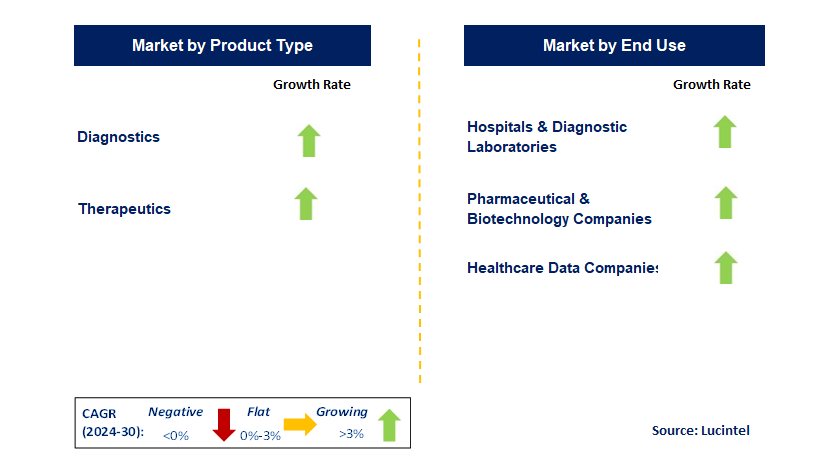
• Variantyx Q6. Which precision oncology market segment will be the largest in future? Answer: Lucintel forecasts that diagnostics is expected to witness highest growth over the forecast period due to rising demand of early intervention and treatment for cancer, improved diagnostic imaging and testing techniques, and demand of personalised medicines based on daignosis results. Q7. In precision oncology market, which region is expected to be the largest in next 5 years? Answer: APAC is expected to witness highest growth over the forecast period due to surge in aging population, rising investment in the healthcare infrastructure, and growing demand of personalized medicine in the region. Q.8 Do we receive customization in this report? Answer: Yes, Lucintel provides 10% customization without any additional cost.


Choose a license that fits your team. Instant PDF delivery.
Prices exclude taxes. Instant delivery. Custom licensing available on request.
Market Report · July 15, 2026
Market Report · May 18, 2026
Market Report · May 18, 2026
Trusted partner for strategic intelligence and business growth


Receive a complimentary market analysis tailored to your industry. Our analysts will identify key growth opportunities and competitive dynamics specific to your business.

Market size, growth rate, and key trend analysis for your specific sector.

Top competitor positioning and market share analysis.

Strategic recommendations backed by data-driven insights.
Get curated market intelligence and competitive moves straight to your inbox.
By subscribing, you agree to receive our monthly insights. Unsubscribe anytime.
Receive a complimentary market analysis tailored to your industry. Our analysts will identify key growth opportunities and competitive dynamics specific to your business.
Market size, growth rate, and key trend analysis for your specific sector.
Top competitor positioning and market share analysis.
Strategic recommendations backed by data-driven insights.
Get curated market intelligence, emerging trends, and competitive moves straight to your inbox each month.
By subscribing, you agree to receive our monthly insights. Unsubscribe anytime.
We'll send your sample report shortly.