
Report Feature
PPR Heat Sealing Market Trends and Forecast
The technologies in the PPR heat sealing market have undergone significant changes in recent years, with a shift from traditional methods like high frequency sealing and hot plate sealing to more advanced techniques such as Induction Heating and infrared heat sealing. These newer technologies offer enhanced precision, efficiency, and energy savings compared to older methods. Induction Heating, for instance, provides a faster, more uniform heat application, making it ideal for high-throughput production in industrial applications. Infrared heat sealing, on the other hand, offers better control over heat distribution and is increasingly being adopted in applications requiring sensitive material handling. As industries demand more cost-effective and energy-efficient solutions, the market has seen a technological shift towards systems that integrate advanced heating methods, automation, and real-time monitoring, contributing to higher production output and reduced operational costs.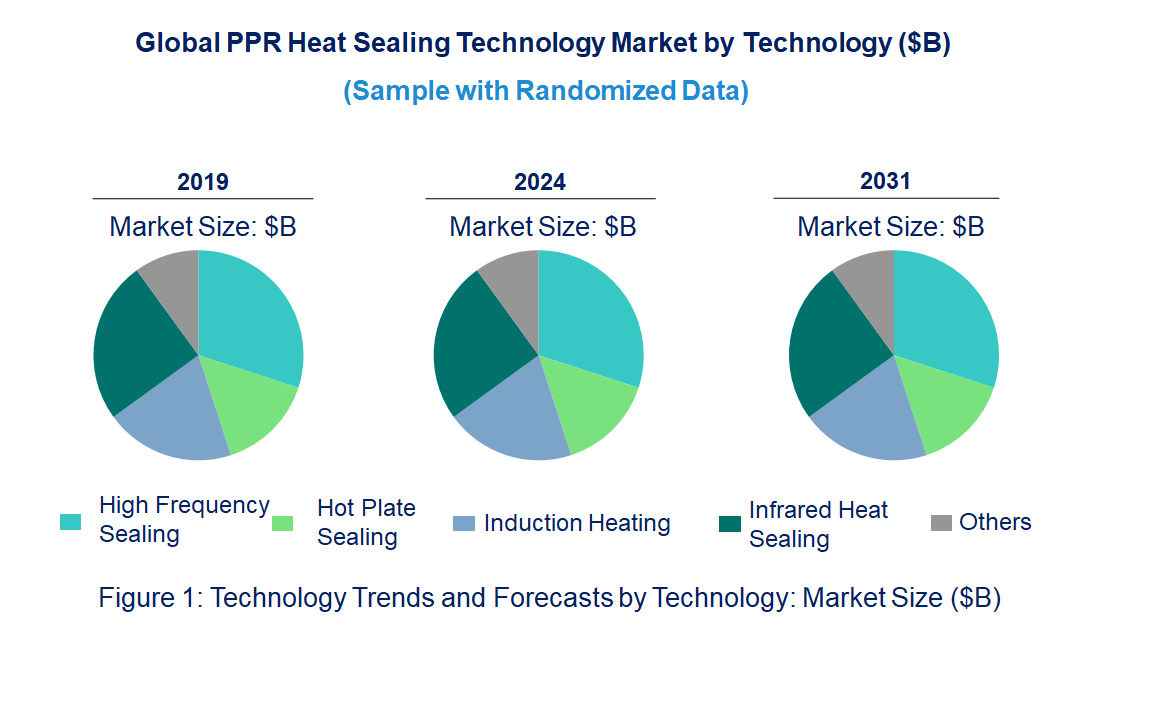
Emerging Trends in the PPR Heat Sealing Market
The PPR heat sealing market is evolving rapidly, driven by advancements in technology and changing industry demands. Here are five emerging trends:• Automation Integration: Increased demand for automated systems that ensure consistent sealing quality, reduce human error, and improve production efficiency.
• Energy Efficiency: Growing adoption of energy-efficient sealing technologies like Induction Heating and Infrared Sealing, which reduce power consumption and lower operating costs.
• Customization for Specific Applications: Manufacturers are developing customized sealing solutions tailored to specific applications in industries like packaging, automotive, and construction.
• Smart Sealing Systems: Integration of IoT and smart technologies to monitor and control sealing parameters in real-time, enhancing product consistency and minimizing defects.
• Sustainability Focus: Rising demand for eco-friendly heat sealing solutions, with an emphasis on reducing waste and utilizing sustainable materials in the sealing process. These trends are reshaping the PPR heat sealing market by driving innovations that improve efficiency, customization, and sustainability, while meeting the evolving needs of industries like industrial, commercial, and packaging.
PPR Heat Sealing Market : Industry Potential, Technological Development, and Compliance Considerations
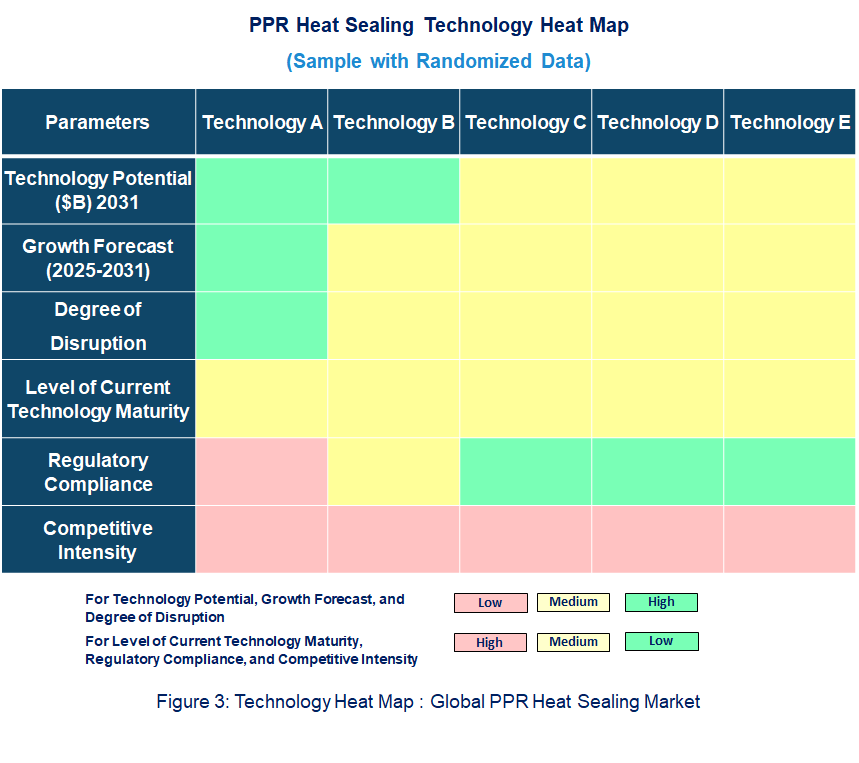
The PPR heat sealing market is witnessing rapid advancements in sealing technologies, driven by the increasing demand for efficiency, automation, and sustainability across industrial and commercial applications. These technologies include High Frequency Sealing, Hot Plate Sealing, Induction Heating, and Infrared Heat Sealing.• Technology Potential: The potential of PPR heat sealing technologies lies in their ability to deliver energy-efficient, precise, and scalable solutions for a wide range of applications. For instance, Induction Heating offers faster heating times and more uniform energy distribution, while Infrared Heat Sealing allows for precise control, making it ideal for sensitive materials. These technologies hold promise in industries like packaging, automotive, and construction, where speed and reliability are critical.
• Degree of Disruption: Technologies like Induction Heating and Infrared Sealing are highly disruptive, offering better performance and lower energy consumption compared to traditional methods like Hot Plate Sealing. This is transforming production lines by enabling faster and more flexible operations.
• Technology Maturity: While many of these technologies are well-established in certain industries, they are still evolving to meet the growing demand for sustainability and automation. The maturity of Induction Heating and Infrared Sealing, in particular, has increased, but integration with legacy systems remains a challenge.
• Regulatory Compliance: With industries like packaging and food manufacturing subject to strict safety standards, PPR heat sealing technologies must comply with regulatory requirements concerning material safety, energy use, and environmental impact. In conclusion, PPR heat sealing technologies are evolving rapidly, offering significant potential for increased efficiency and sustainability. However, ongoing advancements and regulatory alignment are key to their continued adoption and success.
Recent Technological development in PPR Heat Sealing Market by Key Players
In the PPR heat sealing market, key players like Chengkun Electric, Hangzhou Shengde Machinery, Eewa, Qingdao Xinruide Machinery Equipment, and Cosmos Electronic Machine are driving innovation and expanding their product offerings.• Chengkun Electric has introduced advanced Induction Heating systems, enhancing production efficiency and offering customizable features for different industrial applications, positioning itself as a leader in energy-efficient sealing technologies.
• Hangzhou Shengde Machinery has focused on upgrading its Hot Plate Sealing systems, incorporating automation and smart controls to improve consistency and reduce human error, meeting growing demand from commercial sectors.
• Eewa has expanded its product line with Infrared Heat Sealing machines, offering better heat control and energy savings, particularly in industries like packaging where precision is essential.
• Qingdao Xinruide Machinery Equipment has introduced integrated systems combining High Frequency Sealing with automation, allowing for more streamlined operations and better quality control in industrial applications.
• Cosmos Electronic Machine has enhanced its offerings by focusing on the development of eco-friendly and sustainable sealing solutions, addressing the growing demand for green technologies in manufacturing processes. These developments highlight the increasing focus on energy efficiency, automation, and sustainability within the PPR Heat Sealing Market, as key players seek to meet evolving industry needs.
PPR Heat Sealing Market Driver and Challenges
The PPR heat sealing market is witnessing significant growth, driven by several key factors, but also faces some challenges: The factors responsible for driving the global PPR heat sealing market are:• Increasing Demand for Automation: With a rise in demand for high-efficiency manufacturing, automation has become essential in the PPR heat sealing process, ensuring uniformity and reducing human error in sealing applications.
• Rising Energy Costs: The growing need for energy-efficient sealing technologies like Induction Heating and Infrared Sealing is driven by the need to reduce operational costs, especially in energy-intensive sectors.
• Customization for Specific Industries: Tailored heat sealing solutions for diverse applications, such as in packaging and automotive industries, are driving the adoption of advanced sealing technologies.
• Sustainability Focus: The demand for sustainable, eco-friendly sealing methods is growing, as industries look for ways to reduce environmental impact through energy-efficient and recyclable materials. Challenges facing the global PPR heat sealing market are:
• High Initial Investment: The adoption of advanced technologies like Induction Heating and Infrared Sealing often requires significant upfront investment, which may be a barrier for small and medium enterprises.
• Complexity in Technology Integration: Integrating new sealing technologies with existing production lines can be complex and may require specialized expertise, which could limit adoption for some companies.
• Regulatory Compliance: Meeting stringent regulatory standards, especially in industries like food packaging, requires PPR heat sealing systems to adhere to specific safety and material standards, adding an extra layer of complexity to technology adoption. In conclusion, while the PPR heat sealing market benefits from growing demand for automation, energy efficiency, and sustainability, challenges such as high costs, integration complexity, and regulatory hurdles remain significant factors impacting market growth. However, as technology continues to evolve, these challenges are likely to be addressed through innovation and greater market adoption.
List of PPR Heat Sealing Companies
Companies in the market compete on the basis of product quality offered. Major players in this market focus on expanding their manufacturing facilities, R&D investments, infrastructural development, and leverage integration opportunities across the value chain. With these strategies ppr heat sealing companies cater increasing demand, ensure competitive effectiveness, develop innovative products & technologies, reduce production costs, and expand their customer base. Some of the ppr heat sealing companies profiled in this report includes.• Chengkun Electric
• Hangzhou Shengde Machinery
• Eewa
• Qingdao Xinruide Machinery Equipment
• Cosmos Electronic Machine
PPR Heat Sealing Market by Technology
• Technology Readiness by Technology Type: In the PPR heat sealing market, the technology readiness varies significantly across different sealing methods. High frequency sealing is a well-established and mature technology, commonly used for industrial and commercial applications, especially where high precision and reliability are required. It has a strong foothold due to its proven efficiency and effectiveness in sealing various materials. However, Induction Heating is emerging as a highly competitive and ready technology, offering faster processing times and greater energy efficiency, making it ideal for high-throughput manufacturing. Infrared heat sealing is another advanced technology that is gaining traction due to its ability to provide precise and uniform temperature control, which is critical in sealing delicate materials without causing damage. These technologies have already been integrated into several industrial applications and are evolving rapidly to meet the growing demand for energy-efficient, high-performance solutions. Meanwhile, hot plate sealing remains relevant, but it faces increased competition as newer technologies offer faster and more environmentally friendly alternatives. The readiness of these technologies in PPR heat sealing is shaped by the industry’s demand for efficiency, cost-effectiveness, and sustainability, with newer technologies like Induction heating and Infrared heat sealing gaining a competitive edge.
• Competitive Intensity and Regulatory Compliance: The PPR heat sealing market is highly competitive, with various sealing technologies such as high frequency sealing, hot plate sealing, induction heating, and infrared heat sealing vying for market share. Induction heating and infrared heat sealing are gaining significant traction due to their energy efficiency, faster sealing capabilities, and lower environmental impact compared to traditional methods. These technologies are increasingly seen as more sustainable, offering reduced operational costs and improved throughput, which makes them highly competitive, particularly in industries where speed and precision are critical, such as automotive and electronics. High frequency sealing, while still widely used, faces more competition as it is less energy-efficient than newer technologies. Regulatory compliance is an important consideration for all these technologies, particularly in industries like food packaging and medical device manufacturing, where safety and material integrity are crucial. Each technology must comply with industry-specific standards regarding safety, energy use, and environmental impact. Induction Heating and Infrared Heat Sealing technologies must meet increasingly stringent regulations on energy efficiency and emissions, especially as the demand for sustainable manufacturing solutions grows. As a result, companies must innovate continuously while ensuring that their solutions adhere to rigorous regulatory standards to remain competitive.
• Disruption Potential by Technology Type: The PPR heat sealing market is experiencing significant disruption due to the rise of newer technologies like induction heating and infrared heat sealing, which offer distinct advantages over traditional methods such as high frequency sealing and hot plate sealing. Induction heating offers a game-changing potential by enabling more efficient energy use and faster production speeds, making it ideal for high-volume manufacturing environments. This technology can disrupt the market by reducing energy consumption and improving throughput, which is especially beneficial in industries like automotive and electronics. Infrared heat sealing, with its precise and uniform temperature control, is also disrupting the market by providing faster and more consistent sealing, which is especially useful in sensitive applications such as food packaging and pharmaceuticals. Hot plate sealing, while still in use, faces increasing competition as it is slower and less energy-efficient compared to newer alternatives. High frequency sealing remains a reliable solution for many applications, but is being slowly overtaken by technologies that offer greater flexibility and sustainability. As these newer technologies continue to evolve, they will likely transform the market, driving innovation in sealing methods, reducing costs, and improving environmental sustainability across industries. The potential for disruption is high as manufacturers seek more efficient, cost-effective, and eco-friendly solutions for heat sealing applications.
PPR Heat Sealing Market Trend and Forecast by Technology [Value from 2019 to 2031]:
• High Frequency Sealing
• Hot Plate Sealing
• Induction Heating
• Infrared Heat Sealing
• Others
PPR Heat Sealing Market Trend and Forecast by Application [Value from 2019 to 2031]:
• Industrial
• Commercial
PPR Heat Sealing Market by Region [Value from 2019 to 2031]:
• North America
• Europe
• Asia Pacific
• The Rest of the World
• Latest Developments and Innovations in the PPR Heat Sealing Technologies
• Companies / Ecosystems
• Strategic Opportunities by Technology Type
Features of the Global PPR Heat Sealing Market
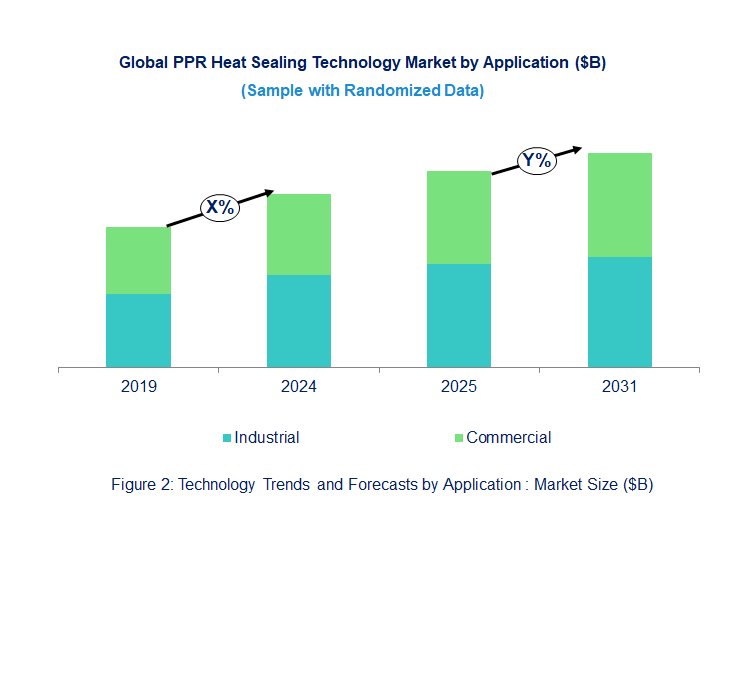
Market Size Estimates: Ppr heat sealing market size estimation in terms of ($B). Trend and Forecast Analysis: Market trends (2019 to 2024) and forecast (2025 to 2031) by various segments and regions. Segmentation Analysis: Technology trends in the global ppr heat sealing market size by various segments, such as application and technology in terms of value and volume shipments. Regional Analysis: Technology trends in the global ppr heat sealing market breakdown by North America, Europe, Asia Pacific, and the Rest of the World. Growth Opportunities: Analysis of growth opportunities in different applications, technologies, and regions for technology trends in the global ppr heat sealing market. Strategic Analysis: This includes M&A, new product development, and competitive landscape for technology trends in the global ppr heat sealing market. Analysis of competitive intensity of the industry based on Porter’s Five Forces model.Table of Contents
Methodology
- In-depth interviews of the major players in this market
- Detailed secondary research from competitors’ financial statements and published data
- Extensive searches of published works, market, and database information pertaining to industry news, company press releases, and customer intentions
- A compilation of the experiences, judgments, and insights of Lucintel’s professionals, who have analyzed and tracked this market over the years.


Buy Now
Choose a license that fits your team. Instant PDF delivery.
Prices exclude taxes. Instant delivery. Custom licensing available on request.
Key Questions
- • What are some of the most promising potential, high-growth opportunities for the technology trends in the global ppr heat sealing market by technology (high frequency sealing, hot plate sealing, induction heating, infrared heat sealing, and others), application (industrial and commercial), and region (North America, Europe, Asia Pacific, and the Rest of the World)?
- • Which technology segments will grow at a faster pace and why?
- • Which regions will grow at a faster pace and why?
- • What are the key factors affecting dynamics of different technology? What are the drivers and challenges of these technologies in the global ppr heat sealing market?
- • What are the business risks and threats to the technology trends in the global ppr heat sealing market?
- • What are the emerging trends in these technologies in the global ppr heat sealing market and the reasons behind them?
- • Which technologies have potential of disruption in this market?
- • What are the new developments in the technology trends in the global ppr heat sealing market? Which companies are leading these developments?
- • Who are the major players in technology trends in the global ppr heat sealing market? What strategic initiatives are being implemented by key players for business growth?
- • What are strategic growth opportunities in this ppr heat sealing technology space?
- • What M & A activities did take place in the last five years in technology trends in the global ppr heat sealing market?


