
Market Report · July 29, 2026

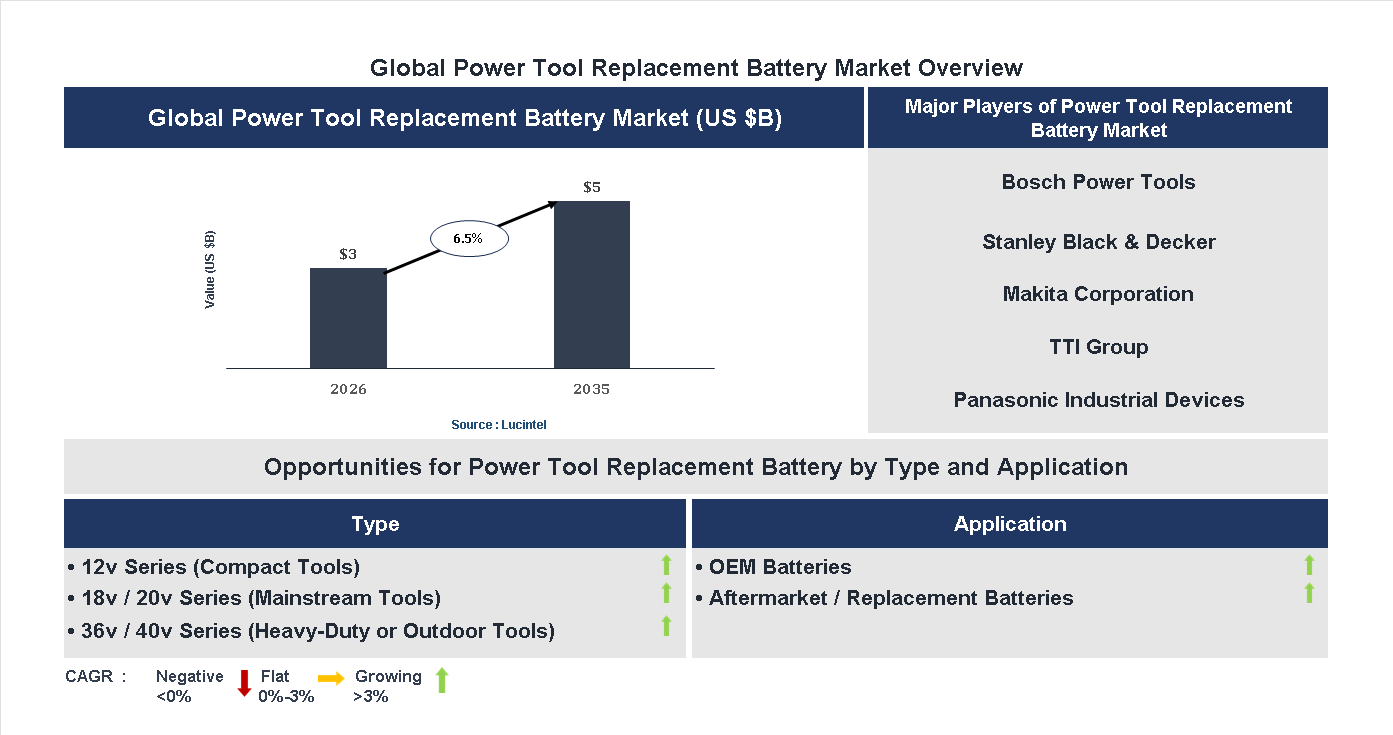
Key data points: The market size in 2035 = $5 billion, growth forecast = 6.5% annually for the next 8 years. Scroll below to get more insights. This market report covers trends, opportunities and forecasts in power tool replacement battery market to 2035 by type (12v series (compact tools), 18v / 20v series (mainstream tools), and 36v / 40v series (heavy-duty or outdoor tools)), application (OEM batteries and aftermarket / replacement batteries), and region (North America, Europe, Asia Pacific, and the Rest of the World)
We'll send your sample report shortly.
• Lucintel forecasts that, within the type category, 18v / 20v series (mainstream tool) is expected to witness the highest growth over the forecast period.
• Within the application category, aftermarket / replacement battery is expected to witness the highest growth.
• In terms of region, APAC is expected to witness the highest growth over the forecast period. Gain valuable insights for your business decisions with our comprehensive 150+ page report. Sample figures with some insights are shown below.
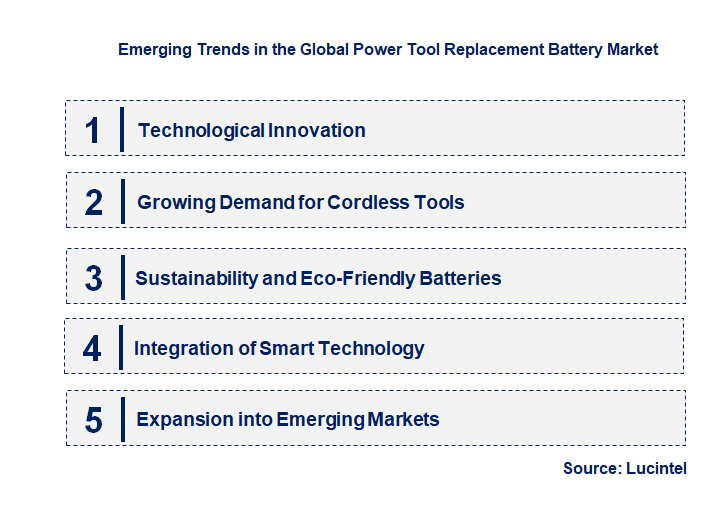
• Technological Innovation: Advancements in battery chemistry and design are leading to longer-lasting, faster-charging, and more reliable power tools. Lithium-ion batteries dominate due to their high energy density and lightweight nature, while emerging solid-state batteries promise even greater improvements. These innovations enhance user experience by reducing downtime and increasing productivity, which in turn drives market growth. Companies investing in R&D are gaining competitive advantages by offering superior products that meet the evolving demands of professional and DIY users.
• Growing Demand for Cordless Tools: The shift towards cordless power tools is accelerating, driven by consumer preference for portability and convenience. This trend is expanding the market for replacement batteries, as users seek reliable, high-capacity power sources to support their tools. The convenience of cordless operation in construction, DIY projects, and industrial applications is making replacement batteries a critical component. As the adoption of cordless tools increases, so does the need for compatible, high-performance batteries, fueling market expansion.
• Sustainability and Eco-Friendly Batteries: Environmental concerns are prompting manufacturers to develop batteries with reduced environmental impact. This includes the use of recyclable materials, longer lifespan batteries, and the development of batteries with lower carbon footprints. Eco-friendly batteries appeal to environmentally conscious consumers and comply with stricter regulations. The focus on sustainability is also encouraging innovations in battery recycling and second-life applications, which are reshaping the market by emphasizing eco-responsibility alongside performance.
• Integration of Smart Technology: Smart batteries equipped with IoT features are gaining popularity, offering real-time data on battery health, usage patterns, and remaining charge. This integration enhances maintenance, safety, and efficiency, especially in professional settings. Smart technology allows manufacturers to differentiate their products and provide added value to consumers. The data collected can also inform future product development and optimize battery lifecycle management, making smart batteries a significant trend in the market.
• Expansion into Emerging Markets: Rapid urbanization and infrastructure development in emerging economies are creating new opportunities for power tool batteries. Increasing adoption of construction and manufacturing equipment in regions like Asia-Pacific and Latin America is driving demand. Local manufacturers are also entering the market, offering cost-effective solutions. This expansion is diversifying the market landscape, increasing competition, and encouraging innovation to meet diverse regional needs. The growth in emerging markets is expected to significantly contribute to the overall market size in the coming years. These trends are collectively transforming the power tool replacement battery market by fostering innovation, expanding applications, and emphasizing sustainability. They are enabling manufacturers to meet evolving consumer demands, improve product performance, and explore new geographical opportunities. As a result, the market is becoming more dynamic, competitive, and aligned with global sustainability goals, ensuring sustained growth and technological progress.
• Growing Demand for Cordless Power Tools: Market expansion is fueled by consumer preference for portability and convenience, leading to increased demand for replacement batteries that offer longer runtime and quick recharge capabilities, thus boosting sales and innovation in battery technology.
• Advancements in Battery Technology: Development of lithium-ion and solid-state batteries has improved energy density, safety, and lifespan, enabling power tools to operate more efficiently, reducing downtime, and increasing user satisfaction, which drives market growth.
• Sustainability and Eco-Friendly Solutions: Emphasis on environmentally friendly batteries with recyclable materials and reduced carbon footprint is influencing manufacturers to develop sustainable options, appealing to eco-conscious consumers and regulatory standards.
• Expansion into New Industrial Sectors: Growing adoption of cordless tools in construction, manufacturing, and agriculture sectors creates new opportunities for replacement batteries, especially in heavy-duty applications requiring high durability and performance.
• Customization and Compatibility Innovations: Manufacturers are focusing on creating batteries compatible with multiple tool brands and models, enhancing user convenience and fostering brand loyalty, which broadens market reach and increases sales. These developments are significantly transforming the power tool replacement battery market by enhancing product performance, sustainability, and versatility. The focus on technological innovation and expanding applications is driving market growth, attracting new consumers, and encouraging industry players to invest in research and development. Overall, these opportunities are fostering a more competitive, sustainable, and customer-centric market landscape.
• Increasing Adoption of Cordless Power Tools in Construction and DIY Sectors: The rising popularity of cordless power tools, due to their portability and convenience, is boosting demand for replacement batteries. As users seek longer-lasting, quick-charging batteries, manufacturers are innovating with higher capacity and faster-charging options. This trend is particularly prominent in construction, home improvement, and professional applications, creating substantial opportunities for battery suppliers to develop compatible, durable, and efficient replacement solutions.
• Technological Innovations Enhancing Battery Performance and Longevity: Advances in battery chemistry, such as lithium-ion and solid-state technologies, are significantly improving power tool batteries. These innovations offer higher energy density, faster charging, and extended cycle life, encouraging consumers to replace older batteries with more efficient options. Companies investing in R&D to develop smarter, lightweight, and environmentally friendly batteries are poised to capture market share, especially as demand for reliable, high-performance power tools continues to grow.
• Expansion of Battery Compatibility and Standardization Across Brands: The development of universal or standardized battery platforms allows consumers to use a single battery across multiple tools and brands. This interoperability reduces costs and enhances convenience, driving replacement battery sales. Market players are focusing on creating compatible batteries for popular brands, fostering brand loyalty and expanding customer base. Standardization also facilitates easier inventory management and supply chain efficiencies, further propelling market growth.
• Growing Demand for Eco-Friendly and Sustainable Battery Solutions: Environmental concerns are prompting manufacturers to develop eco-friendly batteries with reduced toxic materials and improved recyclability. The adoption of sustainable batteries aligns with global regulations and consumer preferences for green products. This shift opens opportunities for companies to innovate in biodegradable packaging, recycling programs, and renewable energy integration, thereby attracting environmentally conscious consumers and expanding market reach in both developed and emerging regions.
• Strategic Partnerships and Distribution Channel Expansion: Collaborations between battery manufacturers, power tool brands, and retail chains are enhancing product availability and brand visibility. Expanding distribution channels, including e-commerce platforms, specialty stores, and direct sales, increases market penetration. Strategic alliances also facilitate joint innovation, cost reduction, and faster time-to-market for new products. These efforts enable companies to meet rising demand efficiently, strengthen market presence, and capitalize on emerging growth opportunities globally. The overall impact of these growth opportunities is a robust expansion of the power tool replacement battery market, driven by technological, environmental, and strategic factors. Companies that innovate, standardize, and expand their reach will be well-positioned to capitalize on increasing consumer demand for reliable, efficient, and sustainable power solutions. This evolution promises sustained market growth and increased competitiveness in the coming years.
• Technological Innovation: The continuous development of high-capacity, fast-charging, and longer-lasting batteries, such as lithium-ion and emerging solid-state technologies, enhances performance and reliability. These innovations meet consumer demands for efficiency and convenience, fueling market growth. Manufacturers investing in R&D are able to offer advanced products, expanding market reach. Additionally, integration with smart technology and IoT features adds value, making batteries more appealing. As technology progresses, the market benefits from improved safety, reduced charging times, and increased energy density, all of which drive consumer adoption and industry expansion.
• Growing Adoption of Cordless Power Tools: The shift from corded to cordless power tools is driven by the need for portability, ease of use, and flexibility across various applications. This trend is particularly prominent in construction, DIY projects, and industrial sectors. As consumers and professionals seek more convenient solutions, demand for replacement batteries rises. The proliferation of cordless tools in residential and commercial markets further accelerates this growth. Manufacturers are expanding their product lines to include compatible batteries, ensuring longer device lifespans and consistent performance, which sustains market momentum and encourages repeat purchases.
• Environmental Regulations and Sustainability Initiatives: Increasing global emphasis on environmental sustainability and stricter regulations on battery disposal are influencing the market. Governments are implementing policies to promote recycling and the use of eco-friendly materials, encouraging manufacturers to develop greener batteries. This shift not only reduces environmental impact but also creates opportunities for innovative, sustainable battery solutions. Companies investing in recyclable and biodegradable batteries can differentiate themselves and meet regulatory compliance, gaining competitive advantage. These initiatives also foster consumer trust and brand loyalty, further propelling market growth in environmentally conscious regions.
• Rising Demand from Construction and Industrial Sectors: The construction and industrial sectors are significant consumers of power tools, and their expanding infrastructure projects and industrial activities drive the need for reliable replacement batteries. As these sectors modernize and adopt more advanced tools, the demand for durable, high-performance batteries increases. The need for uninterrupted operations and reduced downtime makes high-quality replacement batteries essential. Market players are focusing on developing batteries that withstand harsh conditions and provide consistent power, which is critical for large-scale projects. This sector-specific demand sustains steady growth and encourages innovation in battery technology.
• Expansion of E-commerce and Aftermarket Sales Channels: The growth of online retail platforms and specialized aftermarket channels has made replacement batteries more accessible to consumers and professionals. E-commerce offers a wide range of products, competitive pricing, and convenient purchasing options, boosting sales volume. Additionally, aftermarket channels provide easy access to compatible and high-quality batteries, supporting consumer needs for quick replacements. This expansion enhances market reach, especially in remote or underserved areas, and fosters brand competition. As digital sales channels continue to grow, they will play a crucial role in shaping the distribution and availability of power tool replacement batteries. The challenges facing the power tool replacement battery market include:-
• High Cost of Advanced Batteries: Despite technological advancements, high-capacity and fast-charging batteries remain expensive to produce. The costs associated with raw materials, manufacturing processes, and quality control contribute to elevated retail prices. This can limit adoption among cost-sensitive consumers and small businesses, restricting market growth. Additionally, frequent replacements due to battery degradation can increase overall expenses for consumers. Manufacturers must balance performance improvements with cost efficiency to ensure broader market penetration. Overcoming cost barriers is essential for expanding the market, especially in emerging economies where price sensitivity is higher.
• Regulatory and Environmental Restrictions: Stringent regulations regarding battery disposal, recycling, and environmental impact pose challenges for manufacturers. Compliance with diverse international standards requires significant investment in eco-friendly materials and recycling infrastructure. These regulations can increase production costs and complicate supply chains. Moreover, restrictions on certain raw materials, such as cobalt and nickel, necessitate the development of alternative chemistries, which may delay product launches. Navigating these regulatory landscapes demands continuous innovation and adaptation, potentially slowing market growth and increasing operational risks for companies involved in battery manufacturing and disposal.
• Environmental Impact and Recycling Challenges: Although sustainability initiatives promote greener batteries, effective recycling remains complex and costly. The hazardous nature of battery materials and the lack of comprehensive recycling infrastructure hinder proper disposal and reuse. This environmental challenge raises concerns about long-term ecological impacts and regulatory penalties. Companies face pressure to develop recyclable batteries and establish efficient collection systems, which require significant investment. Failure to address these issues can lead to environmental liabilities, consumer distrust, and potential bans on non-recyclable batteries. Overcoming recycling challenges is critical for sustainable growth and regulatory compliance in the market. The power tool replacement battery market is driven by technological innovation, increasing adoption of cordless tools, sustainability initiatives, sector-specific demand, and expanding sales channels. However, high costs, regulatory restrictions, and recycling challenges pose significant hurdles. The interplay of these factors will shape the market’s future, requiring stakeholders to innovate, adapt, and invest strategically. Successful navigation of these drivers and challenges will determine the pace of growth, competitive positioning, and overall sustainability of the market in the coming years.
• Bosch Power Tools
• Stanley Black & Decker
• Makita Corporation
• TTI Group
• Panasonic Industrial Devices
• Samsung SDI
• LG Energy Solution
• 12v Series (Compact Tools)
• 18v / 20v Series (Mainstream Tools)
• 36v / 40v Series (Heavy-Duty or Outdoor Tools)
• OEM Batteries
• Aftermarket / Replacement Batteries
• North America
• Europe
• Asia Pacific
• The Rest of the World
• United States: The US market has seen rapid adoption of lithium-ion batteries, with major companies investing in research to enhance battery longevity and safety. There is a growing trend toward smart batteries with IoT integration for real-time performance monitoring. The rise of DIY culture and professional construction projects has further fueled demand, prompting manufacturers to develop lightweight, high-capacity batteries. Regulatory focus on sustainability has also encouraged the adoption of recyclable battery technologies, boosting market growth.
• China: China remains the largest producer and consumer of power tool batteries, driven by a booming construction and manufacturing sector. Recent developments include the integration of fast-charging technologies and the expansion of electric power tools. Chinese companies are investing heavily in R&D to improve battery energy density and reduce costs, making products more affordable. The government’s push for green energy and sustainable manufacturing practices has accelerated the adoption of eco-friendly batteries, positioning China as a key innovator in this market.
• Germany: Germany’s market is characterized by a focus on high-quality, durable batteries for professional use, especially in industrial and construction sectors. Innovations include the development of batteries with enhanced safety features and longer cycle life. German companies are also leading in the adoption of environmentally sustainable materials and manufacturing processes. The emphasis on precision engineering and technological excellence has resulted in advanced battery systems that cater to the needs of demanding users, reinforcing Germany’s reputation as a leader in industrial power tools.
• India: The Indian market is witnessing rapid growth due to increasing urbanization and infrastructure development. Local manufacturers are expanding their product portfolios with affordable, reliable batteries suitable for both domestic and commercial use. Recent advancements include the adoption of lithium-ion technology and the development of portable, lightweight batteries to suit the needs of small-scale industries and DIY consumers. Government initiatives promoting renewable energy and sustainable manufacturing are also encouraging the adoption of eco-friendly batteries, fostering market expansion.
• Japan: Japan’s market is driven by innovation in battery technology, with a focus on high-performance, long-lasting power sources for professional and industrial applications. Japanese firms are pioneering advancements in solid-state batteries and fast-charging solutions. The emphasis on safety, reliability, and environmental sustainability has led to the development of batteries with improved thermal stability and recyclability. The integration of smart battery management systems and IoT connectivity is also prominent, enhancing the efficiency and lifespan of power tool batteries in Japan’s highly advanced manufacturing landscape.


• Bosch Power Tools
• Stanley Black & Decker
• Makita Corporation
• TTI Group
• Panasonic Industrial Devices
• Samsung SDI
• LG Energy Solution Q6. Which power tool replacement battery market segment will be the largest in future? Answer: Lucintel forecasts that, within the type category, 18v / 20v series (mainstream tool) is expected to witness the highest growth over the forecast period. Q7. In power tool replacement battery market, which region is expected to be the largest in next 5 years? Answer: In terms of region, APAC is expected to witness the highest growth over the forecast period. Q8. Do we receive customization in this report? Answer: Yes, Lucintel provides 10% customization without any additional cost.


Choose a license that fits your team. Instant PDF delivery.
Prices exclude taxes. Instant delivery. Custom licensing available on request.
Market Report · July 29, 2026
Market Report · July 15, 2026
Market Report · July 13, 2026
Trusted partner for strategic intelligence and business growth


Receive a complimentary market analysis tailored to your industry. Our analysts will identify key growth opportunities and competitive dynamics specific to your business.

Market size, growth rate, and key trend analysis for your specific sector.

Top competitor positioning and market share analysis.

Strategic recommendations backed by data-driven insights.
Get curated market intelligence and competitive moves straight to your inbox.
By subscribing, you agree to receive our monthly insights. Unsubscribe anytime.
Receive a complimentary market analysis tailored to your industry. Our analysts will identify key growth opportunities and competitive dynamics specific to your business.
Market size, growth rate, and key trend analysis for your specific sector.
Top competitor positioning and market share analysis.
Strategic recommendations backed by data-driven insights.
Get curated market intelligence, emerging trends, and competitive moves straight to your inbox each month.
By subscribing, you agree to receive our monthly insights. Unsubscribe anytime.
We'll send your sample report shortly.