
Market Report · May 18, 2026

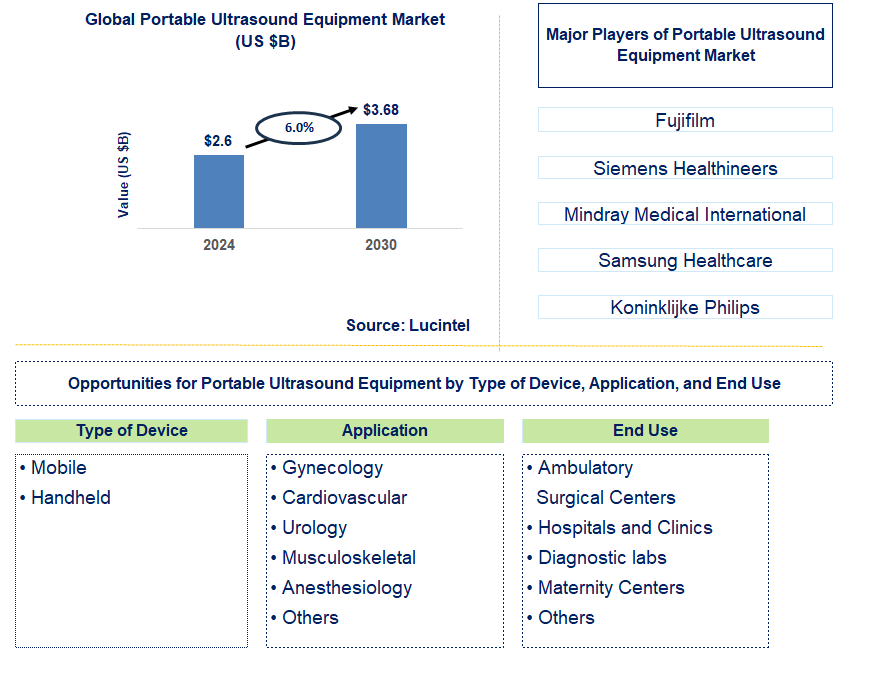
Key data points: The market size in 2030 = $3.68 billion, growth forecast = 6.0% annually for the next 6 years. Scroll below to get more insights. This market report covers trends, opportunities, and forecasts in the global portable ultrasound equipment market to 2030 by type of device (mobile and handheld), application (gynecology, cardiovascular, urology, musculoskeletal, anesthesiology, and others), end use (ambulatory surgical centers, hospitals and clinics, diagnostic labs, maternity centers, and others), and region (North America, Europe, Asia Pacific, and the Rest of the World)
We'll send your sample report shortly.
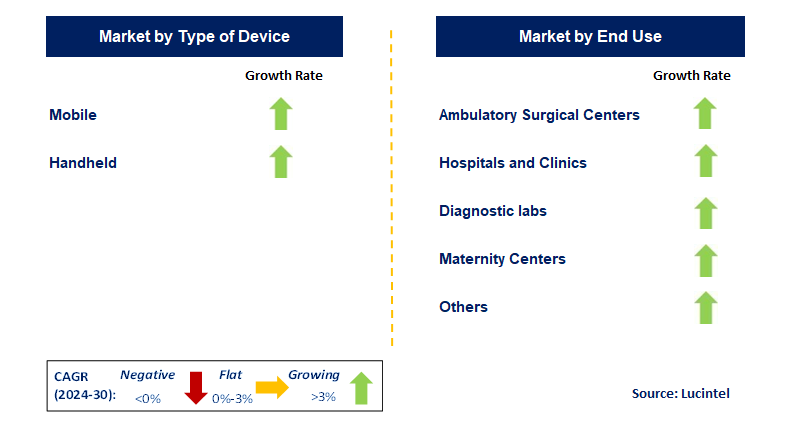
• Lucintel forecasts that, within the device category, mobile is expected to witness a higher growth over the forecast period due to growing demand for ambulatory care.
• Within the ens use category, hospital and clinic will remain the largest segment due to high adaption of advanced healthcare devices.
• In terms of region, North America will remain the largest over the forecast period due to presence of advanced health infrastructure, rising prevalence of diseases and infections, and existence of large number of companies in the region. A more than 150-page report is developed to help in your business decisions.
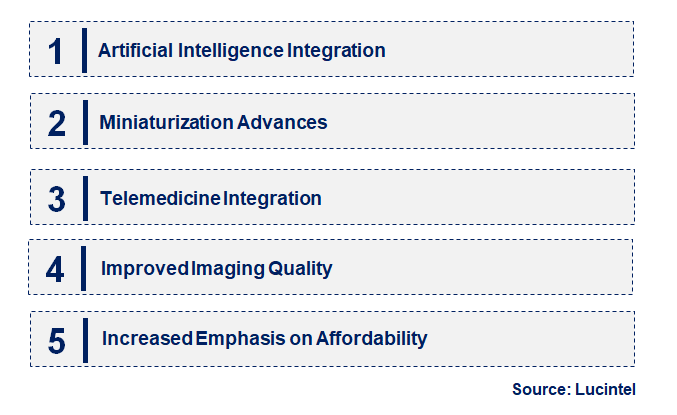
• Artificial Intelligence Integration: AI-driven portable ultrasound machines offer significant improvements in diagnostic precision and speed. AI algorithms assist in image analysis, detection of anomalies, and automated measurements, which enhance both the precision and speed of diagnoses across a wide range of clinical settings.
• Miniaturization Advances: Further miniaturization is making ultrasound machines more compact and lightweight, thus enhancing portability and ease of use. This, in turn, makes portable ultrasound systems more practical for fieldwork, emergency situations, and remote diagnostics.
• Telemedicine Integration: The integration of portable ultrasound devices into telemedicine platforms is increasing their scope of use. Real-time data sharing and consultation with specialists are made possible through remote connectivity, thus enhancing diagnostic capability and patient management, especially in underserved areas.
• Improved Imaging Quality: Advances in imaging technology continue to improve the resolution and clarity of portable ultrasound devices. High-definition imaging and advanced processing techniques allow for a greater degree of diagnostic detail, benefiting both practitioners and patients.
• Increased Emphasis on Affordability: There is a growing emphasis on making portable ultrasound equipment more affordable without compromising its quality. This trend has emerged as a response to the need for cost-effective solutions in both developed and emerging markets to increase access to diagnostic services. These trends are pushing the portable ultrasound market toward better diagnostics, increased access, and greater integration with broader healthcare technologies. This will significantly improve patient care and clinical practice.
• AI integration: Diagnosis has taken a new turn with the introduction of artificial intelligence in portable ultrasound devices. AI helps in the analysis of images and the detection of anomalies, thus assisting with the automated reporting of test results. It has considerably raised the accuracy of diagnosis and hastened the whole process in various clinical settings.
• Wireless connectivity: Advances in wireless technology have led to the development of portable ultrasound systems. These machines boast convenient data transfer and integration into electronic health records. In fact, such connectivity facilitates workflow and access to data for healthcare professionals.
• Improved battery life: Advances in battery technology have also applied to portable ultrasound machines, improving their operating time. With increased battery life, professionals can use devices for longer periods in remote and emergency situations, increasing the practicality and reliability of such devices.
• Enhanced ergonomics: New design protocols optimize user-friendly interfaces and ergonomic features, making it more convenient and comfortable to handle and operate portable ultrasound devices. Such advancements improve the overall user experience and reduce the level of training required for efficient operation.
• Global expansion: Companies are expanding their reach across the globe, particularly in emerging markets. Offering less expensive, multi-purpose portable ultrasound solutions increases access to diagnostic tools in resource-poor settings. These innovations will continue to make portable ultrasound machines more sophisticated, widely available, and easier to use, thereby extending their applications and enhancing patient care in diverse environments.
• Expansion of Telemedicine: The integration of portable ultrasound equipment into telemedicine platforms makes remote diagnostics and consultations feasible. This can enhance access to specialist services in rural and under-resourced settings by facilitating the management of patients in these areas.
• Growth in Home Healthcare: The rising demand for home healthcare services presents significant growth opportunities for portable ultrasound devices. Compact, user-friendly models can be developed for home use, improving remote monitoring and diagnostic capabilities for patients receiving care at home.
• AI Applications Development: Investment in AI-based ultrasound technology can enable more accurate diagnoses and improve operational efficiencies. Companies will be able to develop more sophisticated algorithms to interpret images and automate tasks, thereby providing better diagnostic support.
• Market Penetration: Delivering affordable and adaptable portable ultrasound solutions to emerging markets will enable companies to capture an increasing market share. Key products should be developed to meet regional needs and price points, driving market growth in developing countries.
• Partnerships with Healthcare Providers: Strategic partnerships with hospitals, clinics, and healthcare networks will help improve the penetration of portable ultrasound devices. These partnerships can be leveraged for product development, training, and support, thereby enhancing market penetration and fostering customer loyalty. These emerging opportunities reflect ongoing development in new markets, advanced technologies, and changing healthcare needs. They provide a path to innovation and market growth in portable ultrasound.
• Medical Imaging Technology: Technological innovation is a significant factor in the growth of portable ultrasound devices. Advances in imaging technology, AI, and miniaturization continuously improve diagnostic capabilities, enhance usability, and expand the range of applications for portable systems.
• Increased Demand for Point-of-Care Testing: The growing demand for point-of-care testing and immediate diagnostic results also increases the demand for portable ultrasound devices. These devices enable quick and efficient diagnostics across various clinical settings, from emergency care to remote locations.
• Increasing Healthcare Expenditure: Increased investment in healthcare infrastructure and technology supports growth in the portable ultrasound market. Higher spending on medical devices enhances the availability and utilization of advanced portable ultrasound solutions.
• Emerging Home Healthcare Services: Home healthcare services are gaining popularity, which significantly drives demand for portable ultrasound devices. Smaller, more user-friendly devices are becoming integral to remote monitoring and diagnostic services in home care.
• Regulatory Support: A supportive regulatory environment and medical device standards facilitate market growth. Compliance with regulations ensures product safety and quality, encouraging the use of portable ultrasound equipment. Challenges in the portable ultrasound equipment market include:
• High Price of Advanced Models: The high prices of advanced portable ultrasound devices are a barrier to their adoption in price-sensitive markets. Balancing cost with technological features during development and purchasing remains a challenge.
• Compliance and Certifications: Navigating complex regulations and obtaining necessary certifications is difficult. The resources and expertise required to meet different standards across various regions need to be significantly strengthened.
• Market Competition: Intense competition among manufacturers often results in pricing pressures and challenges related to product differentiation. Developing unique features while maintaining competitive pricing is essential for success. The drivers and challenges in the portable ultrasound equipment market center around innovation, regulatory compliance, and strategic positioning. To achieve sustained growth and overcome obstacles in the sector, these factors must be carefully considered.
• Fujifilm
• Siemens Healthineers
• Mindray Medical International
• Samsung Healthcare
• Koninklijke Philips
• Canon Medical Systems
• Zimmer MedizinSysteme
• Mobile
• Handheld
• Gynecology
• Cardiovascular
• Urology
• Musculoskeletal
• Anesthesiology
• Others
• Ambulatory Surgical Centers
• Hospitals and Clinics
• Diagnostic labs
• Maternity Centers
• Others
• North America
• Europe
• Asia Pacific
• The Rest of the World
• United States: The U.S. has recently seen the development of portable ultrasound devices with high resolution and integrated AI to enhance image quality and diagnostics. Increased use in emergency medicine and telehealth is expected to continue expanding the clinical applications of these devices, improving patient care and access to quality services.
• China: China's portable ultrasound market is experiencing an upward trend due to significant investments in healthcare infrastructure and technology. Innovations have focused on affordability and integration into mobile platforms to expand the reach of healthcare services into remote areas, further improving diagnostic capabilities in both urban and rural settings.
• Germany: Portable ultrasound technologies in Germany are improving continuously, with a focus on precision and user-friendly interfaces. Advancements in imaging capabilities include wireless connectivity, which allows better data sharing and integration with electronic health records, thereby improving overall diagnostic efficiency.
• India: Growing healthcare needs and the demand for more affordable alternatives in India have led to significant applications for portable ultrasound devices. These include compact, lightweight models with basic diagnostic functionality at an affordable price, making them suitable for use in underserved and remote regions of the country.
• Japan: Japan is leading in the integration of advanced imaging technologies into portable ultrasound devices. This includes high-definition imaging and improved user interfaces to manage and support advanced diagnostic procedures, reflecting the country's commitment to high-quality, precision medical technology.


• Fujifilm
• Siemens Healthineers
• Mindray Medical International
• Samsung Healthcare
• Koninklijke Philips
• Canon Medical Systems
• Zimmer MedizinSysteme Q6. Which portable ultrasound equipment market segment will be the largest in future? Answer: Lucintel forecasts that mobile is expected to witness higher growth over the forecast period due to growing demand for ambulatory care. Q7. In portable ultrasound equipment market, which region is expected to be the largest in next 6 years? Answer: North America will remain the largest over the forecast period due to presence of advanced health infrastructure, rising prevalence of diseases and infections, and existence of large number of companies in the region. Q.8 Do we receive customization in this report? Answer: Yes, Lucintel provides 10% customization without any additional cost.


Choose a license that fits your team. Instant PDF delivery.
Prices exclude taxes. Instant delivery. Custom licensing available on request.
Market Report · May 18, 2026
Market Report · May 18, 2026
Market Report · May 18, 2026
Trusted partner for strategic intelligence and business growth


Receive a complimentary market analysis tailored to your industry. Our analysts will identify key growth opportunities and competitive dynamics specific to your business.

Market size, growth rate, and key trend analysis for your specific sector.

Top competitor positioning and market share analysis.

Strategic recommendations backed by data-driven insights.
Get curated market intelligence and competitive moves straight to your inbox.
By subscribing, you agree to receive our monthly insights. Unsubscribe anytime.
Receive a complimentary market analysis tailored to your industry. Our analysts will identify key growth opportunities and competitive dynamics specific to your business.
Market size, growth rate, and key trend analysis for your specific sector.
Top competitor positioning and market share analysis.
Strategic recommendations backed by data-driven insights.
Get curated market intelligence, emerging trends, and competitive moves straight to your inbox each month.
By subscribing, you agree to receive our monthly insights. Unsubscribe anytime.
We'll send your sample report shortly.