
Report Feature
Portable Diagnostic Device Market Trends and Forecast
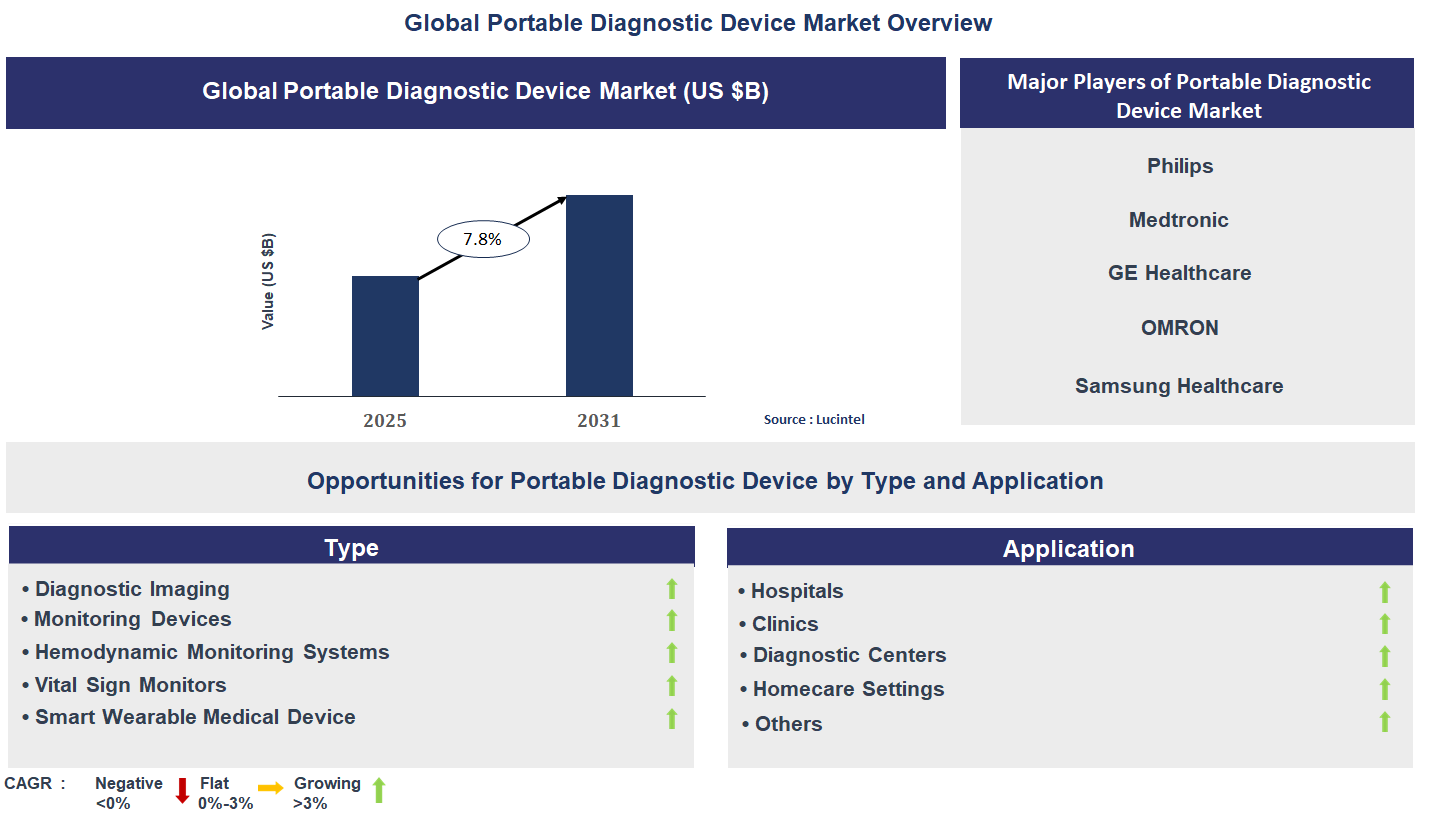
The future of the global portable diagnostic device market looks promising with opportunities in the hospital, clinic, diagnostic center, and homecare setting markets. The global portable diagnostic device market is expected to grow with a CAGR of 7.8% from 2025 to 2031. The major drivers for this market are the increasing demand for point-of-care testing, the rising prevalence of chronic diseases, and the growing focus on home-based healthcare.• Lucintel forecasts that, within the type category, diagnostic imaging is expected to witness the highest growth over the forecast period.
• Within the application category, homecare setting is expected to witness the highest growth.
• In terms of region, APAC is expected to witness the highest growth over the forecast period. Gain valuable insights for your business decisions with our comprehensive 150+ page report. Sample figures with some insights are shown below.
Emerging Trends in the Portable Diagnostic Device Market
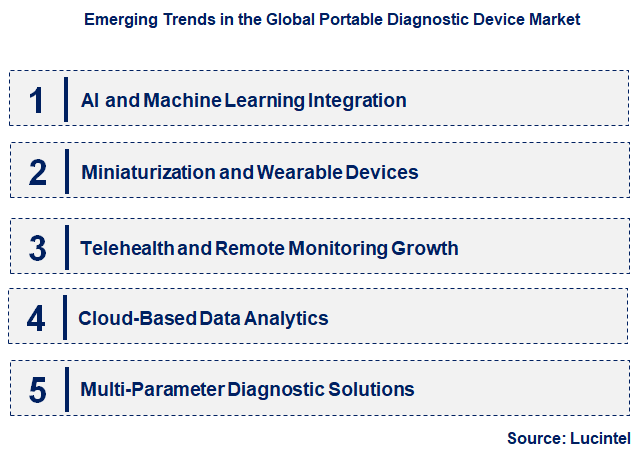
The market for portable diagnostic device is witnessing revolutionary trends due to technological innovation, shifting healthcare delivery paradigms, and growing demand for home-based patient care. Focus on miniaturization, AI integration, and connectivity is influencing new product design. Telehealth growth and personalized diagnosis are improving patient outcomes across the world. These trends are opening new market space for new market entrants and improving traditional healthcare systems.• AI and Machine Learning Integration: AI algorithms enhance data analysis, diagnostic accuracy, and predictive power in handheld devices, allowing for early disease detection and personalized treatment regimens.
• Miniaturization and Wearable Devices: Advances in technology result in smaller, more comfortable, and multifunctional handheld devices, allowing constant monitoring without sacrificing user convenience.
• Telehealth and Remote Monitoring Growth: Expanded utilization of networked portable devices enables telemedicine services to monitor patients remotely, decrease hospital visits, and better manage chronic conditions.
• Cloud-Based Data Analytics: Cloud integration allows real-time data exchange, remote diagnosis, and centralized patient management, enhancing healthcare system effectiveness and patient care.
• Multi-Parameter Diagnostic Solutions: Designing devices to monitor a range of health parameters at one time promotes diagnostic completeness, ease of use, and patient adherence. All these trends collectively are propelling the portable diagnostic device industry toward more consolidated, patient-focused models of healthcare delivery with increased accuracy and convenience.
Recent Development in the Portable Diagnostic Device Market
Recent trends in the portable diagnostic device sector reflect quick technological advancements, service delivery, and collaborative strategies. Device accuracy, connectivity, and usability are areas of focus for the industry. R&D investments and partnerships are driving the commercialization of AI-enabled and multi-functional devices. Augmentation of regulatory guidelines and reimbursement schemes is enabling market growth.• AI-Powered Diagnostic Devices: Devices that employ AI enhance diagnostic processes through automated analysis and clinical decision support, minimizing errors and maximizing efficiency.
• Wearable Biosensors: Expanded wearable sensor adoption enables real-time monitoring of core signs such as ECG, glucose, and oxygen saturation beyond the confines of traditional clinical environments.
• Telemedicine Platform Integration: Handheld diagnostics more and more incorporate telehealth services to allow remote patient monitoring and virtual consults, particularly imperative post-pandemic.
• Regulatory and Reimbursement Advancements: Broader coverage of remote diagnostics and more defined regulatory channels support innovation and uptake of portable devices in healthcare networks.
• Multi-Analyte Portable Devices: Integration of devices that can monitor multiple biomarkers simultaneously enhances convenience and diagnostic quality, facilitating holistic health management. All these advancements together augment the range, integrity, and usability of portable diagnostic devices, solidifying their position in contemporary healthcare.
Strategic Growth Opportunities in the Portable Diagnostic Device Market
The market for portable diagnostic device has huge growth opportunities in various healthcare applications facilitated by advances in technology and shifts in patient care models. Targeted development in high-value application markets and incorporation with digital health platforms are areas of opportunity for market growth. Strategic collaboration and cost efforts enhance the adoption of devices worldwide. Expanding personalized diagnostics and real-time tracking facilitates expanded usage.• Chronic Disease Management: Continuously wearable monitoring and early detection of diabetes, cardiovascular, and respiratory diseases decrease hospital stays and enhance quality of life.
• Home Healthcare: Conveniently portable diagnostics for patients empower self-monitoring, facilitating aging populations and minimizing healthcare system loads.
• Emergency and Critical Care: Point-of-care diagnostic devices that get results quickly enhance timely clinical decision-making in ambulances and emergency departments and save lives.
• Remote Patient Monitoring: Telehealth platform integration enables enhanced long-term patient care, especially in rural or underserved communities, facilitating increased access and adherence.
• Preventive Health and Wellness: Portable and wearable diagnostics for health and fitness monitoring promote proactive management of health and earlier intervention, enhancing market reach. Securing these opportunities will propel market growth, encourage innovation, and enable sustainable healthcare delivery.
Portable Diagnostic Device Market Driver and Challenges
The portable diagnostic device market growth is propelled by several technological, economic, and regulatory drivers, alongside notable challenges. Drivers include innovations enabling real-time monitoring and point-of-care applications, aging populations requiring continuous health management, and increased chronic disease prevalence. Economic incentives and telehealth expansion also foster adoption. The factors responsible for driving the portable diagnostic device market include: 1. Emerging Chronic Disease Incidence: Increasing incidence of diabetes, cardiovascular and respiratory disease creates demand for portable diagnosis products facilitating early detection and monitoring. 2. Technological Evolution: Advances in miniaturization, AI inclusion, and wireless capabilities improve device functionality and user experience, fueling uptake. 3. Aging World Population: Older individuals need ongoing health monitoring and easy-to-use diagnostics, creating demand for portable devices addressing this demographic. 4. Healthcare System Transitions: Growing emphasis on decentralized and home-based care models enhances point-of-care and home-based diagnostics, enhancing healthcare access. 5. Telehealth Growth: Payer and regulatory endorsement of telemedicine services drives ubiquitous device adoption for remote patient monitoring. Challenges in the portable diagnostic device market are: 1. Device Precision and Reliability: Maintaining consistent and clinically relevant results in portable forms is a technical challenge that impacts clinician and patient trust. 2. Regulatory and Reimbursement Complexity: Diverse global regulations and variable insurance coverage hinder innovation and uptake. 3. Cost and Accessibility Barriers: Prohibitive device prices and limited infrastructure in low-resource environments limit widespread adoption. Market drivers are driving quick uptake of portable diagnostic devices by improving convenience, accessibility, and healthcare outcomes. But technical, regulatory, and economic hurdles need to be overcome in order to realize full market potential. These elements interact to create a dynamic environment that spurs innovation and strategic investment.List of Portable Diagnostic Device Companies
Companies in the market compete on the basis of product quality offered. Major players in this market focus on expanding their manufacturing facilities, R&D investments, infrastructural development, and leverage integration opportunities across the value chain. With these strategies portable diagnostic device companies cater increasing demand, ensure competitive effectiveness, develop innovative products & technologies, reduce production costs, and expand their customer base. Some of the portable diagnostic device companies profiled in this report include-• Philips
• Medtronic
• GE Healthcare
• OMRON
• Samsung Healthcare
• Roche
• PixCell Medical
• Siemens
• Abbott
• Beckman Coulter
Portable Diagnostic Device Market by Segment
The study includes a forecast for the global portable diagnostic device market by type, application, and region.Portable Diagnostic Device Market by Type [Value from 2019 to 2031]:
• Diagnostic Imaging
• Monitoring Devices
• Hemodynamic Monitoring Systems
• Vital Sign Monitors
• Smart Wearable Medical Device
Portable Diagnostic Device Market by Application [Value from 2019 to 2031]:
• Hospitals
• Clinics
• Diagnostic Centers
• Homecare Settings
• Others
Portable Diagnostic Device Market by Region [Value from 2019 to 2031]:
• North America
• Europe
• Asia Pacific
• The Rest of the World
Country Wise Outlook for the Portable Diagnostic Device Market
The market of portable diagnostic device is growing at a fast pace because of increasing point-of-care test demand, climbing prevalence of chronic diseases, and technological advancements. AI capabilities, miniaturization, and wireless connectivity capabilities in the device augment real-time health monitoring, widening the scope from clinic to home care. Rising healthcare accessibility, particularly in rural areas, and government support further drive growth. Enhanced integration with telehealth and cloud platforms enhances patient outcomes.• United States: United States is the leader with impressive innovation in handheld diagnostic devices due to wide research and development in wearable and AI-based technologies. Medicare and Medicaid expansion of reimbursement for remote patient monitoring drives market growth. Portable devices such as ECGs, glucometers, and multi-parameter monitors are commonly used in both home and clinical care. On-device AI inference and cloud platforms enhance diagnostics accuracy and physician decision-making. The US market is expected to record robust growth with the help of favorable policies, huge chronic disease populations, and well-developed healthcare infrastructure.
• China: The portable diagnostic device market in China enjoys rapid expansion fueled by urbanization and growing healthcare expenditure. Strong government promotion of digital health integration and telemedicine increases demand for portable devices in hospitals and rural areas. Innovation centers on miniaturized sensors and IoT devices that can monitor continuously. China is also increasing manufacturing capacity and collaborations with international tech companies. Increasing occurrence of diabetes and cardiovascular diseases boosts adoption, and affordable devices increase accessibility in rural districts.
• Germany: Germany gains from an advanced healthcare system that focuses on quality and accuracy in point-of-care diagnostics. Regulatory support and security for data handling connected diagnostic devices is becoming increasingly a focus. Portable diagnostics are incorporated into hospital systems for preventive care and chronic disease management. Germany promotes research in biosensors and AI algorithms for early diagnosis and tailored treatment. Remote monitoring services are preferred under public health reimbursement policies, increasing the utilization of devices.
• India: Indias portable diagnostic device industry is developing quickly, driven by increasing healthcare access, government health programs, and chronic disease burden. Inexpensive, simple-to-use diagnostic devices are increasingly popular, particularly in rural and semi-urban markets. Telehealth platforms and smartphone integration improve usage and data management. Domestic manufacturing and international collaborations eliminate cost impediments. Increasing awareness and need for early diagnosis of diabetes, cardiovascular, and respiratory diseases are major market drivers, weighed against infrastructure and regulatory harmonization challenges.
• Japan: Japans portable diagnostic device market is driven by innovations focused on an aging population that needs ongoing health monitoring and preventive care. The emphasis is on wearable biosensors, elimination of data connectivity gaps, and accuracy improvement through AI. Incorporation of portable devices into home nursing and healthcare services is on the rise. Adoption and innovation incentives are provided by the government. User-friendly design and dependability are key in Japan, promoting patient acceptance even among aged patients. Interregional connections boost technological strength and penetration.

Features of the Global Portable Diagnostic Device Market
Market Size Estimates: Portable diagnostic device market size estimation in terms of value ($B). Trend and Forecast Analysis: Market trends (2019 to 2024) and forecast (2025 to 2031) by various segments and regions. Segmentation Analysis: Portable diagnostic device market size by type, application, and region in terms of value ($B). Regional Analysis: Portable diagnostic device market breakdown by North America, Europe, Asia Pacific, and Rest of the World. Growth Opportunities: Analysis of growth opportunities in different types, applications, and regions for the portable diagnostic device market. Strategic Analysis: This includes M&A, new product development, and competitive landscape of the portable diagnostic device market. Analysis of competitive intensity of the industry based on Porter’s Five Forces model.
FAQ
Q1. What is the growth forecast for portable diagnostic device market? Answer: The global portable diagnostic device market is expected to grow with a CAGR of 7.8% from 2025 to 2031. Q2. What are the major drivers influencing the growth of the portable diagnostic device market? Answer: The major drivers for this market are the increasing demand for point-of-care testing, the rising prevalence of chronic diseases, and the growing focus on home-based healthcare. Q3. What are the major segments for portable diagnostic device market? Answer: The future of the portable diagnostic device market looks promising with opportunities in the hospital, clinic, diagnostic center, and homecare setting markets. Q4. Who are the key portable diagnostic device market companies? Answer: Some of the key portable diagnostic device companies are as follows:• Philips
• Medtronic
• GE Healthcare
• OMRON
• Samsung Healthcare
• Roche
• PixCell Medical
• Siemens
• Abbott
• Beckman Coulter Q5. Which portable diagnostic device market segment will be the largest in future? Answer: Lucintel forecasts that, within the type category, diagnostic imaging is expected to witness the highest growth over the forecast period. Q6. In portable diagnostic device market, which region is expected to be the largest in next 5 years? Answer: In terms of region, APAC is expected to witness the highest growth over the forecast period. Q7. Do we receive customization in this report? Answer: Yes, Lucintel provides 10% customization without any additional cost.
Table of Contents
List of Figures
List of Tables
Methodology
- In-depth interviews of the major players in this market
- Detailed secondary research from competitors’ financial statements and published data
- Extensive searches of published works, market, and database information pertaining to industry news, company press releases, and customer intentions
- A compilation of the experiences, judgments, and insights of Lucintel’s professionals, who have analyzed and tracked this market over the years.


Buy Now
Choose a license that fits your team. Instant PDF delivery.
Prices exclude taxes. Instant delivery. Custom licensing available on request.
Key Questions
- • What are some of the most promising, high-growth opportunities for the portable diagnostic device market by type (diagnostic imaging, monitoring devices, hemodynamic monitoring systems, vital sign monitors, and smart wearable medical device), application (hospitals, clinics, diagnostic centers, homecare settings, and others), and region (North America, Europe, Asia Pacific, and the Rest of the World)?
- • Which segments will grow at a faster pace and why?
- • Which region will grow at a faster pace and why?
- • What are the key factors affecting market dynamics? What are the key challenges and business risks in this market?
- • What are the business risks and competitive threats in this market?
- • What are the emerging trends in this market and the reasons behind them?
- • What are some of the changing demands of customers in the market?
- • What are the new developments in the market? Which companies are leading these developments?
- • Who are the major players in this market? What strategic initiatives are key players pursuing for business growth?
- • What are some of the competing products in this market and how big of a threat do they pose for loss of market share by material or product substitution?
- • What M&A activity has occurred in the last 5 years and what has its impact been on the industry? For any questions related to Portable Diagnostic Device Market, Portable Diagnostic Device Market Size, Portable Diagnostic Device Market Growth, Portable Diagnostic Device Market Analysis, Portable Diagnostic Device Market Report, Portable Diagnostic Device Market Share, Portable Diagnostic Device Market Trends, Portable Diagnostic Device Market Forecast, Portable Diagnostic Device Companies, write Lucintel analyst at email: helpdesk@lucintel.com. We will be glad to get back to you soon.


