
Market Report · July 31, 2026

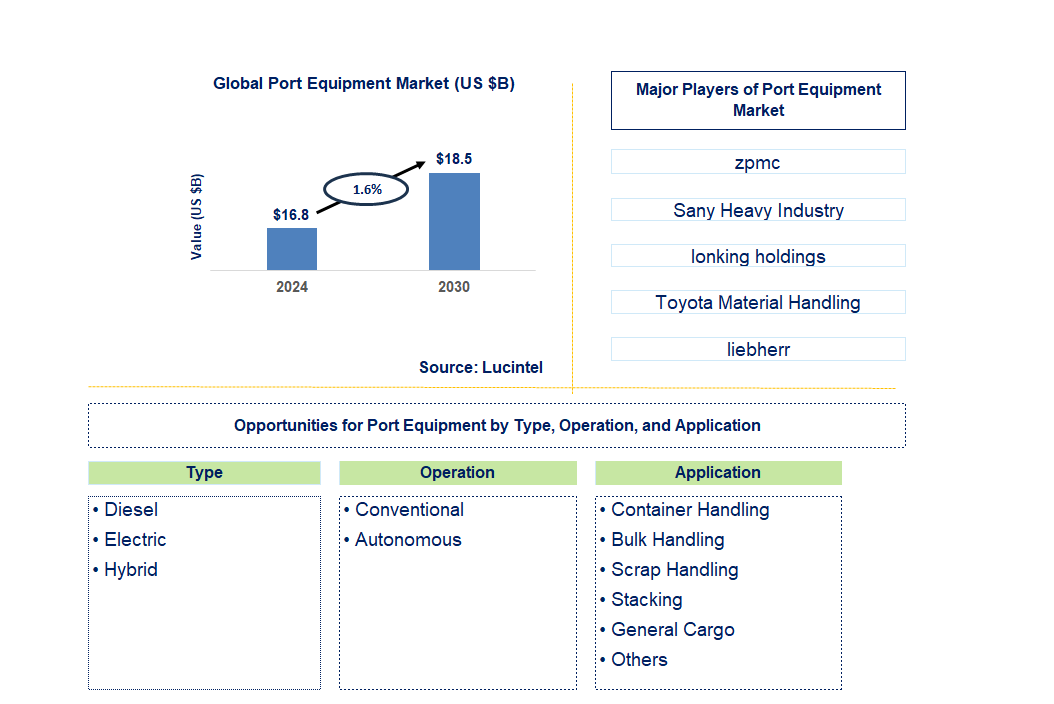
Key data points: The market size in 2030 = $18.5 billion, growth forecast = 1.6% annually for the next 6 years. Scroll below to get more insights. This market report covers trends, opportunities, and forecasts in the global port equipment market to 2030 by type (diesel, electric, and hybrid), operation (conventional and autonomous), application (container handling, bulk handling, scrap handling, stacking, general cargo, and others), and region (North America, Europe, Asia Pacific, and the Rest of the World)
We'll send your sample report shortly.
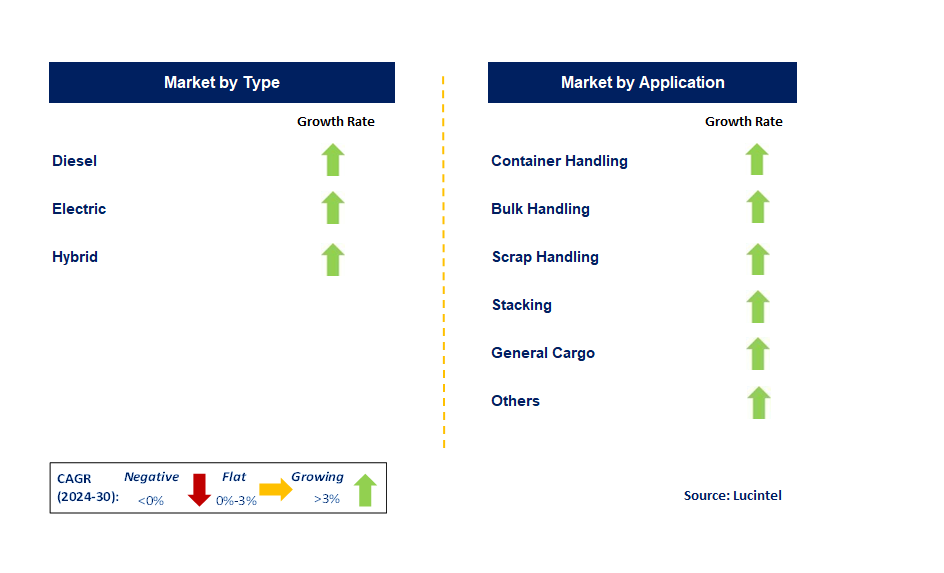
• Lucintel forecasts that, within the type category, electric is expected to witness the highest growth over the forecast period.
• Within the application category, container handling is expected to witness the highest growth over the forecast period.
• In terms of regions, APAC will remain the largest region over the forecast period. Gain valuable insights for your business decisions with our comprehensive 150+ page report.
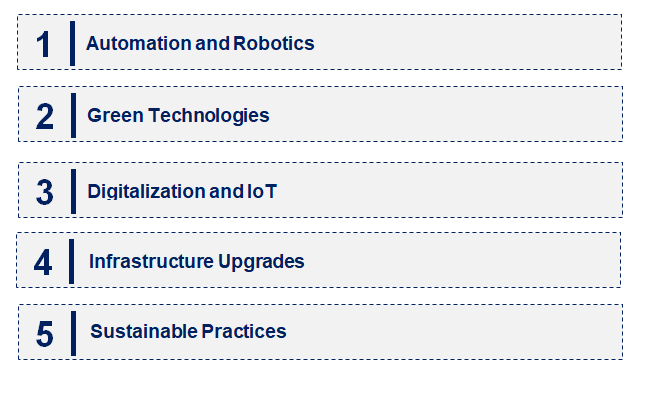
• Automation and Robotics: The use of automated cranes, AGVs, and robots ensures that port operations are more streamlined and efficient.
• Green Technologies: These involve using eco-friendly facilities like electric and hybrid cranes, which minimize environmental impacts from shipping activities at ports.
• Digitalization and IoT: The introduction of IoT and real-time data analytics enables better port management, cargo tracking, and increased operational efficiency.
• Infrastructure Upgrades: Modernizing ports for larger vessels and increasing throughput capacity is an example of infrastructure upgrades at a port.
• Sustainable Practices: Introducing advanced technologies along with sustainable practices in port operations, such as reducing energy consumption and waste generation, among others. Automation and robotics, green technology, digitalization and IoT, infrastructure upgrades, and sustainable practices are the key trends that make the market more efficient. They help reduce pollution through environmentally friendly methods, optimize operational management, and are critical due to the increased demand for global trade.
• Digitalization: Increased utilization of digital solutions for real-time analytics, cargo tracking, and operational optimization.
• Infrastructure Investment: Development of port infrastructure that can handle larger ships and increase throughput.
• Advanced Robotics: Implementation of robotics for automated container handling and cargo management to enhance operational efficiency.
• Automation: Significant investments in automated cranes, AGVs, and port management systems to improve efficiency and reduce labor costs.
• Green Technology: Adoption of electric and hybrid port equipment to comply with environmental regulations and reduce carbon emissions. Recent developments in the port equipment market, including advancements in automation, green technology, digitalization, infrastructure investment, and robotics, are transforming the industry. These changes are enhancing operational efficiency, reducing environmental impact, and preparing ports for future growth and increased cargo demands.
• Automation Solutions: Invest in automatic cranes and AGVs to make operations at the ports more efficient and reduce their costs.
• Green Equipment: Create eco-friendly machines, such as electric and hybrid cranes, that comply with environmental regulations and attract sustainability-conscious customers.
• Digital Port Management: Streamline processes using cutting-edge digital solutions for real-time data analytics, IoT integration, and smart port management to increase the efficiency of operations.
• Infrastructure Upgrades: Modernize ports to handle large vessels and increase their capacity to carry more goods due to increasing global trade demands.
• Robotics Integration: Automate container handling systems through robots, improving efficiencies while lowering labor expenses. Automation solutions, green equipment, digital port management, infrastructure upgrades, and robotics integration are some of the strategic growth opportunities in the port equipment market. These drive market expansion by enhancing operational efficiency and addressing environmental and technological imperatives within a dynamic port industry context.
• Technological Advancements: Automation improvements and other technologies linked to this area are designed to improve efficiency and processes of port equipment.
• Increased Trade Volume: Global trade is increasing, which means there is a need for more efficient, scalable port operations; hence, the demand for advanced equipment.
• Environmental Regulations: Environmental friendliness in port equipment is mandated by strict environmental regulations, encouraging the use of green technologies and sustainable practices.
• Infrastructure Investments: Capacity building occurs through significant investments in the modernization and construction of new facilities at ports.
• Economic Growth: Cargo volumes are rising due to increased consumer demand, growing economic activities, and growing investments in port equipment. Challenges in the port equipment market are:
• High Costs: The high prices of advanced machinery can hinder ports, affecting their investments and profitability levels.
• Regulatory Compliance: Complying with ever-changing environmental and safety legislation may prove challenging, requiring substantial financial expenditure.
• Technological Integration: Adding new technologies to existing systems requires a complex process and significant resource commitment.
• Economic Uncertainty: Instability in economic performance and conflicts in trade policies may result in fluctuations in cargo volumes and investments in port equipment.
• Competition: High competition leads to constant innovation and cost management within a highly competitive industry involving ports and original equipment manufacturers (OEMs). Drivers include technological advancements, increased trade volume, environmental regulations, infrastructure investment, and economic growth. High costs, regulatory compliance, technological integration, economic uncertainty, and competition are some of the challenges faced by this sector. Understanding these factors will help achieve sustainability and success in the port equipment market.
• ZPMC
• Sany Heavy Industry
• Lonking holdings
• Toyota Material Handling
• Liebherr
• Gaussin
• Cargotec
• Konecranes
• Anhui Heli
• Mitsubishi Logisnext
• Diesel
• Electric
• Hybrid
• Conventional
• Autonomous
• Container Handling
• Bulk Handling
• Scrap Handling
• Stacking
• General Cargo
• Others
• North America
• Europe
• Asia Pacific
• The Rest of the World
• USA: Investments in automation and smart technologies are being made in the US port equipment market. They are investing in advanced cranes, automated guided vehicles (AGVs), and real-time data analytics to enhance efficiency and reduce costs related to operations. They are also expanding infrastructure capacity to cater to larger vessels and increase throughput.
• China: In China, investments in automation and digitalization dominate the port equipment industry. The country has incorporated modern container handling systems and automated stacking cranes capable of managing increased volumes of cargo. Additionally, China is using IoT and AI technologies to optimize operations at ports, allowing better tracking and management of cargo.
• Germany: German port equipment focuses heavily on ‘green’ or sustainable development. Their ports invest in hybrid cranes powered by electricity and other advanced waste disposal systems to avoid adverse environmental effects. Furthermore, digitalized management platforms have been introduced, allowing smoother operations by enhancing logistics processes.
• India: India’s port equipment industry continues to grow with a focus on improving infrastructure and introducing superior cargo handling facilities that are more effective than previous ones. Currently, they are investing in advanced cranes, automated systems, and expansion projects targeting higher capacities and reduced congestion across all ports. These measures aim to improve India’s expanding maritime sector.
• Japan: Automation levels within Japan’s port equipment market remain high compared to other countries globally. Japanese ports use sophisticated robotics and automatic container handling technologies, among other smart logistics solutions. Furthermore, Japan has made significant efforts to adhere to stringent standards and improve sustainability by incorporating environmental technologies.


• ZPMC
• Sany Heavy Industry
• Lonking holdings
• Toyota Material Handling
• Liebherr
• Gaussin
• Cargotec
• Konecranes
• Anhui Heli
• Mitsubishi Logisnext Q6. Which port equipment market segment will be the largest in future? Answer: Lucintel forecasts that electric is expected to witness the highest growth over the forecast period. Q7. In port equipment market, which region is expected to be the largest in next 5 years? Answer: APAC will remain the largest region over the forecast period. Q.8 Do we receive customization in this report? Answer: Yes, Lucintel provides 10% customization without any additional cost.


Choose a license that fits your team. Instant PDF delivery.
Prices exclude taxes. Instant delivery. Custom licensing available on request.
Market Report · July 31, 2026
Market Report · July 22, 2026
Market Report · July 20, 2026
Trusted partner for strategic intelligence and business growth


Receive a complimentary market analysis tailored to your industry. Our analysts will identify key growth opportunities and competitive dynamics specific to your business.

Market size, growth rate, and key trend analysis for your specific sector.

Top competitor positioning and market share analysis.

Strategic recommendations backed by data-driven insights.
Get curated market intelligence and competitive moves straight to your inbox.
By subscribing, you agree to receive our monthly insights. Unsubscribe anytime.
Receive a complimentary market analysis tailored to your industry. Our analysts will identify key growth opportunities and competitive dynamics specific to your business.
Market size, growth rate, and key trend analysis for your specific sector.
Top competitor positioning and market share analysis.
Strategic recommendations backed by data-driven insights.
Get curated market intelligence, emerging trends, and competitive moves straight to your inbox each month.
By subscribing, you agree to receive our monthly insights. Unsubscribe anytime.
We'll send your sample report shortly.