
Market Report · July 22, 2026

Key data points: The market size in 2035 = $937 million, growth forecast = 3.1% annually for the next 8 years. Scroll below to get more insights. This market report covers trends, opportunities and forecasts in polyvinylidene difluoride market to 2035 by application (pipes & fittings, films & sheets, wires & semiconductor processing, coatings, membranes, and others), end use (oil & gas, electrical & electronic, chemical processing, automotive & transportation, aerospace & defense, building & construction, and others), and region (North America, Europe, Asia Pacific, and the Rest of the World)
We'll send your sample report shortly.
• Lucintel forecasts that, within the application category, membrane is expected to witness the highest growth over the forecast period.
• Within the end use category, electrical & electronic is expected to witness the highest growth.
• In terms of region, APAC is expected to witness the highest growth over the forecast period.
Gain valuable insights for your business decisions with our comprehensive 150+ page report. Sample figures with some insights are shown below.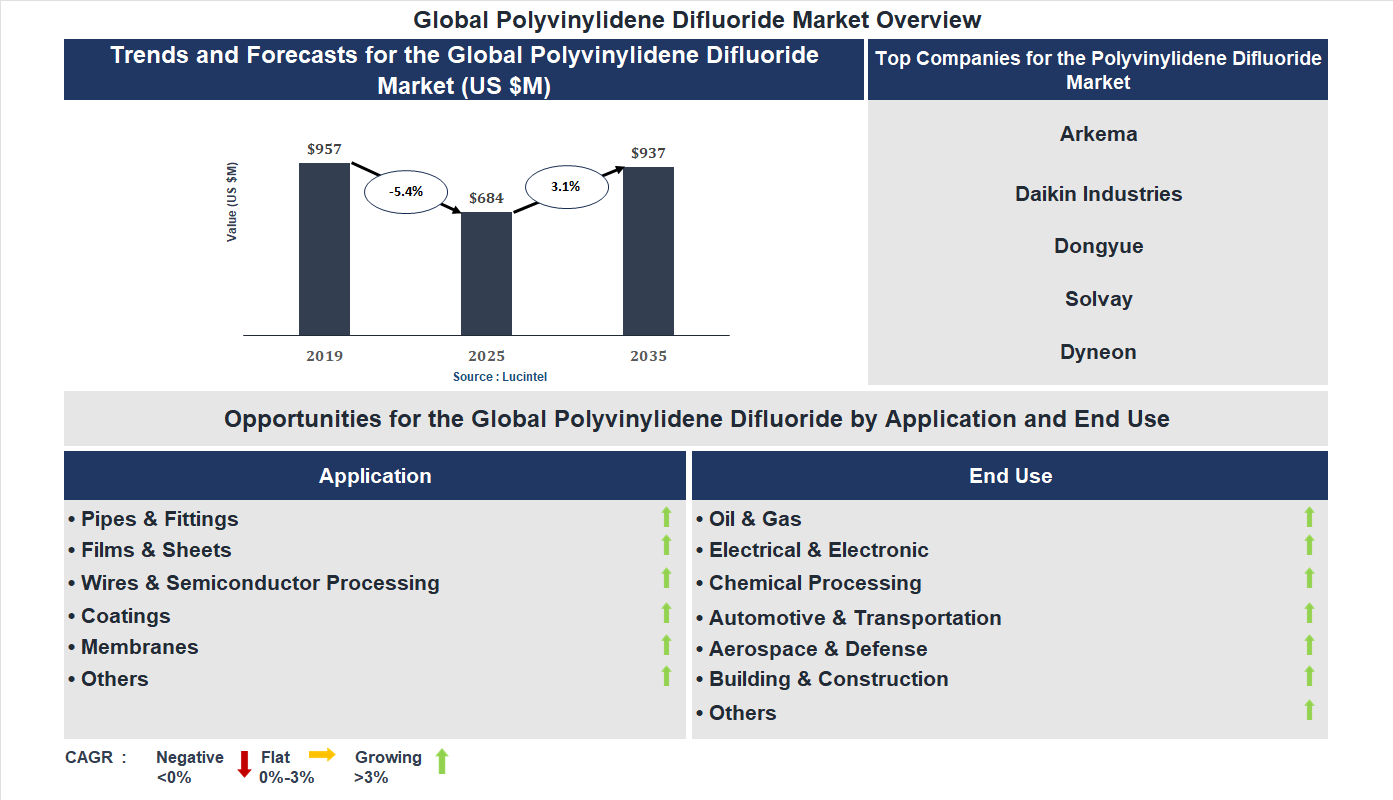
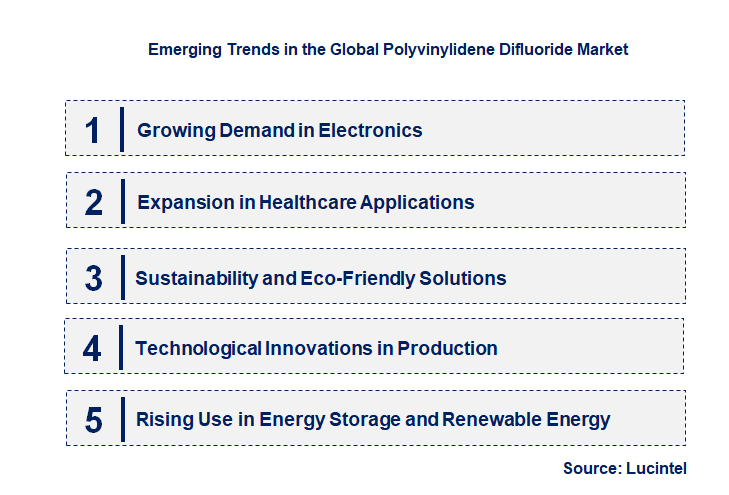
• Growing Demand in Electronics: Increasing adoption of PVDF in electronic components and devices is driven by its excellent dielectric properties, chemical resistance, and flexibility. As consumer electronics and electric vehicles expand, the need for high-performance insulating materials rises, boosting PVDF usage. This trend enhances the market by opening new avenues for advanced electronic applications, including sensors, capacitors, and wiring insulation, thereby supporting the growth of the electronics sector and encouraging innovation in material science.
• Expansion in Healthcare Applications: PVDF‘s biocompatibility, chemical stability, and ease of fabrication are fueling its use in medical devices, filtration membranes, and drug delivery systems. The healthcare industry’s focus on durable, sterile, and reliable materials is propelling demand. This trend impacts the market by creating opportunities for specialized PVDF products, fostering innovation in medical technology, and supporting the development of advanced diagnostic and therapeutic devices, ultimately broadening PVDF‘s role in healthcare.
• Sustainability and Eco-Friendly Solutions: Increasing environmental concerns are prompting the development of bio-based and recyclable PVDF variants. Manufacturers are investing in sustainable production processes and eco-friendly formulations to reduce carbon footprints. This trend influences the market by aligning PVDF applications with green initiatives, attracting environmentally conscious consumers, and complying with stricter regulations. It encourages innovation in sustainable materials, ensuring PVDF remains relevant in a future focused on environmental responsibility.
• Technological Innovations in Production: Advances in manufacturing techniques, such as precision extrusion and nanocomposite integration, are enhancing PVDF‘s properties like strength, transparency, and thermal stability. These innovations enable the creation of high-performance, customized PVDF materials for specific applications. The impact on the market includes increased product versatility, improved performance, and cost efficiencies, which help meet diverse industry needs and foster competitive advantages for manufacturers.
• Rising Use in Energy Storage and Renewable Energy: PVDF‘s excellent chemical resistance and stability make it ideal for use in batteries, fuel cells, and solar panels. The push toward renewable energy sources and energy storage solutions is driving demand for durable, high-quality PVDF components. This trend reshapes the market by positioning PVDF as a critical material in sustainable energy infrastructure, encouraging research and development, and expanding its application scope in clean energy technologies.
• Growing Demand in the Electronics Sector: The electronics industry increasingly relies on PVDF for its excellent dielectric properties, chemical resistance, and flexibility. This demand is driven by the proliferation of electronic devices, sensors, and communication equipment. As consumer electronics become more sophisticated, PVDF‘s role in manufacturing capacitors, cables, and insulation materials is expanding. This trend enhances market growth, encourages innovation, and attracts investments in PVDF production facilities, ultimately strengthening the supply chain and supporting technological advancements.
• Expansion in the Energy Storage Sector: PVDF is critical in lithium-ion batteries, serving as a binder and separator material due to its chemical stability and mechanical strength. The surge in renewable energy projects and electric vehicle adoption has significantly increased demand for high-performance batteries. Innovations in PVDF formulations improve battery safety, lifespan, and efficiency. This growth in energy storage solutions is propelling PVDF market expansion, fostering collaborations between material suppliers and battery manufacturers, and driving sustainable energy initiatives worldwide.
• Advancements in Medical Applications: The medical industry is increasingly utilizing PVDF for its biocompatibility, chemical resistance, and durability. It is used in medical tubing, filtration membranes, and implantable devices. Recent developments focus on enhancing PVDF‘s sterilization resistance and biocompatibility, enabling its use in more complex medical applications. These innovations improve patient safety, device longevity, and performance, thereby expanding PVDF‘s role in healthcare. The medical sector‘s growth directly influences market demand and encourages further research into specialized PVDF variants.
• Sustainability and Eco-Friendly Production: Environmental concerns are prompting PVDF manufacturers to adopt greener production methods, reduce emissions, and develop recyclable variants. Innovations include bio-based PVDF and processes that lower energy consumption. These efforts aim to minimize environmental impact while maintaining material performance. The shift towards sustainable manufacturing practices enhances market appeal, aligns with regulatory standards, and opens new opportunities in eco-conscious industries. This focus on sustainability is shaping the future of PVDF production and market competitiveness.
• Development of High-Performance PVDF Composites: Recent innovations involve integrating PVDF with nanomaterials to create composites with enhanced mechanical, thermal, and electrical properties. These advanced materials are suitable for demanding applications such as aerospace, defense, and high-tech electronics. The development of these composites broadens PVDF‘s application scope, increases product performance, and opens new markets. Companies investing in this R&D are gaining competitive advantages, fostering industry growth, and driving innovation in high-end applications that require superior material characteristics.
• Growing Demand for PVDF in Lithium-Ion Batteries: The increasing adoption of electric vehicles and renewable energy storage systems is boosting the need for high-performance battery components. PVDF’s excellent chemical stability and electrical insulation properties make it ideal for battery binders and separators. As energy storage requirements expand, the market for PVDF in battery applications is projected to grow substantially, driven by technological advancements and the push for sustainable energy solutions.
• Expansion of PVDF use in the electronics industry: PVDF’s exceptional dielectric properties, chemical resistance, and flexibility make it suitable for various electronic components, including cables, connectors, and sensors. The rising demand for miniaturized and high-performance electronic devices is fueling this growth. Additionally, PVDF’s use in flexible electronics and wearable devices is expanding, creating new opportunities for manufacturers to innovate and meet evolving consumer and industrial needs.
• Increasing Adoption of PVDF in Water Treatment and Filtration: PVDF membranes are highly resistant to chemicals, fouling, and high temperatures, making them ideal for water purification and filtration systems. The global focus on clean water and environmental sustainability is driving demand for advanced filtration solutions. As governments and industries seek efficient, durable, and cost-effective filtration materials, PVDF’s role in water treatment applications is expected to expand significantly.
• Rising use of PVDF in Healthcare and Medical Devices: PVDF’s biocompatibility, chemical inertness, and sterilization resistance make it suitable for medical tubing, membranes, and diagnostic equipment. The healthcare sector’s growth, especially in medical device manufacturing and pharmaceutical applications, is increasing demand for PVDF-based materials. Innovations in medical technology and stringent regulatory standards further support the adoption of PVDF in critical healthcare applications.
• Increasing Application of PVDF in the Aerospace and Defense Sectors: PVDF’s lightweight, high-performance, and corrosion-resistant properties are valuable for aerospace and defense components. Its use in wiring, coatings, and structural parts is expanding as industries seek durable, lightweight materials to improve efficiency and safety. Growing investments in defense infrastructure and aerospace innovation are expected to drive further adoption of PVDF, supporting the market’s overall growth trajectory.
• Technological Innovation: The development of advanced manufacturing techniques has enhanced PVDF‘s properties, such as chemical resistance, thermal stability, and flexibility. These improvements have broadened its application scope, especially in high-performance membranes, coatings, and electronic components. Continuous R&D efforts are expected to further optimize PVDF‘s performance, making it more attractive for diverse industrial uses. This technological progress not only boosts product quality but also reduces production costs over time, fostering market growth.
• Growing Demand in the Healthcare Sector: PVDF‘s biocompatibility, chemical resistance, and stability make it ideal for medical devices, filtration membranes, and implantable components. The increasing prevalence of chronic diseases and the rising adoption of advanced medical equipment globally are driving demand for high-quality, durable materials like PVDF. Additionally, stringent regulatory standards for medical devices favor the use of PVDF due to its inert nature, further fueling its adoption in healthcare applications.
• Expansion in Renewable Energy Applications: The shift towards sustainable energy sources has led to increased use of PVDF in solar panel manufacturing, particularly as encapsulants and protective coatings. PVDF‘s excellent weather resistance and UV stability make it suitable for outdoor applications, ensuring longevity and performance of solar modules. Growing investments in solar energy infrastructure worldwide are expected to sustain demand for PVDF, supporting the market‘s expansion into renewable energy sectors.
• Rising Automotive and Aerospace Industry Adoption: The automotive and aerospace sectors are increasingly utilizing PVDF for lightweight, corrosion-resistant components, wiring insulation, and fuel system parts. The need for durable, high-performance materials that contribute to fuel efficiency and safety standards is driving this trend. As these industries focus on innovation and sustainability, PVDF‘s unique properties position it as a preferred material, thereby propelling market growth.
• Increasing Focus on Environmental Regulations and Sustainability: Governments and regulatory bodies are imposing stricter environmental standards concerning the use and disposal of fluoropolymers like PVDF. This has prompted manufacturers to develop eco-friendly production processes and recyclable PVDF variants. The push for sustainability is encouraging innovation in bio-based and low-impact PVDF formulations, which could open new market avenues while addressing environmental concerns.
• High Raw Material and Production Costs: The manufacturing of PVDF involves complex processes and expensive raw materials, such as fluorinated monomers. Fluctuations in raw material prices and energy costs can significantly impact overall production expenses, leading to higher product prices. This cost factor may hinder market penetration, especially in price-sensitive regions, and could limit the adoption of PVDF in cost-competitive applications.
• Environmental and Regulatory Concerns: Despite its advantageous properties, PVDF‘s production and disposal pose environmental challenges due to the release of hazardous fluorinated compounds. Stricter regulations aimed at reducing environmental impact can increase compliance costs for manufacturers. Additionally, concerns over the long-term environmental footprint of fluoropolymers may restrict market growth and necessitate investment in sustainable alternatives.
• Limited Recycling and End-of-Life Management: Recycling PVDF remains a significant challenge due to its chemical stability and complex processing requirements. The lack of efficient recycling methods hampers sustainability efforts and raises environmental concerns. As regulations tighten and consumer awareness increases, the inability to effectively manage PVDF waste could restrict market expansion and lead to increased scrutiny from environmental agencies.
• Arkema
• Daikin Industries
• Dongyue
• Solvay
• Dyneon
• Gujarat Fluorochemicals
• Kureha
• RTP Company
• Shanghai Huayi 3F New Materials
• Shanghai Ofluorine
• Pipes & Fittings
• Films & Sheets
• Wires & Semiconductor Processing
• Coatings
• Membranes
• Others
• Oil & Gas
• Electrical & Electronic
• Chemical Processing
• Automotive & Transportation
• Aerospace & Defense
• Building & Construction
• Others
• North America
• Europe
• Asia Pacific
• The Rest of the World
• United States: The US market for PVDF has seen increased adoption in the aerospace and healthcare sectors, driven by technological innovations and stringent regulatory standards. Major companies are investing in R&D to develop high-performance PVDF variants for use in batteries, filtration, and coatings. The government’s focus on renewable energy and electric vehicles is boosting demand for PVDF in battery separators and solar panel components. Additionally, the US is witnessing a rise in sustainable manufacturing practices, promoting eco-friendly PVDF production methods.
• China: China remains the largest consumer and producer of PVDF, with rapid industrial growth fueling demand across electronics, automotive, and construction sectors. The country has expanded its manufacturing capacity, focusing on high-quality PVDF for use in lithium-ion batteries and water treatment. Government policies supporting new energy vehicles and renewable energy projects are further propelling market growth. Chinese companies are also investing in advanced production techniques to improve product performance and reduce environmental impact, positioning China as a key global player.
• Germany: Germany’s PVDF market is characterized by innovation in the chemical and automotive industries, emphasizing high-performance and sustainable materials. The country’s focus on Industry 4.0 and green technologies has led to increased R&D activities aimed at developing eco-friendly PVDF variants. German manufacturers are also integrating PVDF into advanced electronics and sensor applications, driven by the country’s strong emphasis on quality and environmental standards. Collaborations between industry and academia are fostering new applications and improving production efficiency.
• India: The Indian PVDF market is witnessing rapid growth due to expanding infrastructure, automotive, and renewable energy sectors. Increasing investments in solar power projects and electric vehicles are boosting demand for PVDF in solar panel coatings and battery components. The government’s initiatives to promote sustainable development and manufacturing are encouraging local production and innovation. Indian companies are focusing on cost-effective PVDF solutions to cater to domestic needs and export markets, with a growing emphasis on quality and environmental compliance.
• Japan: Japan’s PVDF market is driven by advancements in electronics, automotive, and healthcare industries. The country is investing heavily in R&D to develop high-performance, durable PVDF materials for use in semiconductors, medical devices, and energy storage. Japan’s focus on sustainability and reducing environmental impact has led to innovations in eco-friendly PVDF production processes. The country’s strong industrial base and technological expertise continue to position it as a leader in high-quality PVDF applications, with ongoing collaborations to explore new markets and applications.


• Arkema
• Daikin Industries
• Dongyue
• Solvay
• Dyneon
• Gujarat Fluorochemicals
• Kureha
• RTP Company
• Shanghai Huayi 3F New Materials
• Shanghai Ofluorine
Q6. Which polyvinylidene difluoride market segment will be the largest in future?

Choose a license that fits your team. Instant PDF delivery.
Prices exclude taxes. Instant delivery. Custom licensing available on request.
Market Report · July 22, 2026
Market Report · July 22, 2026
Market Report · July 22, 2026
Trusted partner for strategic intelligence and business growth


Receive a complimentary market analysis tailored to your industry. Our analysts will identify key growth opportunities and competitive dynamics specific to your business.

Market size, growth rate, and key trend analysis for your specific sector.

Top competitor positioning and market share analysis.

Strategic recommendations backed by data-driven insights.
Get curated market intelligence and competitive moves straight to your inbox.
By subscribing, you agree to receive our monthly insights. Unsubscribe anytime.
Receive a complimentary market analysis tailored to your industry. Our analysts will identify key growth opportunities and competitive dynamics specific to your business.
Market size, growth rate, and key trend analysis for your specific sector.
Top competitor positioning and market share analysis.
Strategic recommendations backed by data-driven insights.
Get curated market intelligence, emerging trends, and competitive moves straight to your inbox each month.
By subscribing, you agree to receive our monthly insights. Unsubscribe anytime.
We'll send your sample report shortly.