
Report Feature
Polyurethane Leather Market Trends and Forecast
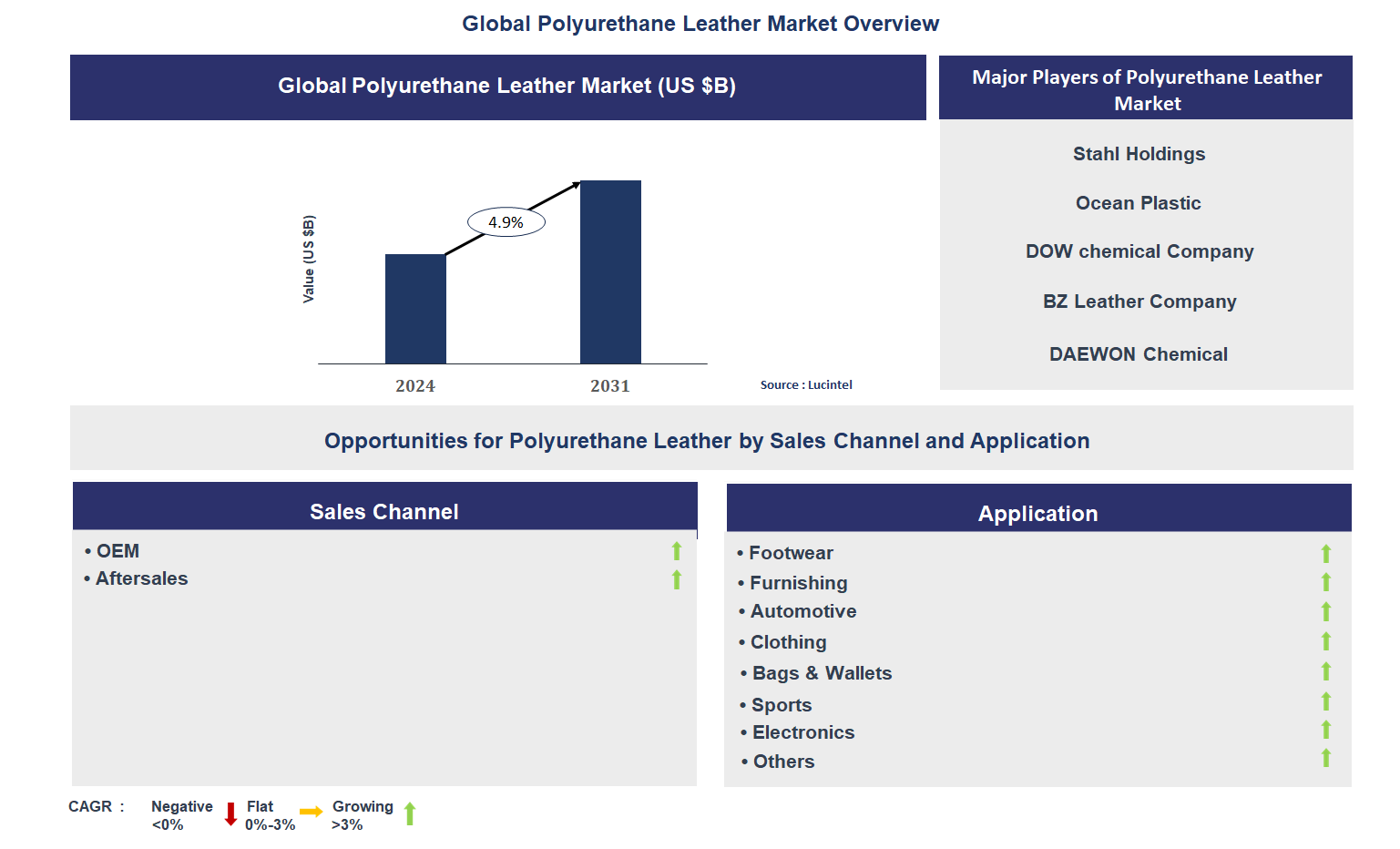
The future of the global polyurethane leather market looks promising with opportunities in the footwear, furnishing, automotive, clothing, bag & wallet, sport, and electronics markets. The global polyurethane leather market is expected to grow with a CAGR of 4.9% from 2025 to 2031. The major drivers for this market are the increasing demand for sustainable alternative materials, the rising preference for eco-friendly leather products, and the growing applications in automotive & fashion industries.• Lucintel forecasts that, within the sales channel category, OEM is expected to witness higher growth over the forecast period.
• Within the application category, footwear is expected to witness the highest growth.
• In terms of region, APAC is expected to witness the highest growth over the forecast period. Gain valuable insights for your business decisions with our comprehensive 150+ page report. Sample figures with some insights are shown below.
Emerging Trends in the Polyurethane Leather Market
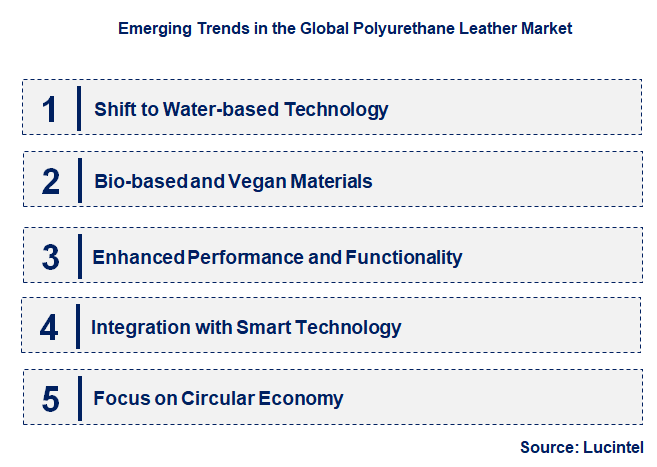
The polyurethane leather market is undergoing a significant transformation driven by a confluence of technological, ethical, and consumer-led forces. These emerging trends reflect a collective industry shift towards sustainability, advanced functionality, and market diversification. The developments are not merely incremental; they are fundamentally reshaping how and where PU leather is produced and utilized.• Shift to Water-based Technology: The industry is moving away from traditional solvent-based production methods. This involves replacing harmful organic solvents like DMF with water. This trend is driven by strict environmental regulations and the need for a cleaner, safer manufacturing process. It significantly reduces VOC emissions, making products more sustainable and appealing to eco-conscious consumers.
• Bio-based and Vegan Materials: There is a strong and growing trend toward using renewable and plant-based feedstocks. This includes materials derived from corn, mushrooms, pineapple leaves, and other agricultural waste. The impact is a more sustainable and ethical product line that appeals to the expanding vegan and cruelty-free consumer base, opening up new market segments and enhancing brand image.
• Enhanced Performance and Functionality: A key trend is the development of polyurethane leather with superior properties. This includes improved breathability, scratch resistance, and enhanced durability to rival natural leather. This innovation is crucial for high-performance applications in the automotive and sports equipment industries, where material performance is a critical differentiator.
• Integration with Smart Technology: The market is seeing an emergence of "smart" polyurethane leather with integrated electronic capabilities. This can include features like embedded sensors for health monitoring or self-heating functionalities. This trend is opening up opportunities in wearable technology, smart furniture, and high-end automotive interiors, pushing the material beyond its traditional role.
• Focus on Circular Economy: The industry is exploring new ways to recycle and reuse PU leather to close the loop on its life cycle. This involves developing recyclable formulations and establishing collection programs. The impact is a more sustainable business model that reduces waste, addresses landfill concerns, and aligns with global efforts toward a circular economy. These trends are fundamentally reshaping the polyurethane leather market. The shift towards sustainability is no longer a niche, but a core business strategy, driving innovation and consumer preference. Enhanced functionality and smart technology integration are pushing the material into new, high-value applications. The focus on a circular economy is creating a more responsible and sustainable industry for the future.
Recent Development in the Polyurethane Leather Market
The polyurethane leather market is being shaped by several key developments, driven by technological progress, shifting market demands, and a growing emphasis on sustainability. These developments are not isolated but rather interconnected, influencing material properties, manufacturing processes, and final applications across various industries. They reflect a strategic response to the need for more efficient and durable materials.• Water-based PU technology: A key development is the widespread adoption of water-based polyurethane (WPU) production, which eliminates harmful solvents. This development is crucial for meeting stringent environmental regulations and reduces VOC emissions. It has a significant impact on product safety and sustainability, making it a preferred choice for companies aiming for a green brand image, particularly in Europe.
• Bio-based feedstock innovations: There is a strong focus on using renewable, non-petroleum-based materials to create PU leather. This includes polyols derived from plants like corn, soybeans, and other agricultural waste. The impact is a reduction in reliance on fossil fuels, lowering the product’s carbon footprint and attracting a growing segment of environmentally conscious consumers.
• Advanced coating and finishing techniques: Recent advancements have focused on improving the aesthetic and tactile properties of PU leather through innovative coating methods. This allows manufacturers to create products that are virtually indistinguishable from genuine leather in look and feel. The impact is a broader adoption of PU leather in high-end applications like luxury handbags and premium car interiors.
• Development of solvent-free production: A major development is the introduction of completely solvent-free PU leather manufacturing processes. This is a significant leap toward a greener industry, as it eliminates the need for any chemical solvents. This development has a profound impact by making the production process safer for workers and the environment, while also reducing energy consumption.
• Integration of recycled content: Manufacturers are increasingly incorporating recycled materials, such as recycled polyester fabrics, into the base layer of polyurethane leather. The impact is a reduction in waste and a more sustainable product. This development is particularly important for brands aiming to meet their corporate social responsibility goals and appeal to a new generation of buyers. These developments are profoundly impacting the polyurethane leather market by driving innovation and value creation. They’re enabling the creation of smarter, more sustainable, and high-performance products. By addressing critical industry needs—from environmental concerns to durability and functionality—these advancements are not only fueling market growth but also setting new standards for material science and engineering.
Strategic Growth Opportunities in the Polyurethane Leather Market
The polyurethane leather market offers significant strategic growth opportunities across various key applications. These opportunities are driven by a convergence of factors, including technological advancements, increasing demand for high-performance materials, and a global emphasis on sustainability. Companies that can strategically align their products with these emerging needs are well-positioned for future success and market leadership.• Automotive: interior components: The electric vehicle (EV) revolution and consumer preference for lightweight, durable, and cruelty-free materials are creating a huge opportunity. PU leather is being used in car seats, dashboards, and door panels due to its durability, aesthetics, and lower weight compared to genuine leather. This allows manufacturers to improve vehicle efficiency and meet sustainability targets.
• Footwear: athletic and fashion: The footwear industry is a major growth area for PU leather due to its versatility and cost-effectiveness. The material is used in both fast fashion and high-performance athletic shoes. The opportunity lies in developing breathable, lightweight, and durable PU leather to meet the demands of both segments, catering to fashion trends and athletic performance.
• Furniture: upholstery and seating: The furniture market, driven by rapid urbanization and rising disposable incomes, offers a significant opportunity. PU leather is a popular choice for upholstery due to its affordability, ease of cleaning, and wide range of textures and colors. The focus is on creating high-quality, long-lasting PU leather that can withstand heavy use in both residential and commercial settings.
• Fashion accessories: handbags and apparel: As consumer demand for vegan and ethical products grows, luxury and mainstream fashion brands are increasingly adopting PU leather. The opportunity is in developing premium-grade, high-performance materials that can mimic the look and feel of genuine leather. This allows brands to expand their product lines to appeal to a wider range of customers.
• Medical: healthcare devices: The healthcare sector presents a high-value opportunity for PU leather due to the demand for materials that are easy to clean, durable, and resistant to bacteria and bodily fluids. The material is used in medical beds, seating, and equipment covers. This growth opportunity is driven by the need for hygienic and long-lasting materials in hospitals and clinics. These strategic growth opportunities are reshaping the market by directing investment and innovation toward high-value, specialized applications. They demonstrate how polyurethane leather is no longer just a commodity material but a crucial component enabling advancements in critical industries. By targeting these applications, companies can unlock new revenue streams and strengthen their position in a competitive global market.
Polyurethane Leather Market Driver and Challenges
The polyurethane leather market is influenced by a dynamic interplay of major drivers and significant challenges. These factors, which include technological, economic, and regulatory forces, dictate market growth and innovation. Understanding this balance is crucial for stakeholders to navigate the market effectively, capitalize on opportunities, and mitigate potential risks. The industry’s future will be defined by how it addresses these dual forces. The factors responsible for driving the polyurethane leather market include: 1. Rising consumer preference for ethical products: The growing global awareness of animal cruelty and environmental impact associated with traditional leather production is a major driver. This is a key factor propelling the demand for cruelty-free and vegan PU leather alternatives across various industries. 2. Cost-effectiveness and performance: PU leather is a more affordable alternative to genuine leather, offering a wide range of colors, textures, and designs. Its high durability, water resistance, and easy maintenance make it a preferred material for mass-produced goods, especially in the automotive and furniture industries. 3. Rapid growth of key end-use industries: The expansion of the automotive, footwear, and furniture industries, particularly in Asia-Pacific, is a powerful market driver. PU leather’s versatility and performance make it an ideal material for these sectors, directly fueling market growth. 4. Advancements in manufacturing technology: Innovations in manufacturing, such as the shift to water-based production and the development of high-performance microfiber materials, are enhancing the quality and sustainability of PU leather. This is improving the material’s appeal and opening up new applications. 5. Strict environmental regulations: Increasing government regulations on tanneries and the use of hazardous chemicals are pushing industries to adopt greener materials. This is compelling manufacturers to invest in cleaner PU leather production methods, driving a significant shift in the market. Challenges in the polyurethane leather market are: 1. Competition from genuine leather: Despite its advantages, PU leather faces competition from genuine leather, which is still perceived as a premium, long-lasting material by luxury brands and consumers. This perception challenges PU leather’s penetration into high-end markets. 2. Environmental concerns of traditional production: The traditional production of PU leather using solvents like DMF poses significant environmental and health risks. This challenge requires manufacturers to invest heavily in developing cleaner, water-based technologies and to comply with stringent regulations, which can increase production costs. 3. Durability and breathability issues: While improved, some PU leather products may not match the long-term durability and breathability of genuine leather, leading to cracking or peeling over time. This can limit its use in certain applications and affect consumer satisfaction. The combined effect of these drivers and challenges is a market that is simultaneously expanding and evolving. While drivers like rising demand and technological progress create strong growth momentum, challenges like sustainability and regulatory hurdles require the industry to innovate and adapt. The market’s future will depend on its ability to overcome these challenges by developing more sustainable, cost-effective, and regulation-compliant solutions.List of Polyurethane Leather Companies
Companies in the market compete on the basis of product quality offered. Major players in this market focus on expanding their manufacturing facilities, R&D investments, infrastructural development, and leverage integration opportunities across the value chain. With these strategies polyurethane leather companies cater increasing demand, ensure competitive effectiveness, develop innovative products & technologies, reduce production costs, and expand their customer base. Some of the polyurethane leather companies profiled in this report include-• Stahl Holdings
• Ocean Plastic
• DOW chemical Company
• BZ Leather Company
• DAEWON Chemical
Polyurethane Leather Market by Segment
The study includes a forecast for the global polyurethane leather market by sales channel, application, and region.Polyurethane Leather Market by Sales Channel [Value from 2019 to 2031]:
• OEM
• Aftersales
Polyurethane Leather Market by Application [Value from 2019 to 2031]:
• Footwear
• Furnishing
• Automotive
• Clothing
• Bags & Wallets
• Sports
• Electronics
• Others
Polyurethane Leather Market by Region [Value from 2019 to 2031]:
• North America
• Europe
• Asia Pacific
• The Rest of the World
Country Wise Outlook for the Polyurethane Leather Market
Recent developments in the polyurethane (PU) leather market are driven by a global shift towards sustainable, ethical, and high-performance materials. Innovations are focusing on reducing environmental impact by developing water-based, bio-based, and solvent-free alternatives. This is meeting growing consumer demand for vegan and eco-friendly products, while also expanding applications in high-end fashion and automotive interiors.• United States: The U.S. market is seeing a significant rise in demand for bio-based and vegan PU leather, fueled by consumer activism and a strong animal welfare movement. Key advancements include the adoption of plant-based materials and recycled plastics, with major brands in the fashion and automotive sectors increasingly incorporating these sustainable alternatives into their product lines.
• China: As the world’s largest producer and consumer of PU leather, China’s market is driven by massive manufacturing capabilities and a booming domestic market. Recent developments focus on improving production efficiency and material quality for applications in footwear and automotive interiors, while also exploring more environmentally friendly production methods to address local and global regulations.
• Germany: Germany’s market is centered on high-quality, specialized PU leather for its premium automotive and industrial sectors. The focus is on developing durable, high-performance materials with enhanced properties like flame retardancy and stain resistance. The country also leads in the adoption of advanced, eco-friendly production technologies to comply with strict European regulations.
• India: India’s polyurethane leather market is experiencing rapid growth, primarily fueled by the country’s fast-expanding fashion, footwear, and automotive industries. The market is highly price-sensitive, with developments focusing on cost-effective yet durable materials. There’s a growing awareness of sustainability, pushing manufacturers towards more eco-friendly and affordable alternatives to traditional leather.
• Japan: Japan is a leader in high-tech and functional materials, and its PU leather market reflects this. Recent developments are concentrated on creating highly functional materials with unique properties such as self-healing, antibacterial, and high breathability. This innovation is targeted at niche, high-value applications in consumer electronics, sports equipment, and medical devices.

Features of the Global Polyurethane Leather Market
Market Size Estimates: Polyurethane leather market size estimation in terms of value ($B). Trend and Forecast Analysis: Market trends (2019 to 2024) and forecast (2025 to 2031) by various segments and regions. Segmentation Analysis: Polyurethane leather market size by sales channel, application, and region in terms of value ($B). Regional Analysis: Polyurethane leather market breakdown by North America, Europe, Asia Pacific, and Rest of the World. Growth Opportunities: Analysis of growth opportunities in different sales channels, applications, and regions for the polyurethane leather market. Strategic Analysis: This includes M&A, new product development, and competitive landscape of the polyurethane leather market. Analysis of competitive intensity of the industry based on Porter’s Five Forces model.
FAQ
Q1. What is the growth forecast for polyurethane leather market? Answer: The global polyurethane leather market is expected to grow with a CAGR of 4.9% from 2025 to 2031. Q2. What are the major drivers influencing the growth of the polyurethane leather market? Answer: The major drivers for this market are the increasing demand for sustainable alternative materials, the rising preference for eco-friendly leather products, and the growing applications in automotive & fashion industries. Q3. What are the major segments for polyurethane leather market? Answer: The future of the polyurethane leather market looks promising with opportunities in the footwear, furnishing, automotive, clothing, bag & wallet, sport, and electronics markets. Q4. Who are the key polyurethane leather market companies? Answer: Some of the key polyurethane leather companies are as follows:• Stahl Holdings
• Ocean Plastic
• DOW chemical Company
• BZ Leather Company
• DAEWON Chemical Q5. Which polyurethane leather market segment will be the largest in future? Answer: Lucintel forecasts that, within the sales channel category, OEM is expected to witness higher growth over the forecast period. Q6. In polyurethane leather market, which region is expected to be the largest in next 5 years? Answer: In terms of region, APAC is expected to witness the highest growth over the forecast period. Q7. Do we receive customization in this report? Answer: Yes, Lucintel provides 10% customization without any additional cost.
Table of Contents
List of Figures
List of Tables
Methodology
- In-depth interviews of the major players in this market
- Detailed secondary research from competitors’ financial statements and published data
- Extensive searches of published works, market, and database information pertaining to industry news, company press releases, and customer intentions
- A compilation of the experiences, judgments, and insights of Lucintel’s professionals, who have analyzed and tracked this market over the years.


Buy Now
Choose a license that fits your team. Instant PDF delivery.
Prices exclude taxes. Instant delivery. Custom licensing available on request.
Key Questions
- • What are some of the most promising, high-growth opportunities for the polyurethane leather market by sales channel (OEM and aftersales), application (footwear, furnishing, automotive, clothing, bags & wallets, sports, electronics, and others), and region (North America, Europe, Asia Pacific, and the Rest of the World)?
- • Which segments will grow at a faster pace and why?
- • Which region will grow at a faster pace and why?
- • What are the key factors affecting market dynamics? What are the key challenges and business risks in this market?
- • What are the business risks and competitive threats in this market?
- • What are the emerging trends in this market and the reasons behind them?
- • What are some of the changing demands of customers in the market?
- • What are the new developments in the market? Which companies are leading these developments?
- • Who are the major players in this market? What strategic initiatives are key players pursuing for business growth?
- • What are some of the competing products in this market and how big of a threat do they pose for loss of market share by material or product substitution?
- • What M&A activity has occurred in the last 5 years and what has its impact been on the industry? For any questions related to Polyurethane Leather Market, Polyurethane Leather Market Size, Polyurethane Leather Market Growth, Polyurethane Leather Market Analysis, Polyurethane Leather Market Report, Polyurethane Leather Market Share, Polyurethane Leather Market Trends, Polyurethane Leather Market Forecast, Polyurethane Leather Companies, write Lucintel analyst at email: helpdesk@lucintel.com. We will be glad to get back to you soon.


