
Market Report · July 15, 2026

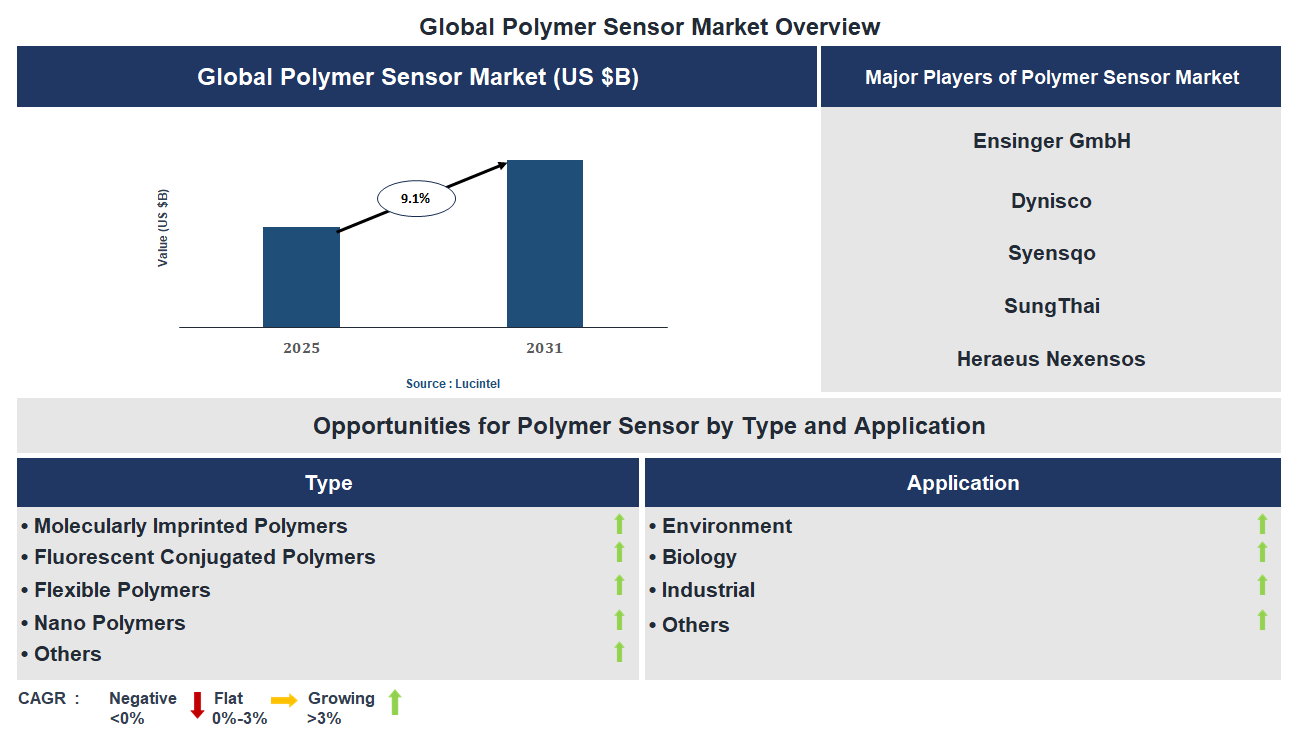
Key data points: The growth forecast = 9.1% annually for the next 7 years. Scroll below to get more insights. This market report covers trends, opportunities and forecasts in polymer sensor market to 2031 by type (molecularly imprinted polymers, fluorescent conjugated polymers, flexible polymers, nano polymers, and others), application (environment, biology, industrial, and others), and region (North America, Europe, Asia Pacific, and the Rest of the World)
We'll send your sample report shortly.
• Lucintel forecasts that, within the type category, molecularly imprinted polymer is expected to witness the highest growth over the forecast period.
• Within the application category, biology is expected to witness the highest growth.
• In terms of region, APAC is expected to witness the highest growth over the forecast period. Gain valuable insights for your business decisions with our comprehensive 150+ page report. Sample figures with some insights are shown below.
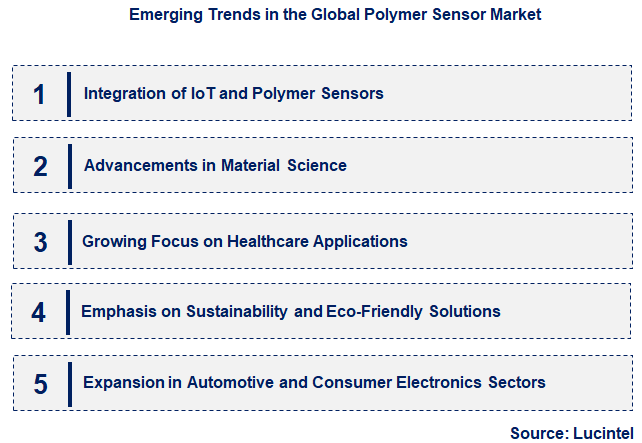
• Integration of IoT and Polymer Sensors: The proliferation of the Internet of Things (IoT) is significantly impacting the polymer sensor market. These sensors are increasingly embedded in smart devices, wearables, and industrial systems to enable real-time data collection and remote monitoring. The lightweight, flexible, and cost-effective nature of polymer sensors makes them ideal for IoT applications, enhancing connectivity and automation. This trend is driving demand for miniaturized, energy-efficient sensors that can operate seamlessly within interconnected networks, ultimately leading to smarter, more responsive systems across various sectors.
• Advancements in Material Science: Innovations in polymer materials are leading to the development of highly sensitive, durable, and customizable sensors. Researchers are exploring new polymer composites and nanomaterials to improve sensor performance, including enhanced sensitivity, selectivity, and stability. These advancements enable sensors to detect a broader range of stimuli, such as chemical, biological, and physical parameters, with greater accuracy. The improved material properties also extend sensor lifespan and reduce maintenance costs, making them more attractive for long-term applications in healthcare, environmental monitoring, and industrial processes.
• Growing Focus on Healthcare Applications: The healthcare sector is a major driver of polymer sensor adoption, especially for wearable health monitoring devices, diagnostics, and drug delivery systems. Polymer sensors offer biocompatibility, flexibility, and lightweight design, making them suitable for integration with human tissue and bodily fluids. The trend towards personalized medicine and remote patient monitoring is fueling demand for these sensors, which can provide continuous, real-time health data. This shift is revolutionizing healthcare by enabling early diagnosis, improving treatment outcomes, and reducing hospital visits, thus expanding the market significantly.
• Emphasis on Sustainability and Eco-Friendly Solutions: Environmental concerns and regulatory pressures are pushing the market towards sustainable polymer sensor solutions. Manufacturers are focusing on biodegradable, recyclable, and low-toxicity materials to reduce environmental impact. The development of eco-friendly sensors aligns with global sustainability goals and appeals to environmentally conscious consumers and industries. This trend is fostering innovation in green manufacturing processes and materials, which not only benefits the environment but also enhances the markets reputation and acceptance, especially in sensitive applications like food safety and environmental monitoring.
• Expansion in Automotive and Consumer Electronics Sectors: The automotive industry is increasingly adopting polymer sensors for applications such as tire pressure monitoring, collision detection, and climate control systems. Similarly, consumer electronics devices like smartphones, tablets, and wearable gadgets are integrating polymer sensors for touch interfaces, motion detection, and health tracking. The flexibility, lightweight nature, and cost-effectiveness of polymer sensors make them ideal for these applications, leading to widespread adoption. This expansion is driving market growth, fostering innovation in sensor design, and enabling the development of smarter, more connected vehicles and devices. In summary, these emerging trends are collectively reshaping the polymer sensor market by enhancing sensor capabilities, expanding application areas, and promoting sustainable practices. The integration with IoT, material innovations, healthcare focus, eco-friendly solutions, and sector-specific growth are creating a dynamic landscape that promises continued expansion and technological evolution. These developments are positioning polymer sensors as critical components in the future of smart, sustainable, and connected systems across multiple industries.
• Advancements in Material Technology: New polymer composites have been developed that offer higher sensitivity and durability, enabling sensors to operate effectively in harsh environments. This enhances their application in industrial and environmental monitoring, leading to increased adoption and market growth.
• Integration with Internet of Things (IoT): Polymer sensors are increasingly being integrated with IoT platforms, allowing real-time data collection and remote monitoring. This development is transforming sectors like healthcare and smart cities, boosting market demand for connected sensing solutions.
• Miniaturization and Flexibility: Innovations in manufacturing have led to smaller, flexible polymer sensors suitable for wearable devices and embedded systems. This miniaturization expands their use in healthcare, consumer electronics, and automotive sectors, driving market expansion.
• Enhanced Selectivity and Sensitivity: Researchers have improved the selectivity and sensitivity of polymer sensors through nanomaterial integration, enabling precise detection of specific chemicals or biological agents. This advancement is critical for applications in medical diagnostics and environmental safety.
• Sustainable and Eco-friendly Materials: The development of biodegradable and eco-friendly polymer sensors aligns with global sustainability goals. These environmentally conscious sensors are gaining traction, especially in packaging and environmental monitoring, influencing market trends positively. In summary, these recent developments are significantly impacting the polymer sensor market by enhancing sensor performance, expanding application areas, and aligning with sustainability goals. The market is becoming more versatile, efficient, and integrated with digital technologies, which is expected to sustain its growth trajectory in the coming years.
• Enhanced Patient Monitoring and Diagnostics: Polymer sensors enable real-time, non-invasive health monitoring, improving patient outcomes and reducing healthcare costs. Their biocompatibility and flexibility make them ideal for wearable devices and implantable sensors, driving growth in personalized medicine and remote healthcare services.
• Advanced Vehicle Safety and Automation: Polymer sensors are crucial for developing intelligent vehicle systems, including collision detection, lane departure warnings, and autonomous driving. Their durability and sensitivity improve vehicle safety features, fostering innovation in automotive safety and driver assistance systems.
• Smarter, More Responsive Devices: Integration of polymer sensors in smartphones, wearables, and smart home devices enhances user experience through improved touch sensitivity, environmental sensing, and gesture recognition. This drives demand for more sophisticated, miniaturized sensor solutions.
• Real-time Pollution and Climate Tracking: Polymer sensors offer cost-effective, flexible solutions for monitoring air and water quality, soil conditions, and climate parameters. Their adaptability supports widespread deployment in environmental conservation and regulatory compliance efforts.
• Enhanced Process Control and Safety: Polymer sensors facilitate precise monitoring of manufacturing processes, chemical reactions, and machinery health. Their robustness and ease of integration improve operational efficiency, safety, and predictive maintenance in industrial settings. In summary, these growth opportunities are significantly impacting the polymer sensor market by expanding its application scope, fostering innovation, and enabling more efficient, cost-effective solutions across multiple sectors. This diversification is driving market expansion, attracting new investments, and positioning polymer sensors as vital components in future technological developments.
• Technological Innovation: The rapid development of polymer-based sensors has enhanced sensitivity, flexibility, and cost-effectiveness, making them suitable for diverse applications such as healthcare, automotive, and industrial sectors. Innovations in nanotechnology and material science have further improved sensor performance, enabling real-time monitoring and data collection. These advancements attract investments and foster market expansion, as industries seek reliable and affordable sensing solutions to meet increasing safety and efficiency standards.
• Growing Industrial Automation: The surge in automation across manufacturing, logistics, and process industries is a major driver. Polymer sensors are integral to automation systems for monitoring parameters like temperature, pressure, and chemical composition. Their lightweight, durable, and adaptable nature makes them ideal for integration into complex machinery and robotic systems. As industries aim to optimize operations and reduce human error, the demand for polymer sensors continues to rise, fueling market growth.
• Healthcare and Medical Applications: The expanding healthcare sector is a significant contributor to market growth. Polymer sensors are used in wearable health devices, diagnostics, and drug delivery systems due to their biocompatibility and flexibility. The increasing prevalence of chronic diseases and the focus on personalized medicine drive demand for non-invasive, real-time monitoring tools. These sensors improve patient outcomes and enable remote healthcare, creating a substantial market opportunity.
• Environmental Monitoring and Safety Regulations: Stringent environmental regulations and the need for pollution control are boosting demand for polymer sensors. They are employed in detecting pollutants, monitoring water quality, and assessing air emissions. Their ability to operate in harsh environments and provide accurate data makes them valuable for regulatory compliance and environmental protection initiatives. This regulatory push encourages innovation and adoption of polymer sensing technologies.
• Cost-Effective and Flexible Solutions: The affordability and adaptability of polymer sensors make them attractive for widespread use. Their low manufacturing costs and ease of integration into various devices support mass deployment in consumer electronics, automotive, and industrial applications. The flexibility of polymer materials allows for the development of conformal sensors, expanding their usability in complex or irregular surfaces, thus broadening market reach and application scope. The challenges in the polymer sensor market are:
• High Development and Manufacturing Costs: Despite their advantages, polymer sensors often require sophisticated fabrication techniques and materials, leading to high R&D and production expenses. These costs can hinder market penetration, especially for small and medium-sized enterprises. Additionally, scaling up manufacturing processes while maintaining quality and consistency remains a challenge, potentially limiting widespread adoption and increasing product prices.
• Regulatory and Certification Barriers: The market faces stringent regulatory requirements, especially in healthcare and environmental applications. Obtaining necessary certifications and compliance approvals can be time-consuming and costly, delaying product launches. Variations in regulations across regions further complicate international market expansion, requiring companies to adapt their products to diverse standards, which can impede growth.
• Technological Limitations and Durability Issues: Polymer sensors sometimes struggle with long-term stability, sensitivity drift, and environmental robustness. Factors such as temperature fluctuations, humidity, and chemical exposure can degrade sensor performance over time. Overcoming these technical limitations requires ongoing research and development, which can be resource-intensive. These issues may restrict the deployment of polymer sensors in critical applications demanding high reliability. In summary, the polymer sensor market is driven by technological advancements, increasing automation, healthcare needs, environmental regulations, and cost advantages. However, high development costs, regulatory hurdles, and technical limitations pose significant challenges. These factors collectively influence market dynamics, requiring stakeholders to innovate continuously and navigate complex regulatory landscapes. The overall impact is a market poised for growth, provided these challenges are effectively managed, enabling polymer sensors to become integral to diverse industries worldwide.
• Ensinger GmbH
• Dynisco
• Syensqo
• SungThai
• Heraeus Nexensos
• Process Parameters Ltd
• Arkema
• Innovative Sensor Technology ISTAG
• LEAP Technology
• GEFRAN
• Molecularly Imprinted Polymers
• Fluorescent Conjugated Polymers
• Flexible Polymers
• Nano Polymers
• Others
• Environment
• Biology
• Industrial
• Others
• North America
• Europe
• Asia Pacific
• The Rest of the World
• United States: The US market has seen substantial innovation in polymer sensor technology, particularly in healthcare applications such as wearable health monitors and diagnostic devices. Major companies are investing in R&D to improve sensor sensitivity and integration with IoT platforms. The government’s focus on smart infrastructure and automotive automation has further propelled market growth, with increased adoption of polymer sensors in autonomous vehicles and smart city projects. Additionally, startups are emerging with novel polymer-based sensing solutions, fostering a competitive landscape.
• China: China continues to dominate the polymer sensor market through rapid industrialization and technological adoption. The country has made significant advancements in flexible and wearable sensors, driven by the booming consumer electronics sector. Government initiatives supporting smart manufacturing and IoT deployment have accelerated market expansion. Chinese firms are also focusing on cost-effective production methods and local R&D to develop high-performance sensors suitable for diverse applications, including healthcare, automotive, and environmental monitoring.
• Germany: Germanys market is characterized by a strong emphasis on automotive and industrial applications, leveraging its robust manufacturing sector. Recent developments include the integration of polymer sensors into automotive safety systems and industrial automation processes. German research institutions are pioneering new polymer composites with enhanced durability and sensitivity. The country’s focus on Industry 4.0 has led to increased adoption of polymer sensors for predictive maintenance and smart factory solutions, fostering innovation and high-quality product development.
• India: The Indian polymer sensor market is witnessing rapid growth driven by expanding healthcare infrastructure, automotive manufacturing, and consumer electronics sectors. Recent advancements include the development of low-cost, high-performance sensors tailored for rural healthcare and smart city initiatives. Government schemes promoting digital health and smart infrastructure are fueling demand. Indian companies are increasingly investing in R&D to develop indigenous sensor technologies, aiming to reduce dependency on imports and cater to domestic needs.
• Japan: Japan remains a leader in high-precision polymer sensor technology, especially in robotics, healthcare, and aerospace sectors. Recent developments include the integration of polymer sensors into advanced robotic systems for improved tactile sensing and environmental monitoring. Japanese firms are focusing on miniaturization and enhanced sensor stability under extreme conditions. The country’s emphasis on innovation and quality has resulted in the deployment of polymer sensors in space exploration and medical devices, maintaining its position at the forefront of sensor technology.


• Ensinger GmbH
• Dynisco
• Syensqo
• SungThai
• Heraeus Nexensos
• Process Parameters Ltd
• Arkema
• Innovative Sensor Technology ISTAG
• LEAP Technology
• GEFRAN Q5. Which polymer sensor market segment will be the largest in future? Answer: Lucintel forecasts that, within the type category, molecularly imprinted polymer is expected to witness the highest growth over the forecast period. Q6. In polymer sensor market, which region is expected to be the largest in next 5 years? Answer: In terms of region, APAC is expected to witness the highest growth over the forecast period. Q7. Do we receive customization in this report? Answer: Yes, Lucintel provides 10% customization without any additional cost.


Choose a license that fits your team. Instant PDF delivery.
Prices exclude taxes. Instant delivery. Custom licensing available on request.
Market Report · July 15, 2026
Market Report · July 13, 2026
Market Report · July 13, 2026
Trusted partner for strategic intelligence and business growth


Receive a complimentary market analysis tailored to your industry. Our analysts will identify key growth opportunities and competitive dynamics specific to your business.

Market size, growth rate, and key trend analysis for your specific sector.

Top competitor positioning and market share analysis.

Strategic recommendations backed by data-driven insights.
Get curated market intelligence and competitive moves straight to your inbox.
By subscribing, you agree to receive our monthly insights. Unsubscribe anytime.
Receive a complimentary market analysis tailored to your industry. Our analysts will identify key growth opportunities and competitive dynamics specific to your business.
Market size, growth rate, and key trend analysis for your specific sector.
Top competitor positioning and market share analysis.
Strategic recommendations backed by data-driven insights.
Get curated market intelligence, emerging trends, and competitive moves straight to your inbox each month.
By subscribing, you agree to receive our monthly insights. Unsubscribe anytime.
We'll send your sample report shortly.