
Market Report · May 18, 2026

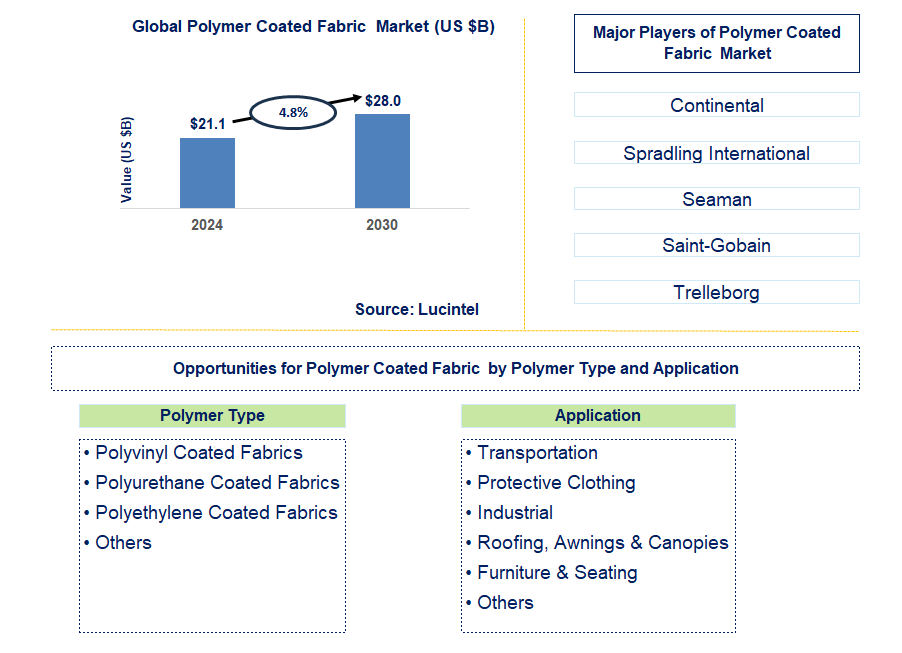
Key data points: The market size in 2030 = $28 billion, growth forecast = 4.8% annually for the next 6 years. Scroll below to get more insights. This market report covers trends, opportunities, and forecasts in the global polymer coated fabric market to 2030 by polymer type (polyvinyl coated fabrics, polyurethane coated fabrics, polyethylene coated fabrics, and others), application (transportation, protective clothing, industrial, roofing, awnings & canopies, furniture & seating, and others), and region (North America, Europe, Asia Pacific, and the Rest of the World)
We'll send your sample report shortly.
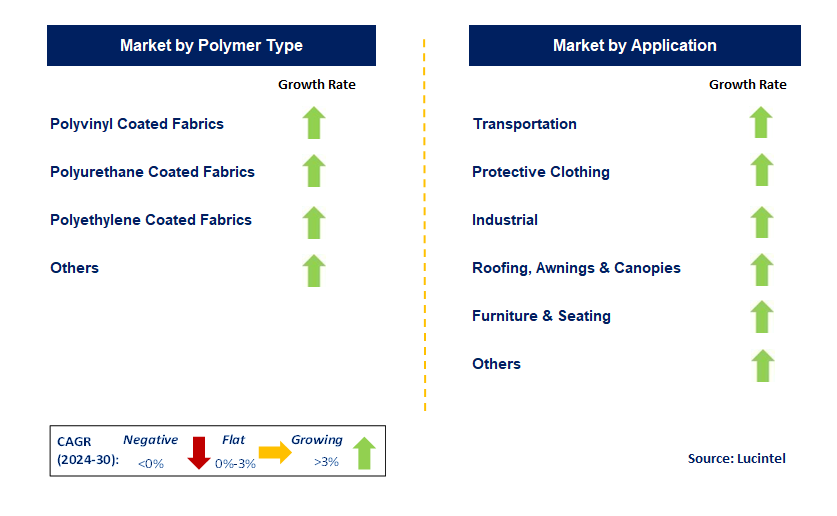
• Lucintel forecasts that, within the polymer type category, polyurethane segment is expected to witness the highest growth over the forecast period owing to its transparency, elasticity, and resistance to oil, grease, and abrasion.
• Within the application category, transportation will remain the largest segment due to rising use of polymer coated fabrics in various transportation applications, such as interior, exterior, airbags, and covers.
• In terms of regions, APAC will remain the largest region over the forecast period due to increasing industrial growth and swift urbanization and expanding chemical and automotive industry in the region. A more than 150-page report is developed to help in your business decisions.
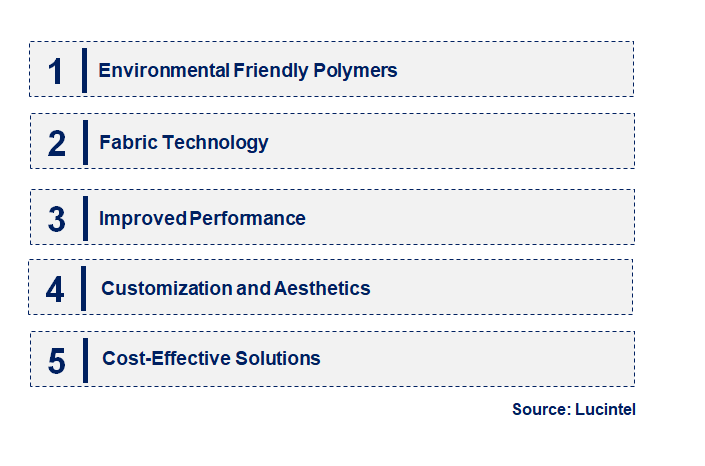
• Environmentally Friendly Polymers: The production and use of non-toxic and recyclable plastics are gaining traction. More companies are switching to bio-based polymer materials and studying ways and technologies to minimize environmental impact, meeting the current trends and needs of consumers who prefer environmentally friendly products.
• Fabric Technology: Polymer-coated fabrics with integrated electronics and sensors are becoming more common. Smart fabrics are used in a variety of applications, from healthcare to smart clothing, assisting users with body temperature, physical activity, and overall health.
• Improved Performance: These technologies are aimed at developing polymer-coated fabrics with enhanced durability and tensile strength. New types of coatings shield against ultraviolet rays, harmful chemicals, and extreme heat, making these fabrics suitable for harsh environments such as aerospace and automotive industries.
• Customization and Aesthetics: The negative attitudes that previously dominated the polymer fabric industry due to standardized designs are now being overcome. This trend addresses the increasing demand in the fashion and interior design markets for products that are both functional and visually appealing.
• Cost-Effective Solutions: Strategies aimed at improving performance coatings at relatively low costs, without compromising quality, are on the rise. This trend supports the polymer-coated fabric market by exploring the potential for developing markets and industries with significant budget challenges. These trends are transforming the polymer-coated fabric market by introducing new ideas, features, and sustainable practices. They signal a move towards stronger, greener products that could shape the future of the market and consumer needs in the years ahead.
• Advanced Coating Technologies: Recent advancements include coatings with improved wear and corrosion resistance as well as better environmental quality. These technologies add value to polymer-coated fabrics by enhancing their resilience and resistance, enabling them to withstand extreme conditions.
• Eco-Friendly Innovations: There is a growing share of green coatings in the market. Innovations include bio-based polymers and advanced recycling technology, indicating more sustainable changes and compliance with stricter environmental regulations.
• Smart Fabric Integration: Incorporating smart technologies into polymer-coated fabrics has become common. These developments involve integrating sensors and electronics within fabrics for health monitoring and environmental sensing, among other uses.
• Increased Demand in Emerging Markets: Rapid industry growth and infrastructure development in emerging markets like Asia continue to drive demand for polymer-coated fabrics. Manufacturers in these regions are seeking to provide low-cost alternatives.
• Focus on Aesthetic and Functional Improvements: Recent advancements focus on enhancing both the appearance and performance of polymer-coated fabrics. Examples include improving furniture and automotive performance, as well as offering a variety of colors required by industries such as fashion and automotive. These developments are advancing the polymer-coated fabric market by providing cutting-edge technologies, improving environmental sustainability, and meeting market requirements. They aim to improve and diversify the market, offering new options to manufacturers and end-users.
• Automotive Industry: The automotive industry presents significant growth potential due to the increasing demand for strong and lightweight materials. Polymer-coated fabrics can be used in both outer and inner components of vehicles for aesthetic and performance purposes. This creates opportunities for manufacturers to scale up production and innovate with novel surfaces.
• Construction Sector: Polymer-coated fabrics are widely used in construction materials, particularly in protective coatings. There is increasing demand for sustainable building solutions that meet the specific needs of construction projects.
• Aerospace Industry: The aerospace industry requires high-performance fabrics that offer strength and resistance. There are opportunities to develop flame-retardant coatings to improve safety and efficiency in the manufacturing of materials for aircraft and spacecraft.
• Medical Applications: Polymer-coated fabrics are increasingly used in the medical field, particularly for surgical gowns and wound dressings. Opportunities include developing coatings that incorporate biocompatibility and antimicrobial properties to meet the stringent requirements of the medical industry.
• Fashion and Textiles: The fashion industry is pursuing the development of polymer-coated fabrics due to their unique appearance and functional properties. There is a growing market for customizable and smart fabrics that address the demand for personalized, technologically advanced products, with significant mass-market potential. These growth opportunities highlight the diverse applications of polymer-coated fabrics and their potential for further market penetration. With the needs of key industries evolving, producers can capitalize on these trends to drive innovation and development.
• Technological Advancements: Modern coating technologies keep on changing positively on the way they make protective coverings for fabrics and the endurance of the fabrics as well. Tough coatings allow this with withstanding negative environmental impact as well as mechanical abrasion calling for use in industries.
• Increasing Need for Durability: There are more demanding materials and high-performance requirements in the automotive and aerospace industries, which supports market growth. Furthermore, polymer coated fabrics help address such environments which help drive their adoption.
• Sustainability Trends: Rapid increase in industry research in the area of development of polymer coatings which are environmentally friendly. This is also in accordance with the regulation and consumers who demand environmentally safe products.
• Emerging Applications: There is a wide scope of application of polymer coated fabrics and hence their use ranges from construction work to use in fashion industry. This expansion also poses new opportunities and markets for the manufacturers.
• Economic Growth in Emerging Markets: The increase in the manufacturing and development of infrastructure facilities in developing economies generates more polymer coated fabric needs and thus encourages usage. This can create opportunities for manufacturers as well as boost sales. Challenges in the polymer coated fabric market are:
• Cost Pressures: Manufacturing advanced polymer coatings can be costly. Manufacturers must balance cost and performance to remain competitive while meeting market demands.
• Regulatory Compliance: Navigating regulatory requirements can be challenging due to strict environmental and safety standards. Compliance often requires significant investments in technology and process changes.
• Raw Material Availability: Fluctuations in the availability and prices of raw materials can affect the cost and manufacturing of polymer-coated fabrics. Manufacturers must manage supply chain risks to ensure product quality and consistency. The polymer-coated fabric market faces both driving forces and barriers. Technological advancements, increasing demand, and sustainability trends are helping to drive growth, while challenges such as cost pressures, regulatory compliance, and competition must be addressed. Successfully navigating these factors is crucial for achieving market penetration and sustainable growth.
• Continental
• Spradling International
• Seaman
• Saint-Gobain
• Trelleborg
• Polyvinyl Coated Fabrics
• Polyurethane Coated Fabrics
• Polyethylene Coated Fabrics
• Others
• Transportation
• Protective Clothing
• Industrial
• Roofing, Awnings & Canopies
• Furniture & Seating
• Others
• North America
• Europe
• Asia Pacific
• The Rest of the World
• United States: In the U.S., the polymer-coated fabric market has grown significantly due to their applications in automobile interiors and the aerospace industry, where lightweight and high-strength materials are required. Recent developments focus on improving UV resistance and self-cleaning capabilities of polymer films in response to environmental standards and consumer demand for advanced materials.
• China: China has seen rapid growth in the polymer-coated fabric market, driven by expansion in the construction and automotive sectors. Cost-effective coatings that are weather-resistant and strong are supporting infrastructure development in the country.
• Germany: Germany’s market is trending toward more sustainable and environmentally friendly polymer coatings. Innovations include the use of eco-friendly polymers and advancements in recycling technology. The automotive and textile industries are major consumers of these coatings, with strategies aimed at reducing environmental impact and extending the lifespan of materials.
• India: In India, the polymer-coated fabric market is expanding due to rising infrastructure investments and the demand for low-cost, high-quality materials. New coating technologies are cost-effective, and recent improvements in fabric performance cater to the growing construction and automotive sectors.
• Japan: In Japan, high-tech polymer-coated fabrics are primarily used in aerospace and medical applications. Developments focus on enhancing functionality and operational performance, such as improving thermal and chemical stability. There is also a growing trend for the adoption of smart fabrics containing embedded sensors and other electronics.


• Continental
• Spradling International
• Seaman
• Saint-Gobain
• Trelleborg Q6. Which polymer coated fabric market segment will be the largest in future? Answer: Lucintel forecasts that polyurethane segment is expected to witness the highest growth over the forecast period owing to its transparency, elasticity, and resistance to oil, grease, and abrasion. Q7. In polymer coated fabric market , which region is expected to be the largest in next 5 years? Answer: APAC will remain the largest region over the forecast period due to increasing industrial growth and swift urbanization and expanding chemical and automotive industry in the region. Q.8 Do we receive customization in this report? Answer: Yes, Lucintel provides 10% customization without any additional cost.


Choose a license that fits your team. Instant PDF delivery.
Prices exclude taxes. Instant delivery. Custom licensing available on request.
Market Report · May 18, 2026
Market Report · May 18, 2026
Market Report · May 18, 2026
Trusted partner for strategic intelligence and business growth


Receive a complimentary market analysis tailored to your industry. Our analysts will identify key growth opportunities and competitive dynamics specific to your business.

Market size, growth rate, and key trend analysis for your specific sector.

Top competitor positioning and market share analysis.

Strategic recommendations backed by data-driven insights.
Get curated market intelligence and competitive moves straight to your inbox.
By subscribing, you agree to receive our monthly insights. Unsubscribe anytime.
Receive a complimentary market analysis tailored to your industry. Our analysts will identify key growth opportunities and competitive dynamics specific to your business.
Market size, growth rate, and key trend analysis for your specific sector.
Top competitor positioning and market share analysis.
Strategic recommendations backed by data-driven insights.
Get curated market intelligence, emerging trends, and competitive moves straight to your inbox each month.
By subscribing, you agree to receive our monthly insights. Unsubscribe anytime.
We'll send your sample report shortly.