
Market Report · September 7, 2026

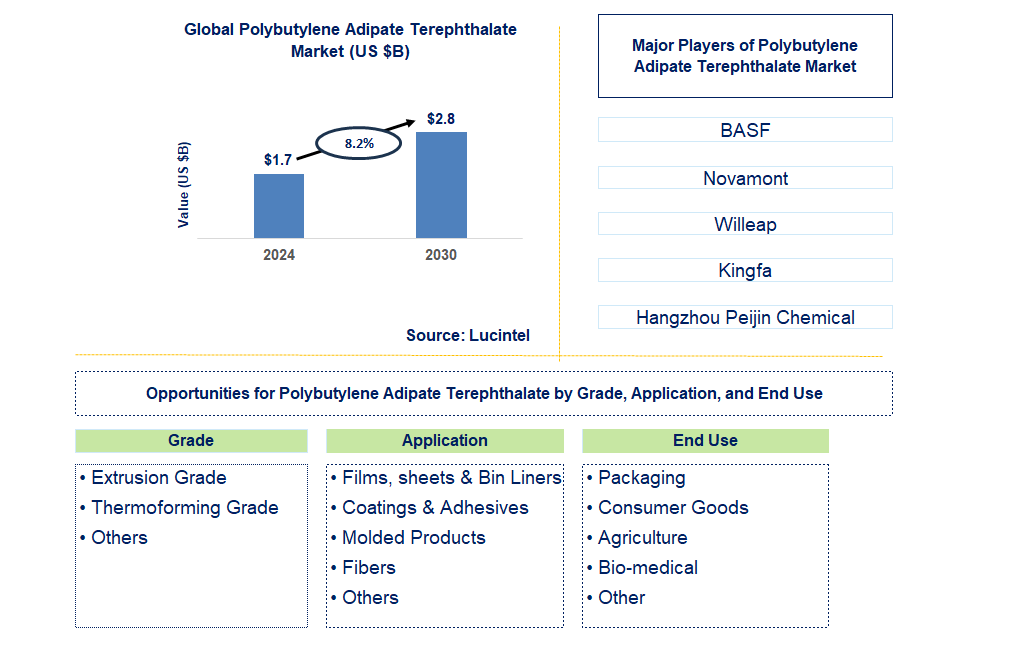
Key data points: The market size in 2030 = $2.8 billion, growth forecast = 8.2% annually for the next 6 years. Scroll below to get more insights. This market report covers trends, opportunities, and forecasts in the global polybutylene adipate terephthalate market to 2030 by grade (extrusion grade, thermoforming grade, and others), application (films, sheets & bin liners, coatings & adhesives, molded products, fibers, and others), end use (packaging, consumer goods, agriculture, bio-medical, and other), and region (North America, Europe, Asia Pacific, and the Rest of the World)
We'll send your sample report shortly.
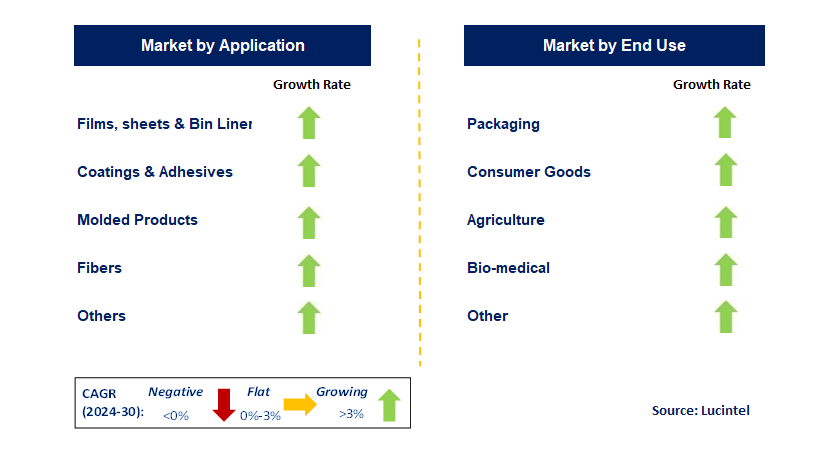
• Lucintel forecasts that, within the application category, films, sheets & bin liners is expected to witness the highest growth over the forecast period due to its excellent stretchability, flexibility, and processability, as well as, it is utilized in the film industry.
• In terms of regions, APAC is expected to witness the highest growth over the forecast period due to quick urbanization, a sizable consumer base, growing consciousness of sustainability and biodegradable products, and government programs to support PBAT products in the region. Gain valuable insights for your business decisions with our comprehensive 150+ page report.
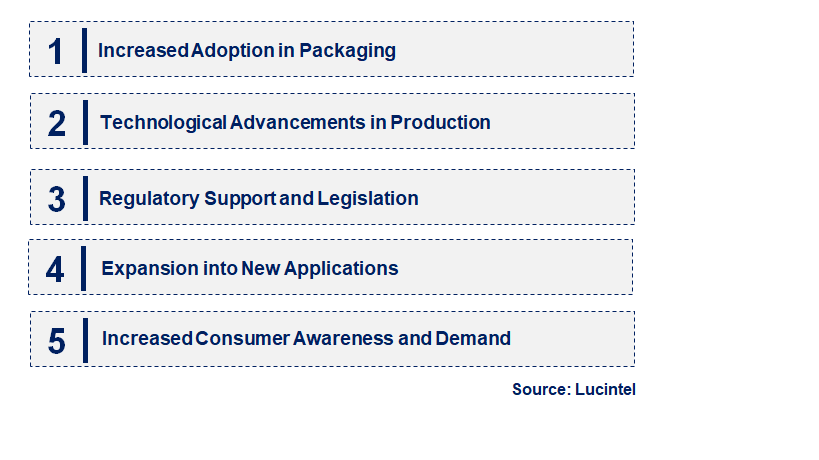
• Increased Adoption in Packaging: Polybutylene adipate terephthalate's biodegradable properties make it an attractive alternative to conventional plastics in the packaging industry. Its adoption is growing in applications such as food packaging, shopping bags, and agricultural films. Companies are investing in polybutylene adipate terephthalate to meet consumer demand for eco-friendly options and to comply with stricter environmental regulations. The trend is pushing manufacturers to scale up production and reduce costs, making polybutylene adipate terephthalate more competitive with traditional plastics.
• Technological Advancements in Production: Innovations in the production processes of polybutylene adipate terephthalate, such as enhanced catalysts and more efficient polymerization techniques, are driving improvements in quality and cost-effectiveness. These advancements are leading to higher production yields and better material properties, such as increased strength and flexibility. As technology evolves, it is expected that polybutylene adipate terephthalate will become more widely available and affordable, further accelerating its market adoption.
• Regulatory Support and Legislation: Governments worldwide are implementing stricter regulations on plastic waste, promoting the use of biodegradable materials like polybutylene adipate terephthalate. Legislation aimed at reducing single-use plastics and encouraging compostable alternatives is creating a more favorable environment for polybutylene adipate terephthalate products. This regulatory support is not only boosting demand but also encouraging companies to invest in sustainable practices and develop new polybutylene adipate terephthalate applications.
• Expansion into New Applications: Beyond packaging, polybutylene adipate terephthalate is being explored for use in diverse applications such as agricultural films, medical products, and textiles. Its flexibility and biodegradability make it suitable for a range of industries looking for sustainable solutions. This diversification is opening new market opportunities and driving innovation in how polybutylene adipate terephthalate can be utilized, expanding its role in the broader materials sector.
• Increased Consumer Awareness and Demand: Growing environmental awareness among consumers is fueling demand for biodegradable products. polybutylene adipate terephthalate's benefits align with the increasing consumer preference for sustainable and eco-friendly options. As public awareness about plastic pollution rises, companies are responding by incorporating polybutylene adipate terephthalate into their product lines to attract environmentally conscious customers and enhance brand reputation. The polybutylene adipate terephthalate market is undergoing significant transformation driven by technological, regulatory, and consumer trends. Increased adoption in packaging, advancements in production technology, supportive legislation, diversification into new applications, and heightened consumer awareness are reshaping the landscape. These trends are not only enhancing the viability and appeal of polybutylene adipate terephthalate but also contributing to a broader shift towards sustainable materials in various industries. As these developments continue, polybutylene adipate terephthalate is poised to play a critical role in addressing global environmental challenges and fostering a more sustainable future.
• Advancements in Production Technology: Recent innovations in production technology for polybutylene adipate terephthalate are enhancing efficiency and lowering costs. Improved polymerization processes and the integration of advanced catalysts have streamlined manufacturing, resulting in higher yields and reduced energy consumption. These advancements also enable the production of polybutylene adipate terephthalate with enhanced properties, such as increased tensile strength and flexibility. This not only makes polybutylene adipate terephthalate more competitive against traditional plastics but also boosts its appeal for various applications. As production becomes more cost-effective, polybutylene adipate terephthalate is likely to see broader adoption, particularly in sectors like packaging and agriculture.
• Strategic Partnerships and Collaborations: The polybutylene adipate terephthalate industry has seen a surge in strategic partnerships and collaborations between companies, research institutions, and governments. These alliances are aimed at accelerating the development and commercialization of polybutylene adipate terephthalate-based products. For example, partnerships between bioplastic manufacturers and major packaging companies are driving innovation in biodegradable packaging solutions. Collaborative efforts also focus on optimizing supply chains and scaling up production capabilities. Such partnerships enhance resource sharing and knowledge exchange, which are crucial for addressing the challenges associated with polybutylene adipate terephthalate production and market expansion.
• Increased Adoption in Various Applications: polybutylene adipate terephthalate is increasingly being adopted across diverse applications due to its biodegradable nature and functional versatility. It is finding applications in areas such as agricultural films, food packaging, and disposable items. The growing consumer demand for environmentally friendly alternatives is driving this trend, as polybutylene adipate terephthalate offers a viable solution for reducing plastic waste. Enhanced performance characteristics, such as improved barrier properties and flexibility, are making polybutylene adipate terephthalate a preferred choice for packaging applications. This broadening application base is helping to drive market growth and establish polybutylene adipate terephthalate as a key material in the bioplastics sector.
• Regulatory Support for Sustainability: Regulatory frameworks worldwide are increasingly supporting the use of sustainable materials, including polybutylene adipate terephthalate. Governments and environmental organizations are implementing stricter regulations on plastic waste and promoting the adoption of biodegradable alternatives. For instance, bans on single-use plastics and incentives for bioplastic adoption are encouraging industries to transition towards polybutylene adipate terephthalate and other sustainable materials. This regulatory push not only creates a favorable market environment for polybutylene adipate terephthalate but also drives innovation and investment in bioplastic technologies, further accelerating market growth.
• Innovations in Material Properties: Recent innovations in the properties of polybutylene adipate terephthalate are enhancing its performance and expanding its application range. Advances in formulation and blending techniques are resulting in polybutylene adipate terephthalate with tailored properties, such as improved thermal stability, increased impact resistance, and better biodegradability. These innovations are addressing previous limitations of polybutylene adipate terephthalate and making it more suitable for demanding applications. Enhanced material properties are contributing to polybutylene adipate terephthalate's competitive edge over conventional plastics and other bioplastics, driving its adoption across various industries and applications. The recent developments in the polybutylene adipate terephthalate market are significantly reshaping its landscape. Advancements in production technology, strategic collaborations, increased application adoption, regulatory support, and material innovations are collectively driving the growth of polybutylene adipate terephthalate. These factors are making polybutylene adipate terephthalate a more viable and attractive option in the bioplastics market, addressing environmental concerns while meeting industry demands for performance and sustainability. As these trends continue to evolve, polybutylene adipate terephthalate is likely to see increased market penetration and broader acceptance as a key component of the future of sustainable materials.
• Packaging Materials: Polybutylene adipate terephthalate’s superior flexibility and biodegradability make it an attractive option for flexible packaging. As consumer preference shifts towards eco-friendly packaging, Polybutylene adipate terephthalate’s use in films, bags, and wraps is expanding. This growth opportunity is driven by regulatory pressures and increasing demand for sustainable packaging solutions. Polybutylene adipate terephthalate’s ability to break down without leaving harmful residues supports its adoption in single-use and compostable packaging, meeting both consumer expectations and environmental regulations.
• Agricultural Films: In agriculture, Polybutylene adipate terephthalate is emerging as a key material for biodegradable mulch films. These films enhance soil quality and reduce waste management issues compared to traditional plastic films. Polybutylene adipate terephthalate’s biodegradability ensures that the films decompose naturally, reducing environmental impact and supporting sustainable farming practices. This opportunity is particularly impactful as agricultural practices seek to minimize their ecological footprint while maintaining productivity.
• Automotive Components: Polybutylene adipate terephthalate is increasingly utilized in automotive applications, such as interior trims and components. Its lightweight and durable properties contribute to fuel efficiency and lower emissions. As automotive manufacturers focus on incorporating sustainable materials, Polybutylene adipate terephthalate’s use helps meet stringent environmental regulations and consumer demand for eco-friendly vehicles. This trend supports the automotive industry’s transition towards greener alternatives and enhances overall vehicle performance.
• Consumer Goods: In consumer goods, polybutylene adipate terephthalate is used in products like disposable cutlery, plates, and personal care items. The drive towards reducing plastic waste and increasing the use of biodegradable materials boosts Polybutylene adipate terephthalate’s application in this sector. Polybutylene adipate terephthalate’s adaptability allows for the creation of products that align with environmental goals while maintaining functionality and convenience for consumers. This opportunity capitalizes on the growing trend of sustainability in everyday products.
• Medical Applications: Polybutylene adipate terephthalate’s biocompatibility makes it suitable for medical applications, including drug delivery systems and biodegradable medical devices. Its ability to safely degrade within the body or environment addresses the need for sustainable solutions in healthcare. This growth opportunity is driven by the increasing emphasis on reducing medical waste and improving patient outcomes through advanced materials that offer both performance and environmental benefits. The growth opportunities for polybutylene adipate terephthalate across these applications reflect a broader shift towards sustainable and environmentally friendly materials. In the automotive sector, for example, polybutylene adipate terephthalate’s integration into components aligns with industry goals of reducing carbon footprints and enhancing eco-friendliness. As automotive engine oil sensors and other components increasingly utilize biodegradable materials, the polybutylene adipate terephthalate market’s expansion supports the development of greener technologies, driving innovation and adherence to environmental standards. This synergy underscores polybutylene adipate terephthalate’s role in advancing sustainability across multiple industries.
• Technological Advancements: Technological progress in polymer chemistry and processing techniques has significantly improved the production efficiency and performance of polybutylene adipate terephthalate. Innovations such as advanced catalysts and optimized reaction conditions have enhanced the polymer’s properties, making it more attractive for applications in biodegradable packaging. These advancements have lowered production costs and expanded polybutylene adipate terephthalate's applicability, fostering market growth.
• Rising Environmental Concerns: Growing environmental awareness has driven demand for eco-friendly alternatives to conventional plastics. polybutylene adipate terephthalate, known for its biodegradability and compostability, aligns well with global efforts to reduce plastic waste and pollution. The increasing emphasis on sustainability among consumers and businesses is propelling the adoption of polybutylene adipate terephthalate, thus boosting market expansion.
• Government Regulations and Incentives: Governments worldwide are implementing stringent regulations and incentives to curb plastic pollution and promote the use of biodegradable materials. Policies such as plastic bans, recycling mandates, and subsidies for green technologies create a favorable environment for polybutylene adipate terephthalate. These regulations not only support market growth but also encourage investment in sustainable material innovations.
• Growing Demand in Packaging Industry: The packaging sector is a major consumer of polybutylene adipate terephthalate due to its excellent flexibility, strength, and biodegradability. As e-commerce and single-use packaging demand surge, the need for sustainable packaging solutions becomes more pressing. polybutylene adipate terephthalate’s ability to meet these needs without compromising performance drives its adoption in the packaging industry, contributing to market growth.
• Consumer Preference for Sustainable Products: Consumer preference for sustainable products is a significant driver for the polybutylene adipate terephthalate market. As individuals and organizations increasingly prioritize environmental impact in their purchasing decisions, the demand for biodegradable and compostable materials rises. polybutylene adipate terephthalate’s alignment with these preferences enhances its market appeal and drives growth across various applications. Challenges in the polybutylene adipate terephthalate market are:
• High Production Costs: Despite its advantages, polybutylene adipate terephthalate faces high production costs compared to traditional plastics. The complex synthesis process and the use of specialized raw materials contribute to its higher price point. This cost disparity can hinder polybutylene adipate terephthalate’s competitiveness, particularly in price-sensitive markets, and slow its adoption relative to conventional, less expensive alternatives.
• Limited Infrastructure for Composting: The effectiveness of polybutylene adipate terephthalate depends on the availability of adequate composting infrastructure. Many regions lack the necessary facilities to process biodegradable materials effectively, which can lead to improper disposal and diminished environmental benefits. The absence of widespread composting infrastructure poses a challenge to polybutylene adipate terephthalate’s market growth and environmental impact.
• Market Competition from Alternative Biopolymers: polybutylene adipate terephthalate competes with other biodegradable polymers such as polylactic acid (PLA) and polyhydroxyalkanoates (PHA), which offer similar environmental benefits. The presence of multiple alternatives can dilute market share and limit polybutylene adipate terephthalate's growth potential. Additionally, innovations in competing biopolymers can influence polybutylene adipate terephthalate’s market position and affect its competitive edge. The polybutylene adipate terephthalate market is shaped by a dynamic interplay of drivers and challenges. Technological advancements, environmental concerns, regulatory support, and consumer preferences collectively propel market growth, while high production costs, limited composting infrastructure, and competition from alternative biopolymers pose significant challenges. Balancing these factors is crucial for stakeholders to capitalize on polybutylene adipate terephthalate’s potential and navigate the evolving landscape of sustainable materials. Addressing the challenges effectively while leveraging the drivers can enhance polybutylene adipate terephthalate's market position and contribute to its long-term success
• BASF
• Novamont
• Willeap
• Kingfa
• Hangzhou Peijin Chemical
• Zhejiang Biodegradable Advanced Material
• Anhui Jumei Biotechnology
• Go Yen Chemical
• Jinhui Zhaolong Advanced Technology
• Mitsui Plastics
• Extrusion Grade
• Thermoforming Grade
• Others
• Films, sheets & Bin Liners
• Coatings & Adhesives
• Molded Products
• Fibers
• Others
• Packaging
• Consumer Goods
• Agriculture
• Bio-medical
• Other
• North America
• Europe
• Asia Pacific
• The Rest of the World
• United States: In the U.S, polybutylene adipate terephthalate market growth is driven by increasing environmental regulations and a push for sustainable packaging solutions. Key advancements include investments by major chemical companies in production facilities and research into improving the polymer's performance. The focus is also on developing new applications in the packaging and agricultural sectors. Additionally, there is a growing trend toward integrating polybutylene adipate terephthalate with other biodegradable materials to enhance its environmental benefits and cost-effectiveness.
• China: China has seen significant strides in polybutylene adipate terephthalate production due to both government policies and rising consumer demand for eco-friendly products. The country is investing heavily in expanding its polybutylene adipate terephthalate manufacturing capacity, with several new plants coming online. Innovations in production technology aim to reduce costs and increase the polymer’s versatility. China is also focusing on integrating polybutylene adipate terephthalate into a broader range of applications, including agriculture and packaging, supported by favorable regulatory frameworks and subsidies for green technologies.
• Germany: Germany is at the forefront of polybutylene adipate terephthalate research and application in Europe, with a strong emphasis on environmental sustainability. Recent developments include collaborations between academic institutions and industry leaders to enhance polybutylene adipate terephthalate's properties and applications. Germany's stringent environmental regulations drive innovation, leading to advancements in recycling processes and the development of new polybutylene adipate terephthalate-based products. Additionally, the country is a hub for international polybutylene adipate terephthalate conferences and research initiatives, fostering knowledge exchange and technological progress.
• India: In India, the polybutylene adipate terephthalate market is emerging as a key player in the push for sustainable development. Recent progress includes increased awareness and adoption of polybutylene adipate terephthalate in packaging and agricultural sectors. The Indian government is implementing policies to promote biodegradable materials, leading to new investments in polybutylene adipate terephthalate production facilities. Innovations are focused on making polybutylene adipate terephthalate more cost-effective and suitable for local conditions, while efforts are also underway to educate manufacturers and consumers about its benefits and applications.
• Japan: Japan has been a leader in advanced materials technology, including polybutylene adipate terephthalate. Recent developments in Japan involve significant investments in enhancing polybutylene adipate terephthalate’s properties and integrating it into various industries. Japanese companies are focusing on high-performance polybutylene adipate terephthalate formulations and exploring new applications in electronics and medical fields. Additionally, Japan commitment to environmental sustainability is reflected in its support for polybutylene adipate terephthalate through government initiatives and public-private partnerships aimed at reducing plastic waste and promoting biodegradable alternatives.


• BASF
• Novamont
• Willeap
• Kingfa
• Hangzhou Peijin Chemical
• Zhejiang Biodegradable Advanced Material
• Anhui Jumei Biotechnology
• Go Yen Chemical
• Jinhui Zhaolong Advanced Technology
• Mitsui Plastics Q6. Which polybutylene adipate terephthalate market segment will be the largest in future? Answer: Lucintel forecasts that films, sheets & bin liners is expected to witness the highest growth over the forecast period due to its excellent stretchability, flexibility, and processability, as well as, it is utilized in the film industry. Q7. In polybutylene adipate terephthalate market, which region is expected to be the largest in next 5 years? Answer: APAC is expected to witness highest growth over the forecast period due to quick urbanization, a sizable consumer base, growing consciousness of sustainability and biodegradable products, and government programs to support PBAT products in the region. Q.8 Do we receive customization in this report? Answer: Yes, Lucintel provides 10% customization without any additional cost.


Choose a license that fits your team. Instant PDF delivery.
Prices exclude taxes. Instant delivery. Custom licensing available on request.
Market Report · September 7, 2026
Market Report · July 22, 2026
Market Report · July 22, 2026
Trusted partner for strategic intelligence and business growth


Receive a complimentary market analysis tailored to your industry. Our analysts will identify key growth opportunities and competitive dynamics specific to your business.

Market size, growth rate, and key trend analysis for your specific sector.

Top competitor positioning and market share analysis.

Strategic recommendations backed by data-driven insights.
Get curated market intelligence and competitive moves straight to your inbox.
By subscribing, you agree to receive our monthly insights. Unsubscribe anytime.
Receive a complimentary market analysis tailored to your industry. Our analysts will identify key growth opportunities and competitive dynamics specific to your business.
Market size, growth rate, and key trend analysis for your specific sector.
Top competitor positioning and market share analysis.
Strategic recommendations backed by data-driven insights.
Get curated market intelligence, emerging trends, and competitive moves straight to your inbox each month.
By subscribing, you agree to receive our monthly insights. Unsubscribe anytime.
We'll send your sample report shortly.