
Market Report · July 31, 2026

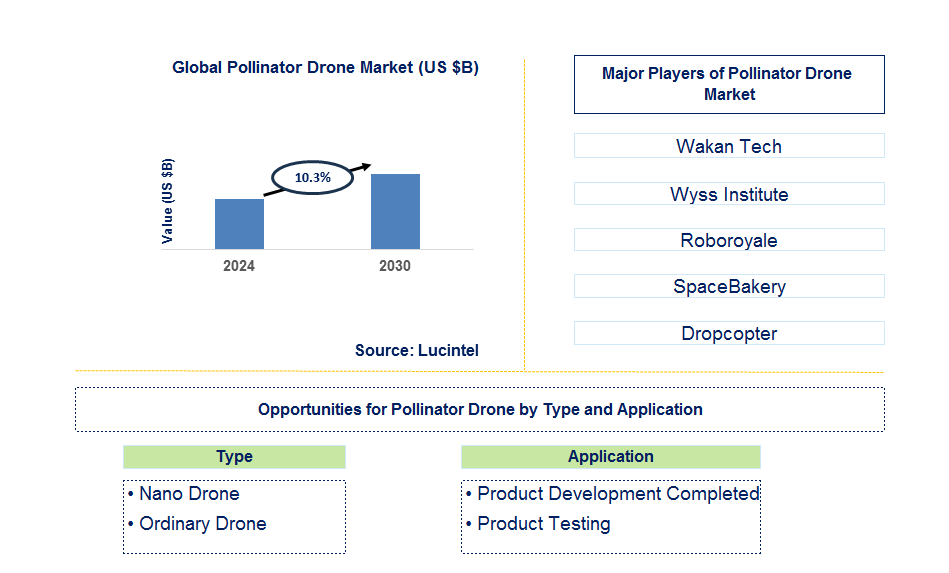
Key data points: The growth forecast = 10.3% annually next 6 years. Scroll below to get more insights. This market report covers trends, opportunities, and forecast in the global pollinator drone market to 2030 by type (nano drone and ordinary drone), application (product development completed and product testing), and region (North America, Europe, Asia Pacific, and the Rest of the World)
We'll send your sample report shortly.
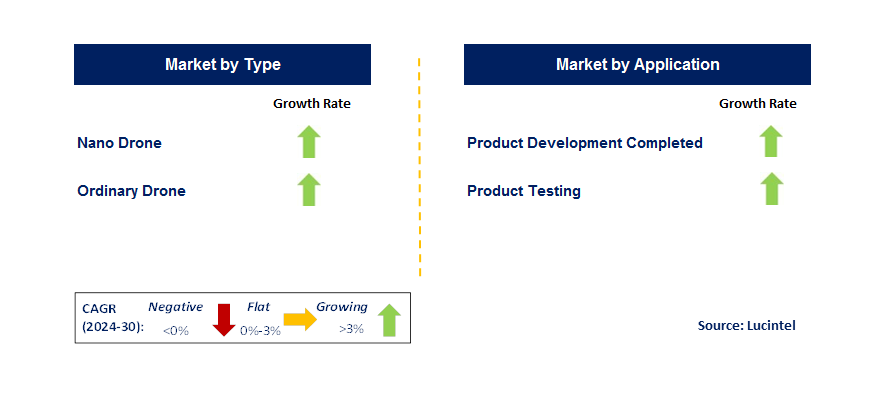
• Lucintel forecasts that nano drone is expected to witness the higher growth over the forecast period.
• Within this market, product development completed is expected to witness the higher growth.
• North America is expected to witness highest growth over the forecast period. A more than 150-page report is developed to help in your business decisions.
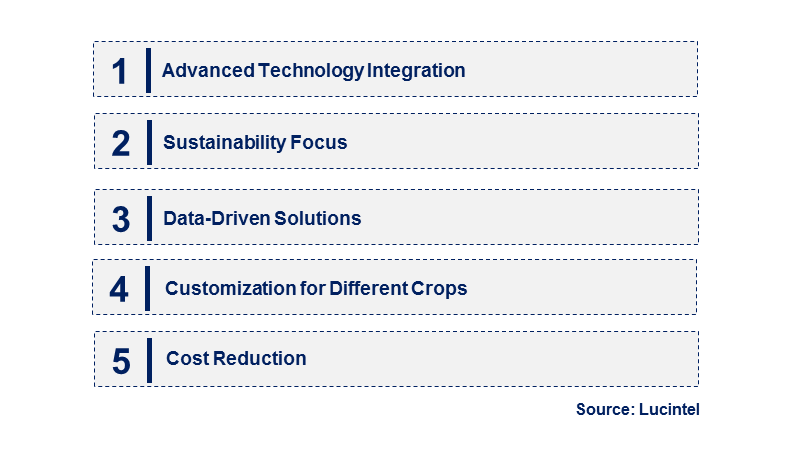
• Advanced Technology Integration: The integration of AI and advanced sensors is enhancing the capabilities of pollinator drones, allowing for more precise and effective pollination.
• Sustainability Focus: There is a growing emphasis on developing eco-friendly drone technologies that minimize environmental impact and integrate well with sustainable farming practices.
• Data-Driven Solutions: The use of data analytics and real-time monitoring is improving the efficiency of pollination processes and optimizing drone operations.
• Customization for Different Crops: Innovations are focusing on customizing drones for specific crops and agricultural environments to increase their effectiveness and applicability.
• Cost Reduction: Efforts are being made to reduce the cost of pollinator drones, making them more accessible to small and medium-sized farms. Emerging trends in the pollinator drone market, such as advanced technology integration and sustainability focus, are driving innovation and expanding the applicability of drones in agriculture, offering significant potential for growth and impact.
• Technological Advancements: Innovations in drone technology, including improved sensors and AI algorithms, are enhancing the effectiveness of pollination and operational efficiency.
• Commercial Deployment: There has been a rise in the commercial use of pollinator drones in various agricultural settings, from large-scale farms to orchards, addressing the shortage of natural pollinators.
• Increased Research and Development: Ongoing research and development efforts are focused on refining drone designs, improving pollination mechanisms, and adapting drones for different crops and environments.
• Government Support: Policymakers and government agencies are providing support and funding to promote the adoption of pollinator drones, recognizing their potential to boost agricultural productivity and sustainability.
• Collaborative Projects: Partnerships between technology companies, agricultural researchers, and farming organizations are driving innovation and accelerating the development and deployment of pollinator drones.
• Cost Improvements: Advances in manufacturing and technology are leading to reduced costs for pollinator drones, making them more accessible to a wider range of agricultural operations. Recent developments in the pollinator drone market, including technological advancements and increased research, are enhancing the effectiveness and adoption of these drones in agriculture, offering new opportunities for growth and innovation.
• Precision Agriculture: Drones offer the potential to revolutionize precision agriculture by providing targeted pollination and improving crop yields through data-driven insights.
• Sustainable Farming: Integrating pollinator drones with sustainable farming practices can enhance environmental conservation efforts and support eco-friendly agricultural methods.
• Expansion into New Markets: There are opportunities to expand the use of pollinator drones into emerging markets with growing agricultural sectors, such as developing countries.
• Technological Innovations: Continued advancements in drone technology, such as enhanced sensors and automation, present opportunities for developing new and improved pollination solutions.
• Customized Solutions: Developing customized drones for specific crops and agricultural environments can address unique challenges and improve overall effectiveness.
• Partnerships and Collaborations: Collaborating with agricultural organizations, technology firms, and research institutions can drive innovation and accelerate the adoption of pollinator drones.
• Policy and Regulation: Engaging with policymakers to shape regulations and secure funding for pollinator drone initiatives can support market growth and facilitate wider adoption. Strategic growth opportunities in the pollinator drone market, including precision agriculture and technological innovations, offer significant potential for expanding applications and driving the adoption of these drones in agriculture.
• Wakan Tech
• Wyss Institute
• Roboroyale
• SpaceBakery
• Dropcopter
• Nano Drone
• Ordinary Drone
• Product Development Completed
• Product Testing
• North America
• Europe
• Asia Pacific
• The Rest of the World
• USA: In the USA, the pollinator drone market is making strides with technological innovations aimed at enhancing agricultural productivity and addressing the decline in natural pollinators. Recent developments include the integration of advanced sensors and AI to mimic the behavior of bees and other pollinators. Companies are deploying drones for precision pollination in orchards and large-scale farms, particularly where natural pollinator populations are insufficient. Additionally, research and development efforts are focusing on improving the efficiency and accuracy of these drones, making them more viable for commercial use. There is also growing interest in policy support and funding to promote the use of pollinator drones in sustainable agriculture.
• Germany: Germany is at the forefront of utilizing pollinator drones to address environmental and agricultural challenges. Recent developments include collaborations between technology firms and agricultural researchers to enhance drone capabilities for targeted pollination. Innovations include drones equipped with specialized pollination mechanisms and advanced navigation systems to operate efficiently in complex environments. German companies are also exploring the integration of drones with data analytics to optimize pollination strategies and increase crop yields. Additionally, there is a strong emphasis on sustainability and environmental impact, with efforts focused on reducing the ecological footprint of drone operations and improving their integration into organic farming practices.
• China: China is rapidly advancing in the pollinator drone market, driven by its large-scale agricultural sector and need to boost crop yields. Recent developments include the deployment of drones for pollination in key agricultural regions, particularly for crops like apples and almonds. Innovations involve the use of drones equipped with advanced imaging and targeting systems to accurately distribute pollens. China is also investing in research to enhance drone capabilities and operational efficiency, focusing on increasing their applicability in diverse farming environments. Government support and funding for agricultural technology are further accelerating the adoption of pollinator drones in the country.
• India: In India, the pollinator drone market is emerging as a promising solution to support agricultural productivity, particularly in regions facing pollinator shortages. Recent developments include pilot projects and collaborations between agricultural research institutions and drone manufacturers to test and refine pollinator drone technologies. Innovations focus on adapting drones to the diverse and often challenging agricultural environments in India. Efforts are also underway to develop cost-effective solutions that are accessible to smallholder farmers. Indian policymakers are beginning to recognize the potential of pollinator drones and are exploring ways to integrate them into broader agricultural strategies to improve crop yields and support sustainable farming practices.
• Japan: Japan is leveraging pollinator drones to address challenges in its agricultural sector, including a declining population of natural pollinators. Recent developments involve the use of drones equipped with precision pollination technology and advanced imaging systems to enhance the efficiency of pollination processes. Japanese researchers and technology firms are working on improving drone designs to make them more suitable for Japan’s varied agricultural landscapes. Additionally, there is a focus on integrating pollinator drones with existing agricultural technologies to provide a comprehensive solution for enhancing crop production. Japan's emphasis on innovation and sustainability is driving the development and adoption of these drones in the country’s agricultural sector.


• Wakan Tech
• Wyss Institute
• Roboroyale
• SpaceBakery
• Dropcopter Q5. Which pollinator drone market segment will be the largest in future? Answer: Lucintel forecasts that nano drone is expected to witness the higher growth over the forecast period. Q6. In pollinator drone market, which region is expected to be the largest in next 5 years? Answer: North America is expected to witness highest growth over the forecast period. Q.7 Do we receive customization in this report? Answer: Yes, Lucintel provides 10% customization without any additional cost.


Choose a license that fits your team. Instant PDF delivery.
Prices exclude taxes. Instant delivery. Custom licensing available on request.
Market Report · July 31, 2026
Market Report · July 31, 2026
Market Report · July 31, 2026
Trusted partner for strategic intelligence and business growth


Receive a complimentary market analysis tailored to your industry. Our analysts will identify key growth opportunities and competitive dynamics specific to your business.

Market size, growth rate, and key trend analysis for your specific sector.

Top competitor positioning and market share analysis.

Strategic recommendations backed by data-driven insights.
Get curated market intelligence and competitive moves straight to your inbox.
By subscribing, you agree to receive our monthly insights. Unsubscribe anytime.
Receive a complimentary market analysis tailored to your industry. Our analysts will identify key growth opportunities and competitive dynamics specific to your business.
Market size, growth rate, and key trend analysis for your specific sector.
Top competitor positioning and market share analysis.
Strategic recommendations backed by data-driven insights.
Get curated market intelligence, emerging trends, and competitive moves straight to your inbox each month.
By subscribing, you agree to receive our monthly insights. Unsubscribe anytime.
We'll send your sample report shortly.