
Market Report · July 31, 2026

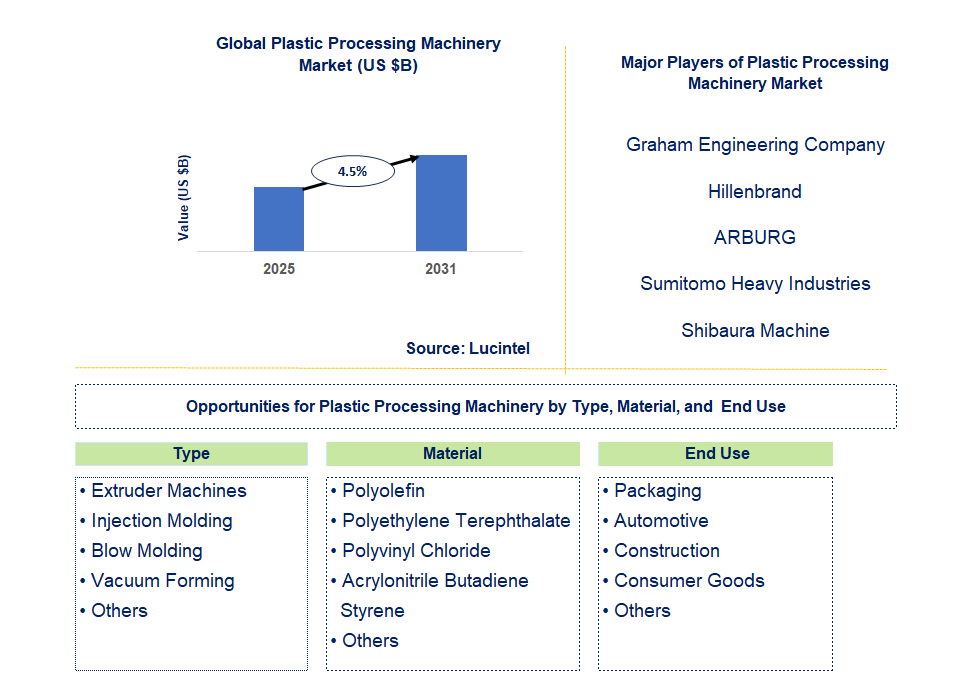
Key data points: The growth forecast = 4.5% annually for the next 7 years. Scroll below to get more insights. This market report covers Trends, opportunities and forecasts in plastic processing machinery market to 2031 by type (extruder machines, injection molding, blow molding, vacuum forming, and others), material (polyolefin, polyethylene terephthalate, polyvinyl chloride, acrylonitrile butadiene styrene, and others), end use (packaging, automotive, construction, consumer goods, and others), and region (North America, Europe, Asia Pacific, and the Rest of the World)
We'll send your sample report shortly.
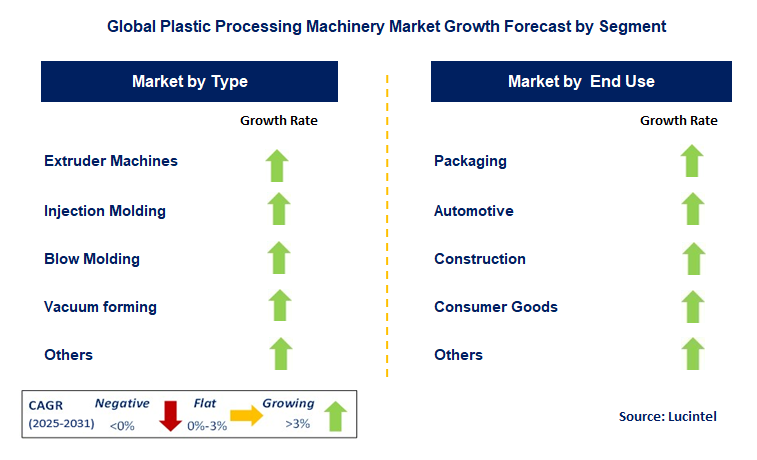
• Lucintel forecasts that, within the type category, injection molding is expected to witness the highest growth over the forecast period.
• Within the end use category, packaging is expected to witness the highest growth.
• In terms of region, APAC is expected to witness the highest growth over the forecast period.
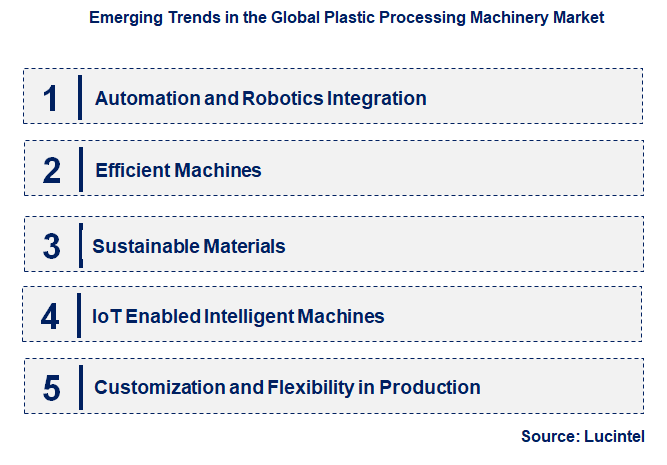
• Automation and Robotics Integration: Automation and robotics are playing a more vital role in the plastic processing machinery market. Robotic system integration enhances production efficiency, minimizes labor expenses, and increases product accuracy. Automated equipment permits manufacturers to integrate processes, reduce human mistakes, and maximize throughputs. It also allows pervasive use of machine learning and artificial intelligence, giving rise to predictive maintenance and general optimization of the machinery's functioning. This shift is set to grow as manufacturing companies aim to become more cost-effective and productive.
• Efficient Machines: The growing emphasis on sustainability has compelled manufacturers to go for energy-saving plastic processing machinery. Energy-efficient machinery reduces costs of operation and limits environmental effects through the consumption of less energy while in production. This is inspired by increased regulatory requirements for minimizing environmental footprints and reducing carbon emissions. Industries are also working on harnessing alternative energy forms, including the use of solar or wind energy, to power machinery more ecologically. This transition to energy-efficient equipment is likely to be a key force in the plastic processing machinery industry in the years to come.
• Sustainable Materials: There is growing demand for machinery that can process sustainable materials. As consumers increasingly demand environmentally friendly products, manufacturers are coming up with machines that can process bioplastics, recycled plastics, and biodegradable plastics. This trend has much to do with the world-wide shift toward limiting plastic waste and fostering circular economy behaviors. Machines that can work with these new materials are much in demand, especially in packaging, automotive, and consumer product industries where use of green materials is an utmost priority.
• IoT Enabled Intelligent Machines: Internet of Things-enabled intelligent plastic processing machines are also gaining immense popularity. These devices facilitate real-time monitoring of data and remote control, making it possible for manufacturers to streamline production processes and minimize downtime. Manufacturers can gather data on machine performance, identify potential faults before they happen, and make informed decisions to enhance efficiency through the use of IoT technology. This is likely to increase the productivity and lifespan of plastic processing equipment, yielding considerable advantages for manufacturers.
• Customization and Flexibility in Production: The need for specialized plastic products is creating the demand for more versatile plastic processing equipment. Companies are emphasizing the development of machines that can process a large range of materials and create products with intricate geometries. These machines are created to be flexible to meet evolving production requirements, providing greater versatility and greater throughput. Customization features are especially crucial in industries such as automotive and electronics, where accuracy and flexibility in production are major determinants of success. These emerging trends point towards a significant transformation towards automation, sustainability, and intelligent technologies in the plastic processing machinery market. The incorporation of robotics, energy-efficient machines, and intelligent systems is enhancing production efficiency, lowering costs, and stimulating innovation. With the focus turning to sustainability, manufacturers are investing in machinery that can handle green materials and reduce waste. These trends will continue to reshape the plastic processing machinery market, fueling growth and technological improvements.
• Advancements in Injection Molding: Injection molding machines have undergone tremendous technological development with enhanced precision, energy efficiency, and speeds. Servo-driven machines and advanced control systems have been introduced to help manufacturers consume less energy and achieve better cycle times. These advances are facilitating improved quality of production and more efficient material usage, leading to more efficient and eco-friendly injection molding machines.
• Demand for Recycling Machines is Increasing: Increased attention to sustainability has resulted in rising demand for plastic recycling equipment. Companies are putting money into new equipment that has the capability of handling a larger variety of recycled plastics, which are utilized in manufacturing new plastic items. This is an especially significant development with nations worldwide restricting plastic waste. Recycling equipment with the ability to effectively turn waste plastics into raw materials will have a key position in the circular economy.
• 3D Printing Technology Adoption: The use of 3D printing technology in plastic processing equipment is becoming increasingly popular. The technology enables quick prototyping and the manufacture of intricate parts with minimal scrap. 3D printing is especially valuable in industries where customization is a priority, including aerospace, automotive, and medical devices. With the reduction in the cost of 3D printing machinery, it is likely to become a more affordable and useful tool for manufacturers in the plastic processing sector.
• Emphasis on Smart Factory and Automation Solutions: The transformation to smart manufacturing is propelling the creation of automated plastic processing equipment. These machines are being fitted with sensors, artificial intelligence, and IoT features that support real-time monitoring and predictive maintenance. This movement is assisting manufacturers in minimizing downtime, enhancing efficiency, and improving product quality. The adoption of smart factory solutions is revolutionizing conventional manufacturing procedures, allowing more flexibility and responsiveness in production.
• Investment in Energy-Efficient Machines: The demand for energy-efficient plastic processing equipment is gaining traction as producers seek to cut costs and comply with regulatory demands. Reducing energy use during production with more efficient machines is a focus area in the market. Manufacturers are investing in machines with power-saving capabilities, including high-tech servo motors and improved heating mechanisms, to enable their operations to be more economical and environmentally friendly. These trends reflect the increasing emphasis on efficiency, sustainability, and technological advancement in the plastic processing machinery industry. The convergence of automation, energy-efficient technologies, and cutting-edge technologies is fueling growth and enhancing the overall performance of plastic processing machinery.
• Sustainable Packaging Solutions: The increasing need for environmentally friendly packaging solutions offers a major growth prospect for plastic processing equipment. Companies are looking more and more for machinery that can process recycled and biodegradable materials to address consumer demand for green packaging. This is propelling the creation of machines that can process these substitute materials and deliver quality packaging products.
• Automotive Industry: The automotive sector is one of the major drivers for overall demand for plastic processing equipment, especially for components that are lightweight and long-lasting. With the rise of electric cars and hybrid vehicles, demand for high-performance plastic components is rising. Industry players are making investments in machinery that can fabricate components of complex geometries and higher accuracy to satisfy the changing needs of the automotive industry.
• Consumer Goods and Electronics: Consumer and electronics sectors are leading the demand for plastic processing machinery because plastics are more frequently being used to package products, components, and accessories. The industry manufacturers are seeking machinery that produces high-quality, light-weight, and long-lasting plastic components. With growing demand for customized products, the market also has opportunities for machinery to process complex and detailed designs.
• Medical Devices and Healthcare: The healthcare and medical device industry is an emerging market for plastic processing equipment. The demand for high-precision manufacturing of medical devices, including syringes, catheters, and diagnostic devices, is fueling the demand for high-precision plastic processing machines. The growth in disposable medical products is also increasing the demand for efficient and consistent machinery to satisfy the increasing demand.
• Food and Beverage Packaging: Food and beverages packaging is also a growth opportunity for plastic processing equipment. As the world becomes more focused on convenient and environmentally friendly packaging, companies are spending money on equipment that can produce quality plastic packaging solutions like bottles, containers, and films. The ability to process recyclable and biodegradable materials is a priority area in this market. These opportunities for growth are a manifestation of the increased usage of plastic processing machinery across different industries. The continued emphasis on sustainability, accuracy, and efficiency is prompting innovation in the industry, and the companies are poised to ride on these opportunities as demand remains on the upswing.
• Graham Engineering Company
• Hillenbrand
• ARBURG
• Sumitomo Heavy Industries
• Shibaura Machine
• Wilmington Machinery
• SACMI Group
• Husky Technologies
• Nissei Plastic Industrial
• Haitan International Holdings
• Extruder Machines
• Injection Molding
• Blow Molding
• Vacuum Forming
• Others
• Polyolefin
• Polyethylene Terephthalate
• Polyvinyl Chloride
• Acrylonitrile Butadiene Styrene
• Others
• North America
• Europe
• Asia Pacific
• The Rest of the World
• United States: In the United States, the plastic processing machinery industry has been characterized by a sharp rise in demand for high-performance machinery. Firms are investing more and more in injection molding machines and extrusion equipment that provide greater precision as well as energy efficiency. Automation is another trend that is being followed, with large numbers of manufacturers using robots to automate processes and cut down on labor expenses. With the increased focus on sustainability, the use of equipment that allows for recycling and biodegradable materials in plastic production is becoming more widespread. The American market is also experiencing innovation in intelligent machines providing real-time data monitoring and predictive maintenance.
• China: China is still among the world's biggest manufacturers of plastic processing machinery, and its market is still developing fast. Its emphasis on industrial upgrading and automation has created stronger demand for advanced plastic processing machines. Chinese makers are integrating artificial intelligence and robots to enhance productivity and product quality. Additionally, China is investing in large numbers of green technologies and energy-efficient machinery in order to realize its environmental objectives. The drive towards sustainability is encouraging the creation of machinery that can recycle plastics and decrease the carbon footprint of plastic manufacturing processes.
• Germany: Germany has emerged as a global leader in the plastic processing machinery market, with high dedication to technological innovation and sustainability. The nation's producers are embracing state-of-the-art technologies, including Industry 4.0 solutions, to advance automation and maximize operational efficiency. Germany is also leading the way in creating machines that are intended to process bioplastics and other sustainable materials. With tight environmental regulations in the country, the German market is more interested in machinery that minimizes energy consumption and emissions. Consequently, companies are investing in equipment that provides accurate control of processes, which in turn minimizes waste and maximizes sustainability.
• India: The Indian market for plastic processing machinery has been growing steadily with the increasing manufacturing industry and growing demand for plastic products. Indian manufacturers are modernizing their machinery to enhance efficiency and product quality. There is also a trend towards embracing automated systems to minimize labor expenses and enhance production speed. Furthermore, the demand for environmental sustainability is impacting the Indian market, with more emphasis on recycling and creating machinery that can process sustainable materials. Indian middle-class growth is also driving demand for consumer goods, packaging, and auto components, driving further growth in plastic processing machinery.
• Japan: Japan has experienced technological advancements in plastic processing machinery, especially precision engineering and automation. Japanese makers are concentrating on high-precision, flexible machines with high quality to suit a wide range of industries, including the automotive, electronics, and packaging sectors. The Japanese market has also a tremendous focus on eco-friendly production and a steady migration towards recycling, waste minimization in plastic manufacture processes. Besides, Japan also embraces robotics, as well as AI technologies more and more every day to reduce wastage, increase efficiency and enhance output capacity. Japan's matured manufacturing base still funds cutting-edge solution approaches to strengthen its dominance position in the plastic processing machinery sector at the worldwide level.


• Graham Engineering Company
• Hillenbrand
• ARBURG
• Sumitomo Heavy Industries
• Shibaura Machine
• Wilmington Machinery
• SACMI Group
• Husky Technologies
• Nissei Plastic Industrial
• Haitan International Holdings Q5. Which plastic processing machinery market segment will be the largest in future? Answer: Lucintel forecasts that, within the type category, injection molding is expected to witness the highest growth over the forecast period. Q6. In plastic processing machinery market, which region is expected to be the largest in next 5 years? Answer: In terms of region, APAC is expected to witness the highest growth over the forecast period. Q7. Do we receive customization in this report? Answer: Yes, Lucintel provides 10% customization without any additional cost.


Choose a license that fits your team. Instant PDF delivery.
Prices exclude taxes. Instant delivery. Custom licensing available on request.
Market Report · July 31, 2026
Market Report · July 22, 2026
Market Report · July 20, 2026
Trusted partner for strategic intelligence and business growth


Receive a complimentary market analysis tailored to your industry. Our analysts will identify key growth opportunities and competitive dynamics specific to your business.

Market size, growth rate, and key trend analysis for your specific sector.

Top competitor positioning and market share analysis.

Strategic recommendations backed by data-driven insights.
Get curated market intelligence and competitive moves straight to your inbox.
By subscribing, you agree to receive our monthly insights. Unsubscribe anytime.
Receive a complimentary market analysis tailored to your industry. Our analysts will identify key growth opportunities and competitive dynamics specific to your business.
Market size, growth rate, and key trend analysis for your specific sector.
Top competitor positioning and market share analysis.
Strategic recommendations backed by data-driven insights.
Get curated market intelligence, emerging trends, and competitive moves straight to your inbox each month.
By subscribing, you agree to receive our monthly insights. Unsubscribe anytime.
We'll send your sample report shortly.