
Close Lucintel Chat
Didn't Find What You're Looking for?
Call us at +1972 636 5056 or write at helpdesk@Lucintel.com
Ask an Expert Provide Custom Requirements Download Sample Report Search Available Reports
  • helpdesk@Lucintel.com
  • |
  • Call Lucintel +1 972 636 5056
  • |
  • Login
  • |
  • Register
  • |
  • Search
  • |
'
...

The Impact of COVID-19 is included in Plant Phenol Market Report. Buy it today to get an advantage.

Request the impact of COVID-19 on your product or industry


Plant Phenol Market Trends and Forecast

The future of the global plant phenol market looks promising with opportunities in the automotive, food and beverage, industrial, agricultural, and others markets. The global plant phenol market is expected to grow with a CAGR of 3.5% from 2025 to 2031. The major drivers for this market are rising demand for sustainable, bio-based materials drives plant phenol adoption. and increasing use of natural antioxidants in food and beverage industries..

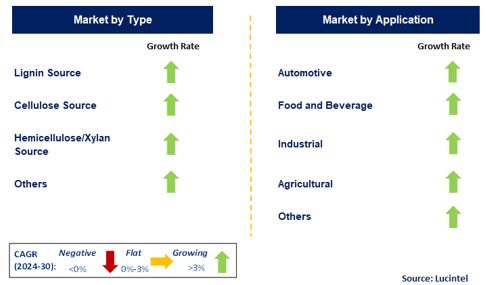
Lucintel forecasts that, within the type category, lignin source is expected to witness higher growth over the forecast period.
Within the application category, industrial is expected to witness the higher growth.
In terms of region, APAC is expected to witness the highest growth over the forecast period.
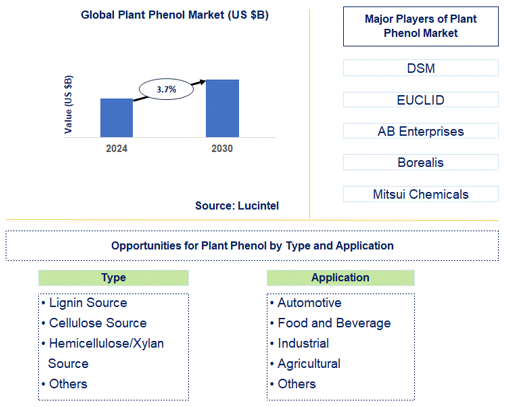
Gain valuable insights for your business decisions with our comprehensive 150+ page report. Sample figures with some insights are shown below.
Plant Phenol Market Trends and Forecast

Plant Phenol Market by Segment

Emerging Trends in the Plant Phenol Market

As the plant phenol market evolves, several emerging trends are reshaping the global landscape. These trends reflect broader shifts toward sustainability, green chemistry, and technological innovations that are driving market growth and diversification. Understanding these trends is crucial for stakeholders looking to capitalize on new opportunities and navigate the changing market dynamics.
• Rise of Bio-Based Alternatives: The increasing shift from petroleum-based phenols to bio-based plant phenols is driven by demand for sustainable materials. Industries are focusing on reducing their carbon footprint by adopting plant-based phenols, which are renewable and eco-friendly.
• Technological Advancements in Extraction: Innovations in extraction technologies, including enzymatic and fermentation processes, are improving the efficiency and cost-effectiveness of plant phenol production. These advancements are expected to increase yields and reduce reliance on traditional extraction methods.
• Growing Demand in Cosmetics & Pharmaceuticals: The demand for plant phenols is growing in the cosmetics and pharmaceutical sectors due to their antioxidant, anti-inflammatory, and antimicrobial properties. Plant phenols are increasingly being used in skincare products and as natural preservatives in medicines.
• Regulatory Support for Sustainable Practices: Governments worldwide are encouraging the use of bio-based chemicals through subsidies and regulatory policies that promote environmental sustainability. This trend is helping plant phenol production and consumption to gain traction across various industries.
• Expansion of Plant Phenol Applications: The versatility of plant phenols in various applications, including agriculture, food, and textiles, is driving their adoption. Phenols are increasingly being used in coatings, fertilizers, and as preservatives, expanding their role in diverse industries.
The global plant phenol market is evolving due to technological advancements, regulatory support, and increased demand for sustainable products. The emerging trends highlight the growing importance of bio-based materials, especially in industries like cosmetics, pharmaceuticals, and agriculture. These trends indicate that the plant phenol market will continue to grow, driven by eco-friendly innovation and evolving consumer preferences.
Emerging Trends in the Plant Phenol Market

Recent Development in the Plant Phenol Market

Recent developments in the global plant phenol market are primarily driven by technological advancements, growing consumer demand for sustainable products, and evolving regulatory landscapes. As industries across various sectors seek to reduce their environmental impact, plant phenols are emerging as a key alternative to synthetic chemicals. Below are some of the key developments shaping this market.
• Technological Advancements in Extraction: Advances in enzymatic and fermentation-based extraction techniques have made the production of plant phenols more efficient and cost-effective. This has expanded the commercial viability of plant phenols, enabling them to compete with petroleum-derived phenols in various applications.
• Increased Production Capacity in Emerging Markets: Countries like India and China have seen significant investments in production capacity for bio-based plant phenols. With growing domestic demand and government incentives, these nations are becoming key suppliers of plant phenols in global markets.
• Shift Towards Sustainable Applications: Industries such as agriculture and pharmaceuticals are adopting plant phenols for their eco-friendly and functional properties. This shift towards sustainability is increasing the market adoption of plant phenols as alternatives to synthetic chemicals in formulations and production processes.
• Growth in Bio-Based Plastics and Coatings: The rising popularity of bio-based materials, including plant phenols, in the production of plastics and coatings is opening up new markets. Plant phenols’ natural preservative and antioxidant properties make them highly desirable for use in environmentally friendly coatings and biodegradable plastics.
• Government Regulations Supporting Bio-Based Chemicals: Regulatory policies that incentivize the use of renewable and bio-based materials are driving plant phenol market growth. With stringent environmental regulations in place, industries are increasingly turning to plant phenols to comply with sustainability mandates.
These developments highlight the growing importance of plant phenols as a sustainable alternative to synthetic chemicals. The adoption of new extraction technologies, increased production capacity, and shifting consumer preferences towards eco-friendly products are propelling the market forward. With continued innovation and regulatory support, the plant phenol market is expected to experience further growth in the coming years.

Strategic Growth Opportunities in the Plant Phenol Market

As the demand for sustainable and bio-based chemicals grows, several strategic growth opportunities have emerged in the plant phenol market. Industries are increasingly exploring new applications, and businesses are capitalizing on the shift toward green chemistry. The following are key growth opportunities within the plant phenol market.
• Bio-Based Packaging Solutions: Plant phenols, with their natural preservative properties, present opportunities in the development of bio-based packaging materials. Their ability to reduce waste and enhance the shelf life of products is making them highly valuable in the food and consumer goods industries.
• Cosmetics and Personal Care: The use of plant phenols in skincare and cosmetic products is growing rapidly. Their antioxidant, anti-aging, and anti-inflammatory properties make them ideal for use in natural and organic beauty products, capitalizing on the rising consumer demand for clean-label cosmetics.
• Agriculture and Crop Protection: Plant phenols are being increasingly adopted in agricultural applications, especially as natural pesticides and growth enhancers. Their ability to protect crops from diseases and pests while being eco-friendly creates opportunities for widespread adoption in sustainable farming practices.
• Pharmaceutical Industry: Plant phenols are finding applications in the pharmaceutical industry due to their therapeutic benefits. They are being explored for use as natural antioxidants, anti-inflammatory agents, and antimicrobial substances, creating growth opportunities in natural medicines.
• Eco-Friendly Coatings and Paints: The increasing demand for sustainable coatings and paints is driving the adoption of plant phenols in the production of eco-friendly materials. Their properties as natural preservatives and antioxidants make them ideal for use in non-toxic paints and coatings for both residential and commercial applications.
The strategic growth opportunities in the plant phenol market are diverse and span multiple industries, from packaging to pharmaceuticals. The increasing consumer preference for sustainable and eco-friendly products, combined with regulatory support, is driving the market’s expansion. As new applications emerge, the plant phenol market is set to experience substantial growth in the coming years.

Global Plant Phenol Market Driver and Challenges

The global plant phenol market is shaped by various drivers and challenges that impact the pace and direction of growth. These include technological advancements, evolving consumer preferences, and regulatory shifts, which play a crucial role in defining the future of the market. The following drivers and challenges highlight these factors.
The factors responsible for driving the Global Plant Phenol market include:
1. Growing Demand for Bio-Based Chemicals: The shift from petroleum-based products to bio-based chemicals, driven by sustainability goals, is a major driver. This trend is pushing industries to explore plant phenols as renewable, eco-friendly alternatives to synthetic chemicals.
2. Technological Advancements in Extraction Processes: Innovations in extraction techniques, such as enzymatic and fermentation methods, are improving efficiency and reducing costs in plant phenol production. This makes plant phenols more competitive in various industrial applications.
3. Consumer Demand for Natural Products: Rising awareness about the harmful effects of synthetic chemicals has increased consumer demand for natural and organic products, especially in sectors like cosmetics and personal care. Plant phenols cater to this demand due to their natural properties.
4. Government Regulations Supporting Sustainability: Regulations encouraging the use of bio-based and sustainable materials are creating favorable conditions for plant phenol market growth. Policies promoting green chemistry and reducing carbon footprints are boosting plant phenol adoption.
5. Expansion of Application Areas: As industries explore new applications for plant phenols in areas like agriculture, food preservation, and eco-friendly coatings, the market is seeing broader adoption. The versatility of plant phenols makes them attractive across diverse sectors.
Challenges in the Global Plant Phenol market are:
1. High Production Costs: While plant phenols offer environmental benefits, the high cost of production compared to synthetic phenols can be a barrier. Investments in more cost-effective technologies are essential to improve market competitiveness.
2. Supply Chain Limitations: The availability of raw materials for plant phenol production can be impacted by agricultural conditions and land-use constraints. Limited supply can affect the scalability of production and market stability.
3. Regulatory Hurdles: Although regulatory support exists for bio-based chemicals, navigating complex regulations across different regions can be challenging. The market needs to adhere to varying standards, which can complicate expansion strategies.
The drivers of sustainability, technological advancements, and regulatory support are significantly influencing the growth of the global plant phenol market. However, challenges such as production costs and supply chain limitations remain. Addressing these challenges while capitalizing on growth drivers will be key to unlocking the full potential of the plant phenol market in the coming years.

List of Plant Phenol Companies

Companies in the market compete on the basis of product quality offered. Major players in this market focus on expanding their manufacturing facilities, R&D investments, infrastructural development, and leverage integration opportunities across the value chain. With these strategies plant phenol companies cater increasing demand, ensure competitive effectiveness, develop innovative products & technologies, reduce production costs, and expand their customer base. Some of the plant phenol companies profiled in this report include-
• DSM
• Euclid
• AB Enterprises
• Borealis
• Mitsui Chemicals

Plant Phenol Market by Segment

The study includes a forecast for the global plant phenol market by type, application, and region.

Plant Phenol Market by Type [Value from 2019 to 2031]:


• Lignin Source
• Cellulose Source
• Hemicellulose
• Other Source

Plant Phenol Market by Application [Value from 2019 to 2031]:


• Automotive
• Food And Beverage
• Industrial
• Agricultural
• Others

Plant Phenol Market by Region [Value from 2019 to 2031]:


• North America
• Europe
• Asia Pacific
• The Rest of the World

Country Wise Outlook for the Plant Phenol Market

The global plant phenol market has been experiencing notable shifts across major economies, including the United States, China, Germany, India, and Japan. The increasing demand for plant-based chemicals, driven by sustainability trends and growing environmental awareness, has spurred advancements in production and consumption. These developments have reshaped the market dynamics and provided opportunities for innovation in various industrial sectors, including agriculture, cosmetics, and pharmaceuticals.
• United States: In the U.S., the plant phenol market has seen growth driven by the increased adoption of sustainable practices in industries such as food, cosmetics, and pharmaceuticals. The push for bio-based chemicals over petroleum-derived alternatives has led to advancements in plant phenol extraction technologies. Government policies and investments in green chemistry have further accelerated market development, positioning the U.S. as a leader in plant phenol production and innovation.
• China: China is a significant player in the global plant phenol market, focusing on expanding its capacity to produce bio-based phenols from renewable sources. The government’s green chemistry initiatives have supported large-scale production plants, reducing dependency on fossil fuels. China’s plant phenol production growth is fueled by rising demand from the automotive and agriculture sectors, with phenols increasingly used in coatings, fertilizers, and other applications requiring bio-based materials.
• Germany: Germany, known for its robust industrial and pharmaceutical sectors, has seen a rise in demand for bio-based plant phenols due to increasing environmental regulations and consumer preference for eco-friendly products. The German market is heavily influenced by research and development in plant phenol extraction processes. Major players in the chemical and food industries are investing in plant-based solutions to replace synthetic phenols, contributing to the country’s growth as a leader in sustainability.
• India: In India, the market for plant phenols is expanding with growing interest in bio-based products, especially in sectors such as agriculture, pharmaceuticals, and personal care. India’s agricultural strength, combined with increasing awareness of sustainable alternatives, has boosted the production of phenols derived from plant sources. The government’s policies promoting green chemistry and biotechnology are driving the development of domestic manufacturing capabilities in plant phenol production.
• Japan: Japan’s plant phenol market has been advancing due to strong support for eco-friendly solutions and a growing demand for bio-based chemicals. The country’s automotive and electronics industries are exploring plant phenols for their sustainable properties in adhesives, coatings, and other materials. Japan is investing in cutting-edge technologies for the efficient extraction of phenols from renewable sources, aligning with global trends toward circular economies and sustainable manufacturing practices.
Lucintel Analytics Dashboard

Features of the Global Plant Phenol Market

Market Size Estimates: Plant phenol market size estimation in terms of value ($B).
Trend and Forecast Analysis: Market trends (2019 to 2024) and forecast (2025 to 2031) by various segments and regions.
Segmentation Analysis: Plant phenol market size by type, application, and region in terms of value ($B).
Regional Analysis: Plant phenol market breakdown by North America, Europe, Asia Pacific, and Rest of the World.
Growth Opportunities: Analysis of growth opportunities in different type, application, and regions for the plant phenol market.
Strategic Analysis: This includes M&A, new product development, and competitive landscape of the plant phenol market.
Analysis of competitive intensity of the industry based on Porter’s Five Forces model.

Lucintel Consulting Services

FAQ

Q1. What is the growth forecast for plant phenol market?
Answer: The global plant phenol market is expected to grow with a CAGR of 3.5% from 2025 to 2031.
Q2. What are the major drivers influencing the growth of the plant phenol market?
Answer: The major drivers for this market are rising demand for sustainable, bio-based materials drives plant phenol adoption. and increasing use of natural antioxidants in food and beverage industries..
Q3. What are the major segments for plant phenol market?
Answer: The future of the plant phenol market looks promising with opportunities in the automotive, food and beverage, industrial, agricultural, and others markets.
Q4. Who are the key plant phenol market companies?
Answer: Some of the key plant phenol companies are as follows:
• DSM
• Euclid
• AB Enterprises
• Borealis
• Mitsui Chemicals
Q5. Which plant phenol market segment will be the largest in future?
Answer: Lucintel forecasts that lignin source is expected to witness higher growth over the forecast period.
Q6. In plant phenol market, which region is expected to be the largest in next 5 years?
Answer: APAC is expected to witness the highest growth over the forecast period.
Q7. Do we receive customization in this report?
Answer: Yes, Lucintel provides 10% customization without any additional cost.

This report answers following 11 key questions:

Q.1. What are some of the most promising, high-growth opportunities for the plant phenol market by type (lignin source, cellulose source, hemicellulose, and other source), application (automotive, food and beverage, industrial, agricultural, and others), and region (North America, Europe, Asia Pacific, and the Rest of the World)?
Q.2. Which segments will grow at a faster pace and why?
Q.3. Which region will grow at a faster pace and why?
Q.4. What are the key factors affecting market dynamics? What are the key challenges and business risks in this market?
Q.5. What are the business risks and competitive threats in this market?
Q.6. What are the emerging trends in this market and the reasons behind them?
Q.7. What are some of the changing demands of customers in the market?
Q.8. What are the new developments in the market? Which companies are leading these developments?
Q.9. Who are the major players in this market? What strategic initiatives are key players pursuing for business growth?
Q.10. What are some of the competing products in this market and how big of a threat do they pose for loss of market share by material or product substitution?
Q.11. What M&A activity has occurred in the last 5 years and what has its impact been on the industry?

For any questions related to Plant Phenol Market, Plant Phenol Market Size, Plant Phenol Market Growth, Plant Phenol Market Analysis, Plant Phenol Market Report, Plant Phenol Market Share, Plant Phenol Market Trends, Plant Phenol Market Forecast, Plant Phenol Companies, write Lucintel analyst at email: helpdesk@lucintel.com. We will be glad to get back to you soon.
                                                            Table of Contents

            1. Executive Summary

            2. Global Plant Phenol Market : Market Dynamics
                        2.1: Introduction, Background, and Classifications
                        2.2: Supply Chain
                        2.3: Industry Drivers and Challenges

            3. Market Trends and Forecast Analysis from 2019 to 2031
                        3.1. Macroeconomic Trends (2019-2024) and Forecast (2025-2031)
                        3.2. Global Plant Phenol Market Trends (2019-2024) and Forecast (2025-2031)
                        3.3: Global Plant Phenol Market by Type
                                    3.3.1: Lignin Source
                                    3.3.2: Cellulose Source
                                    3.3.3: Hemicellulose
                                    3.3.4: Other Source
                        3.4: Global Plant Phenol Market by Application
                                    3.4.1: Automotive
                                    3.4.2: Food and Beverage
                                    3.4.3: Industrial
                                    3.4.4: Agricultural
                                    3.4.5: Others

            4. Market Trends and Forecast Analysis by Region from 2019 to 2031
                        4.1: Global Plant Phenol Market by Region
                        4.2: North American Plant Phenol Market
                                    4.2.1: North American by type: lignin source, cellulose source, hemicellulose, and other source
                                    4.2.2: North American by application: automotive, food and beverage, industrial, agricultural, and others
                        4.3: European Plant Phenol Market
                                    4.3.1: European by type: lignin source, cellulose source, hemicellulose, and other source
                                    4.3.2: European by application: automotive, food and beverage, industrial, agricultural, and others
                        4.4: APAC Plant Phenol
                                    4.4.1: APAC by type: lignin source, cellulose source, hemicellulose, and other source
                                    4.4.2: APAC by application: automotive, food and beverage, industrial, agricultural, and others
                        4.5: ROW Plant Phenol
                                    4.5.1: ROW by type: lignin source, cellulose source, hemicellulose, and other source
                                    4.5.2: ROW by application: automotive, food and beverage, industrial, agricultural, and others

            5. Competitor Analysis
                        5.1: Product Portfolio Analysis
                        5.2: Operational Integration
                        5.3: Porter’s Five Forces Analysis

            6. Growth Opportunities and Strategic Analysis
                        6.1: Growth Opportunity Analysis
                                    6.1.1: Growth Opportunities for the Global Plant Phenol Market by Type
                                    6.1.2: Growth Opportunities for the Global Plant Phenol Market by Application
                                    6.1.3: Growth Opportunities for the Global Plant Phenol Market by Region
                        6.2: Emerging Trends in the Global Plant Phenol Market
                        6.3: Strategic Analysis
                                    6.3.1: New Product Development
                                    6.3.2: Capacity Expansion of the Global Plant Phenol Market
                                    6.3.3: Mergers, Acquisitions, and Joint Ventures in the Global Plant Phenol Market
                                    6.3.4: Certification and Licensing

            7. Company Profiles of Leading Players
                        7.1: DSM
                        7.2: Euclid
                        7.3: AB Enterprises
                        7.4: Borealis
                        7.5: Mitsui Chemicals
.

Buy full report or by chapter as follows

Limited Time Offer

Price by License Type:
[-] Hide Chapter Details
[Chapter Number] [Chapter Name] [Chapter Number Of Pages] [Chapter Price]
Title/Chapter Name Pages Price
Full Report: Plant Phenol Market Report: Trends, Forecast and Competitive Analysis to 2031 Full Report $ 2,990
A 150 Page Report
Lucintel has been in the business of market research and management consulting since 2000 and has published over 1000 market intelligence reports in various markets / applications and served over 1,000 clients worldwide. This study is a culmination of four months of full-time effort performed by Lucintel's analyst team. The analysts used the following sources for the creation and completion of this valuable report:
  • In-depth interviews of the major players in this market
  • Detailed secondary research from competitors’ financial statements and published data 
  • Extensive searches of published works, market, and database information pertaining to industry news, company press releases, and customer intentions
  • A compilation of the experiences, judgments, and insights of Lucintel’s professionals, who have analyzed and tracked this market over the years.
Extensive research and interviews are conducted across the supply chain of this market to estimate market share, market size, trends, drivers, challenges, and forecasts. Below is a brief summary of the primary interviews that were conducted by job function for this report.
 
Thus, Lucintel compiles vast amounts of data from numerous sources, validates the integrity of that data, and performs a comprehensive analysis. Lucintel then organizes the data, its findings, and insights into a concise report designed to support the strategic decision-making process. The figure below is a graphical representation of Lucintel’s research process. 
 

Please sign in below to get report brochure - Plant Phenol Market Report.

At Lucintel, we respect your privacy and maintain the confidentiality of information / data provided by you
(Please enter your corporate email. * These fields are mandatory )

Follow us on