
Market Report · July 22, 2026

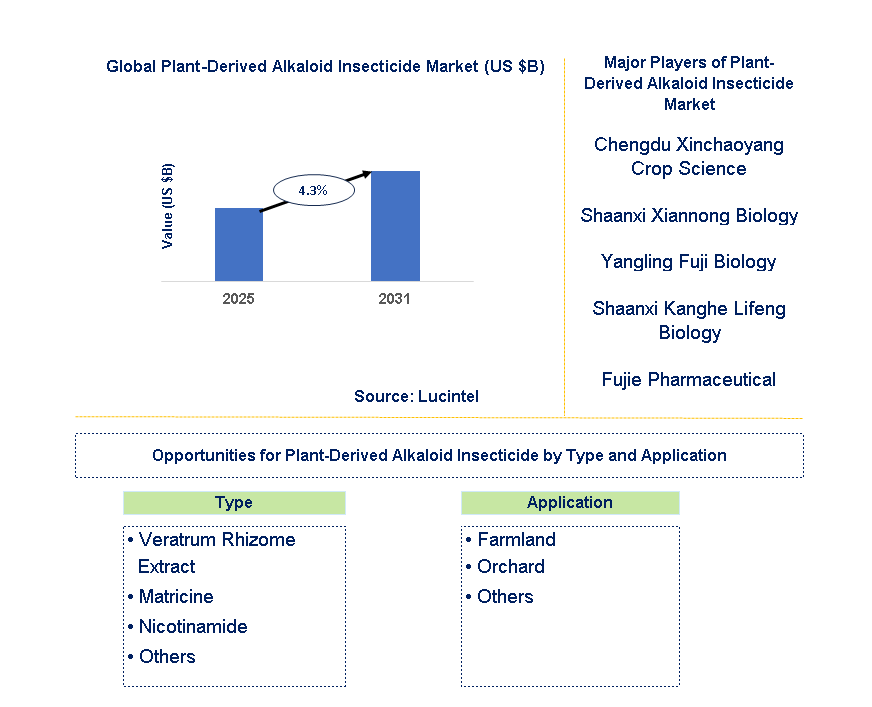
Key data points: The growth forecast = 4.3% annually for the next 7 years. Scroll below to get more insights. This market report covers Trends, opportunities and forecasts in plant-derived alkaloid insecticide market to 2031 by type (veratrum rhizome extract, matricine, nicotinamide, and others), application (farmland, orchard, and others), and region (North America, Europe, Asia Pacific, and the Rest of the World)
We'll send your sample report shortly.
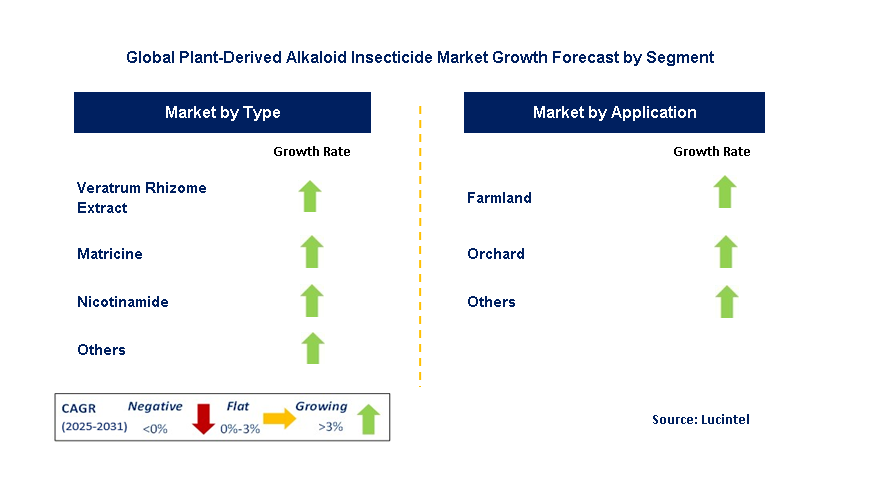
• Lucintel forecasts that, within the type category, nicotinamide is expected to witness the highest growth over the forecast period due to the increasing benefits in skincare.
• Within the application category, orchard is expected to witness higher growth due to the expanding need for fruit production.
• In terms of region, North America is expected to witness the highest growth over the forecast period due to the rising focus on organic farming and sustainable pest control methods.
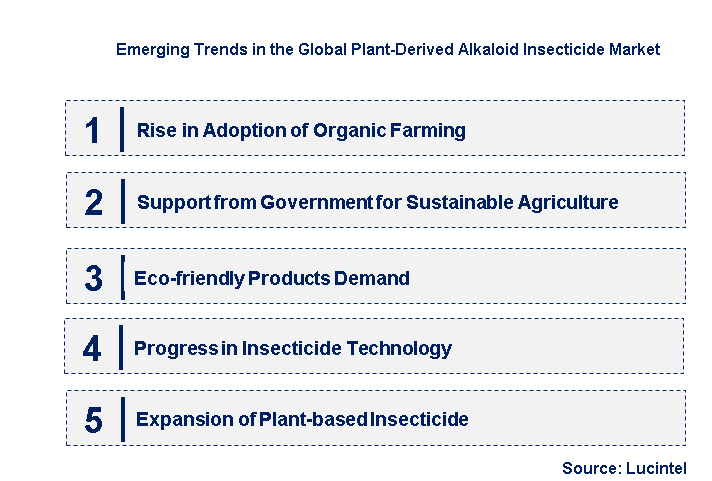
• Rise in Adoption of Organic Farming: The world is changing towards organic farming and this translates into growth in plant-derived alkaloid insecticide. These insecticide are often certified organic and represent a softer approach compared to synthetic chemicals .With the growth of organic farming, there will also be a growth in need for plant-derived alkaloids for sustainable pest management.
• Support from Government for Sustainable Agriculture: Governments around the globe are directing more support towards sustainable agriculture and even funding the use of natural insecticide. Such policies are advancing the use of plant-derived alkaloids because they are less harmful than synthetic chemicals. There are many supportive regulations like organic certification guidelines and grants for plant based products which are propelling the growth of the plant derived alkaloid insecticide market.
• Eco-friendly Products Demand: There is a willingness to adopt pest control measures using environmentally friendly materials. Users have also become more comfortable with the formulation of plant based alkaloid insecticide that are less harmful to the environment. Residential and agricultural markets have also started shifting their paradigm towards the adoption of more sustainable and natural methods of pest control. This change in the attitude of the users is pushing the manufacturers to invest in developing eco-friendly insecticide.
• Progress in Insecticide Technology: Formulation technology for plant derived alkaloid insecticide is becoming sophisticated. More research is being conducted on the ease of use and stabilization of these natural products to make them as effective as constructed insecticide. These improvements are broadening the use of plant based alkaloids for pest extermination as well as lowering the manufacturing expenses.
• Expansion of Plant-based Insecticide: The advancement of integrated pest management (IPM) practices is boosting growth of the market for plant-based insecticide. These systems use natural, biological and minimal chemical approaches to eliminate pests. Such systems can also use plant derived active ingredients as a more effective and less toxic option to insecticide. The emerging trends in the market for plant-derived alkaloid insecticide show a strong move towards sustainability, technology innovation and consumer-driven demand for safer, eco-friendly products. The increased popularity of organic farming is expected to expand the market for plant-based insecticide which will be supported by increasing regulatory backing. These insecticide have become more efficient, cheaper, and more competitive with traditional chemical alternatives due to advances in formulation and extraction techniques. Sustainability-minded consumers and producers are pointing towards a bright future for these plant-derived alkaloids as core elements of integrated pest management systems, as well as ecological pest control solutions.
• Improvements in Alkaloid Extraction Techniques: The development of ‘new’ alkaloid extraction methods for plant and herb sources is making it easier and cheaper to manufacture natural insecticide. These changes also ensures the greater concentration of alkaloids like nicotine, pyrethrins, and rotenone, which are useful in pest control. Undeniably, this is boosting the relative attractiveness of plant insecticide over synthetic chemicals.
• Creation of New Broad-Spectrum Plant Derived Insecticide: The creation of a broad-spectrum plant-derived insecticide that targets most agricultural pests has advanced fast. By modifying the formulation of plant alkaloids, manufacturers are making more potent and effective products. This has a significant impact as it reduces the range of different types of insecticide needed for effective pest control thereby simplifying pest control in farming and horticulture.”
• New Product Regulatory Approvals: The recent approval of the plant-derived alkaloids insecticide in the USA and the European Union is increasing the market. These new registrations provide an opportunity for plant-based insecticide to penetrate wider markets where consumers and regulators are becoming more concerned about safe and eco-friendly products.
• Growth In Primary Development Projects: Investments into R&D for plant-derived insecticide is on the rise. These funds are mainly targeted towards increasing the efficiency, stability, and overall use of the alkaloid-based insecticide. These changes are designed to improve the effectiveness of pest control products and increase the penetration of plant-based products in the market.
• Green Compliance Mark: In response to the growing need for sustainability, manufacturers of plant-derived alkaloid insecticide are shifting to greener packaging. This development is in reaction to the rise in consumers willing to purchase environmentally friendly products. The use of advanced biodegradable and recyclable materials for packaging these products is not only appealing to the market but also minimizes the adverse effects on the environment. Developments from last time show a growing trend towards natural-based pest control alternatives in the market for Plant Derived Alkaloid insecticide. This shift is supported by several factors including; product formulation advancements, increasing government incentives to embrace sustainable agriculture and consumer information on health and environmental consequences of synthetic insecticide use. Firms are putting more money into research and development activities so as to increase efficiency and reduce costs of plant-derived alkaloids as compared to chemical pesticides. These developments are set to make plant-derived alkaloid insecticide a mainstay in future agriculture, thus creating a better way to control pests that is sustainable and does not harm the environment.
• Improvement in Organic Farming: The improvement in organic farming practices appears to be a key growth potential for the plant alkaloid insecticide market. Natural pest control methods are increasingly needed in response to the rising demand for organic food. Plant-derived insecticide typically permissible in organic farming can help meet this challenge in a safe and environmentally friendly manner, thus presenting a strong opportunity for market growth.
• Adoption in Public Health Programs: Aside from pharmaceutical usage, public sprays of plant-based insecticide have been implemented to target disease carrying insects like mosquitoes. These sprays provide a more eco-friendly, less harmful alternative to traditional chemical use. The focus towards fighting vector-borne diseases in developing regions is creating enormous new markets for plant based insecticide.
• Integration with Biocontrol Strategies: The use of plant-based biopesticides with biocontrol agents is a new development in Integrated Pest Management (IPM) systems. Like other IPM systems, pest control is accomplished using natural insecticide and biological control agents like predators and parasitoids. This approach contributes to sustainable pest management. This has increased the importance of biopesticides in sustainable agriculture.
• Global Market Expansion: There is a growing prospect for expansion of business into developing markets, especially in Latin America and Africa, as hygiene health standards increase and safer agricultural methods become more common. These markets provide great potential for investment, thus providing plant-based insecticide can increase the rate of business expansion in the regions.
• Development of Home and Garden Products;The home and garden sector has increasingly developed as a potential growth area for these plant-derived alkaloid insecticide as buyers look for affordable and environmentally friendly pest control measures. There is increasing use of these products for the management of mosquito, ant, and termite infestations in households. The increasing inclination towards gardening without chemicals is accelerating the research and marketing of such products. The market for plant derived alkaloid insecticide is growing at a fast pace due to the emerging trends of demand for organic farming, eco-friendly products, and formulation technology improvements. These factors foster growth across many applications from farming, home gardening, and even public health campaigns. Although there are still challenges such as regulatory difficulties and competition with synthetic insecticide, the market seems to be expanding as the consumers and industries are becoming more and more focused on sustainability. Companies have the chance to position themselves as leaders in the expanding plant-derived insecticide market by taking advantage of the growth opportunities that are available.
• Chengdu Xinchaoyang Crop Science
• Shaanxi Xiannong Biology
• Yangling Fuji Biology
• Shaanxi Kanghe Lifeng Biology
• Fujie Pharmaceutical
• QHL Pharma
• Select Botanical
• Indena
• Selco Wirkstoffe Vertriebs
• Jiangsu Wannong Biotechnology
• Veratrum Rhizome Extract
• Matricine
• Nicotinamide
• Others
• Farmland
• Orchard
• Others
• North America
• Europe
• Asia Pacific
• The Rest of the World
• United States: There is a growing interest on sustainable agriculture in the United States, leading to a rapid expansion of the plant-derived alkaloid insecticide market. The growth of these insecticide is being aided by the government financial support aimed at promoting organic farming. There is ongoing research on natural substitutes for synthetic pesticides, including some promising commercial vegetarian alkaloid based insecticide. Moreover, the increasing interest in non-toxic, biodegradable products from consumers is further propelling this market segment.
• China: China ranks among the leading countries adopting and developing plant-derived alkaloid insecticide owing to its robust agricultural sector. The country is starting to adopt more environmentally friendly methods of pest control as the country is pressed to minimize harmful farming chemicals. More and more eco-friendly alternatives like nicotine and pyrethrum plantonics are starting to emerge. The government has also expedited the adoption of natural insecticide through its support for sustainable agriculture policies.
• Germany: Germany has always been a striking example of sustainability, and it is no different with the plant derived alkaloid insecticide market. The country is known for its stringent laws on the use of chemical pesticides and high levels of green awareness which propels farm organizations to search for other efficient solutions. The wide usage of less toxic and environmentally friendly ALK based insecticide is on the rise. Research and Development of new plant sources of alkaloids and improving already existing formulations are leading the market expansion in Germany.
• India: With India’s booming agricultural sector, the negative impact synthetic pesticides have on the environment is becoming evident, therefore the need for plant-based alkaloid insecticide is increasing. Farmers are starting to adopt more organic methods of farming, particularly the use of neem and tobacco derived insecticide. Pest control is also moving towards more natural alternatives instead of chemicals, which is a great step forward. The authorities are supporting this trend by easing the regulations around organic farming and restricting chemical pesticides in India, further adopting this form of agriculture is greatly beneficial.
• Japan: The agricultural sector in Japan is starting to adopt plant-based alkaloid insecticide as a part of their sustainable farming practices. Japan has been trying to improve the use of organic and eco-friendly farming practices and with that, the demand for natural insecticide has increased over time. For their minimal impact on the environment, plant-based alkaloids like pyrethrins and nicotine are becoming more commonplace. These trends are further supported by ongoing research and consumer desire for natural products, which in turn propels the need for better performing natural insecticide.


• Chengdu Xinchaoyang Crop Science
• Shaanxi Xiannong Biology
• Yangling Fuji Biology
• Shaanxi Kanghe Lifeng Biology
• Fujie Pharmaceutical
• QHL Pharma
• Select Botanical
• Indena
• Selco Wirkstoffe Vertriebs
• Jiangsu Wannong Biotechnology Q5. Which plant-derived alkaloid insecticide market segment will be the largest in future? Answer: Lucintel forecasts that, within the type category, nicotinamide is expected to witness the highest growth over the forecast period due to the increasing benefits in skincare. Q6. In plant-derived alkaloid insecticide market, which region is expected to be the largest in next 5 years? Answer: In terms of region, North America is expected to witness the highest growth over the forecast period due to the rising focus on organic farming and sustainable pest control methods. Q7. Do we receive customization in this report? Answer: Yes, Lucintel provides 10% customization without any additional cost.


Choose a license that fits your team. Instant PDF delivery.
Prices exclude taxes. Instant delivery. Custom licensing available on request.
Market Report · July 22, 2026
Market Report · July 20, 2026
Market Report · July 20, 2026
Trusted partner for strategic intelligence and business growth


Receive a complimentary market analysis tailored to your industry. Our analysts will identify key growth opportunities and competitive dynamics specific to your business.

Market size, growth rate, and key trend analysis for your specific sector.

Top competitor positioning and market share analysis.

Strategic recommendations backed by data-driven insights.
Get curated market intelligence and competitive moves straight to your inbox.
By subscribing, you agree to receive our monthly insights. Unsubscribe anytime.
Receive a complimentary market analysis tailored to your industry. Our analysts will identify key growth opportunities and competitive dynamics specific to your business.
Market size, growth rate, and key trend analysis for your specific sector.
Top competitor positioning and market share analysis.
Strategic recommendations backed by data-driven insights.
Get curated market intelligence, emerging trends, and competitive moves straight to your inbox each month.
By subscribing, you agree to receive our monthly insights. Unsubscribe anytime.
We'll send your sample report shortly.