
Market Report · July 22, 2026

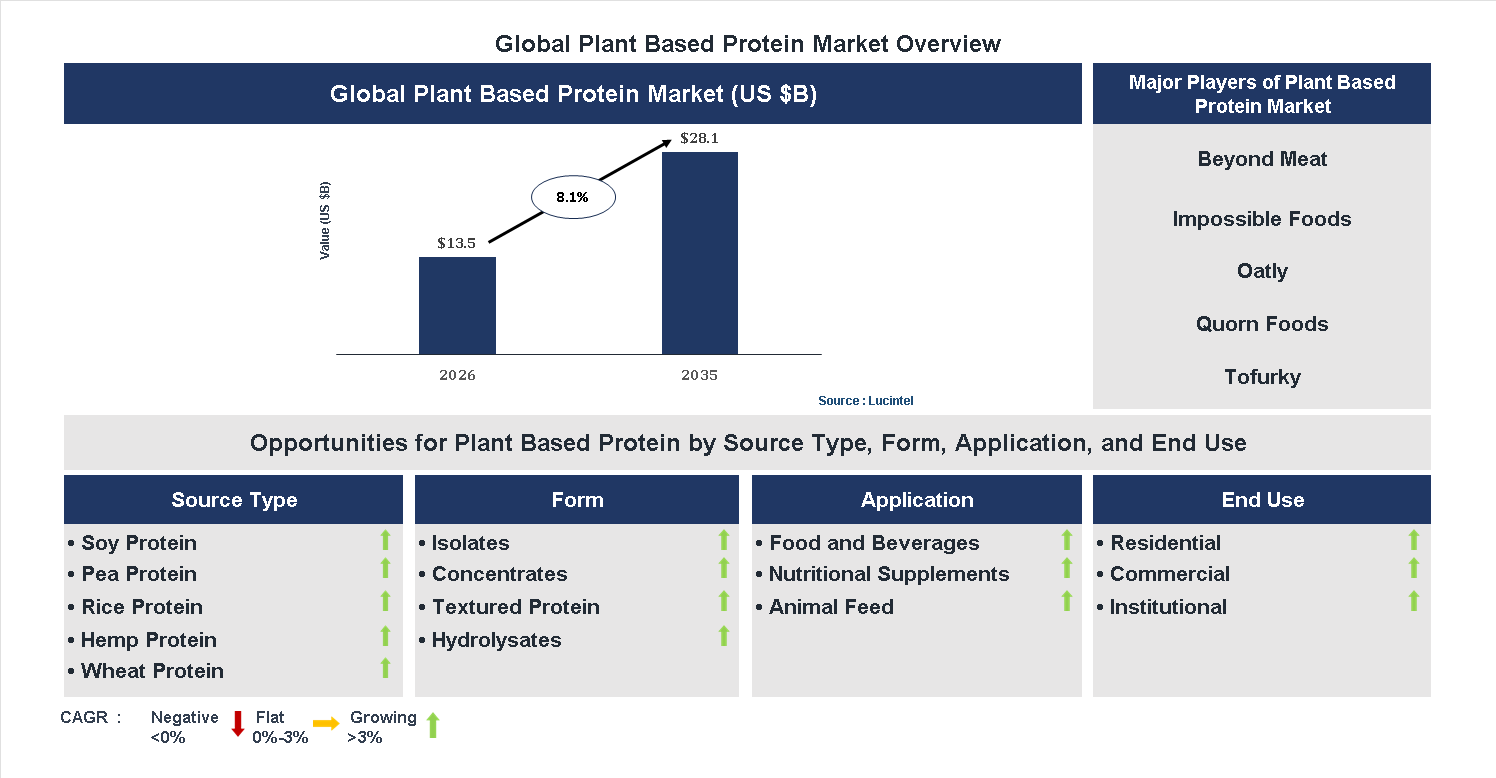
Key data points: The market size in 2035 = $28.1 billion, growth forecast = 8.1% annually for the next 8 years. Scroll below to get more insights. This market report covers trends, opportunities and forecasts in plant based protein market to 2035 by source type (soy protein, pea protein, rice protein, hemp protein, and wheat protein), form (isolates, concentrates, textured protein, and hydrolysates), application (food and beverages, nutritional supplements, and animal feed), end use (residential, commercial, and institutional), and region (North America, Europe, Asia Pacific, and the Rest of the World)
We'll send your sample report shortly.
• Lucintel forecasts that, within the source type category, soy protein is expected to witness the highest growth over the forecast period.
• Within the end use category, residential is expected to witness the highest growth.
• In terms of region, APAC is expected to witness the highest growth over the forecast period. Gain valuable insights for your business decisions with our comprehensive 150+ page report. Sample figures with some insights are shown below.
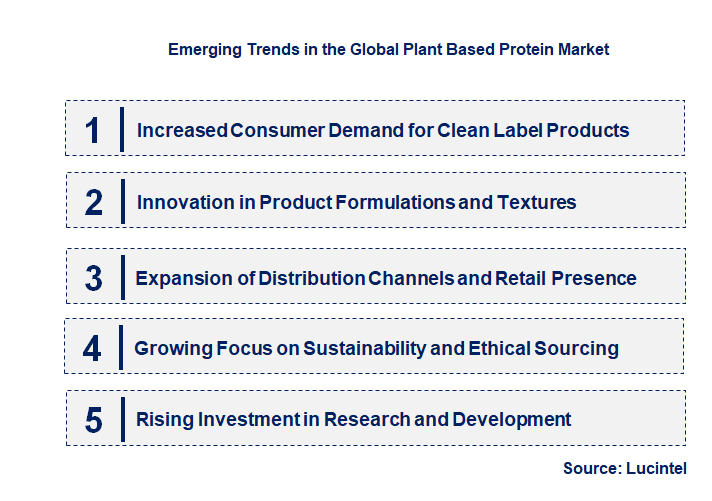
• Increased Consumer Demand For Clean Label Products: Consumers are increasingly seeking plant-based proteins with simple, recognizable ingredients. This trend is driven by health consciousness and a desire for transparency in food sourcing. Brands are responding by reformulating products to eliminate artificial additives and preservatives, emphasizing natural ingredients. This shift enhances consumer trust and aligns with the broader movement towards healthier eating habits. As a result, companies that prioritize clean labels are gaining competitive advantage, fostering innovation in ingredient sourcing and product development to meet these expectations.
• Innovation In Product Formulations And Textures: The market is witnessing significant advancements in creating plant-based proteins that mimic the texture and taste of animal products. Innovations include new processing techniques and ingredient combinations that improve mouthfeel and flavor profiles. This trend broadens the appeal of plant-based options to flexitarians and meat-eaters, not just vegetarians. Enhanced product formulations are also enabling the development of diverse offerings such as plant-based cheeses, yogurts, and ready-to-eat meals. These innovations are crucial for increasing consumer adoption and expanding market share.
• Expansion Of Distribution Channels And Retail Presence: Plant-based proteins are moving beyond specialty stores into mainstream supermarkets, convenience stores, and online platforms. Retailers are dedicating more shelf space to plant-based products, recognizing their growing popularity. E-commerce channels are also facilitating wider access, especially in regions with limited physical retail options. This expansion increases product visibility and accessibility, encouraging trial and repeat purchases. The integration of plant-based options into everyday shopping environments is vital for driving mass-market adoption and supporting sustained growth.
• Growing Focus On Sustainability And Ethical Sourcing: Consumers are increasingly motivated by environmental concerns and animal welfare when choosing plant-based proteins. Companies are emphasizing sustainable sourcing practices, such as using locally grown ingredients and reducing carbon footprints. Certifications and transparent supply chains are becoming important purchase drivers. This focus aligns with broader sustainability goals and appeals to eco-conscious consumers. As a result, brands that prioritize ethical sourcing and sustainability are gaining loyalty, influencing industry standards and encouraging more responsible production practices across the market.
• Rising Investment In Research And Development: Significant investments are being made in R&D to improve the nutritional profile, taste, and functionality of plant-based proteins. This trend is fostering innovation in ingredient technology, such as novel protein isolates and blends. R&D efforts are also aimed at developing products that cater to specific dietary needs, including allergen-free and functional foods. Increased funding from venture capital and large corporations accelerates product innovation and market expansion. This focus on research is essential for overcoming current limitations and unlocking new opportunities, ensuring the market remains competitive and responsive to evolving consumer preferences. These trends are collectively transforming the plant based protein market by making products more appealing, accessible, and aligned with consumer values. They are driving innovation, expanding market reach, and emphasizing sustainability, ultimately reshaping the industry into a more inclusive and environmentally responsible sector.
• Growing Consumer Demand for Healthier Alternatives: The rising awareness of health benefits associated with plant-based diets is boosting market growth. Consumers are increasingly seeking nutritious, low-fat, and high-protein options, leading to a surge in plant-based protein product consumption. This demand is encouraging companies to develop innovative, functional, and tasty products that cater to diverse dietary needs, thereby expanding market reach and driving sales.
• Technological Innovations in Protein Extraction: Advances in extraction and processing technologies are enhancing the quality and functionality of plant-based proteins. These innovations improve texture, taste, and nutritional profile, making products more appealing to consumers. As a result, manufacturers can develop a wider range of products, from meat substitutes to dairy alternatives, which boosts market competitiveness and accelerates growth.
• Expansion of Distribution Channels and Market Penetration: The increasing availability of plant-based proteins across supermarkets, convenience stores, and online platforms is broadening consumer access. Strategic partnerships and collaborations are facilitating market penetration in emerging regions. This expansion is enabling brands to reach a larger customer base, increase sales volume, and establish a strong presence in both developed and developing markets.
• Rising Investment and Strategic Partnerships: Significant investments from venture capitalists and food corporations are fueling innovation and product development. Strategic alliances are enabling companies to leverage expertise, expand product portfolios, and accelerate market entry. These investments are vital for scaling production, improving supply chains, and meeting growing consumer demand, thereby strengthening the overall market ecosystem.
• Growing Focus on Sustainability and Ethical Consumption: Consumers are increasingly prioritizing environmentally friendly and ethically produced foods. Plant-based proteins are perceived as sustainable alternatives to animal proteins, reducing carbon footprint and resource use. This shift in consumer preference is encouraging companies to adopt sustainable practices, promote transparency, and develop eco-friendly products, which further enhances market growth and aligns with global sustainability goals. These developments are significantly transforming the plant based protein market by expanding consumer base, improving product quality, and fostering innovation. Increased investment, technological advancements, and a sustainability focus are driving market expansion and competitiveness. As a result, the industry is poised for sustained growth, with more diverse offerings and wider accessibility, ultimately shaping the future of sustainable and healthy food consumption worldwide.
• Expanding Applications in the Food and Beverage Industry: The integration of plant-based proteins into various food and beverage products is a key growth opportunity. Manufacturers are developing plant-based meat, dairy alternatives, snacks, and ready-to-eat meals to meet consumer demand for healthier, sustainable options. Innovations in texture, flavor, and nutritional content are making these products more appealing. As consumer preferences shift, companies that diversify their product lines with plant-based options can capture new market segments and increase sales.
• Innovation in Protein Sources and Formulations: Developing novel plant protein sources such as pea, lentil, chickpea, and algae offers significant growth potential. Advances in extraction and processing technologies improve protein quality, functionality, and taste. This enables the creation of more diverse, high-protein products that cater to various dietary needs. Companies investing in R&D to optimize formulations can differentiate their offerings, meet regulatory standards, and expand their market reach, especially in health-conscious and vegan consumer segments.
• Rising Demand for Vegan and Vegetarian Products: The increasing adoption of vegan and vegetarian lifestyles is fueling demand for plant-based proteins. Consumers seek ethical, health, and environmental benefits, prompting brands to develop appealing, protein-rich plant-based foods. Market growth is driven by product launches, marketing campaigns, and endorsements from health influencers. Companies that focus on authentic, tasty, and convenient vegan options can capitalize on this trend, gaining loyalty and expanding their consumer base.
• Growing Focus on Sustainability and Environmental Impact: Consumers are increasingly aware of the environmental footprint of their food choices, favoring plant-based proteins for their lower greenhouse gas emissions and resource use. This shift encourages brands to promote sustainability credentials and transparent sourcing. Investment in eco-friendly production methods and sustainable supply chains enhances brand reputation. Companies that align their strategies with environmental concerns can attract eco-conscious consumers and gain a competitive advantage in the market.
• Strategic Partnerships and Market Expansion Opportunities: Collaborations between plant-based protein producers, food manufacturers, and retailers facilitate product innovation and distribution expansion. Entering emerging markets with rising health awareness and vegetarian populations offers significant growth potential. Strategic acquisitions and joint ventures enable access to new technologies and consumer bases. By expanding geographic reach and strengthening supply chains, companies can accelerate growth, diversify their portfolios, and establish a dominant presence in the global plant based protein market. The overall landscape of the plant based protein market is poised for substantial growth, driven by innovation, consumer preferences, and sustainability initiatives. These opportunities enable companies to expand their offerings, improve product appeal, and capture new markets. Embracing these trends will be crucial for market players aiming to maintain competitiveness and capitalize on the increasing global demand for plant-based nutrition solutions.
• Technological Innovation: The development of advanced processing techniques has improved the texture, taste, and nutritional profile of plant-based proteins, making them more appealing to consumers. Innovations like extrusion technology and fermentation have enabled the creation of meat substitutes that closely mimic animal products, expanding market reach. These technological advancements reduce production costs over time and facilitate product diversification, attracting a broader consumer base. As R&D continues, the market is expected to see more innovative offerings, further fueling growth.
• Rising Consumer Awareness and Health Trends: Increasing awareness about the health benefits of plant-based diets, such as lower cholesterol and reduced risk of chronic diseases, is a major driver. Consumers are actively seeking healthier, cleaner-label products free from artificial additives and preservatives. The growing prevalence of lifestyle-related health issues has shifted preferences towards plant-based proteins as a nutritious alternative. This trend is reinforced by social media and influencer marketing, which promote plant-based lifestyles, thereby expanding the consumer base and boosting demand.
• Environmental Sustainability Concerns: Growing concerns over the environmental impact of traditional animal agriculture, including greenhouse gas emissions, water usage, and deforestation, are compelling consumers and policymakers to support plant-based diets. The environmental benefits of plant-based proteins, such as lower carbon footprint and resource efficiency, are significant selling points. Governments and organizations are also promoting plant-based options through policies and campaigns, which further accelerate market growth. This sustainability focus aligns with consumer values, making plant-based proteins a preferred choice.
• Regulatory Support and Policy Frameworks: Governments worldwide are implementing policies to promote plant-based diets and sustainable food systems. Regulatory support includes favorable labeling laws, subsidies for plant-based product development, and initiatives to reduce meat consumption. These policies enhance consumer confidence and facilitate market entry for new products. Additionally, standards around food safety and quality assurance help build trust among consumers and retailers, encouraging wider adoption and expansion of plant-based protein offerings.
• Market Expansion and Product Diversification: The increasing availability of plant-based protein products across retail channels, including supermarkets, convenience stores, and online platforms, is expanding market reach. Companies are diversifying their product portfolios to include snacks, beverages, and ready-to-eat meals, catering to various consumer preferences. Strategic collaborations and partnerships with foodservice providers are also boosting visibility and accessibility. This diversification not only attracts different consumer segments but also encourages repeat purchases, sustaining market growth. The challenges facing the plant based protein market include:
• High Production Costs: Producing plant-based proteins often involves expensive raw materials and complex processing techniques, which can lead to higher retail prices. These costs can limit affordability for price-sensitive consumers and hinder mass adoption. Additionally, scaling up production to meet growing demand requires significant capital investment, which can be a barrier for small and medium-sized enterprises. Overcoming cost challenges through technological advancements and economies of scale is essential for market expansion.
• Consumer Acceptance and Perception Issues: Despite growing interest, some consumers remain skeptical about the taste, texture, and nutritional value of plant-based proteins. Cultural preferences and ingrained dietary habits can also impede acceptance in certain regions. Misinformation and a lack of awareness about the benefits of plant-based diets further hinder adoption. Addressing these perception issues through marketing, education, and product innovation is crucial to increasing consumer acceptance.
• Regulatory and Labeling Challenges: Navigating complex regulatory environments and obtaining approvals for novel plant-based ingredients can be time-consuming and costly. Inconsistent labeling standards across regions may create confusion and hinder international trade. Additionally, some regulatory bodies scrutinize claims related to health benefits and sustainability, which can delay product launches. Clear, harmonized regulations are needed to facilitate smoother market entry and consumer trust. The plant based protein market is driven by technological innovations, health consciousness, environmental sustainability, supportive policies, and product diversification. These factors collectively foster growth by expanding consumer options and increasing demand. However, high production costs, consumer perception barriers, and regulatory complexities pose significant challenges that could slow market expansion. Addressing these hurdles through technological advancements, consumer education, and harmonized regulations will be vital. Overall, the markets future appears promising, with sustainable growth opportunities driven by evolving consumer preferences and global sustainability initiatives. Strategic efforts to overcome challenges will determine the pace and extent of market development in the coming years.
• Beyond Meat
• Impossible Foods
• Oatly
• Quorn Foods
• Tofurky
• Field Roast
• Daiya Foods
• Lightlife
• MorningStar Farms
• Eat Just
• Soy Protein
• Pea Protein
• Rice Protein
• Hemp Protein
• Wheat Protein
• Isolates
• Concentrates
• Textured Protein
• Hydrolysates
• Food and Beverages
• Nutritional Supplements
• Animal Feed
• Residential
• Commercial
• Institutional
• North America
• Europe
• Asia Pacific
• The Rest of the World
• United States: The US market has seen significant innovation with new product launches, including plant-based meats and dairy alternatives. Major companies like Beyond Meat and Impossible Foods have expanded their product lines and distribution channels, including fast-food chains. Consumer demand for clean-label and organic options is rising, prompting brands to focus on transparency and ingredient quality. R&D investments are increasing, fostering new protein sources such as pea and mung bean proteins. Regulatory support and favorable policies are further boosting market growth, making the US a leader in plant-based protein adoption.
• China: China is rapidly expanding its plant based protein market, driven by a large population and rising health consciousness. Domestic companies are innovating with traditional ingredients like soy and mung beans, while international brands are entering the market. The government promotes plant-based diets as part of sustainability initiatives, encouraging local production and consumption. E-commerce platforms are playing a crucial role in distribution, making products more accessible. Additionally, Chinese consumers are increasingly interested in functional and premium plant-based products, which are gaining popularity among urban middle-class populations.
• Germany: Germanys plant based protein market is characterized by a strong consumer focus on sustainability and animal welfare. The country has seen a surge in plant-based meat and dairy alternatives, supported by a robust food tech sector. Retailers are expanding their plant-based offerings, and there is a growing trend towards flexitarian diets. German startups are innovating with novel ingredients like lentils and chickpeas, emphasizing organic and local sourcing. Government initiatives promoting sustainable food systems and environmental awareness are further propelling market growth, positioning Germany as a key European hub for plant-based proteins.
• India: India presents a unique market with a rich tradition of plant-based diets, primarily based on legumes, lentils, and pulses. The market is witnessing modernization with the introduction of processed plant-based proteins and meat substitutes. Rising health concerns, urbanization, and increased disposable income are driving demand. Local startups are developing affordable, culturally relevant products, while international brands are entering the space. Government schemes promoting plant-based diets for health and sustainability are supportive. The market is expected to grow significantly as consumers seek nutritious, affordable, and sustainable protein sources aligned with traditional dietary patterns.
• Japan: Japans plant based protein market is growing steadily, influenced by aging populations and health-conscious consumers. The focus is on functional foods that support health and longevity. Traditional ingredients like soy are being used innovatively in new product formats, including plant-based meats and snacks. Japanese companies are investing in R&D to develop novel proteins such as konjac and seaweed-based options. The market benefits from a strong culture of innovation and high-quality standards. Government initiatives promoting sustainable and healthy eating habits are encouraging industry growth. International brands are also expanding their presence, catering to evolving consumer preferences for plant-based options.


• Beyond Meat
• Impossible Foods
• Oatly
• Quorn Foods
• Tofurky
• Field Roast
• Daiya Foods
• Lightlife
• MorningStar Farms
• Eat Just Q6. Which plant based protein market segment will be the largest in future? Answer: Lucintel forecasts that, within the source type category, soy protein is expected to witness the highest growth over the forecast period. Q7. In plant based protein market, which region is expected to be the largest in next 5 years? Answer: In terms of region, APAC is expected to witness the highest growth over the forecast period. Q8. Do we receive customization in this report? Answer: Yes, Lucintel provides 10% customization without any additional cost.


Choose a license that fits your team. Instant PDF delivery.
Prices exclude taxes. Instant delivery. Custom licensing available on request.
Market Report · July 22, 2026
Market Report · July 22, 2026
Market Report · July 22, 2026
Trusted partner for strategic intelligence and business growth


Receive a complimentary market analysis tailored to your industry. Our analysts will identify key growth opportunities and competitive dynamics specific to your business.

Market size, growth rate, and key trend analysis for your specific sector.

Top competitor positioning and market share analysis.

Strategic recommendations backed by data-driven insights.
Get curated market intelligence and competitive moves straight to your inbox.
By subscribing, you agree to receive our monthly insights. Unsubscribe anytime.
Receive a complimentary market analysis tailored to your industry. Our analysts will identify key growth opportunities and competitive dynamics specific to your business.
Market size, growth rate, and key trend analysis for your specific sector.
Top competitor positioning and market share analysis.
Strategic recommendations backed by data-driven insights.
Get curated market intelligence, emerging trends, and competitive moves straight to your inbox each month.
By subscribing, you agree to receive our monthly insights. Unsubscribe anytime.
We'll send your sample report shortly.