
Market Report · July 22, 2026

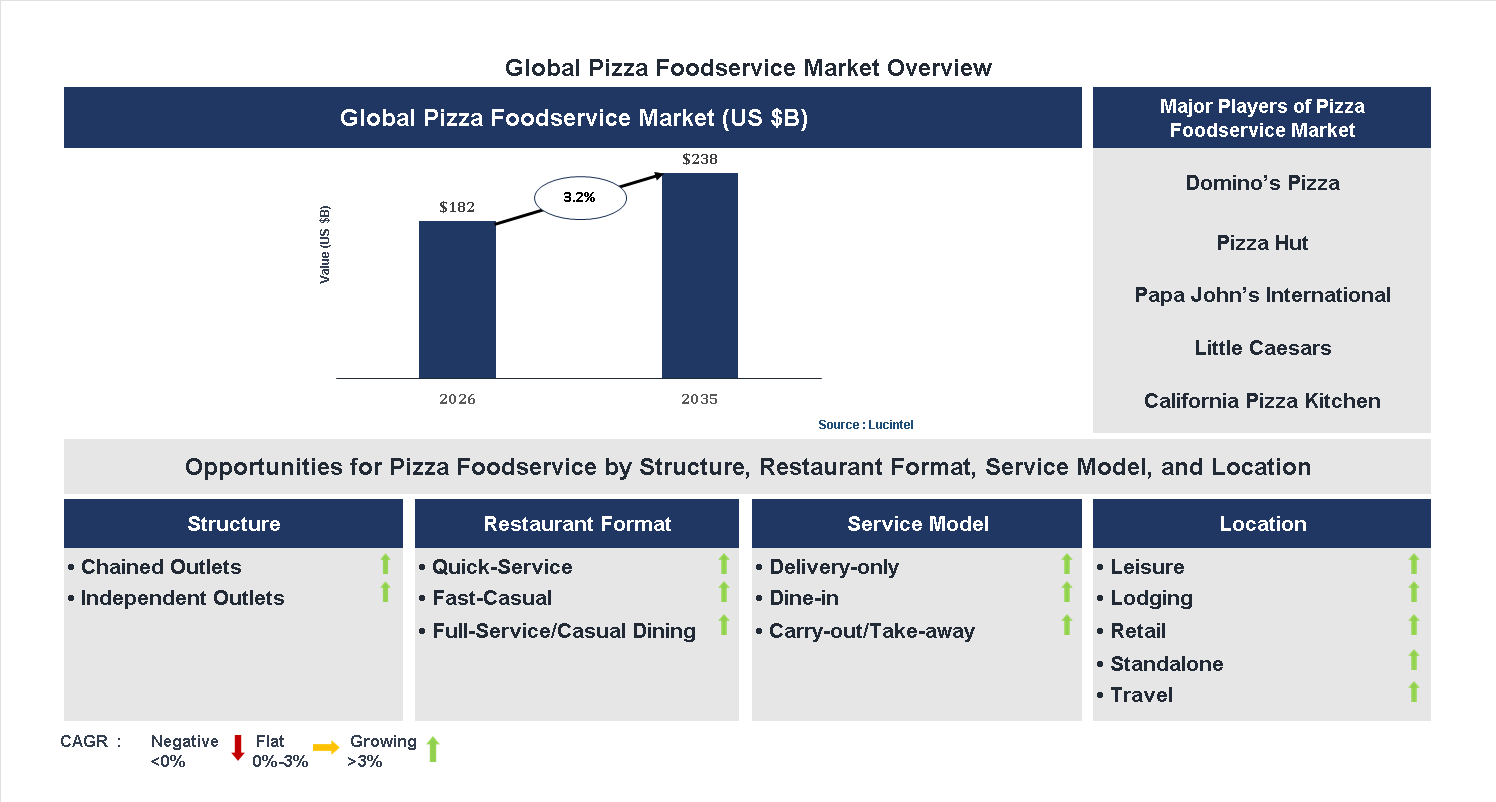
Key data points: The market size in 2035 = $238 billion, growth forecast = 3.2% annually for the next 8 years. Scroll below to get more insights. This market report covers trends, opportunities and forecasts in pizza foodservice market to 2035 by structure (chained outlets and independent outlets), restaurant format (quick-service, fast-casual, and full-service/casual dining), service model (delivery-only, dine-in, and carry-out/take-away), location (leisure, lodging, retail, standalone, and travel), and region (North America, Europe, Asia Pacific, and the Rest of the World)
We'll send your sample report shortly.
• Lucintel forecasts that, within the location category, standalone is expected to witness the highest growth over the forecast period.
• Within the structure category, chained outlet is expected to witness higher growth.
• In terms of region, North America is expected to witness the highest growth over the forecast period. Gain valuable insights for your business decisions with our comprehensive 150+ page report. Sample figures with some insights are shown below.
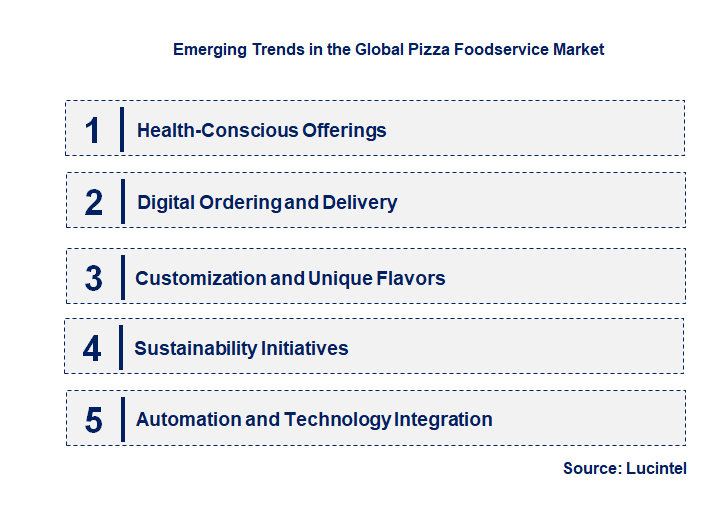
• Health-Conscious Offerings: Consumers are increasingly demanding healthier pizza options, prompting restaurants to incorporate organic ingredients, gluten-free crusts, and plant-based toppings. This trend reflects a broader shift towards wellness and dietary awareness, encouraging innovation in menu development. Businesses adopting healthier options can attract a wider customer base, including those with specific dietary restrictions, thereby expanding market reach and enhancing brand reputation.
• Digital Ordering and Delivery: The rise of online platforms and mobile apps has revolutionized how customers order pizza. Contactless delivery, real-time tracking, and easy payment options improve convenience and customer satisfaction. This trend has accelerated during the pandemic, making digital channels essential for growth. Companies investing in robust digital infrastructure can increase sales, optimize delivery logistics, and gather valuable consumer data for targeted marketing.
• Customization and Unique Flavors: Consumers now seek personalized pizza experiences, leading to a surge in customizable options and innovative flavor combinations. This trend allows brands to differentiate themselves through creative toppings, regional flavors, and limited-time offerings. Enhanced customization fosters customer loyalty and encourages repeat business, while also enabling operators to respond swiftly to emerging taste trends.
• Sustainability Initiatives: Environmental concerns are prompting pizza brands to adopt sustainable practices, such as eco-friendly packaging, waste reduction, and sourcing ingredients locally. These efforts appeal to eco-conscious consumers and can reduce operational costs. Sustainability initiatives also enhance brand image and compliance with regulations, positioning companies as responsible industry leaders committed to environmental stewardship.
• Automation and Technology Integration: The adoption of automation in pizza preparation, such as robotic kitchens and AI-driven ordering systems, is increasing efficiency and consistency. These technologies reduce labor costs and improve speed, enabling businesses to handle higher volumes with precision. Integration of AI and IoT devices also facilitates inventory management and predictive analytics, supporting strategic decision-making and operational excellence. These emerging trends are fundamentally reshaping the pizza foodservice market by emphasizing health, convenience, personalization, sustainability, and technological innovation. Companies that adapt to these developments can gain competitive advantages, meet evolving consumer expectations, and secure long-term growth in a highly dynamic industry.
• Expansion of Health-Conscious Menu Options: The market is increasingly adopting healthier ingredients, such as gluten-free crusts, plant-based toppings, and low-fat cheeses. This shift caters to health-conscious consumers seeking nutritious alternatives without compromising flavor. Restaurants investing in these options are attracting a broader customer base, including vegetarians and those with dietary restrictions. This trend is expected to boost sales and brand loyalty, fostering innovation in menu development and supply chain management.
• Adoption of Digital Ordering and Delivery Platforms: The rise of online ordering and delivery services has transformed customer engagement. Pizza chains are leveraging mobile apps, third-party platforms, and contactless payments to enhance convenience and reach. This digital shift has increased order volumes, expanded geographic reach, and improved customer data collection. Companies investing in seamless digital experiences are gaining competitive advantages, leading to increased revenue streams and operational efficiencies in the evolving foodservice landscape.
• Focus on Sustainability and Eco-Friendly Practices: Consumers are increasingly prioritizing environmentally responsible options. Pizza businesses are adopting sustainable packaging, reducing food waste, and sourcing ingredients locally. These initiatives improve brand image and appeal to eco-conscious customers. Implementing green practices also helps reduce costs and comply with regulations. As sustainability becomes a key differentiator, companies that lead in eco-friendly initiatives are likely to strengthen customer loyalty and market positioning.
• Innovation in Menu Offerings and Customization: Customization options, such as build-your-own pizzas and unique flavor combinations, are gaining popularity. This trend allows consumers to personalize their orders, enhancing satisfaction and engagement. Restaurants are experimenting with new toppings, sauces, and crust styles to stand out. Such innovation drives repeat business and attracts diverse customer segments. Emphasizing flexibility and creativity in menu development is crucial for capturing market share and responding to evolving consumer tastes.
• Integration of Advanced Technologies for Operational Efficiency: Automation, AI, and data analytics are streamlining operations, inventory management, and customer service. Robots and self-service kiosks reduce labor costs and improve order accuracy. AI-driven insights optimize supply chains and marketing strategies. These technological advancements enable faster service, better resource allocation, and enhanced customer experiences. Companies adopting these innovations are gaining a competitive edge, increasing profitability, and positioning themselves for sustainable growth in a dynamic market. These developments are significantly transforming the pizza foodservice market by enhancing customer experience, operational efficiency, and sustainability. Companies embracing health trends, digital platforms, eco-friendly practices, menu innovation, and advanced technologies are better positioned for growth. As a result, the market is becoming more competitive, diverse, and responsive to consumer demands, fostering long-term sustainability and profitability for industry players.
• Expansion of Delivery and Takeout Services: The increasing demand for convenience and on-the-go dining has propelled the growth of delivery and takeout options. Foodservice providers are investing in online ordering platforms, contactless payments, and efficient logistics to meet customer expectations. This segment includes third-party delivery partnerships and in-house delivery fleets, enabling brands to reach wider audiences and boost sales. The focus on quick, reliable service is critical for capturing market share in urban and suburban areas.
• Introduction of Premium and Gourmet Pizza Offerings: Consumers are seeking unique, high-quality pizza options with innovative toppings, artisanal ingredients, and gourmet flavors. This trend encourages restaurants to develop specialty menus featuring organic, locally sourced, and gluten-free ingredients. Premium offerings appeal to a more affluent demographic and food enthusiasts, creating opportunities for upscale branding and higher profit margins. Customization and limited-edition pizzas further enhance customer engagement and loyalty.
• Growth of Health-Conscious and Dietary-Specific Pizzas: The rising awareness of health and wellness influences menu development, with a focus on low-calorie, plant-based, and allergen-free options. Incorporating vegetables, whole grains, and alternative proteins caters to vegetarian, vegan, and gluten-sensitive consumers. This segment includes innovative crusts like cauliflower or chickpea-based options and reduced-sodium sauces. Meeting dietary preferences broadens customer base and aligns with global health trends, fostering brand differentiation and loyalty.
• Adoption of Technology for Operational Efficiency: Digital tools such as AI-driven inventory management, automated kitchen equipment, and data analytics optimize operations. These technologies reduce waste, improve order accuracy, and enhance customer experience through personalized marketing. Mobile apps and self-service kiosks streamline ordering processes, increasing throughput during peak hours. Embracing technology also enables real-time feedback and performance monitoring, supporting continuous improvement and cost reduction.
• Expansion into Emerging Markets and New Geographies: Growing middle-class populations and urbanization in developing regions present significant opportunities. Companies are entering markets in Asia, Africa, and Latin America, tailoring menus to local tastes and preferences. Strategic partnerships, franchising, and localized marketing are key to successful expansion. This growth diversifies revenue streams, mitigates risks associated with mature markets, and capitalizes on the increasing global demand for pizza as a convenient, affordable food option. These growth opportunities are shaping the future landscape of the pizza foodservice market. By focusing on delivery innovation, premium and health-conscious offerings, technological integration, and geographic expansion, industry players can capitalize on emerging trends. These strategies will drive revenue growth, enhance customer loyalty, and ensure long-term competitiveness in a rapidly evolving industry environment.
• Technological Advancements: The integration of digital ordering platforms, mobile apps, and delivery tracking systems has significantly enhanced customer convenience and operational efficiency. These innovations enable quick order processing, real-time updates, and expanded reach, attracting a broader customer base. Automation in kitchen processes and AI-driven analytics also optimize inventory management and personalized marketing strategies, fostering growth and competitiveness in the market.
• Consumer Preference for Convenience and Delivery: Modern consumers prioritize convenience, leading to increased demand for takeout and delivery services. The rise of third-party delivery apps like Uber Eats, DoorDash, and Grubhub has expanded market access, allowing pizza brands to reach customers beyond traditional dine-in settings. This shift has driven restaurants to invest heavily in delivery infrastructure, resulting in increased sales volumes and market penetration.
• Economic Factors and Disposable Income: Fluctuations in disposable income influence consumer spending on dining out and food delivery. During economic booms, increased spending boosts sales for pizza outlets, while economic downturns may lead to reduced discretionary spending. Price sensitivity and promotional offers become critical in maintaining customer loyalty and market share amid changing economic conditions.
• Innovation in Menu Offerings: Continuous innovation in menu options, including healthier ingredients, plant-based toppings, and regional flavors, caters to evolving consumer tastes. This diversification attracts a wider demographic, including health-conscious and multicultural consumers. Such innovation not only enhances brand differentiation but also encourages repeat business and market expansion. The challenges in the pizza foodservice market are:
• Regulatory and Food Safety Compliance: Stringent regulations regarding food safety, labeling, and hygiene standards pose operational challenges. Compliance requires significant investment in staff training, quality control, and infrastructure upgrades. Non-compliance can lead to legal penalties, reputational damage, and loss of customer trust, making regulatory adherence a critical ongoing concern.
• Intense Competition and Market Saturation: The market is highly competitive, with numerous local and international brands vying for market share. Saturation in key regions limits growth opportunities and pressures profit margins. Differentiating offerings and maintaining customer loyalty amidst fierce competition require continuous innovation and marketing efforts.
• Supply Chain Disruptions: Dependence on global supply chains for ingredients and packaging materials exposes the market to risks such as price volatility, shortages, and delays. Disruptions can impact product quality, increase costs, and reduce service levels. Managing supply chain resilience is vital to ensure consistent product availability and customer satisfaction. The pizza foodservice market is driven by technological innovations, consumer demand for convenience, economic factors, and menu diversification. However, it faces challenges from regulatory compliance, intense competition, and supply chain vulnerabilities. These drivers and challenges collectively influence market growth, requiring strategic adaptation by industry players. Embracing technological advancements and innovation while managing regulatory and supply chain risks will be essential for sustained success in this dynamic market environment.
• Domino’s Pizza
• Pizza Hut
• Papa John’s International
• Little Caesars
• California Pizza Kitchen
• Marco’s Franchising
• MOD Super Fast Pizza, LLC.
• Blaze Pizza
• Sbarro LLC
• Jet’s Pizza
• Chained Outlets
• Independent Outlets
• Quick-Service
• Fast-Casual
• Full-Service/Casual Dining
• Delivery-only
• Dine-in
• Carry-out/Take-away
• Leisure
• Lodging
• Retail
• Standalone
• Travel
• North America
• Europe
• Asia Pacific
• The Rest of the World
• United States: The market is experiencing a boom in online delivery services, with major chains investing heavily in digital platforms. Consumers are increasingly seeking healthier and customizable options, including plant-based ingredients and gluten-free crusts. Fast-casual concepts are gaining popularity, and there is a notable rise in gourmet and artisanal pizza offerings. The pandemic accelerated growth in takeout and delivery, transforming the competitive landscape. Additionally, sustainability initiatives, such as eco-friendly packaging, are becoming more prominent among pizza providers.
• China: The pizza foodservice market is expanding rapidly, driven by urbanization and rising disposable incomes. International brands are increasing their presence, while local chains are innovating with flavors tailored to Chinese tastes. Online ordering and delivery apps dominate the market, facilitating quick service. There is a growing demand for affordable, convenient options, with a focus on quick-service formats. The market also sees a trend toward healthier ingredients and sustainable packaging, aligning with global health and environmental concerns.
• Germany: The market is shifting towards artisanal and gourmet pizzas, emphasizing high-quality, locally sourced ingredients. Consumers are increasingly interested in sustainable practices, including organic and eco-friendly packaging. Traditional pizza styles coexist with innovative fusion recipes, appealing to diverse tastes. There is a rising trend in vegetarian and vegan options, reflecting changing dietary preferences. The use of digital ordering platforms is widespread, and delivery services are expanding, especially in urban areas. The market also sees a focus on transparency and ingredient provenance.
• India: The pizza foodservice sector is growing rapidly, with international brands expanding their footprint and local chains innovating with regional flavors. Vegetarian and spicy varieties are particularly popular, catering to local tastes. The market is characterized by affordability and convenience, with a strong emphasis on delivery and takeaway services. There is a rising trend in fusion pizzas, incorporating Indian spices and ingredients. The adoption of digital ordering platforms is increasing, and brands are focusing on menu customization to attract diverse customer segments. Sustainability and health-conscious options are gradually gaining attention.
• Japan: The pizza market is marked by innovative toppings, fusion styles, and premium offerings. Consumers show a preference for unique, high-quality ingredients and artisanal pizzas. There is a notable trend toward fusion cuisine, blending Japanese flavors with traditional pizza styles. The market also features a rise in gluten-free and health-conscious options. Digital ordering and delivery services are well-established, with a focus on convenience. Premium and limited-edition pizzas are popular among consumers seeking novel experiences. Sustainability practices, such as eco-friendly packaging, are increasingly integrated into business strategies.


• Domino’s Pizza
• Pizza Hut
• Papa John’s International
• Little Caesars
• California Pizza Kitchen
• Marco’s Franchising
• MOD Super Fast Pizza, LLC.
• Blaze Pizza
• Sbarro LLC
• Jet’s Pizza Q6. Which pizza foodservice market segment will be the largest in future? Answer: Lucintel forecasts that, within the location category, standalone is expected to witness the highest growth over the forecast period. Q7. In pizza foodservice market, which region is expected to be the largest in next 5 years? Answer: In terms of region, North America is expected to witness the highest growth over the forecast period. Q8. Do we receive customization in this report? Answer: Yes, Lucintel provides 10% customization without any additional cost.


Choose a license that fits your team. Instant PDF delivery.
Prices exclude taxes. Instant delivery. Custom licensing available on request.
Market Report · July 22, 2026
Market Report · July 22, 2026
Market Report · July 22, 2026
Trusted partner for strategic intelligence and business growth


Receive a complimentary market analysis tailored to your industry. Our analysts will identify key growth opportunities and competitive dynamics specific to your business.

Market size, growth rate, and key trend analysis for your specific sector.

Top competitor positioning and market share analysis.

Strategic recommendations backed by data-driven insights.
Get curated market intelligence and competitive moves straight to your inbox.
By subscribing, you agree to receive our monthly insights. Unsubscribe anytime.
Receive a complimentary market analysis tailored to your industry. Our analysts will identify key growth opportunities and competitive dynamics specific to your business.
Market size, growth rate, and key trend analysis for your specific sector.
Top competitor positioning and market share analysis.
Strategic recommendations backed by data-driven insights.
Get curated market intelligence, emerging trends, and competitive moves straight to your inbox each month.
By subscribing, you agree to receive our monthly insights. Unsubscribe anytime.
We'll send your sample report shortly.