
Market Report · July 20, 2026

Key data points: The growth forecast = 6.2% annually for the next 6 years. Scroll below to get more insights. This market report covers trends, opportunities, and forecast in the global pipes for air conditioning market to 2030 by type (high pressure pipe and low pressure pipe), application (commercial vehicle and passenger car), and region (North America, Europe, Asia Pacific, and the Rest of the World)
We'll send your sample report shortly.
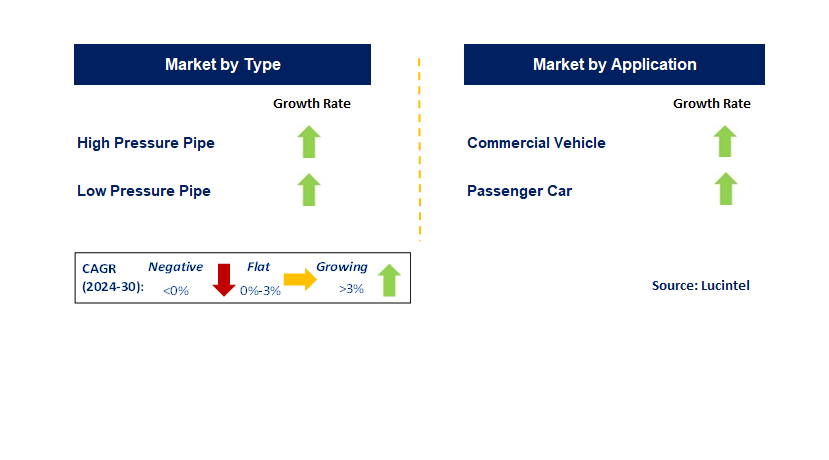
• Lucintel forecasts that, within the type category, high-pressure pipe is expected to witness a higher growth over the forecast period.
• Within the application category, passenger car is expected to witness a higher growth.
• In terms of regions, APAC is expected to witness the highest growth over the forecast period.
A more than 150-page report is developed to help in your business decisions.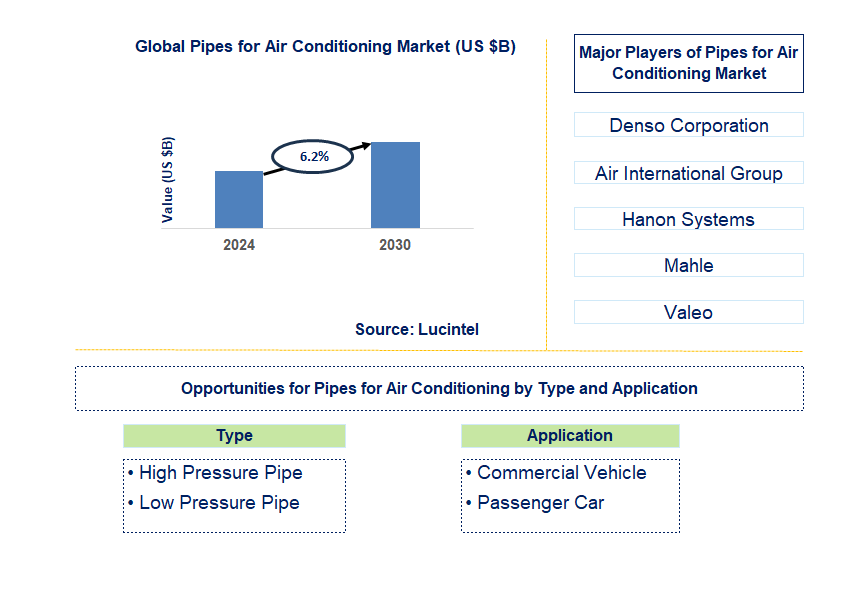
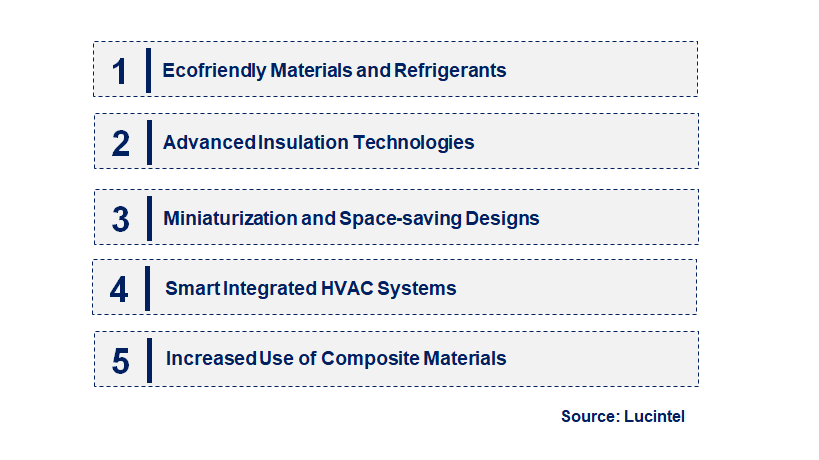
• Eco-friendly Materials and Refrigerants: One major trend in this market is the move towards eco-friendly materials and refrigerants. With increasing environmental concerns and more stringent regulations, manufacturers have developed pipes that can work with natural refrigerants such as CO2 or hydrocarbons. These substances not only help reduce environmental impact but also comply with global standards for ozone depletion and global warming potential.
• Advanced Insulation Technologies: Advanced insulation materials and technologies are becoming more common. Innovations, such as aerogel insulation or vacuum-insulated panels, enhance the thermal efficiency of air-conditioning pipes, leading to lower energy consumption and improved system performance. Efficient insulation is crucial for maintaining indoor comfort, particularly in regions experiencing extreme climatic conditions; hence, these technologies have been used extensively.
• Miniaturization and Space-saving Designs: The compactness and space-saving requirements of air conditioning systems have necessitated a demand for miniaturized/flexible piping solutions. Thinner, flexible pipes that can be passed through tight spaces are being developed by manufacturers, which conform well to modern building designs as well as retrofits. This trend also aligns with the growing use of ductless/split-type air conditioners since they are easy to install.
• Smart Integrated HVAC Systems: The design and functionality of air conditioning pipes are being influenced by the integration of smart technologies into HVAC systems. Smart pipes equipped with sensors monitor temperature, pressure, and flow rates at any given time, providing valuable data on optimizing system performance and maintenance. This is part of a wider phenomenon tied to smart homes and IoT-enabled infrastructure, which ensures better control over operations, thereby enhancing energy efficiency levels while cutting down on costs.
• Increased Use of Composite Materials: The market has seen an upsurge in the usage of composite materials such as fiber-reinforced polymers. These materials combine strength, durability, and light weight, making them ideal for various applications. Besides being corrosion- and chemical-resistant, composite pipes also improve the longevity of air conditioning systems and eventually reduce maintenance costs.
• Development of High-performance Copper-Aluminum Pipes: A notable development is the introduction of copper-aluminum hybrid pipes to this market. These pipes combine copper’s excellent thermal conductivity with aluminum’s light weight and cost-effectiveness. The hybrid design cuts down on material costs while enhancing heat exchange, thereby increasing the efficiency of air conditioning systems. This innovation is especially beneficial in regions where efficient cooling solutions are highly needed, as it strikes a balance between performance and cost.
• Introduction of Advanced Insulation Technologies: Recent advancements include the adoption of cutting-edge insulation technologies like aerogel insulation or vacuum-insulated panels. These materials minimize energy losses by effectively preventing thermal bridging in air conditioning systems. They are particularly important for making energy-efficient buildings, as they minimize thermal bridging. Additionally, these technologies contribute immensely to the overall sustainability of HVAC systems through reduced energy consumption and greenhouse gas emissions.
• Eco-friendly and Sustainable Materials: There is a trend of using eco-friendly materials in the production of air conditioning pipes. Manufacturers are increasingly using recyclable metals such as aluminum and biodegradable polymers. Regulatory requirements and consumer demand for environmentally friendly products are driving this shift. This trend aligns with worldwide campaigns to reduce the carbon footprint of building materials and promote green building.
• Advancements in Smart Piping Solutions: The integration of smart technologies into piping systems is an important development. Smart pipes fitted with sensors and IoT capabilities can continually monitor system conditions such as temperature, pressure, and flow rates. The information can be used to optimize system performance, detect leaks ahead of time, and proactively schedule maintenance. The implementation of smart piping solutions enhances the efficiency and reliability of air conditioning systems, aligning with the wider smart building technology trend.
• Expansion into Emerging Markets: In emerging economies, such as Southeast Asia, Africa, and Latin America, there is great potential for growth driven by rising demand in markets requiring cooling equipment. The growing urbanization process, along with higher income levels, contributes to an increasing need for cooling appliances. Companies can take advantage of this by establishing local factories, partnering with distributors from the region, and offering products that meet the unique specifications of these markets.
• Innovation in Eco-friendly and Energy-efficient Products: There is a strategic opportunity in developing and marketing eco-friendly and energy-efficient air conditioning pipes. As global awareness of environmental issues increases, consumers and businesses are seeking products that reduce energy consumption and have a lower environmental impact. Companies that innovate in this area can distinguish themselves through solutions that adhere to green building codes as well as energy efficiency guidelines. These include pipes working with natural refrigerants or those made from recyclable materials.
• Investment in Smart and Connected Technologies: The advent of smart buildings and IoT technologies provides an opportunity for integrating smart features into air conditioning pipes. Companies may produce smart pipes equipped with sensors and connectivity options, enabling system performance monitoring, diagnosing problems, and optimizing energy use. This will add value to clients by providing extra services like predictive maintenance and power management, resulting in improved customer satisfaction and loyalty.
• Focus on Green Retrofits and Renovation Projects: As many buildings worldwide undergo renovations to make them more energy-efficient and comply with new environmental regulations, there is an increasing need for retrofitting existing HVAC systems with modern pipes that are energy-efficient. Companies can target this market by offering specialized products and services for retrofitting projects. This includes developing flexible and easy-to-install piping solutions that minimize disruption during installation and maximize energy savings.
• Personalized Systems and Modules: The demand for customized and modular air conditioning systems is rising, especially in commercial and industrial applications. Companies may find potential in providing tailor-made piping solutions based on unique building layouts, cooling loads, aesthetic requirements, and other customer-specific needs. Furthermore, businesses that grow over time require modular solutions that allow for flexible space usage.
• Denso Corporation
• Air International Group
• Hanon Systems
• Mahle
• Valeo
• Calsonic Kansei
• Sumitomo Electric Industries
• Continental
• Eaton
• TI Fluid Systems
• High Pressure Pipe
• Low Pressure Pipe
• Commercial Vehicle
• Passenger Car
• North America
• Europe
• Asia Pacific
• The Rest of the World
• United States: The U.S. market for air conditioning pipes has witnessed an increasing use of eco-friendly materials and refrigerants due to stricter environmental regulations. Some developments include the manufacture of high-performance copper-aluminum hybrid pipes that combine copper’s higher thermal efficiency and more expensive cost with aluminum’s cheaper solution costs. There have also been advancements in manufacturing technologies like 3D printing, employed in making complex pipe designs that reduce production costs and enhance efficiency.
• China: The growth rate of China's air conditioning pipes market is directly related to the boom in construction activities and the demand for energy-efficient HVAC systems. Recent trends involve a transition towards using aluminum tubes, which are lightweight and cost-effective. Additionally, advanced insulation techniques, such as improved pipe coatings, are being adopted by Chinese manufacturers to improve durability and efficiency. Furthermore, there is a push from the government to minimize carbon emissions by adopting environmentally friendly refrigerants and materials.
• Germany: Germany’s market for air conditioning tubes stands out due to its focus on quality materials and precision engineering. In recent years, stainless steel tubes have gained popularity, especially among industrial customers, because they are resistant to corrosion and highly durable. German companies also lead in the development of innovative insulation materials and heat-resistant coatings that make AC units more efficient. These factors have contributed to an increased use of recyclable and environmentally friendly materials as part of the sustainability/energy drive.
• India: The Indian market for air conditioning pipes is growing due to urbanization and the increasing middle-class population. Copper tubes are increasingly being used because they have better heat conductivity and are durable at high temperatures. Additionally, Indian manufacturers are exploring cost-effective options such as PEX or composite pipes for the low-cost market segment. Furthermore, energy efficiency has become one of the essential criteria in selecting air conditioners, encouraging the development of advanced insulation technology that will reduce electricity consumption during cooling.
• Japan: Japan’s market for air conditioning pipes is characterized by advanced technology and high-quality standards. Recently, lightweight and high-strength aluminum pipes have been adopted, offering a good balance between affordability and performance. Japanese firms focus on research aimed at increasing the efficiency of refrigerants and insulation materials. As a result, pipe designs have evolved, including the advent of thinner, flexible types that can be easily embedded in different structures thanks to compact and efficient HVAC systems.


• Denso Corporation
• Air International Group
• Hanon Systems
• Mahle
• Valeo
• Calsonic Kansei
• Sumitomo Electric Industries
• Continental
• Eaton
• TI Fluid Systems
Q5. Which pipes for the air conditioning market segment will be the largest in the future?

Choose a license that fits your team. Instant PDF delivery.
Prices exclude taxes. Instant delivery. Custom licensing available on request.
Market Report · July 20, 2026
Market Report · July 20, 2026
Market Report · July 16, 2026
Trusted partner for strategic intelligence and business growth


Receive a complimentary market analysis tailored to your industry. Our analysts will identify key growth opportunities and competitive dynamics specific to your business.

Market size, growth rate, and key trend analysis for your specific sector.

Top competitor positioning and market share analysis.

Strategic recommendations backed by data-driven insights.
Get curated market intelligence and competitive moves straight to your inbox.
By subscribing, you agree to receive our monthly insights. Unsubscribe anytime.
Receive a complimentary market analysis tailored to your industry. Our analysts will identify key growth opportunities and competitive dynamics specific to your business.
Market size, growth rate, and key trend analysis for your specific sector.
Top competitor positioning and market share analysis.
Strategic recommendations backed by data-driven insights.
Get curated market intelligence, emerging trends, and competitive moves straight to your inbox each month.
By subscribing, you agree to receive our monthly insights. Unsubscribe anytime.
We'll send your sample report shortly.