
Market Report · July 20, 2026

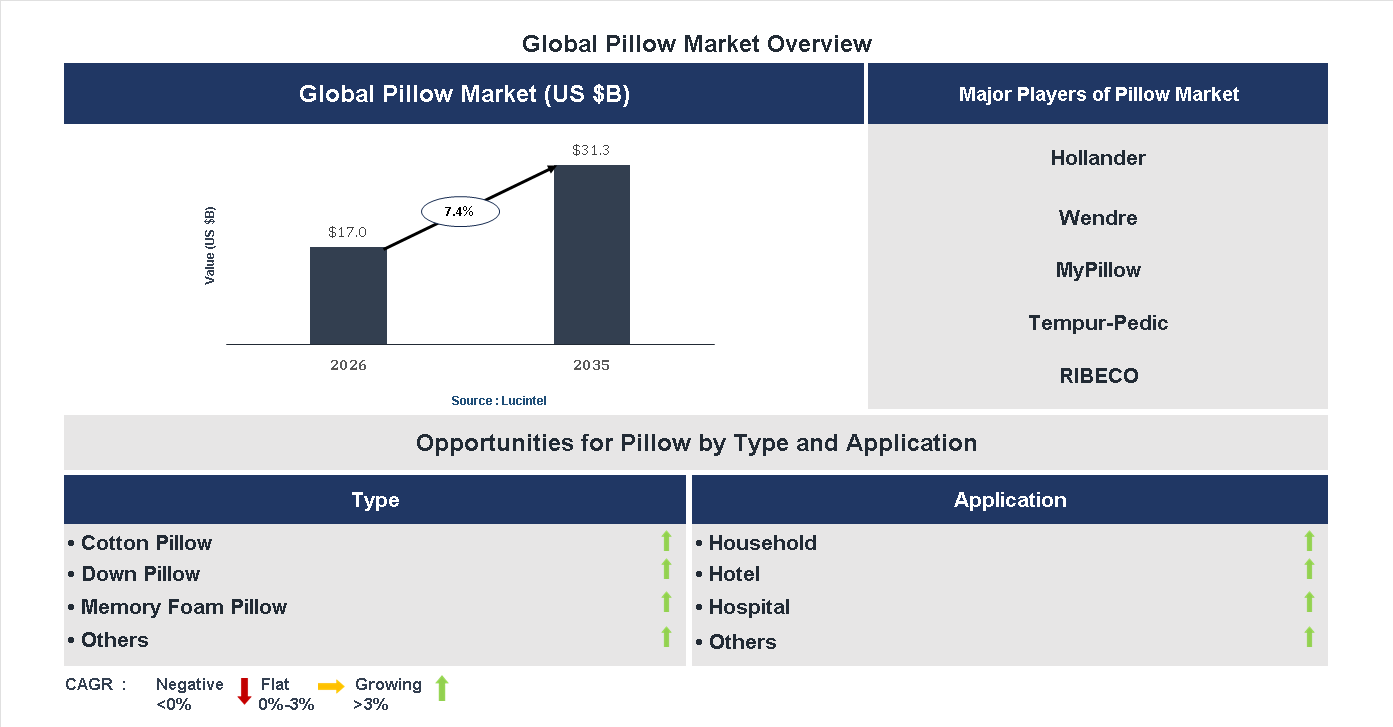
Key data points: The market size in 2035 = $31.3 billion, growth forecast = 7.4% annually for the next 8 years. Scroll below to get more insights. This market report covers trends, opportunities and forecasts in pillow market to 2035 by type (cotton pillow, down pillow, memory foam pillow, and others), application (household, hotel, hospital, and others), and region (North America, Europe, Asia Pacific, and the Rest of the World)
We'll send your sample report shortly.
• Lucintel forecasts that, within the type category, memory foam pillow is expected to witness the highest growth over the forecast period.
• Within the application category, household is expected to witness the highest growth.
• In terms of region, APAC is expected to witness the highest growth over the forecast period. Gain valuable insights for your business decisions with our comprehensive 150+ page report. Sample figures with some insights are shown below.
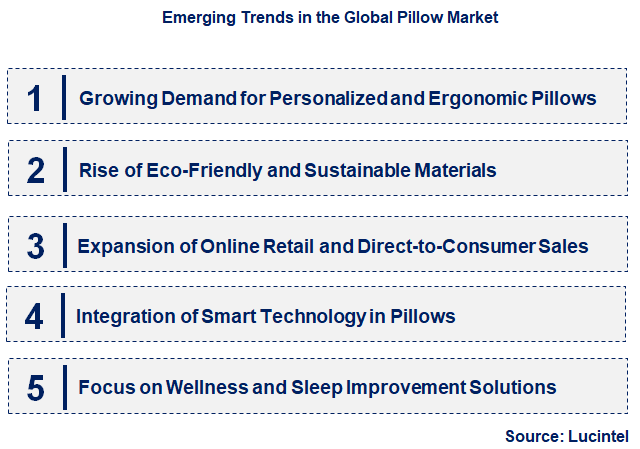
• Growing Demand for Personalized and Ergonomic Pillows: Consumers increasingly prioritize comfort and health benefits, leading to a surge in customizable and ergonomic pillow options. This trend is driven by awareness of sleep health and the desire for tailored solutions that support specific sleep positions or health conditions. Manufacturers are offering adjustable fill levels, memory foam, and contour designs to cater to individual needs, enhancing customer satisfaction and loyalty. The focus on personalized comfort is expected to continue, influencing product development and marketing strategies across the industry.
• Rise of Eco-Friendly and Sustainable Materials: Sustainability is becoming a key factor influencing purchasing decisions. Consumers prefer pillows made from organic, biodegradable, and recycled materials that reduce environmental impact. Brands are adopting eco-friendly manufacturing processes and transparent supply chains to appeal to environmentally conscious buyers. This trend is fostering innovation in natural fillings like buckwheat hulls, organic cotton covers, and plant-based foams. As environmental awareness grows, the market for sustainable pillows is projected to expand, encouraging companies to integrate eco-conscious practices into their core offerings.
• Expansion of Online Retail and Direct-to-Consumer Sales: The shift towards e-commerce is significantly impacting the pillow market. Consumers favor the convenience of online shopping, detailed product information, and home delivery options. Brands are investing in digital marketing, virtual try-on tools, and customer reviews to enhance online shopping experiences. Direct-to-consumer models allow for better pricing, customization, and brand engagement. This trend is reducing reliance on traditional brick-and-mortar stores and enabling new entrants to penetrate the market more easily, thereby increasing competition and innovation.
• Integration of Smart Technology in Pillows: Smart pillows equipped with sensors and connectivity features are emerging as a new segment. These pillows monitor sleep quality, provide real-time feedback, and integrate with health apps to promote better sleep hygiene. The technology-driven approach appeals to health-conscious consumers and tech enthusiasts. The integration of features like temperature regulation, adjustable firmness, and sleep tracking is transforming pillows from simple comfort items into health and wellness devices. This trend is expected to accelerate as IoT and AI technologies become more accessible and affordable.
• Focus on Wellness and Sleep Improvement Solutions: The market is increasingly aligned with the broader wellness industry, emphasizing sleep as a critical component of health. Products are designed to improve sleep quality through innovative materials, ergonomic designs, and complementary accessories like pillow sprays and sleep masks. Brands are marketing pillows as part of holistic sleep improvement routines, often incorporating scientific research and expert endorsements. This trend reflects a growing consumer awareness of sleeps importance for overall well-being and is driving demand for premium, health-oriented pillow products. These trends are reshaping the pillow market by emphasizing customization, sustainability, technological integration, online accessibility, and wellness focus. They are fostering innovation, expanding market segments, and enhancing consumer engagement, ultimately leading to a more dynamic and competitive industry landscape.
• Growing Demand for Ergonomic Pillows: The rising awareness of health and wellness has increased demand for ergonomic pillows designed to improve sleep quality and reduce neck and back pain. Consumers are prioritizing comfort and support, prompting manufacturers to develop specialized products with memory foam, adjustable features, and ergonomic designs. This trend is expanding market share for premium and health-focused pillow brands, fostering innovation and increasing overall sales.
• Adoption of Sustainable Materials: Environmental concerns are driving the shift toward eco-friendly pillows made from organic, biodegradable, and recycled materials. Brands are investing in sustainable sourcing and manufacturing processes to appeal to eco-conscious consumers. This development not only enhances brand reputation but also opens new market segments. The adoption of sustainable materials is expected to boost sales, reduce environmental impact, and align the industry with global sustainability goals.
• Integration of Smart Technology: The incorporation of smart features such as temperature regulation, sleep tracking, and adjustable firmness is revolutionizing the pillow industry. These technologically advanced products offer personalized sleep experiences, attracting tech-savvy consumers. The integration of IoT (Internet of Things) enhances product value and creates new revenue streams. This innovation is positioning the market at the forefront of sleep technology, fostering consumer loyalty and expanding market reach.
• Expansion of Customization Options: Consumers increasingly seek personalized pillows tailored to their specific sleep preferences and health needs. Manufacturers are offering customizable options in size, firmness, and materials, often through online platforms. This trend enhances customer satisfaction and brand loyalty, while also allowing companies to differentiate themselves in a competitive market. The focus on customization is driving sales growth and encouraging innovation in product design and marketing strategies.
• Rise of E-commerce and Direct-to-Consumer Sales: The shift toward online shopping has significantly impacted the pillow market, enabling brands to reach a broader audience directly. E-commerce platforms facilitate easy access to diverse products, reviews, and customization options. This development reduces distribution costs and enhances customer engagement. The growth of direct-to-consumer models is accelerating market expansion, fostering innovation in digital marketing, and providing consumers with more choices and better prices. The overall impact of these developments is a dynamic, innovative pillow market characterized by increased consumer choice, sustainability, and technological integration. These trends are driving growth, expanding market segments, and fostering competitive differentiation, ultimately transforming the industry landscape and offering new opportunities for stakeholders.
• Growing Demand for Ergonomic and Supportive Pillows: Increasing awareness of health and wellness is driving demand for ergonomic pillows that improve sleep quality and reduce neck and back pain. Consumers are seeking customizable support options, prompting manufacturers to develop innovative designs with memory foam, adjustable fill, and contouring features. This trend is particularly prominent among aging populations and health-conscious individuals, creating a lucrative market segment focused on comfort and health benefits.
• Expansion of the Hospitality and Healthcare Sectors: The hospitality industry’s focus on guest comfort and the healthcare sector’s emphasis on patient well-being are fueling pillow demand. Hotels are investing in premium, decorative, and ergonomic pillows to enhance guest experiences, while hospitals and clinics require specialized pillows for patient support and comfort. This growth in institutional demand offers manufacturers opportunities to develop tailored products, expand distribution channels, and establish long-term B2B partnerships.
• Innovation in Sustainable and Eco-Friendly Materials: Rising environmental awareness is prompting manufacturers to adopt sustainable materials such as organic cotton, natural latex, and recycled fibers. Consumers increasingly prefer eco-friendly pillows that align with their values, creating a niche market for green products. Innovations in biodegradable and non-toxic fillings also enhance product safety and appeal. This shift toward sustainability not only meets consumer expectations but also helps brands differentiate themselves in a competitive market.
• Adoption of Smart and Technology-Integrated Pillows: The integration of smart technology into pillows, such as sensors for sleep tracking and temperature regulation, presents new growth opportunities. These advanced products cater to tech-savvy consumers seeking personalized sleep solutions. The development of IoT-enabled pillows can provide data-driven insights into sleep patterns, improving overall sleep health. This technological innovation is expected to attract premium customers and open avenues for health monitoring and wellness applications.
• Rise of E-Commerce and Direct-to-Consumer Sales Channels: The proliferation of online retail platforms has expanded market reach, allowing brands to connect directly with consumers. E-commerce offers convenience, customization options, and competitive pricing, boosting sales volume. Digital marketing strategies and online reviews influence purchasing decisions, making online channels vital for growth. Companies investing in robust digital presence and logistics infrastructure can capitalize on this trend, gaining market share and fostering brand loyalty in a competitive landscape. These growth opportunities are poised to significantly influence the pillow market by fostering innovation, expanding customer bases, and enhancing product offerings. Embracing ergonomic, sustainable, technological, and digital trends will enable industry players to stay competitive and meet evolving consumer needs. Overall, these opportunities will drive sustained market expansion and diversification in the coming years.
• Technological Innovations: The development of advanced materials like memory foam, cooling gels, and hypoallergenic fabrics has revolutionized pillow manufacturing. These innovations enhance comfort, durability, and health benefits, attracting a broader consumer base. Companies investing in R&D can differentiate their products, meet specific customer needs, and gain competitive advantages. Moreover, automation and smart manufacturing processes improve efficiency and reduce costs, enabling brands to offer innovative products at competitive prices. As consumer preferences shift towards personalized and health-oriented products, technological advancements are crucial for market expansion and product diversification.
• Rising Health and Wellness Awareness: Increasing awareness about sleep health and its impact on overall well-being is a significant driver. Consumers are seeking ergonomic, supportive, and hypoallergenic pillows to improve sleep quality and reduce health issues like neck pain and allergies. This trend encourages demand for specialized pillows such as orthopedic, cervical, and memory foam variants. The growing focus on wellness also prompts consumers to invest in premium and eco-friendly products, fostering market growth. Manufacturers are responding by developing products that cater to these health-conscious preferences, thereby expanding the market scope and consumer loyalty.
• E-commerce Growth and Distribution Channels: The expansion of online retail platforms has made pillows more accessible to a global audience. E-commerce offers convenience, a wide product range, and competitive pricing, attracting a diverse customer base. Digital marketing and direct-to-consumer sales enable brands to build strong relationships and gather customer feedback for continuous improvement. Additionally, omnichannel strategies integrating online and offline sales enhance market reach. The rise of e-commerce has also facilitated niche marketing for specialized pillows, allowing smaller brands to compete effectively with established players, thus fueling overall market growth.
• Urbanization and Housing Trends: Rapid urbanization and increasing housing developments contribute to higher demand for pillows, especially in the hospitality and residential sectors. As urban populations grow, so does the need for comfortable bedding products in hotels, apartments, and new homes. The trend towards modern, aesthetically appealing, and functional home furnishings further boosts pillow sales. Additionally, the rise in rental and shared accommodations encourages consumers to purchase affordable, stylish, and durable pillows. These housing and urbanization trends create a steady demand pipeline, supporting sustained growth in the pillow market.
• Sustainability and Eco-Friendly Products: Growing environmental consciousness among consumers is driving demand for sustainable and eco-friendly pillows. Use of organic, biodegradable, and recycled materials appeals to eco-conscious buyers. Regulatory pressures and certifications related to sustainability also influence product development. Companies adopting eco-friendly practices can enhance brand reputation and meet regulatory standards, gaining a competitive edge. The shift towards sustainable products encourages innovation in materials and manufacturing processes, fostering market differentiation. As consumers increasingly prioritize environmental impact, the market is expected to see continued growth in eco-friendly pillow offerings. The challenges facing the pillow market include:-
• Regulatory and Safety Standards: Stringent regulations concerning product safety, labeling, and environmental impact pose compliance challenges for manufacturers. Meeting diverse regional standards requires significant investment in testing, certification, and quality control. Non-compliance can lead to legal penalties, recalls, and damage to brand reputation. Additionally, evolving standards demand continuous adaptation of products and processes, increasing operational costs. Smaller players may find it difficult to keep pace with regulatory changes, potentially limiting market entry or expansion. Navigating these complex regulatory landscapes is essential for sustainable growth but remains a significant challenge.
• Fluctuating Raw Material Prices: The market heavily depends on raw materials such as foam, fabric, and filling materials, which are subject to price volatility due to supply chain disruptions, geopolitical tensions, and environmental factors. Rising costs can squeeze profit margins and force manufacturers to increase product prices, potentially reducing competitiveness. Conversely, price drops may impact quality or innovation investments. Managing supply chain risks and securing stable sourcing are critical for maintaining profitability. Fluctuations also influence inventory management and production planning, adding complexity to operational strategies in the pillow industry.
• Intense Market Competition: The pillow market is highly competitive, with numerous established brands and new entrants vying for market share. Differentiation becomes challenging amid commoditized products, leading to price wars and marketing battles. Companies must continuously innovate and invest in branding to attract consumers, which can strain resources, especially for smaller firms. Additionally, counterfeit and imitation products threaten brand integrity and consumer trust. The competitive landscape requires strategic positioning, cost management, and innovation to sustain growth and profitability, making market competition a persistent challenge. The pillow market is shaped by technological advancements, health trends, distribution channels, urbanization, and sustainability initiatives, which collectively drive growth. However, regulatory complexities, raw material price fluctuations, and intense competition pose significant hurdles. Navigating these drivers and challenges requires strategic agility, innovation, and compliance. Successful players will leverage technological and consumer trends while managing risks associated with regulation and market rivalry. Overall, the markets future hinges on balancing innovation with sustainability and operational efficiency to sustain growth amid evolving consumer preferences and regulatory landscapes.
• Hollander
• Wendre
• MyPillow
• Tempur-Pedic
• RIBECO
• John Cotton
• Paradise Pillow
• Magniflex
• Comfy Quilts
• PENELOPE
• Cotton Pillow
• Down Pillow
• Memory Foam Pillow
• Others
• Household
• Hotel
• Hospital
• Others
• North America
• Europe
• Asia Pacific
• The Rest of the World
• United States: The U.S. pillow market is characterized by a surge in organic, memory foam, and ergonomic pillows. Consumers increasingly seek customizable and health-oriented options, with a strong emphasis on sustainability and eco-friendly materials. E-commerce sales continue to grow, and brands are investing in innovative designs to enhance sleep quality. The market also sees a rising trend in smart pillows with integrated technology for health monitoring. Regulatory standards for safety and environmental impact are becoming more stringent, influencing product development. Overall, the U.S. market is driven by health consciousness, technological integration, and a preference for personalized sleep solutions.
• China: China remains the largest producer and consumer of pillows, with rapid growth in smart pillow technology and sustainable materials. The market is expanding due to rising disposable incomes and increasing awareness of sleep health. Manufacturers are investing in innovative features such as temperature regulation and sleep tracking. Domestic brands are gaining popularity, competing with international companies through price and quality. E-commerce platforms like Alibaba and JD.com facilitate widespread distribution. The government promotes sustainable manufacturing practices, encouraging the use of eco-friendly materials. Overall, China’s pillow market is characterized by technological innovation, mass production, and a focus on sustainability.
• Germany: The German pillow market emphasizes high-quality, eco-conscious products with advanced sleep technology. Consumers prioritize durability, natural materials, and ergonomic designs. The market is influenced by strict regulations on product safety and environmental standards, fostering innovation in sustainable manufacturing. German companies are integrating smart features such as temperature control and sleep tracking into premium pillows. The focus on health and wellness is evident, with a growing demand for orthopedic and allergy-friendly options. E-commerce and specialty stores are key distribution channels. Overall, Germany’s market is driven by quality, sustainability, and technological innovation aimed at improving sleep health.
• India: The Indian pillow market is experiencing rapid growth due to urbanization, rising disposable incomes, and increased awareness of sleep health. Consumers are seeking affordable, comfortable, and durable pillows, with a growing preference for ergonomic and anti-allergy options. E-commerce platforms like Flipkart and Amazon are expanding access to diverse products. Local manufacturers are adopting new materials and designs to meet demand. The market is also seeing a shift towards premium and branded products, driven by increasing health consciousness. Government initiatives promoting health and wellness further support market expansion. Overall, India’s pillow market is characterized by affordability, innovation, and increasing consumer awareness.
• Japan: Japan’s pillow market focuses on innovative, space-saving, and high-quality products tailored to tech-savvy consumers. The demand for ergonomic and orthopedic pillows remains strong, with an emphasis on comfort and health benefits. Japanese manufacturers incorporate advanced materials and smart features such as temperature regulation and sleep monitoring. The market also values aesthetic design and compactness, suitable for small living spaces. Premium and luxury pillows are popular among affluent consumers. E-commerce and specialty sleep stores are primary distribution channels. Overall, Japan’s pillow market is driven by technological innovation, health consciousness, and a preference for premium, space-efficient products.


• Hollander
• Wendre
• MyPillow
• Tempur-Pedic
• RIBECO
• John Cotton
• Paradise Pillow
• Magniflex
• Comfy Quilts
• PENELOPE Q6. Which pillow market segment will be the largest in future? Answer: Lucintel forecasts that, within the type category, memory foam pillow is expected to witness the highest growth over the forecast period. Q7. In pillow market, which region is expected to be the largest in next 5 years? Answer: In terms of region, APAC is expected to witness the highest growth over the forecast period. Q8. Do we receive customization in this report? Answer: Yes, Lucintel provides 10% customization without any additional cost.


Choose a license that fits your team. Instant PDF delivery.
Prices exclude taxes. Instant delivery. Custom licensing available on request.
Market Report · July 20, 2026
Market Report · July 15, 2026
Market Report · July 15, 2026
Trusted partner for strategic intelligence and business growth


Receive a complimentary market analysis tailored to your industry. Our analysts will identify key growth opportunities and competitive dynamics specific to your business.

Market size, growth rate, and key trend analysis for your specific sector.

Top competitor positioning and market share analysis.

Strategic recommendations backed by data-driven insights.
Get curated market intelligence and competitive moves straight to your inbox.
By subscribing, you agree to receive our monthly insights. Unsubscribe anytime.
Receive a complimentary market analysis tailored to your industry. Our analysts will identify key growth opportunities and competitive dynamics specific to your business.
Market size, growth rate, and key trend analysis for your specific sector.
Top competitor positioning and market share analysis.
Strategic recommendations backed by data-driven insights.
Get curated market intelligence, emerging trends, and competitive moves straight to your inbox each month.
By subscribing, you agree to receive our monthly insights. Unsubscribe anytime.
We'll send your sample report shortly.