
Market Report · July 22, 2026

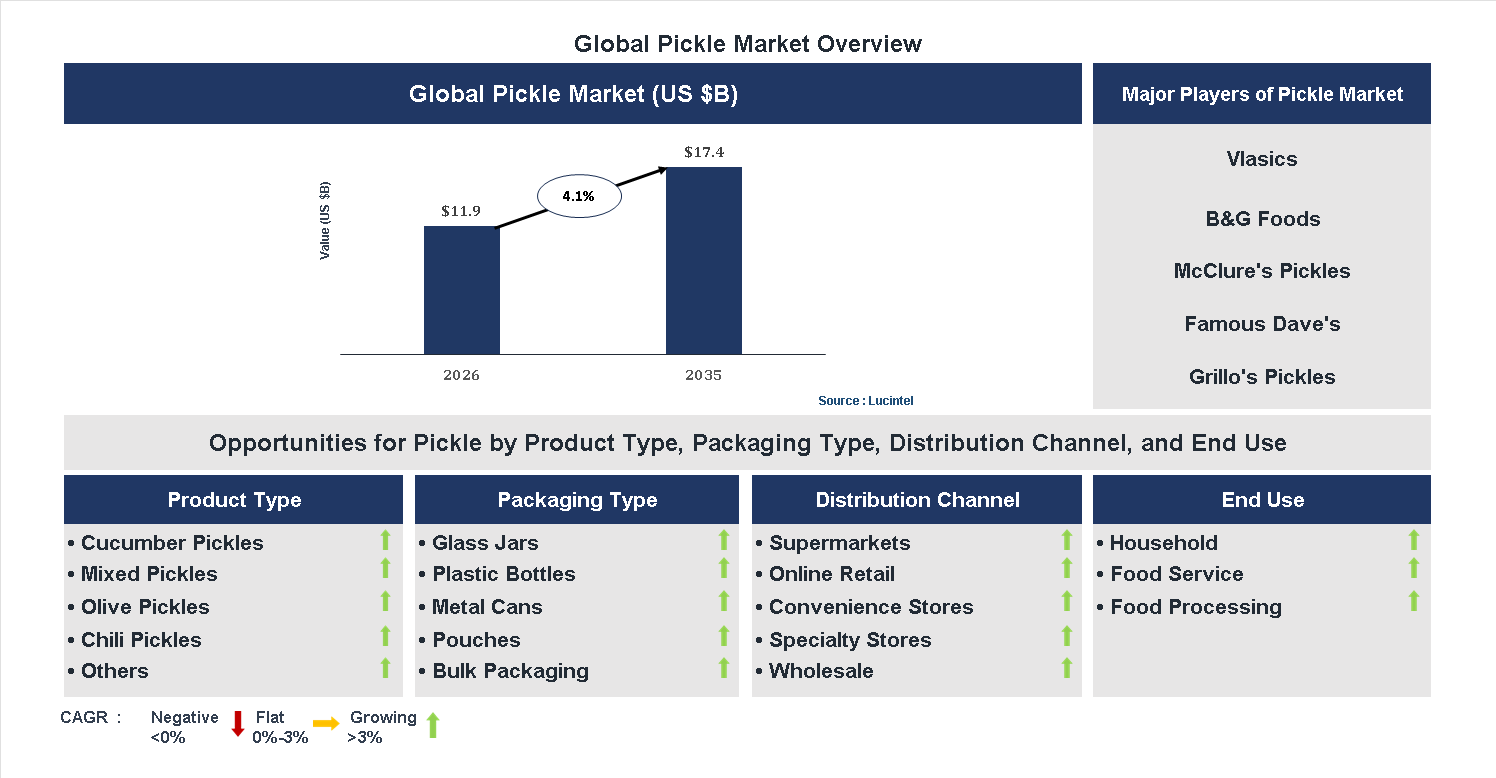
Key data points: The market size in 2035 = $17.4 billion, growth forecast = 4.1% annually for the next 8 years. Scroll below to get more insights. This market report covers trends, opportunities and forecasts in pickle market to 2035 by product type (cucumber pickles, mixed pickles, olive pickles, chili pickles, and others), packaging type (glass jars, plastic bottles, metal cans, pouches, and bulk packaging), distribution channel (supermarkets, online retail, convenience stores, specialty stores, and wholesale), end use (household, food service, and food processing), and region (North America, Europe, Asia Pacific, and the Rest of the World)
We'll send your sample report shortly.
• Lucintel forecasts that, within the product type category, cucumber pickle is expected to witness the highest growth over the forecast period.
• Within the end use category, household is expected to witness the highest growth.
• In terms of region, North America is expected to witness the highest growth over the forecast period. Gain valuable insights for your business decisions with our comprehensive 150+ page report. Sample figures with some insights are shown below.
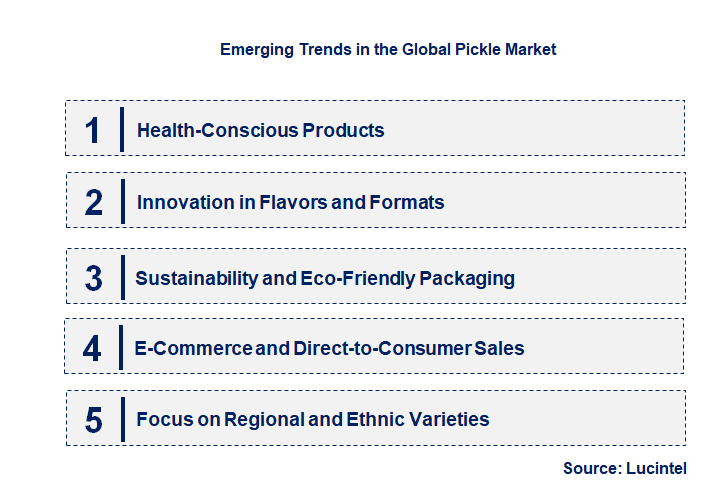
• Health-Conscious Products: Increasing demand for low-sodium, organic, and probiotic pickles reflects consumers focus on health and wellness. This trend encourages manufacturers to develop products with natural ingredients, reduced preservatives, and added health benefits. The rise of functional pickles, such as those with added probiotics or superfoods, is also prominent. This shift not only broadens product portfolios but also attracts health-conscious consumers, boosting market growth and encouraging innovation in product formulation.
• Innovation in Flavors and Formats: Consumers are seeking unique and diverse flavor profiles, leading to the development of exotic, spicy, and fusion-style pickles. Additionally, new formats like snack-sized packs, ready-to-eat, and gourmet varieties are gaining popularity. This trend enhances consumer engagement by offering variety and convenience, encouraging trial and repeat purchases. It also allows brands to differentiate themselves in a competitive market, fostering creativity and expanding market reach.
• Sustainability and Eco-Friendly Packaging: Environmental concerns are prompting companies to adopt sustainable practices, including biodegradable packaging, recyclable materials, and eco-friendly sourcing. Consumers increasingly prefer brands that demonstrate environmental responsibility, influencing purchasing decisions. This trend not only reduces the environmental footprint but also enhances brand reputation and loyalty. As sustainability becomes a key differentiator, companies investing in eco-friendly initiatives are likely to gain a competitive edge in the market.
• E-Commerce and Direct-to-Consumer Sales: The rise of online shopping platforms has expanded market access, allowing brands to reach a broader audience directly. E-commerce enables personalized marketing, subscription models, and convenient purchasing, which are particularly appealing to younger consumers. This trend accelerates market penetration, reduces distribution costs, and provides valuable consumer data. As digital channels grow, traditional retail channels are complemented or replaced, transforming how pickle products are marketed and sold.
• Focus on Regional and Ethnic Varieties: There is a growing interest in regional and ethnic pickle varieties, driven by globalization and cultural exchange. Consumers are exploring traditional recipes from different regions, leading to increased demand for authentic, handcrafted, and culturally specific products. This trend encourages local producers to showcase regional flavors and techniques, fostering diversity in the market. It also opens new avenues for niche marketing and premium pricing, catering to consumers seeking authentic and unique culinary experiences. These trends are collectively reshaping the pickle market by emphasizing health, innovation, sustainability, digital engagement, and cultural diversity. They are driving product development, influencing consumer preferences, and creating new opportunities for growth and differentiation in a competitive landscape.
• Growing Demand for Healthy Snacks: The increasing consumer focus on health and wellness has boosted demand for low-calorie, preservative-free, and organic pickles. This trend encourages manufacturers to innovate with natural ingredients and clean-label products, expanding market reach. As consumers become more health-conscious, the market is witnessing a shift towards functional pickles with added health benefits, which enhances product differentiation and drives sales growth.
• Innovation in Flavors and Varieties: The introduction of diverse flavors such as spicy, tangy, and exotic options is attracting a broader consumer base. Manufacturers are experimenting with unique ingredients and regional recipes to cater to evolving tastes. This innovation not only enhances product appeal but also opens new market segments, encouraging repeat purchases and brand loyalty. The variety expansion is vital for capturing consumer interest and increasing market share.
• Expansion of E-commerce and Online Retail: The rise of online shopping platforms has significantly increased access to pickle products, especially in remote and emerging markets. E-commerce enables brands to reach a wider audience, offer customized packaging, and provide detailed product information. This digital shift reduces distribution barriers, accelerates sales, and fosters direct consumer engagement, making online retail a crucial growth driver for the pickle industry.
• Sustainability and Eco-Friendly Packaging: Consumers are increasingly demanding environmentally responsible products, prompting companies to adopt sustainable packaging solutions. Innovations such as biodegradable jars and recyclable materials reduce environmental impact and appeal to eco-conscious buyers. This shift enhances brand reputation, meets regulatory requirements, and aligns with global sustainability goals, ultimately influencing purchasing decisions and fostering long-term market growth.
• Technological Advancements in Production: Automation, quality control, and innovative preservation techniques have improved product consistency and shelf life. These technological improvements reduce costs, minimize waste, and ensure safety standards, enabling manufacturers to scale operations efficiently. Enhanced production methods also facilitate the development of new product formats and packaging, supporting market expansion and meeting increasing consumer demand for high-quality, safe, and innovative pickle products. The overall impact of these developments is a dynamic, expanding pickle market characterized by innovation, sustainability, and digital integration. These opportunities are attracting new consumer segments, increasing sales channels, and fostering industry growth. As a result, the market is becoming more competitive, diverse, and responsive to consumer preferences, ensuring sustained growth and increased global market penetration.
• Expanding Consumer Preference for Healthy Snacks: The increasing awareness of health benefits associated with pickles, such as probiotics and low-calorie content, is boosting demand. Consumers are seeking natural, preservative-free options, prompting manufacturers to innovate with organic and clean-label products. This trend is particularly prominent among health-conscious demographics, including millennials and Gen Z, leading to a surge in premium and functional pickle varieties. The markets growth is driven by the desire for nutritious, flavorful, and convenient snack options.
• Innovation in Flavors and Product Varieties: The introduction of diverse flavors like spicy, tangy, and exotic blends is attracting a broader consumer base. Manufacturers are experimenting with ingredients such as herbs, spices, and fruits to create unique offerings. Additionally, new formats like pickle chips, spreads, and snack packs are emerging to cater to on-the-go consumption. These innovations enhance product appeal, increase shelf life, and open new revenue streams, thereby fueling overall market expansion and consumer engagement.
• Rising Demand in Foodservice and Commercial Sectors: The foodservice industry, including restaurants, cafes, and catering services, is increasingly incorporating pickles into menus to enhance flavor profiles and offer authentic experiences. Commercial applications such as sandwich toppings, burger accompaniments, and appetizer garnishes are expanding market reach. This growth is driven by the rising popularity of ethnic cuisines and the need for versatile condiments. The sectors expansion provides significant opportunities for bulk sales and brand visibility, further propelling market growth.
• Growth of Organic and Natural Pickle Products: Consumers are prioritizing organic, non-GMO, and preservative-free options, prompting manufacturers to develop organic pickle lines. Certification and transparency are becoming key differentiators in the market. The demand for clean-label products aligns with the broader trend toward healthier eating habits. This shift encourages sustainable sourcing, eco-friendly packaging, and innovative formulations, which collectively contribute to market differentiation and increased consumer loyalty, supporting long-term growth prospects.
• Increasing E-commerce and Retail Distribution Channels: The rise of online shopping platforms has expanded access to a wide range of pickle products, especially in remote and emerging markets. E-commerce enables brands to reach niche segments and offer customized options. Retail expansion, including supermarkets and convenience stores, enhances product visibility and availability. Strategic partnerships, digital marketing, and direct-to-consumer models are driving sales growth. This omnichannel approach is vital for capturing evolving consumer preferences and ensuring sustained market penetration and revenue generation. These strategic growth opportunities collectively position the pickle market for robust expansion, driven by consumer health trends, product innovation, and diversified distribution channels. Embracing these avenues will enable market players to enhance competitiveness, meet evolving demands, and capitalize on emerging trends. As the market continues to evolve, leveraging these opportunities will be crucial for sustained success and long-term profitability in the dynamic pickle industry.
• Technological Innovations: Advances in preservation and packaging techniques have enhanced product quality, extended shelf life, and reduced costs. Automation and improved fermentation processes enable manufacturers to produce consistent, high-quality pickles at scale. These innovations meet consumer demands for convenience and safety, boosting market growth. Additionally, new flavor infusion methods and packaging options attract diverse consumer preferences, expanding market reach.
• Rising Health Consciousness: Consumers are increasingly seeking natural, preservative-free, and organic products. Pickles, rich in probiotics and antioxidants, are perceived as healthy snacks and condiments. This trend encourages manufacturers to develop healthier pickle varieties, catering to dietary needs and lifestyle choices. The growing awareness of gut health and immunity further propels demand, especially in developed markets.
• Growing Ethnic and Cultural Influence: The globalization of cuisines has popularized pickles from various cultures, such as Indian, Korean, and Middle Eastern varieties. This cultural exchange broadens consumer interest and acceptance, leading to increased imports and exports. Foodservice sectors, including restaurants and catering, are incorporating diverse pickle options, fueling market expansion. The influence of social media and food trends also promotes experimentation with traditional recipes, driving demand.
• Economic Growth and Urbanization: Rising disposable incomes and urban lifestyles in emerging economies have increased demand for convenient, ready-to-eat foods like pickles. Urban consumers prefer quick, flavorful condiments, boosting retail and foodservice sales. Economic development also facilitates better distribution channels and infrastructure, ensuring wider availability of products. This growth supports market expansion across regions with rising middle-class populations.
• Regulatory and Quality Standards: Governments and industry bodies are implementing strict safety, labeling, and quality regulations. These standards ensure consumer confidence and product safety, encouraging market stability. Compliance with regulations often leads to product innovation and higher-quality offerings, which can command premium prices. However, navigating diverse regulatory environments can pose challenges for international market entry and operations. The challenges facing the pickle market include:
• Fluctuating Raw Material Prices: The primary raw materials, such as vegetables, spices, and salt, are subject to price volatility due to seasonal variations, climate change, and supply chain disruptions. These fluctuations impact production costs and profit margins. Manufacturers may face difficulties in maintaining consistent pricing and quality, which can affect competitiveness and consumer trust. Long-term price instability necessitates strategic sourcing and inventory management to mitigate risks.
• Regulatory Restrictions and Compliance: Varying food safety standards, labeling requirements, and import-export regulations across countries pose significant hurdles. Compliance costs increase, especially for small and medium-sized enterprises, limiting market entry and expansion. Non-compliance can lead to product recalls, legal penalties, and damage to brand reputation. Navigating complex regulatory landscapes requires substantial investment in quality assurance and legal expertise.
• Environmental Concerns and Sustainability: The pickle industry faces pressure to adopt sustainable practices, including eco-friendly packaging, waste reduction, and responsible sourcing. Environmental regulations and consumer preferences for sustainable products compel companies to innovate and invest in greener solutions. Failure to address these concerns can result in reputational damage and loss of market share. Balancing sustainability with cost-effectiveness remains a key challenge for industry players. The pickle market is driven by technological innovations, health trends, cultural influences, economic growth, and regulatory standards, which collectively foster expansion and diversification. However, challenges such as raw material price volatility, regulatory complexities, and environmental sustainability issues pose risks that require strategic management. The interplay of these drivers and challenges will shape the market’s future, demanding agility and innovation from industry stakeholders. Overall, the market’s growth prospects remain promising, provided companies effectively navigate these dynamic factors.
• Vlasics
• B&G Foods
• McClures Pickles
• Famous Daves
• Grillos Pickles
• Pinnacle Foods
• H.J. Heinz Company
• Cucumber Pickles
• Mixed Pickles
• Olive Pickles
• Chili Pickles
• Others
• Glass Jars
• Plastic Bottles
• Metal Cans
• Pouches
• Bulk Packaging
• Supermarkets
• Online Retail
• Convenience Stores
• Specialty Stores
• Wholesale
• Household
• Food Service
• Food Processing
• North America
• Europe
• Asia Pacific
• The Rest of the World
• United States: The US pickle market has seen increased demand for organic and low-sodium options, with innovative packaging solutions to enhance convenience. Craft and artisanal pickles are gaining popularity, driven by consumer interest in unique flavors and local products. The rise of e-commerce platforms has expanded distribution channels, enabling small-scale producers to reach wider audiences. Additionally, health-conscious consumers are pushing for probiotic-rich fermented pickles, boosting sales in the functional food segment.
• China: China’s pickle market continues to grow rapidly, fueled by traditional consumption and modern flavor innovations. New product varieties, including spicy and sweet pickles, are gaining popularity among younger consumers. The adoption of advanced preservation techniques has improved shelf life and quality. E-commerce sales are expanding, with online platforms facilitating access to a broader consumer base. Domestic brands are investing in branding and packaging to compete with international players, emphasizing health benefits and authenticity.
• Germany: The German pickle market is characterized by a focus on organic and sustainably produced products. Consumers prefer high-quality, locally sourced ingredients, and there is a rising trend toward vegan and plant-based pickles. Innovative flavors, such as herbal and spice-infused varieties, are being introduced to cater to diverse tastes. Retailers are emphasizing transparency and eco-friendly packaging. The market also benefits from a strong foodservice sector, with restaurants incorporating artisanal pickles into their menus, boosting demand.
• India: India’s pickle market remains deeply rooted in tradition, with a wide variety of regional flavors and recipes. Recent developments include the modernization of production processes to ensure hygiene and quality standards. There is a growing demand for premium and health-oriented pickles, such as low-salt and probiotic options. The rise of online retail and export opportunities is expanding market reach. Additionally, innovative packaging solutions are helping preserve freshness and extend shelf life, catering to urban consumers seeking convenience.
• Japan: The Japanese pickle market is characterized by a focus on health and wellness, with an emphasis on fermented and probiotic pickles. Traditional flavors like takuan and umeboshi are evolving with new ingredients and fermentation techniques. The market is witnessing increased interest in organic and non-GMO products. Convenience packaging and ready-to-eat formats are popular among busy consumers. The integration of traditional craftsmanship with modern technology is driving product innovation, while export markets are expanding due to global interest in Japanese culinary culture.


• Vlasics
• B&G Foods
• McClures Pickles
• Famous Daves
• Grillos Pickles
• Pinnacle Foods
• H.J. Heinz Company Q6. Which pickle market segment will be the largest in future? Answer: Lucintel forecasts that, within the product type category, cucumber pickle is expected to witness the highest growth over the forecast period. Q7. In pickle market, which region is expected to be the largest in next 5 years? Answer: In terms of region, North America is expected to witness the highest growth over the forecast period. Q8. Do we receive customization in this report? Answer: Yes, Lucintel provides 10% customization without any additional cost.


Choose a license that fits your team. Instant PDF delivery.
Prices exclude taxes. Instant delivery. Custom licensing available on request.
Market Report · July 22, 2026
Market Report · July 22, 2026
Market Report · July 22, 2026
Trusted partner for strategic intelligence and business growth


Receive a complimentary market analysis tailored to your industry. Our analysts will identify key growth opportunities and competitive dynamics specific to your business.

Market size, growth rate, and key trend analysis for your specific sector.

Top competitor positioning and market share analysis.

Strategic recommendations backed by data-driven insights.
Get curated market intelligence and competitive moves straight to your inbox.
By subscribing, you agree to receive our monthly insights. Unsubscribe anytime.
Receive a complimentary market analysis tailored to your industry. Our analysts will identify key growth opportunities and competitive dynamics specific to your business.
Market size, growth rate, and key trend analysis for your specific sector.
Top competitor positioning and market share analysis.
Strategic recommendations backed by data-driven insights.
Get curated market intelligence, emerging trends, and competitive moves straight to your inbox each month.
By subscribing, you agree to receive our monthly insights. Unsubscribe anytime.
We'll send your sample report shortly.